

There was a time when affordable speakers meant bland boxes that took some partner persuasion to get through the door, with premium fit and finishes reserved for higher end audio gear.
Then some years back, Q Acoustics burst on the scene and turned this notion on its head. Who says you can’t have curved cabinets and sleek finishes that look a million dollars on a modest budget? Not Q. And since then it has gone on to expand into speaker lines for all manner of budgets, and with active models too.
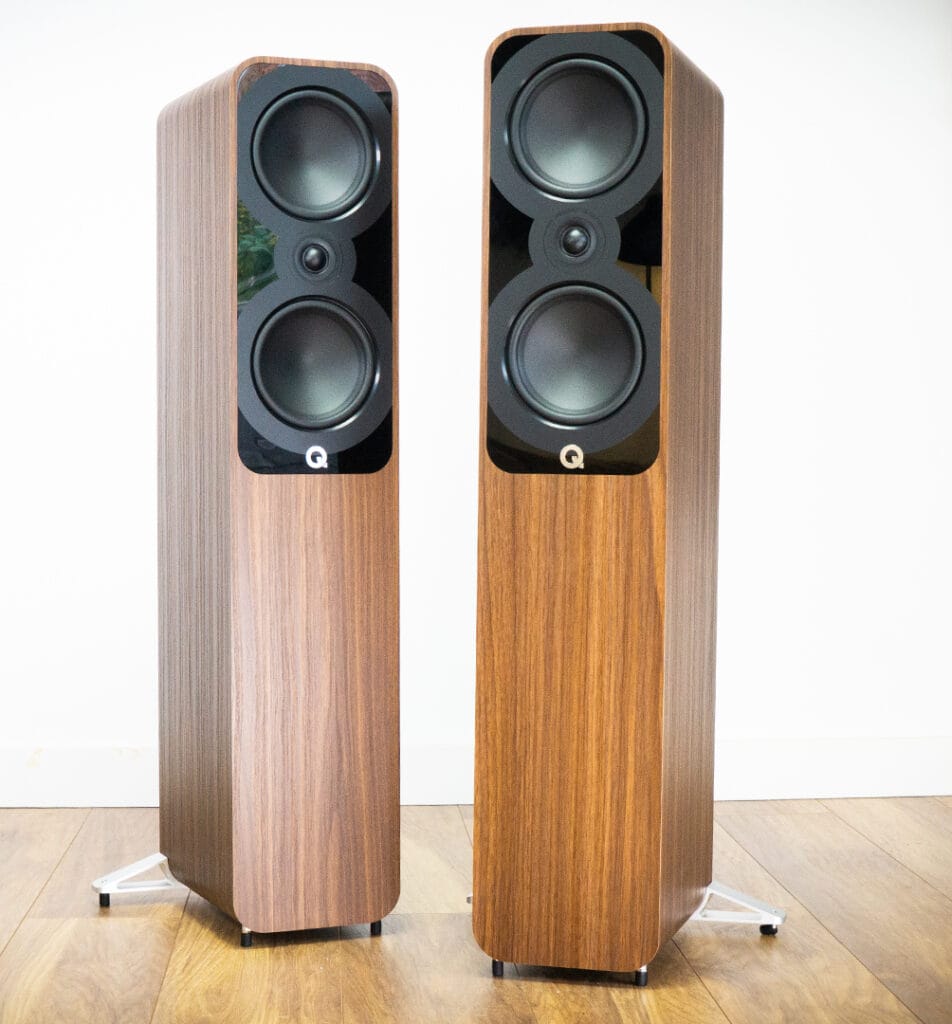
Q Acoustics 5050 standing proud in their Santos rosewood vinyl wrapped skin. But if that’s not to your taste, then there’s satin black or white and ‘Holme’ oak finishes to pick from
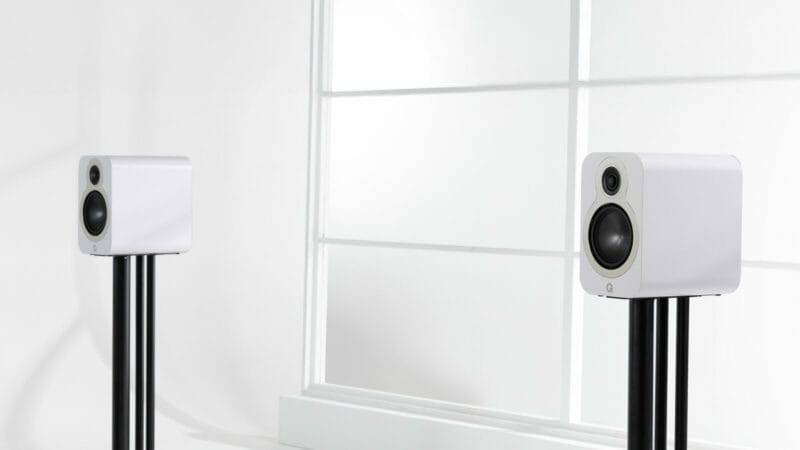
But despite the product line expansion, Q’s basic premise has remained the same in offering style and sonic substance in equal measures. This also makes them instantly recognisable from across a crowded dealership, which is why many of us have owned a pair or know someone that does – they just make sense, especially for hifi newbies who might not be quite ready for all-out separates and room dominating boxes, because Q Acoustics speakers tend to blend in more than most in the average home.
At £1,299, the 5050 on test here is the daddy of Q’s 5000 range, with smaller floorstanders and standmounts priced below it. There’s a sub too, should you want to build a 5000 series home cinema system. This speaker is also the last speaker in Q’s line-up before you step into its flagship Concept territory of models representing the very cutting-edge of the brand’s tech.
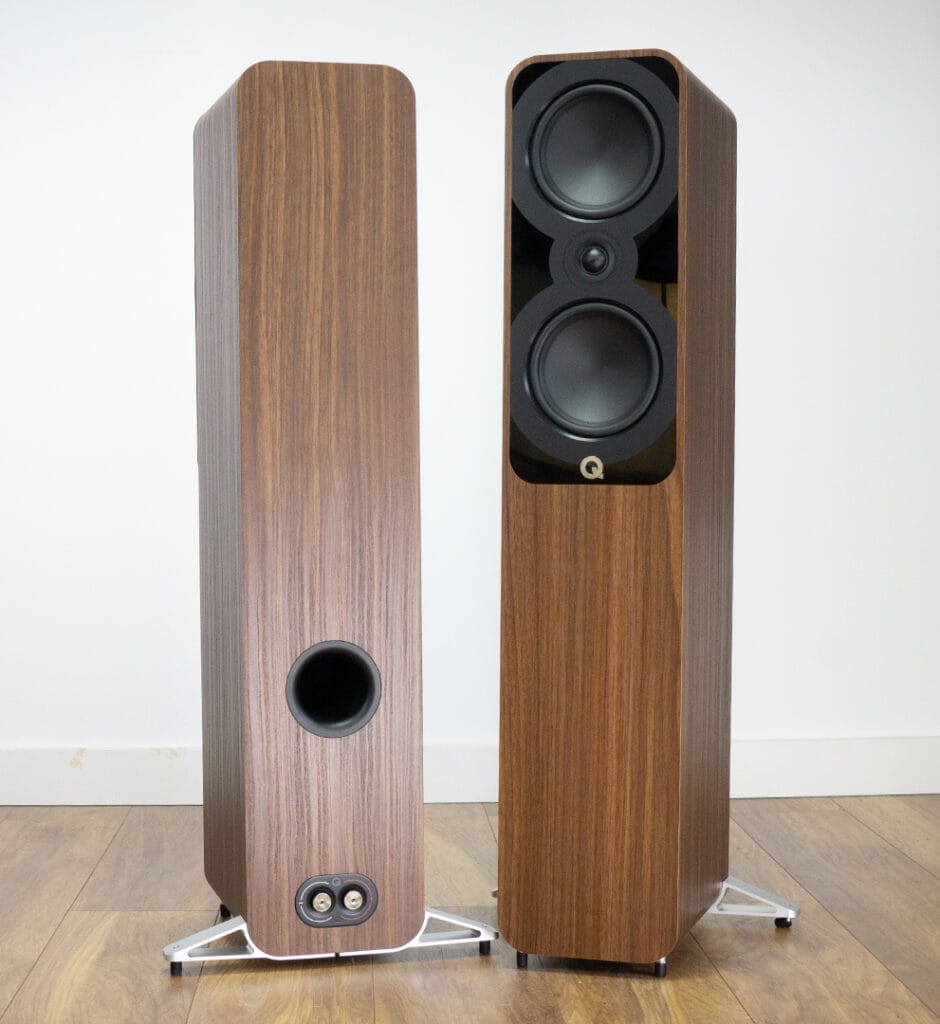
Front and rear view showing a large bass port on the back baffle. A bung is supplied for low frequency tuning, should you need it
Properly baffled
What the 5000 series gets you over the 3000c models is an improved cabinet with thicker walls for increased rigidity, alongside a raft of other upgrades. And while both ranges pack Q’s proprietary point to point bracing (PTP) and HPE (Helmholtz Pressure Equalizer) tech, for the 3000c models this latter element means a single internal tube in the 3050c, whereas the 5050 gets a series of them, aimed at nullifying internal pressures and reducing internal standing waves. The 5000 models also get an uprated front baffle, within which its drive units reside. A laminated design with black acrylic trim, at the baffle’s sandwich centre is a dedicated damping layer of butyl rubber, to suppress vibration and decouple the front baffle (to a degree) from the cabinet.
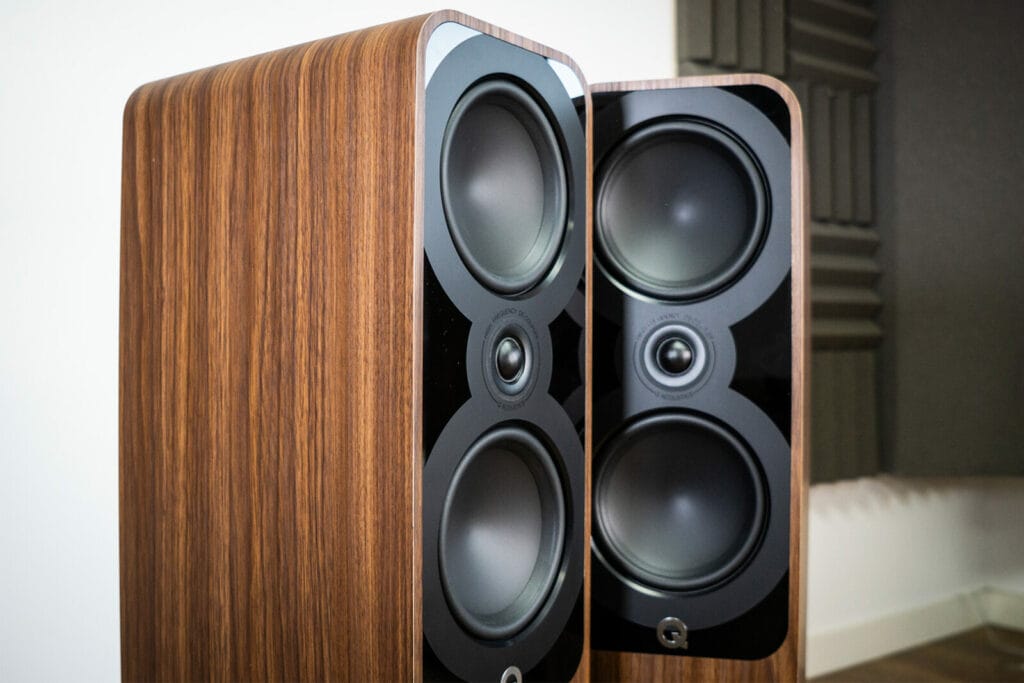
Sleek black front baffle ain’t just for show, it’s also there for acoustic performance
And speaking of those drive units, on mid/bass duties beat twin 150mm (6″) variants of Q’s C³ ‘Continuous Curved Cones’ with enlarged voice coils (for increased motor strength) over the 3000c variants. Their profiles are also tailored for bass and midrange frequencies from a single unit, thanks to a straight conic cone shape for lower frequency performance, flaring for midrange control and large magnets for increased grip to lower distortion. And in many ways this is what sets Q’s approach apart from the competition, as many rivals would have simply opted for a dedicated bass driver and separate midrange unit.
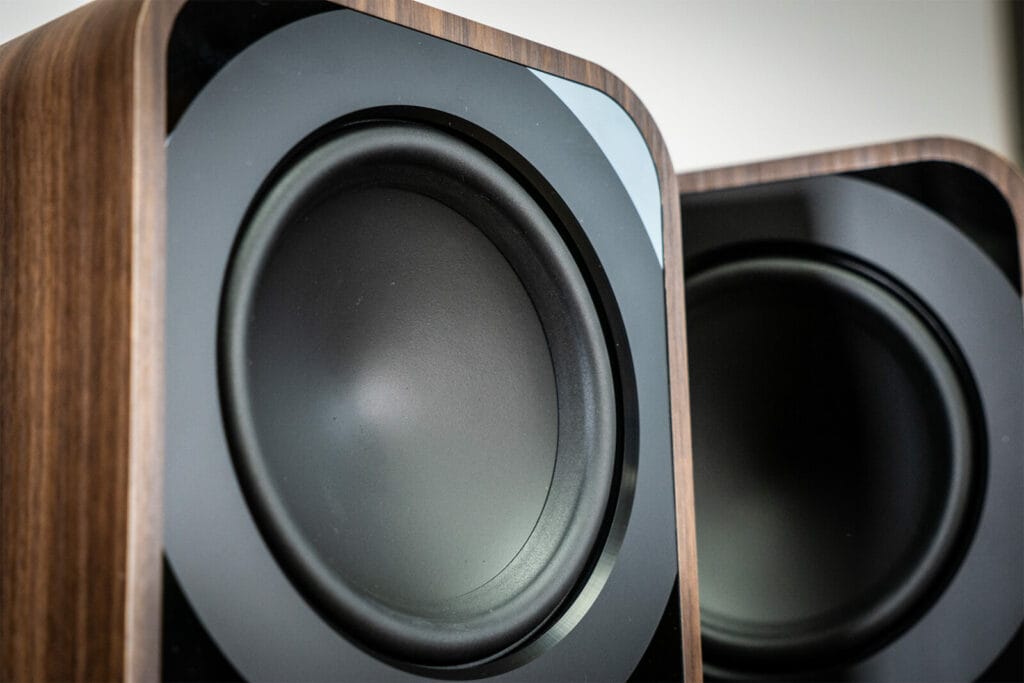
Main drivers are Q Acoustics’ in-house C³ variants, optimised for bass and midrange
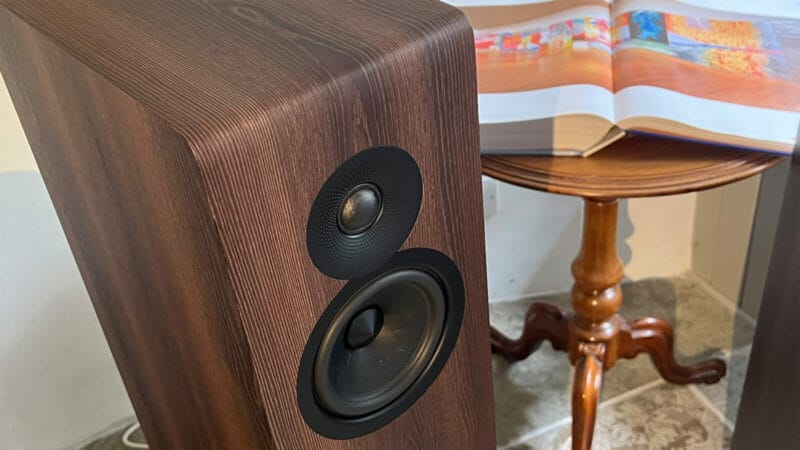
Of course it’s not just what you’ve got, but where you put it that counts, and Q positions its mid/bass drivers above and below a central tweeter in a D’Appolito arrangement. And with this comes audio benefits, as a D’Appolito arrangement is all about improving directivity and dispersion of sound waves from a loudspeaker, often resulting in a more accurate and detailed soundstage, (all credit to Joseph D’Appolito who perfected this approach some decades ago, which is now commonplace in many hi-end speaker circles). While I digress a little, the point being that Q Acoustics is embracing an approach across its affordable loudspeaker range that’s often seen on speakers way beyond this price bracket.
Said tweeter in the middle is a 25mm (1″) soft dome type based on the design principle found in the Concept series’s tweeters with neodymium motor, inverted roll surround and vented rear chamber (to lower distortion). It’s also hermetically sealed and mechanically isolated from the front baffle to prevent internal pressure modulations from within the cabinet and adjacent bass drivers, and crosses over at 2.7kHz.
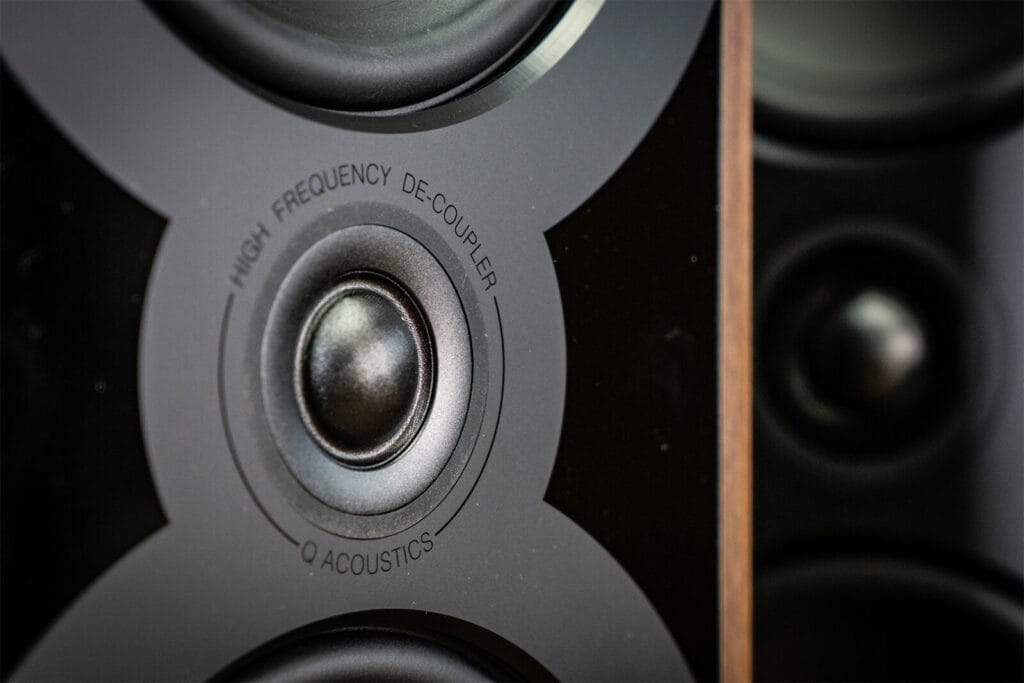
25mm soft dome tweeter sits within a rubber ring to help decouple it from the front baffle and main drivers
Tooled up
Unboxing the 5050 and a supplied accessories box tells you there’s a bit of work to do to set them up, hence it’s best to leave the protective bags on and flip them onto their tops while you install the supplied stablisers.
At first I wondered if there were a couple missing, with the 5050 only including two per speaker, but a quick glance at the instructions tells me what goes where.
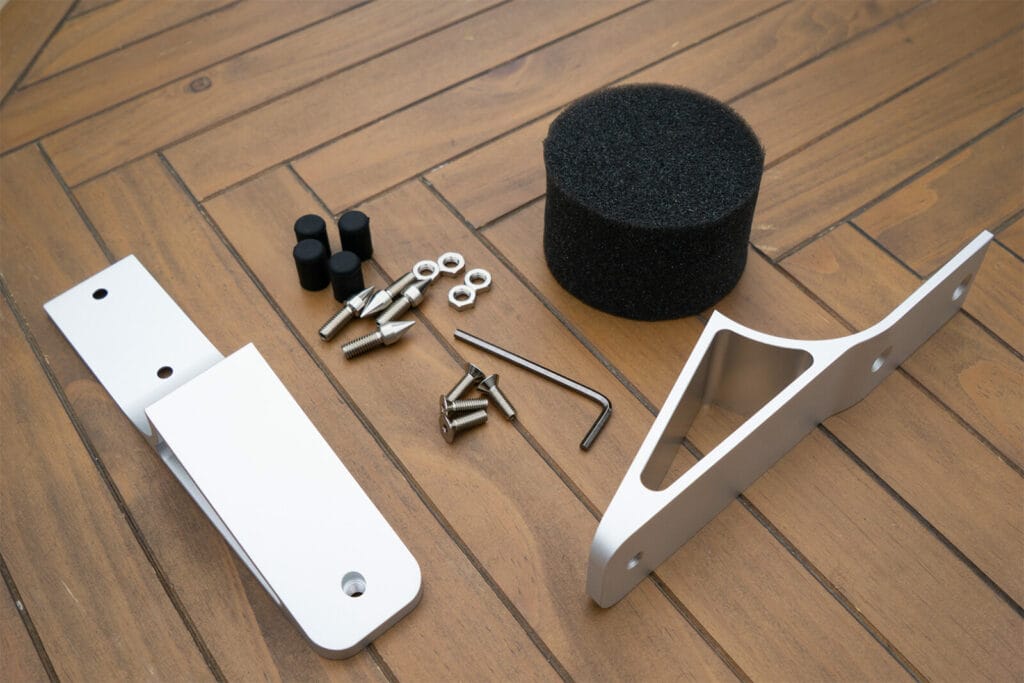
Supplied accessory pack includes stablisers, mounting bolts, hex key, spike kit and foam bass port bung
As you can see from the image below, the alloy stablisers act as outriggers which bolt to the rear of each speaker’s base. And being wider than most, this means the speaker feels nice and rigid without the need for a further pair up front, making the 5050’s forward profile that bit more appealing. They may not be to everyone’s taste, but I welcome them being different from the usual four flat feet of many rival brands.
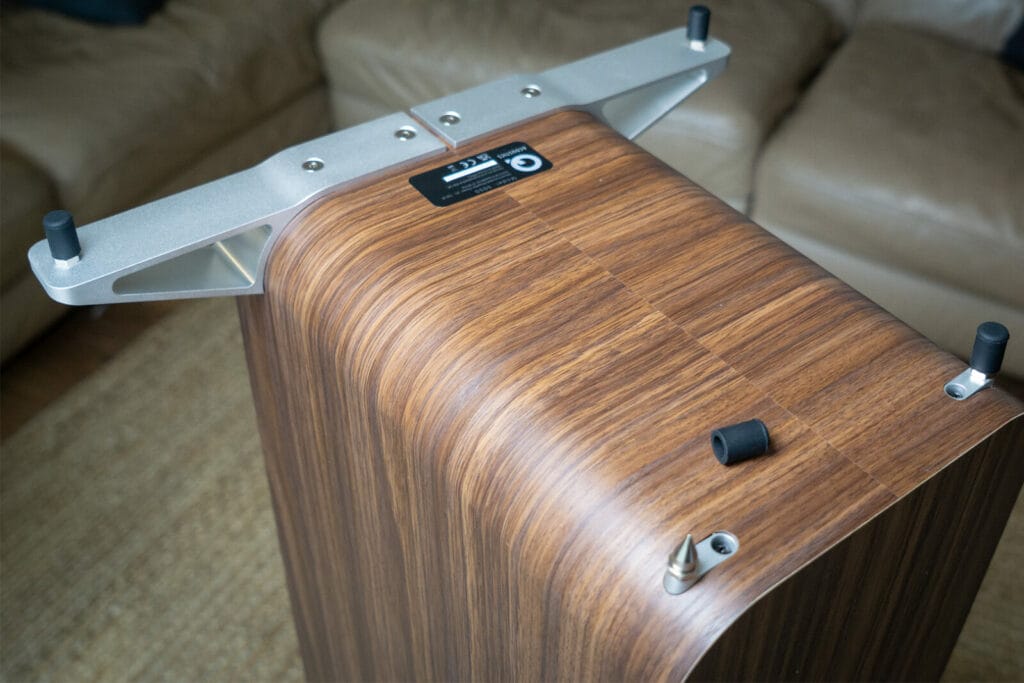
Height adjustable slender spikes are included, and for wooden floors you can pop on rubber caps (also supplied)
Performance
Once fully footed and flipped into position, the 5050 is easy enough to move around. Partnering gear for review purposes is a Rotel Michi X5 integrated amp and Primare’s uber versatile CD15 Prisma network player, alongside an SME 20/2 turntable sporting AVID tonearm.
Spinning José James Trouble at 24-bit/48kHz (FLAC, via Qobuz) and there’s a smoothness to the Q Acoustics’ presentation that immediately lures you in. These speakers are just so easy to listen to. The vocals and rhythm of the track flows with a sense of freedom, without being too languid or too in your face, emphasising how Q has got the voicing just right on these (and noting they’ve clearly been nicely run in before being packed off to Audiograde HQ, thanks folks!).
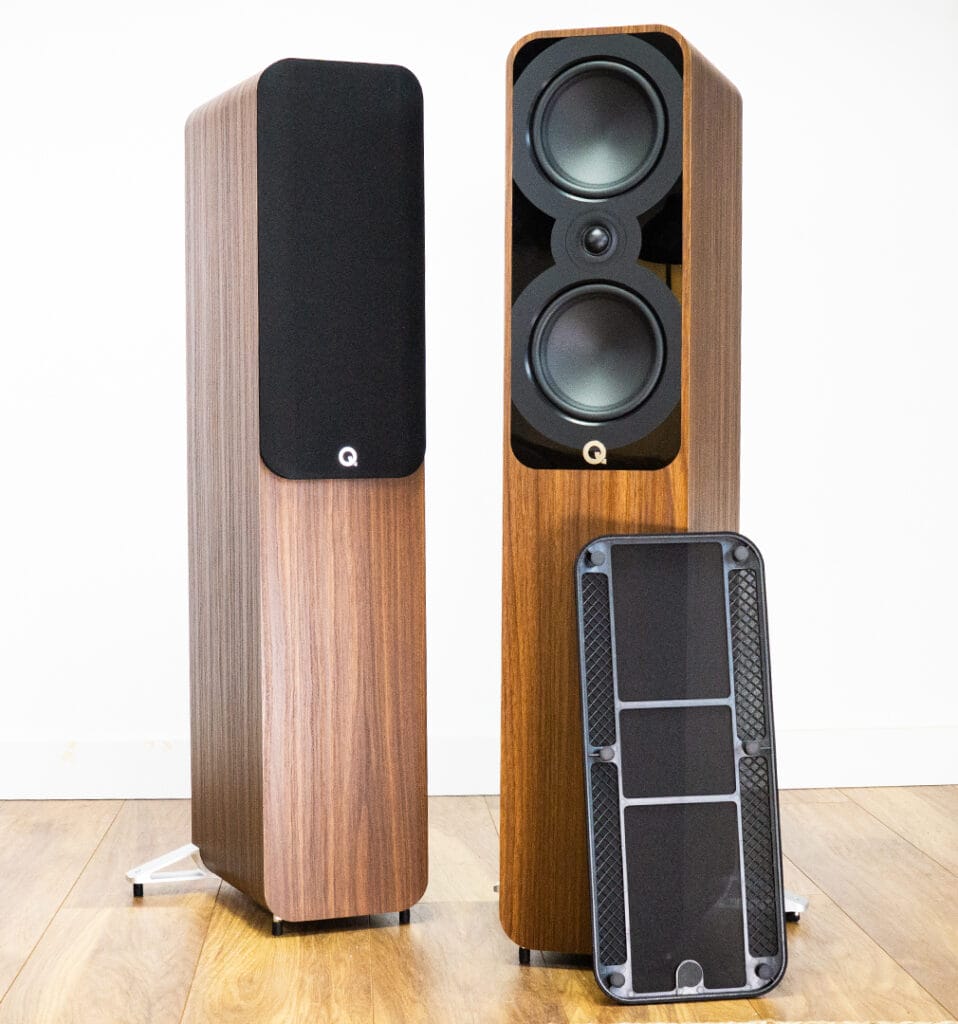
Magnetically attached speaker grilles are included to protect the precious air-moving hardware
They’re articulate too, and able to punch well beyond their relatively demure size (compared to the mighty floorstanders I’m used to wrestling around) with the ability to sonically fill my 30sqm listening room without ever sounding short of breath or diluted in such a large space. Instead they seem to welcome the challenge. Take the smattering of horns on the José James track for example, which the Q Acoustics are able to present well wide in the soundstage and with real weight and punch, which is impressive stuff.
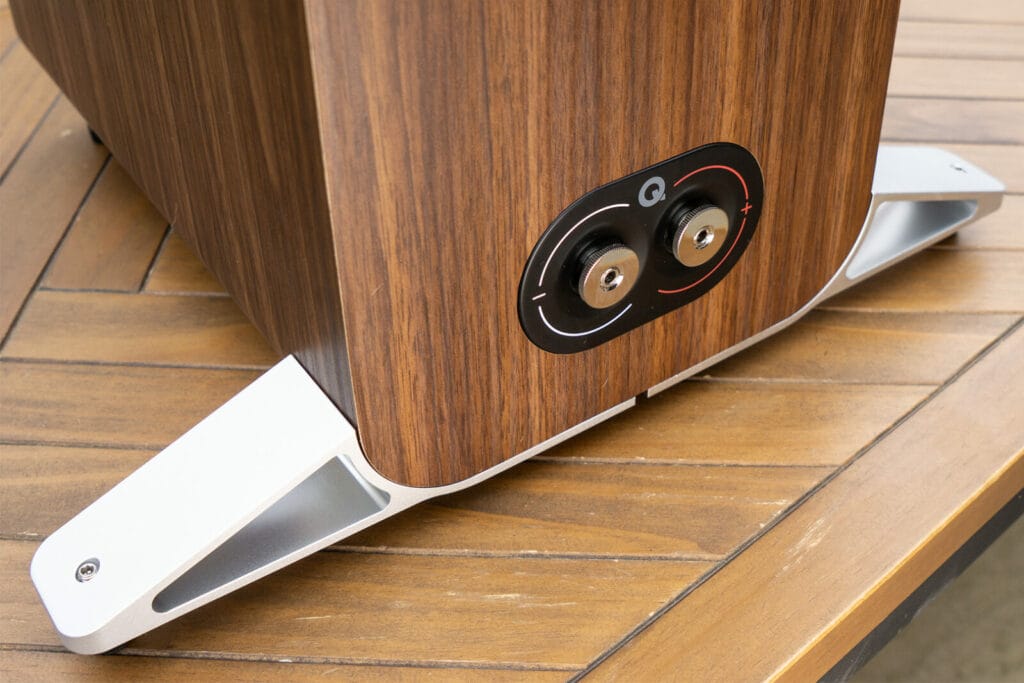
The 5050’s in-house nickel plated brass speaker terminals protrude less proudly than most and look just the part. There’s no bi-wire option though
What’s also notable is the way the music hangs together, especially in the mid to high frequencies, perhaps denoting the benefits of Q’s considered driver array.
I’ve become a little addicted to The Sound of Primare: Volume 1 LP since bagging a pressing at the recent UK Hi-Fi Show Live and it’s easy to see why hearing Shola Ama’s You Might Need Somebody via the 5050 speakers. Keyboards, percussion, lead and backing vocals fill the soundstage with a sense of natural sweetness and melody that’s hard to resist repeat listens of.
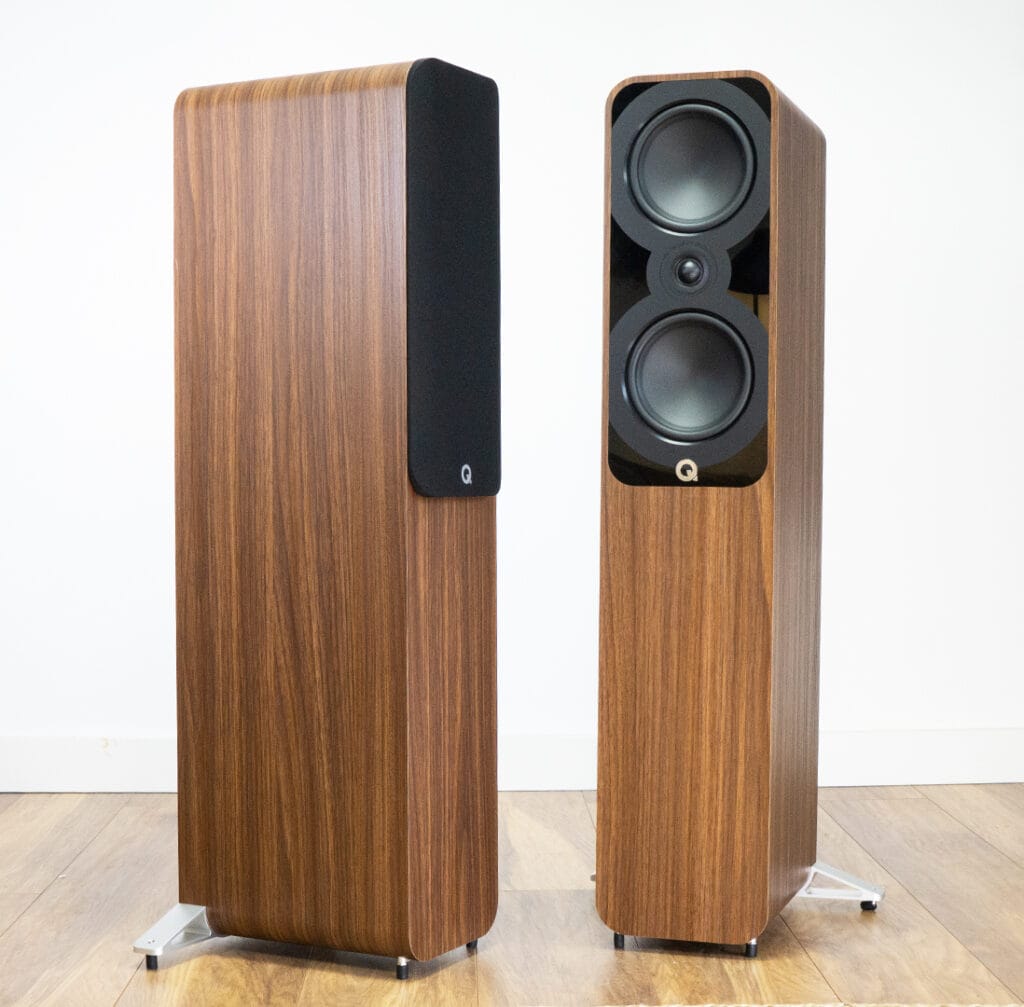
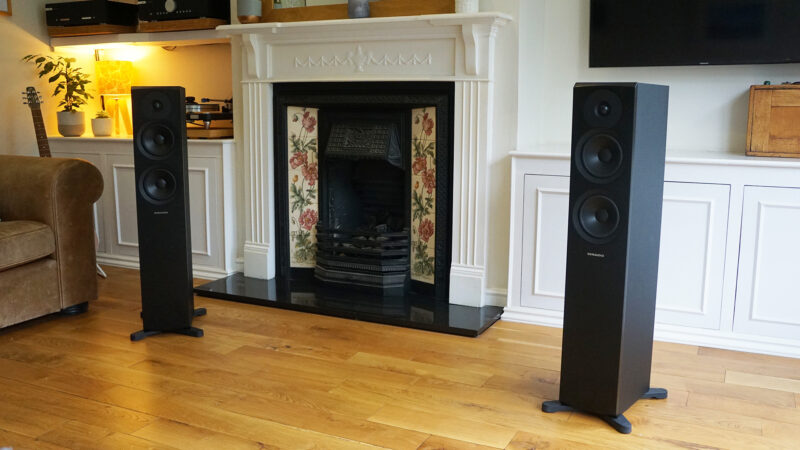
At 336mm deep and with an internal volume of almost 40L, the 5050 is a relatively compact floorstander that hides its size thanks to a slimline front baffle and generous depth. I can’t help be reminded of WW1 aircraft by those outrigger feet though, maybe that’s just me…
But what also jumps out at me is the bass delivery. To be brutally honest I simply wasn’t expecting such an accomplished low frequency response in my large room from a speaker of this size and price. Yet there it is.
With the speakers 2m apart and around 1m from a rear wall, toed in to my listening position, the 5050’s bottom end sounds ample, and nicely textured, seeming to reach lower than its claimed 37dB (at -6dB). And the distinction between upper bass and lower midrange is nicely separated too, despite those drivers covering both basis – so much so these speakers have the presentation and authority of a three-way speaker in many ways, which is quite an accomplishment.
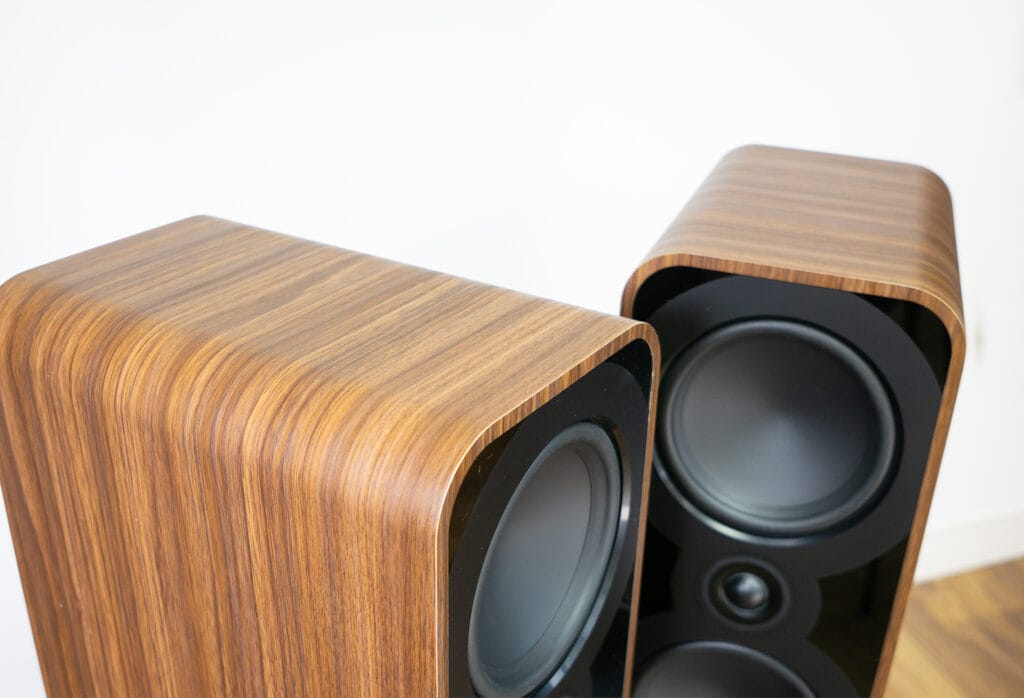
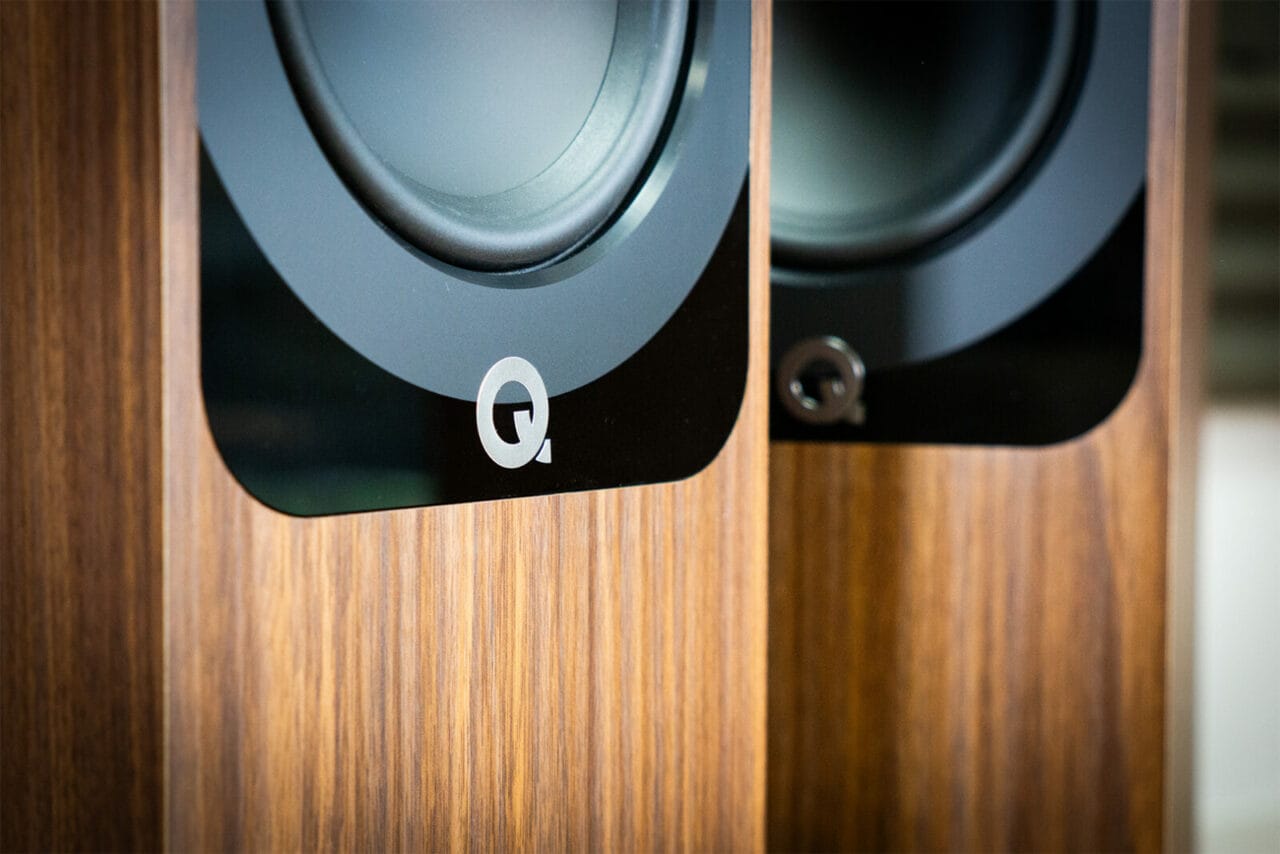
Don’t you wish your cabinet was curved like this? Q Acoustics’ trade mark shape is here in abundance
Slap some rock on and it’s a similar story, Nirvana’s Come As You Are at 24-bit/96kHz sounds rich right across the midband, with that lead bassline dominating the mix with its luscious texture. Okay, so at the extremes the 5050 isn’t as visceral in the treble as some rival speakers, which some may see as less bright, others less fatiguing…but what does shine though is how well the overall mix is held together, which more than keeps my interest.
In summary
This is cracking product at the price. I hear many speakers costing multiple times what the 5050 does and yet I had just as much fun with them. Fantastically musical, despite their modestly sized cabinets, this speaker is also deceptively room filling.
If I was after a compact floorstander and could stretch to beyond a grand then these would be firmly near the top of my audition list, I love em!