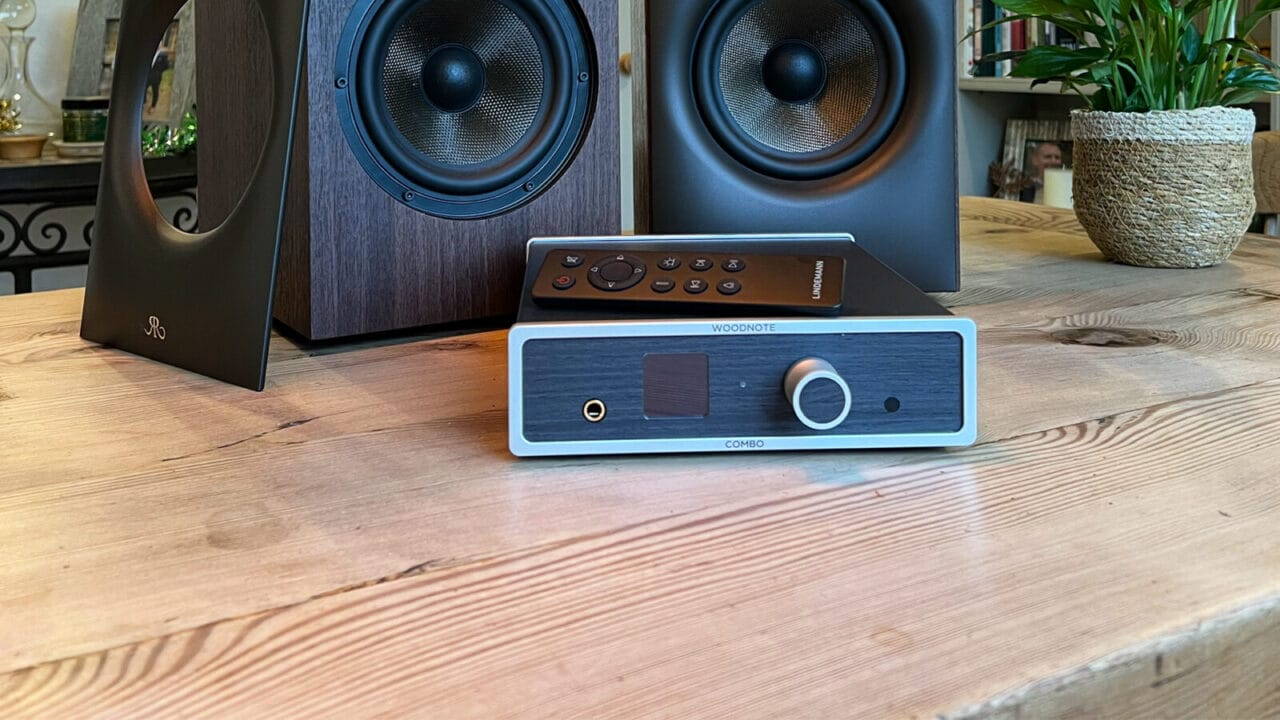




The Revival Audio Sprint 3 standmount speakers and Lindemann Woodnote Combo integrated streaming amp make a well matched partnership both in terms of the way the components look together and the way they sound. It’s the first time I’ve reviewed products from either brand, but from my very first listen I recognise that this is a harmonious pairing. Total system cost is around £3,640 (including speaker stands), which feels competitive considering their combined sonic capabilities and hifi credentials.
Mixing and matching one hifi component with another to achieve balanced sound is something of a fine art in audio circles. Get it right and you’ll experience an effortless interaction between the characteristics of your speakers, amp, and source that matches your hifi preferences with a sound that’s musical nirvana to your ears.
A well balanced audio setup unlocks the potential of your favourite music and sounds significantly better than an individual component’s specifications might suggest. Get the balance wrong though, and your system will sound mediocre, and listening to your favourite tracks will fall short of your musical expectations.
Specifications only go so far to achieving a hifi’s sonic success. It’s largely a subjective matter that requires trialing different components until you land on a combo that sounds right to you. It’s often a time consuming journey for audio fans, so it’s great when an expert has done all the leg work for you and landed on a compatible pairing that is more than the sum of their individual parts.

Revival Audio’s Sprint 3 is a nicely proportioned standmount speaker, and it looks handsome clad in walnut veneer
Harmonious hifi
Every hifi specialist has a range of shortcut systems combining carefully considered components that work well together for all kinds of audio fans and pockets. And Fife-based audio specialist Elite Audio has uncovered a gem of a music system in these, combining a streaming integrated amplifier engineered in Germany with a relatively new speaker brand designed in the Alsace region in France – one that first impressed us back in September at Ascot’s Hi-Fi Show Live.
The elegant Revival Audio Sprint 3 standmount loudspeakers cost £990 per pair and are available in blonde oak, matte black, and walnut finishes. As the value loudspeaker series in Revival Audio’s lineup, all Sprint models are manufactured in China but that doesn’t mean they feel cheap. My walnut review sample is finished to a very high standard and is remarkably solid. In fact, the cabinet is heavier than some standmount speaker designs I’ve reviewed costing twice as much.

Removable front baffles offer Sprint 3 owners an alternative look, and the cabinets have a large bass reflex port at the rear to improve low frequency output
The two-way speaker design is fitted with removable ‘Elytron’ front baffles that are magnetically held in place and sport a directivity waveguide where it surrounds the tweeter, with the area around the bass driver there to optimise its diffraction. Fabric grilles can be attached from behind too, to cover and protect the 28mm soft dome tweeter. The 180mm bass woofer is described as using a ‘Basalt Sandwich Construction’ formed from three layers to achieve a rigid yet lightweight driver.
For this review the Sprint 3 speakers came supplied with a pair of black metal Revival Audio stands, which add £399 to the bundle. Their four tubular legs, anchored by plates at either end, made the stand assembly more fiddly than some designs I’ve built over the years, but once constructed they provided a good solid support for the speakers. The speakers are then decoupled from the metal stands by acoustic isolation pads.
The stand design won’t be to everyone’s taste (I typically prefer wooden stands) but they usefully elevate the Sprint 3 loudspeakers to 110cm high. That’s ideal for a tweeter in my listening position and matches that of the Dynaudio X38 floorstanders (fitted with IsoAcoustics GAIA III feet) that I use as my reference speakers.

Lindemann Woodnote Combo is compact, measuring just 207 x 67 x 250mm (WHD). Front panel hosts small digital display, multi-functional volume control and headphone socket
Homegrown
Although new to me, Lindemann is well known in hifi circles and the Woodnote Combo is an integrated streaming amp costing £2,250. Designed and built in Germany, the Woodnote Combo is the more flexible of the two models Lindemann offers. The series is possibly so-called because of the grained wooden insert on the compact front panel, as well as a nod to Lindemann’s approach to natural sound.

The Lindemann Woodnote Combo offers digital inputs only with coaxial, optical, HDMI (eARC), USB-A, and Bluetooth on the menu
Measuring just 62mm high, 207mm wide, and 250mm deep, the Woodnote’s diminutive dimensions certainly belie its powerful sound. Its Class AD amplifier is rated at 30W per channel into 8 ohms (50W into 4). There are no analogue inputs, but digital inputs include coaxial, optical, HDMI (eARC), and USB-A, as well as UPnP and DLNA networking alongside Bluetooth connectivity, with data handling up to 24-bit/384kHz / DSD256 (see spec section below). In other words for digital music fans, this is an impressively versatile integrated streaming amplifier.
The front panel isn’t much to look at compared to similarly-priced streaming amps and their colourful displays showing off album artwork such as Naim’s Uniti Atom (£2,299) or Cambridge Audio’s Evo 150 SE (£1,999). Instead, the Combo’s bijou front panel has a small dot matrix display simply showing the selected source, plus there’s a multi-functional volume control and a 6.35mm headphone jack.
A handy remote control is supplied for basic navigation when your smartphone isn’t available, but the majority of the Woodnote’s functionality can be handled via the intuitive Lindemann control app for iOS and Android devices. Once downloaded, it enables access to your Tidal, Qobuz, HighResAudio and Deezer music streaming accounts. Qobuz Connect, Spotify Connect and Tidal Connect are also available, as well as source selection to play content from any networked UPnP or DLNA source, USB-A, coaxial, optical and HDMI inputs, or via Bluetooth from a paired device.

The Combo is one of two high-end all-in-one digital music systems in Lindemann’s Woodnote series, with the cheaper Solo model being preamp only while offering balanced outputs
Performance
While the Lindemann Woodnote Combo’s diminutive dimensions and HDMI connectivity suggest that it’s aimed at audio fans seeking a compact audio setup for a TV, its hifi performance hasn’t been sacrificed. The sound signature has just the right amount of warmth and a forgiving nature, and this works particularly well with the tonal balance of the Revival Audio speakers.
The Sprint 3 standmounters belie their dimensions to deliver a big, engaging sound that fills my listening room. In fact, having tried them in my reference system hooked up to a Musical Fidelity M6 500i amp and Cambridge Audio CXN100 network player, I’d say that Revival Audio’s Sprint 3 speakers significantly outperform rival standmount designs at the price.
The solid cabinet design is versatile when it comes to placement, too. They worked well in the usual speaker position in my listening room, delivering an impressively deep and clean low frequency output without any sense of mudiness or over-driving the room. The large bass reflex port at the back extends the speaker’s low-end down to 55Hz (foam bungs are provided to further aid placement), and the Lindemann amplifier always manages to have a firm grip on the speaker load.

A harmonious setup, curated by hifi specialist Elite Audio
House guests
I’ve been living with this setup in place of my main hifi system for two months now. During that time I’ve auditioned it with plenty of musical styles throughout my reviewing process, and almost everything I selected from my playlist sounds sonically satisfying.
Okay, being a standmount speaker, the Sprint 3 doesn’t dig out the timpani drum on Lauryn Hill’s Ex-Factor (streamed via Tidal at 16-bit/44.1kHz) to the level that I’ve experienced elsewhere, but that’s a small sacrifice given the system’s considerable capabilities in other areas.
What impressed me most is the way this system creates an expansive soundstage – it’s equally as engaging as systems with floorstanding speakers I’ve heard costing twice as much. Instruments and vocals are placed within the recording mix, while stereo effects on Heaven 17’s Let Me Go (streamed at 44.1kHz/16-bit via Tidal) showcase drums and synth rhythms that dance left and right across the plane of the speakers with masterful effect.
Although an often overlooked synth-pop track, it’s one of my favourite recordings for its superbly dramatic mix of Glenn Gregory’s moody lead vocal, powerful bass synth and big multitracked backing. It’s an extraordinary listening experience when played on a well balanced hifi system. As such, the Revival Audio and Lindemann combo showed off its full potential, expertly demonstrating why the track was a dance hit in the early 1980s.
This setup has a tremendous sense of funk and drive too. Massive Attack’s Weather Storm (streamed at 16-bit/44.1kHz FLAC via Tidal) from the album Protection showcases a pulsating bass line, and the hypnotic rhythm manages to sound powerful without overwhelming the track’s beautiful piano melody.
Similarly, Teardrop (16-bit/44.1kHz FLAC via Tidal) from the band’s 1998 Mezzanine album captures the full atmosphere and scale of Elizabeth Fraser’s haunting and ethereal vocals. In fact, vocal performances from Bob Dylan through to Taylor Swift are strikingly insightful, consistently managing to balance openness and warmth while showcasing levels of intimacy that sound entirely believable.
In summary
It’s important to point out that this is a digital music system only. There are no analogue inputs whatsoever. I confess, I did initially find this ommission disappointing when I tried to hook up my phono stage and turntable. That’s easily forgiven, though, when I consider the length of time I’ve spent listening to the streaming capabilities of the Lindemann Woodnote Combo partnered with the Revival Audio Sprint 3 speakers, and is testament to the system’s impressive usability and audio performance.
Ultimately, this is one of the most engaging music systems I’ve encountered at the price, and I applaud the hifi experts at Elite Audio for suggesting this masterful digital music setup. It’s been a joyous discovery.