



I still remember the first time I seriously listened to an Audio Note system. Back then I used Krell 600W monoblocks to drive enormous Wilson Watt Puppy 7s speakers. Then I sat down in front of the amp under scrutiny here’s ancestor, an 8W per channel Oto SE, paired Audio Note J speakers with comparatively compact, boxy cabinets.
I arrived fully prepared, carrying a pristine copy of Joan Armatrading’s Me, Myself And I album. What could those limited watts and relatively small speakers possibly do with such a powerful recording? As it turned out, quite a lot. When Joan poured her heart out, backed by real dynamics and authority, the experience genuinely shocked me – and I have never forgotten it.
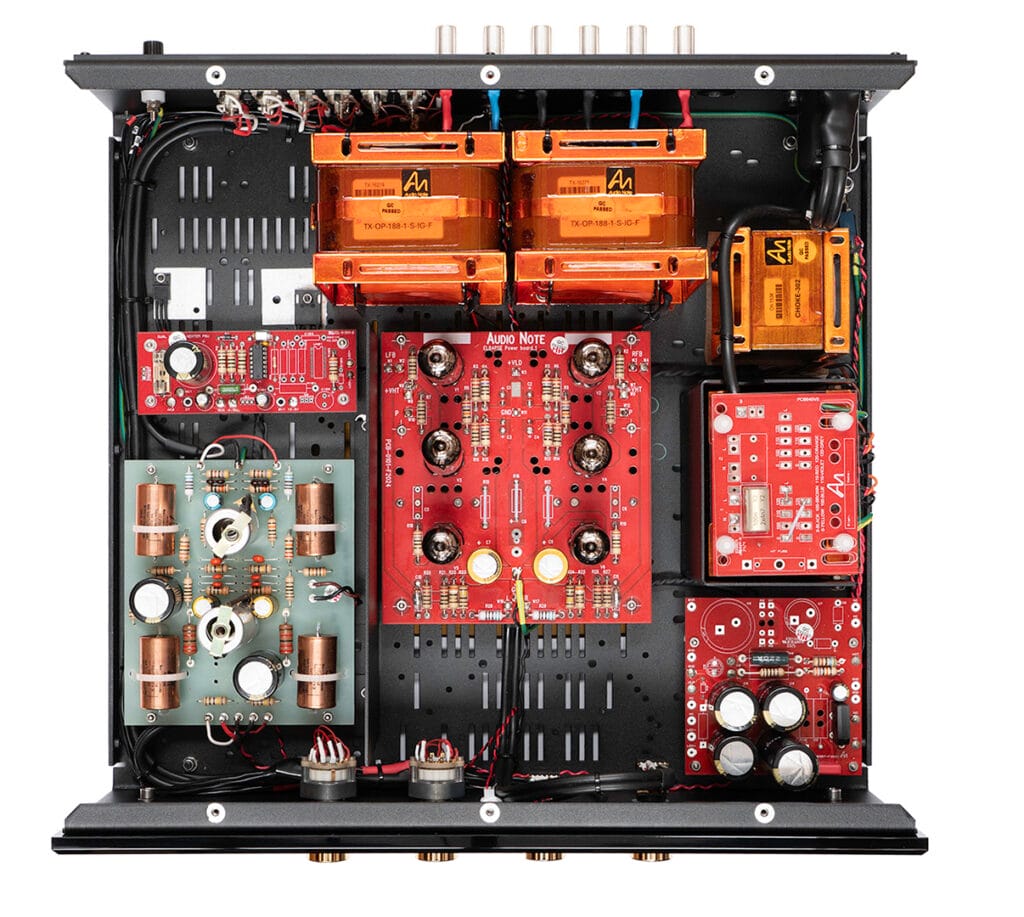
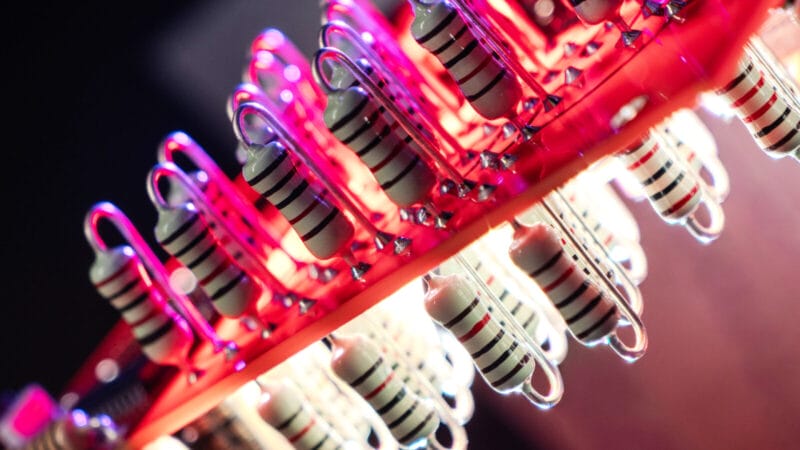
Inside the 35 SE with all of its its in-house expertise on display
And that’s because the Audio Note sound feels different, which is perhaps linked to the way this West Sussex company goes about its business. For a start it produces many of its own internal components in-house, from transformers to resistors, and capacitors. And when they’re not made within its doors, AN commissions them to its own exacting specifications. It also prides itself on offering an ecosystem of separates, spanning speakers, amplifiers, CD players, DACs, turntables and cables.
The result is a fully integrated approach to system building and its resulting sound. And because Audio Note controls so many of its own components, its designers can alter any part of a circuit at short notice and immediately evaluate whether the change improves the sound. This level of control gives the company the freedom to create and evolve products exactly as intended, all towards a simple goal – to communicate the emotion in music.
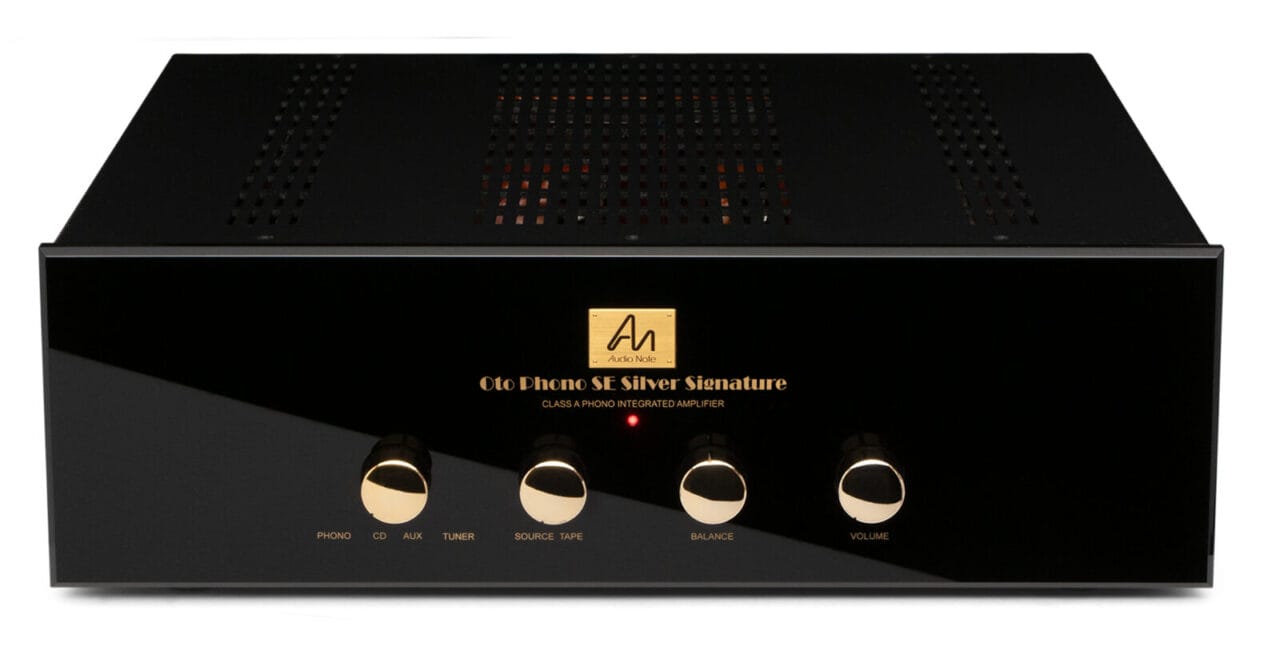
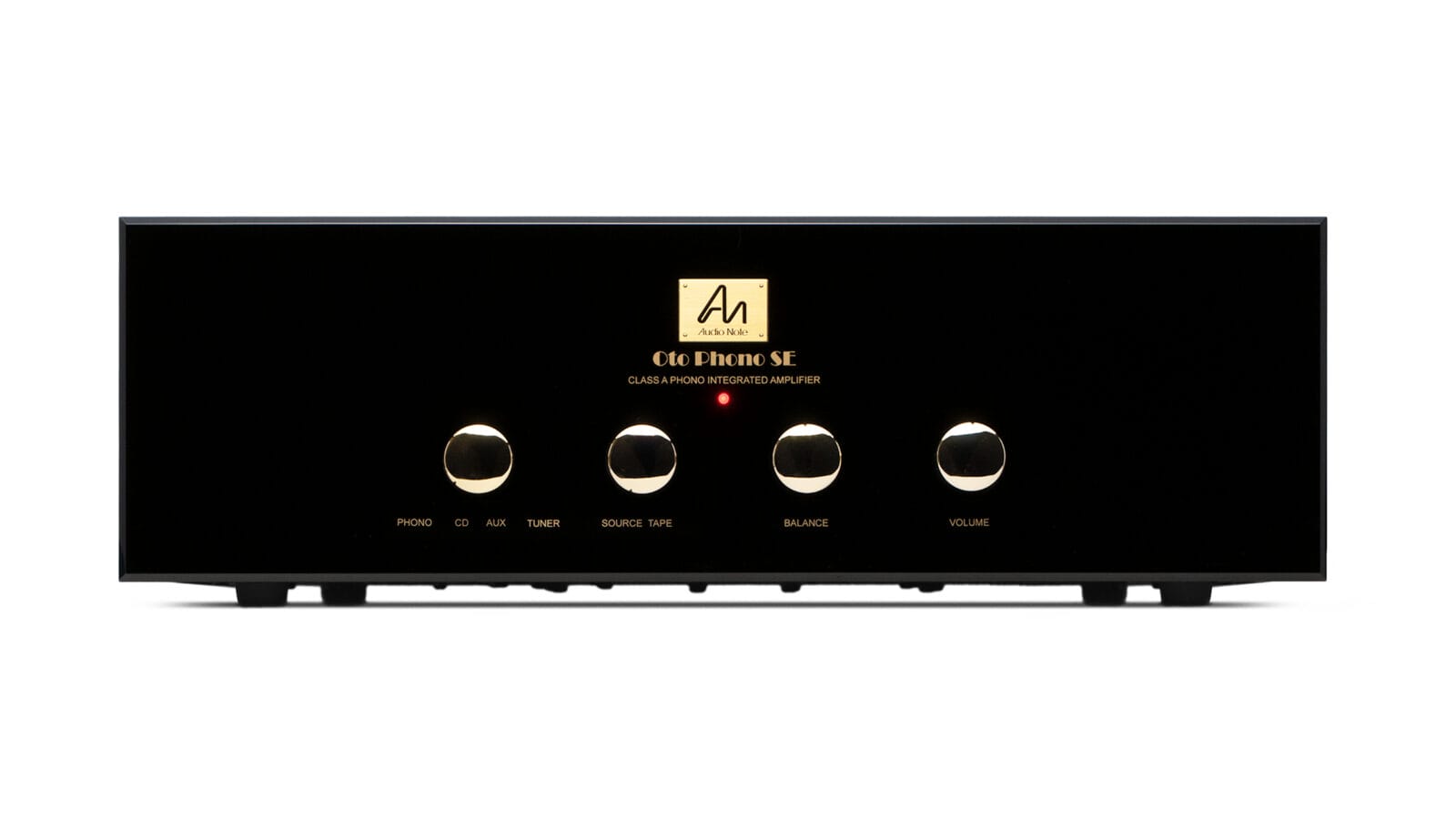
Sleek reflective black casework is contrasted with gold knobs for input select, record, balance and volume
In Audio Note’s view, many audio companies have become too focused on measurements alone or with extracting ever more detail, sometimes to the point of forcing it onto the listener. Audio Note treads a different path, by aiming to deliver a more natural, harmonically rich presentation with both subtle and explosive dynamics (i.e. something much closer to the experience of live music).
That said Audio Note does not reject computer-aided design, but it never treats measurements as the final word. Instead, every product undergoes a long and rigorous listening process. If a design fails to meet the company’s standards, it simply does not reach the market. This keeps the focus on getting the design right from the outset, which avoids having to redesign its amplifiers every year or two. Instead, the company refines them gradually and introduces major changes only when it feels they are genuinely necessary.
Got the bottle
For years, people told me I needed to hear an EL84 valve-powered amp. HiFi fans have long praised the tube-based approach for delivering a refined, subtle, and deeply musical sound when implemented properly. Until recently, however this particular bottle had alluded me. That changed at the Bristol Hi‑Fi Show 2026 when I walked into Audio Note’s room and clocked one on display with its hood removed and its chunky transformers fully exposed. It looked magnificent.
Fast forward a month or so and Audio Note were knocking at the door of George Towers, Oto 35 SE in hand, and not just the standard version either, but the Silver Signature variant, complete with internal phono stage.
The Oto SE of course, isn’t a new amplifier, as it’s been in the company’s product portfolio for a full 35 years without a major redesign. Over time, the company has added small refinements, but its core has endured, until now.

Audio Note’s Andy Grove – the man with an Oto 35 SE plan
Family silver
The man behind the new Oto 35 SE’s upgrades is Andy Grove, AN’s Senior Design Engineer who also designed the original model. His updates include a new in-house wound output transformer that’s been designed specifically for this amp. The main PSU has been rethought too, and now includes choke regulation (also in-house designed and made), with optimised time constants, along with refinements to the power amp board.
For its optional phono stage, improvements extend to increasing sensitivity and another new power amp board, meaning the additional line stage that was necessary in the previous version is removed, which helps retain phase integrity and reduce noise, says Andy.
Taking it to Silver Signature status means additional superior quality components including improved selector switches and internal cabling. AN’s Standard, Seiryu and Kaisei electrolytic capacitors have also been added in critical areas alongside non-magnetic Tantalum and Silver Niobium resistors.
These extras increase the price of the Silver Signature version to £11,350, while the standard Oto Phono costs £4,850 with the non-Silver signature model coming in at £7,150, meaning there are a number of ways into the Oto integrated family should, you not be a position to go all out.
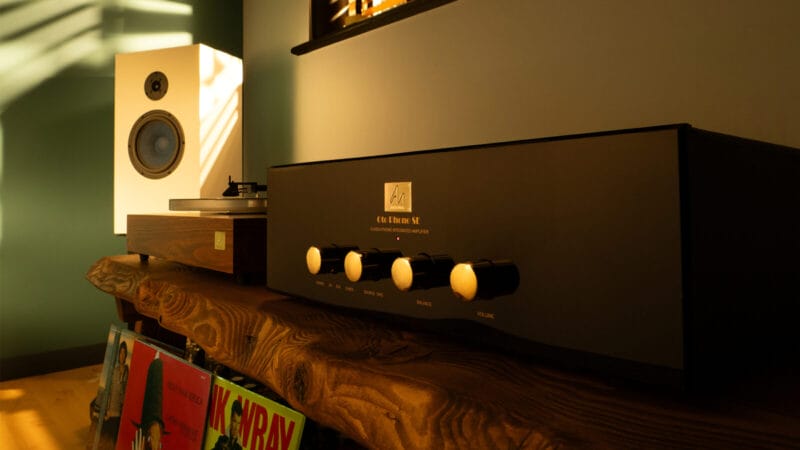
The amp comes housed in a neat black chassis finished with a glossy polycarbonate front panel hosting four distinctive gold AN controls. On the left sits the input selector (for Phono, CD, Aux, and Tuner), next comes the tape monitor selector, followed by a useful balance control and volume dial. There’s no remote though, as AN believes this would compromise sound quality, so expect to get a bit of exercise if you need to tweak volume or input. There is an on/off switch on the back, which could be inconvenient for some but when left on, the Oto only draws 125W at full power.
Performance
Slotting the Oto into my audio system was quite straight forward, although I did have some concerns. My Wilson Sophia III speakers offer a reasonable sensitivity of 88dB, but they also present some vicious impedance dips in the bass. How would they fare with an 8W amp?
Some amplifiers manipulate their tonal balance to exaggerate detail, dynamics, and drama. That approach may impress during a short demonstration, but after half an hour it can begin to feel like an audio assault on the senses. Fortunately, manufacturers now seem to be moving away from that trend.
Audio Note has never played this game and first impressions of the Oto 35 SE Silver Signature reveals a relaxed and natural sounding performer. I can hear every detail, but what’s crucial is how this amplifier integrates these details into the music, rather than spotlighting them unnaturally.
It also delivers all the dynamics you could want, yet presents them in a convincing and lifelike way, complete with natural attack, decay, sustain, and release. Instruments occupy believable acoustic spaces, making it far easier to hear both the venue and the musicians within it.
And it’s not just the level of detail which this amp uncovers that’s impressive, it’s also its ability to unearth the fine musical filigree at the same time, which takes you from simply hearing every word a singer performs to also feeling the emotion behind it. In short – this amplifier excels at communicating emotion, which isn’t entirely a surprise given how the company prides its products on doing this. Do you want to hear every lyric, or do you want to hear every lyric and feel the intention behind it? As the latter is what perhaps makes this amp stand out from some rivals.
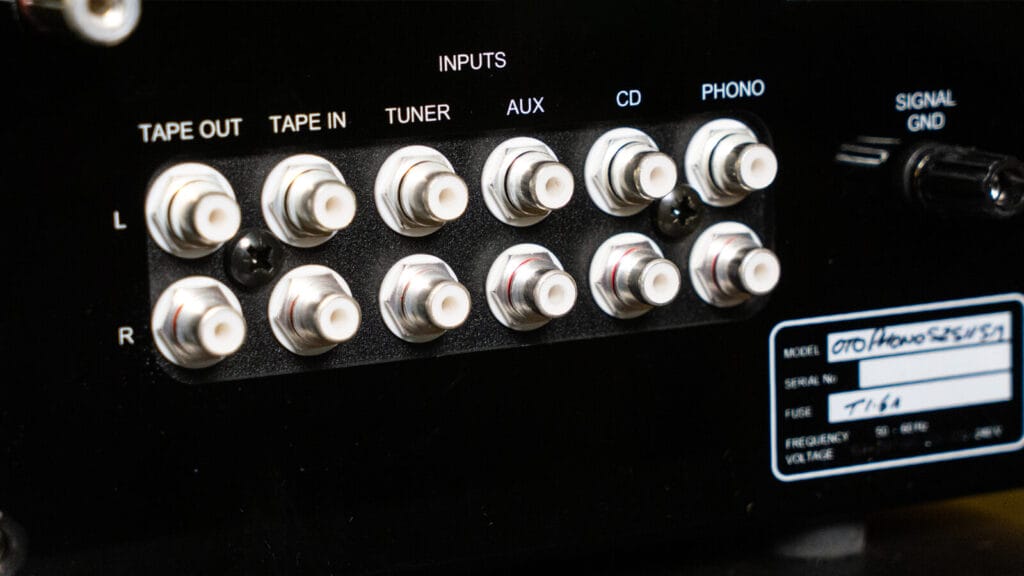
Oto 35 SE’s rear panel sports four sets of line-level inputs, one moving-magnet phono input and one set of outputs
Alison, Beethoven, the dragon and the punks
Alison Krauss can deliver a song about heartbreak with extraordinary clarity and emotional force. And via the Oto 35 SE SS every word comes through effortlessly, but more importantly, so does the sense of pain or joy of an old/new love. Looks Like The End Of The Road (at 24-bit/44kHz via Qobuz from my dCS Bartok) is a straightforward song, but when channelled through the Audio Note, her singing communicates the realisation that it really is all over, as the emotion is just is made much easier to hear and believe.
For a change of pace and using my Audio Research Reference CD 9, the finale of Symphony No. 9, performed by the Pittsburgh Symphony Orchestra, filled my 10x7m room with scale, drama, and impact, showing that despite the numbers on paper, this amp has muscle when needed. When the baritone enters, for example, his voice strikes with tremendous force and authority – perhaps on a level I wasn’t expecting. And as the orchestra receded into silence, allowing the faintest musical details to emerge naturally from the acoustic space, I felt both emotionally drained and satisfied.
Hearing Mike Valentine’s Temple Church Concert (on the Chasing the Dragon label) reveals how the Audio Note amp is able to truly capture the pipe organ’s sound, both in terms of the sheer scale of the instrument and the vast acoustic of the church within which it is being played. And when the bass pedals enter proceedings, the sound pressurised my room with the kind of visceral impact I normally associate with live music (and much beefier amps). Remarkably, even my 600W Vitus RI 101 MkII struggles to achieve this effect as well as the Oto. And this was just via a standard CD in the ARC Ref 9.
Doing a musical about-turn to Daft Punk and their Random Excess Memories album (Qobuz 16-bit/44kHz) and the track Give Life Back To Music, I’m once again impressed by how the Oto can deliver. This electronic-based number is packed with bass that’s rendered fast, deep, and immensely powerful. I was expecting such sophisticated valve amplification to sacrifice low-frequency impact but instead, the Oto combines superb timing with real weight and authority. Dance music that genuinely made me want to get up and dance – and I don’t say that often!
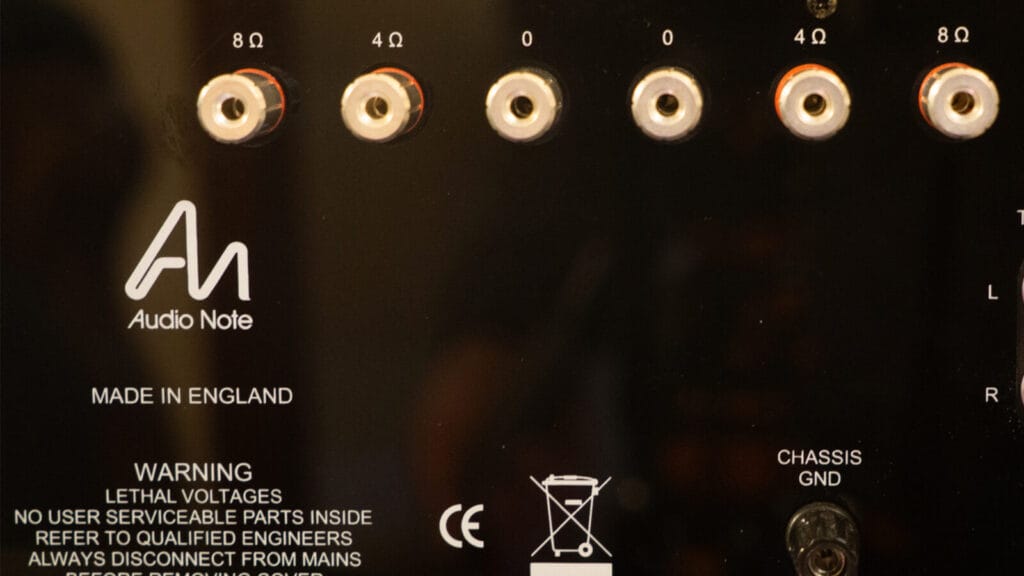
Speaker outputs are provided for 4 and 8 ohm loads
The phono stage is an excellent inclusion on this amp, being far more than just a convenience feature. Fed from my Voyd Reference deck with SME V arm and AN Io moving-coil cartridge, it sounded flawless through my Audio Note step-up transformer, highlighting the AN ecosystem sound to full effect..
With this set up, vinyl through the AN rig just sounded more natural than with my digital gear as the source, my copy of Pure Cello by Vincent Belanger was just breathtaking to experience. Whether the music called for delicacy and restraint or greater vigour and power, the musicianship just shone through.
I also have a treasured collection of direct-cut LPs which the Oto seemed to really flourish with, including I’ve Got The Music In Me by Thelma Houston, several of Mike Valentine’s special recordings, and a wonderfully eccentric album I bought in the United States, Lincoln Mayorga & Distinguished Colleagues – Volume III, with instruments appearing and disappearing dramatically in the soundstage. The dynamics and impact sounded stunning through the AN amp, there is no better word for it – even if the effect occasionally bordered on the theatrical.
Mike Valentine’s direct cut of A Tribute To Ella Fitzgerald by Clare Teal with The Syd Lawrence Orchestra proved equally rewarding on this system. It bursts into life with I’ve Got the Music In Me, and when the orchestra hits its full stride with Clare singing her heart out, the air in my listening room almost sizzled with energy.
In summary
The Audio Note Oto 35 SE Silver Signature is a seriously impressive amplifier. Its sound quality is exceptionally high, combining remarkable detail retrieval with an effortlessly musical presentation.
Being the top version of the Oto 35 SE range it has a price tag reflecting this, but when compared to my solid-state integrated amplifier (of Japanese origin) costing roughly the same, overall, I would say the Audio Note is better.
Contrasted with earlier Audio Note designs, this amplifier sounds more modern in character with improved ability to communicate musical emotional. Bass performance, in particular, stands out being tighter, clearer, and more powerful than I expected, with enough authority to pressurise a large room and superb timing. Overall there are few amps in this area of the market that come close. Best in class? I’d say so.