





REL Acoustics has been at the forefront of the sub-bass speaker market for over 30 years. Originally known for its range of subwoofers built for surround sound setups, today REL builds powered subs that appeal to movie and music fans alike, and at all price points.
And the maker’s latest mid-level Serie S lineup, introduced in late 2025, has been engineered to offer a significant step up over its predecessors. The S/550 on review here is the entry model in the refreshed four-strong range, and is aimed at integrating with higher-end systems in mid-sized rooms.
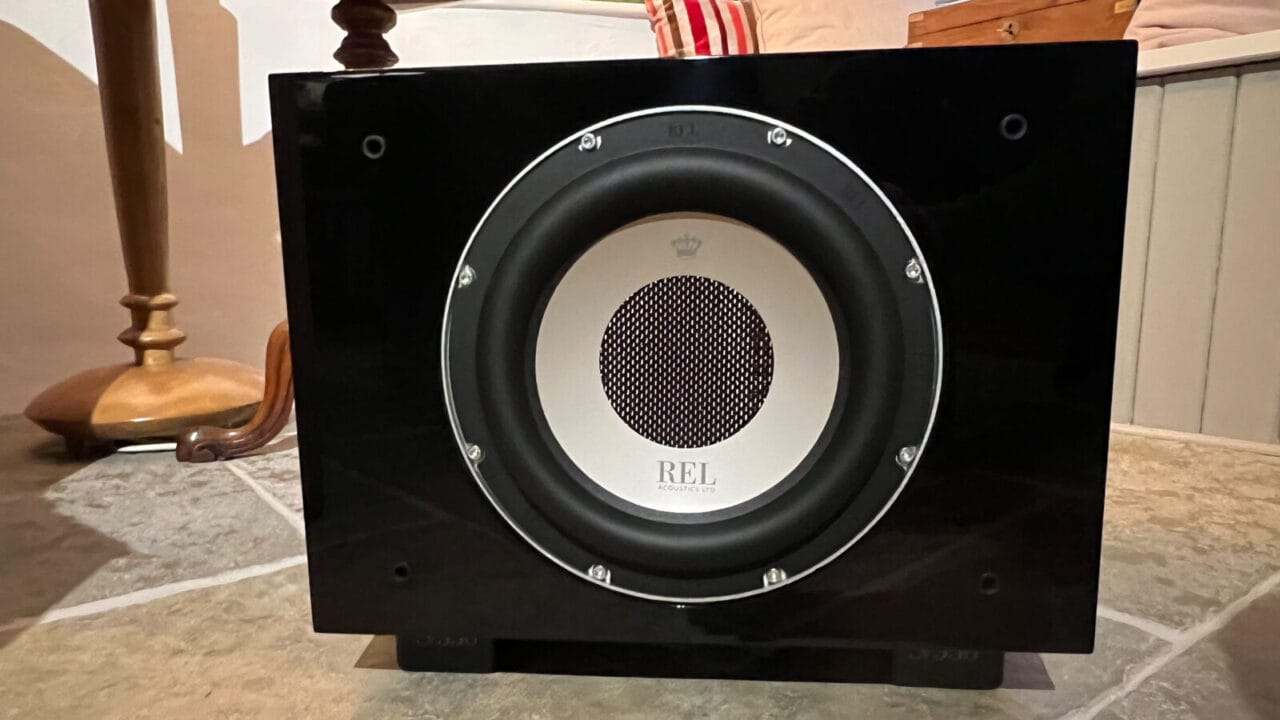
REL’s S/550 forward firing cone employs a large carbon fibre cap, with REL’s insignia and crown logo emblazoned around the alloy driver’s edge
It’s priced at £2,999, which is £700 more than REL’s discontinued S/510 that impressed us in 2023. Headline features include a redesigned cabinet shape with greater internal volume, a beefed up power amp, and more efficient drivers. That’s all well and good, but the S/550 has a lot to live up to at the increased price.
Tour de force
Although not yet part of the hifi mainstream, many two-channel fans are changing their minds about subwoofers in two channel systems and the benefits they can bring when installed correctly. I’ve experienced several of REL’s designs in my hifi rig over the years, including the affordable HT/1205 MKII that I enjoyed in 2023, and the flamboyant T/9x Special Edition I welcomed the following year. Both models bagged our Recommended badge for the way they enhanced the sound of my hifi system in my listening room.
As the one that stayed the longest, I was sad to see the S/510 go at the end of last year when its run ended, but I confess it’s been a lot of fun to try out its replacement, even if the price it somewhat more spendy.
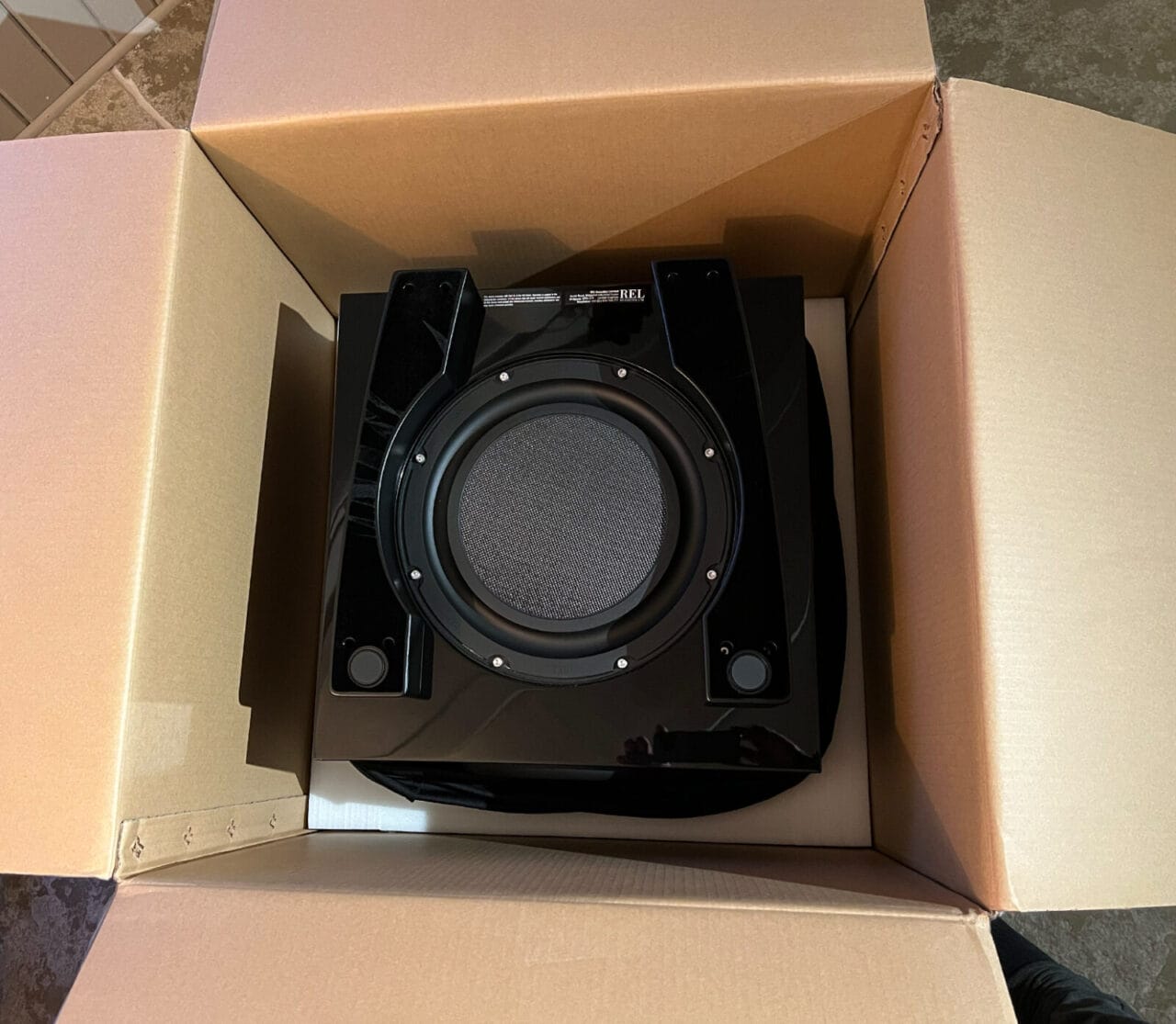
Box fresh: The S/550’s 12″ (305mm) downward-firing driver is said to be 40% stiffer and significantly lighter than its predecessor, to provide extra energy
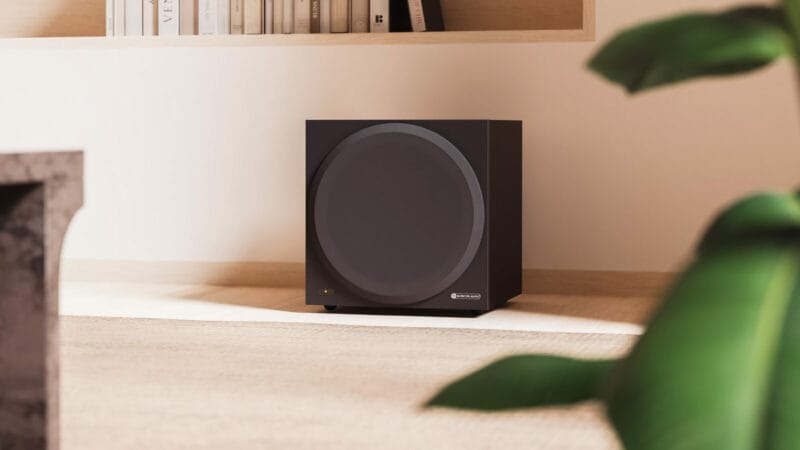
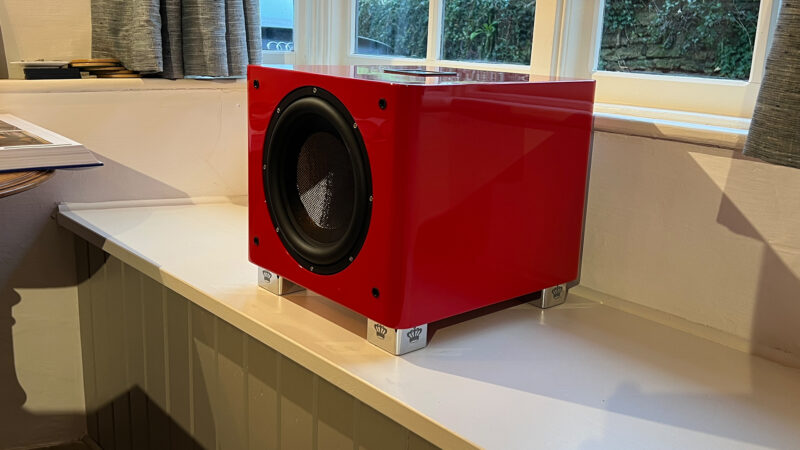
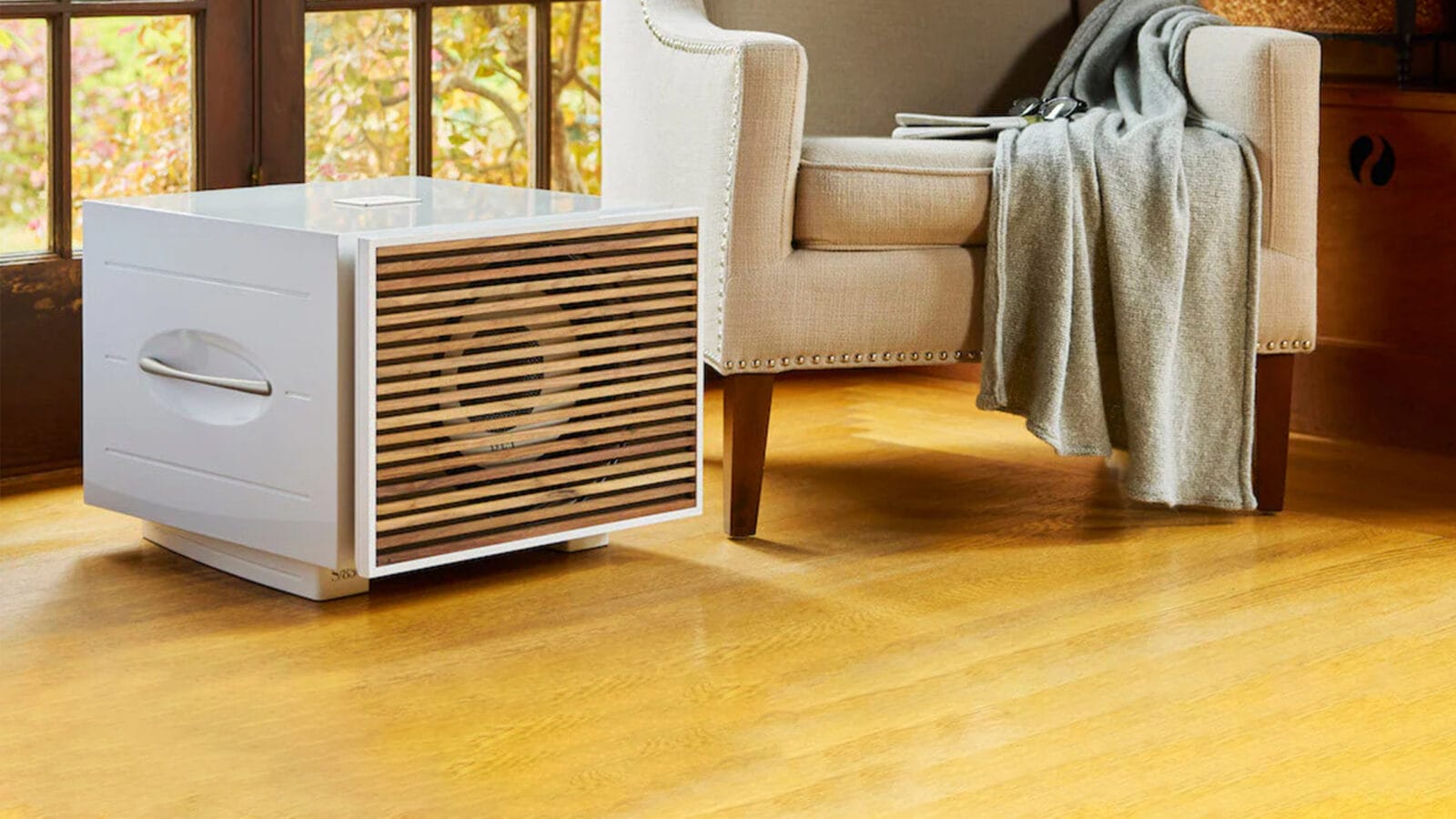
Economic forces notwithstanding, there’s no doubt that REL has raised the subwoofer standard for the sector with the introduction of the S/550. Cabinet construction has evolved from the square box of its predecessor to a lower-profile rectangular design. And the new enclosure boasts greater volume, too. The sub’s proportions make a powerful statement in piano black (as reviewed) and it’s also available in high-gloss white for the same price. Colour matched cloth grilles are supplied as standard, or there’s a premium slatted wood grille option for an extra £349 (as per our feature image).
Beauty and the beast
The S/550’s eye-catching high-gloss cabinet finish is achieved by applying multiple paint layers sprayed in alternating horizontal and vertical directions. Attention to detail throughout the S/550’s construction is outstanding. Everything from the brushed alloy badge inset into the top plate, to the insignia on the speaker cone and the model name etched on the speaker grille and support rails are all expertly applied.
As with the S/510, the S/550 has elliptical recesses with sturdy carry handles either side of the cabinet. These are useful aids when maneuvering its 30kg plus heft into position. I’m not entirely sure whether the three grooves carved into the sides of the cabinet have any structural or acoustic merit, but either way, they’re an attractive addition.
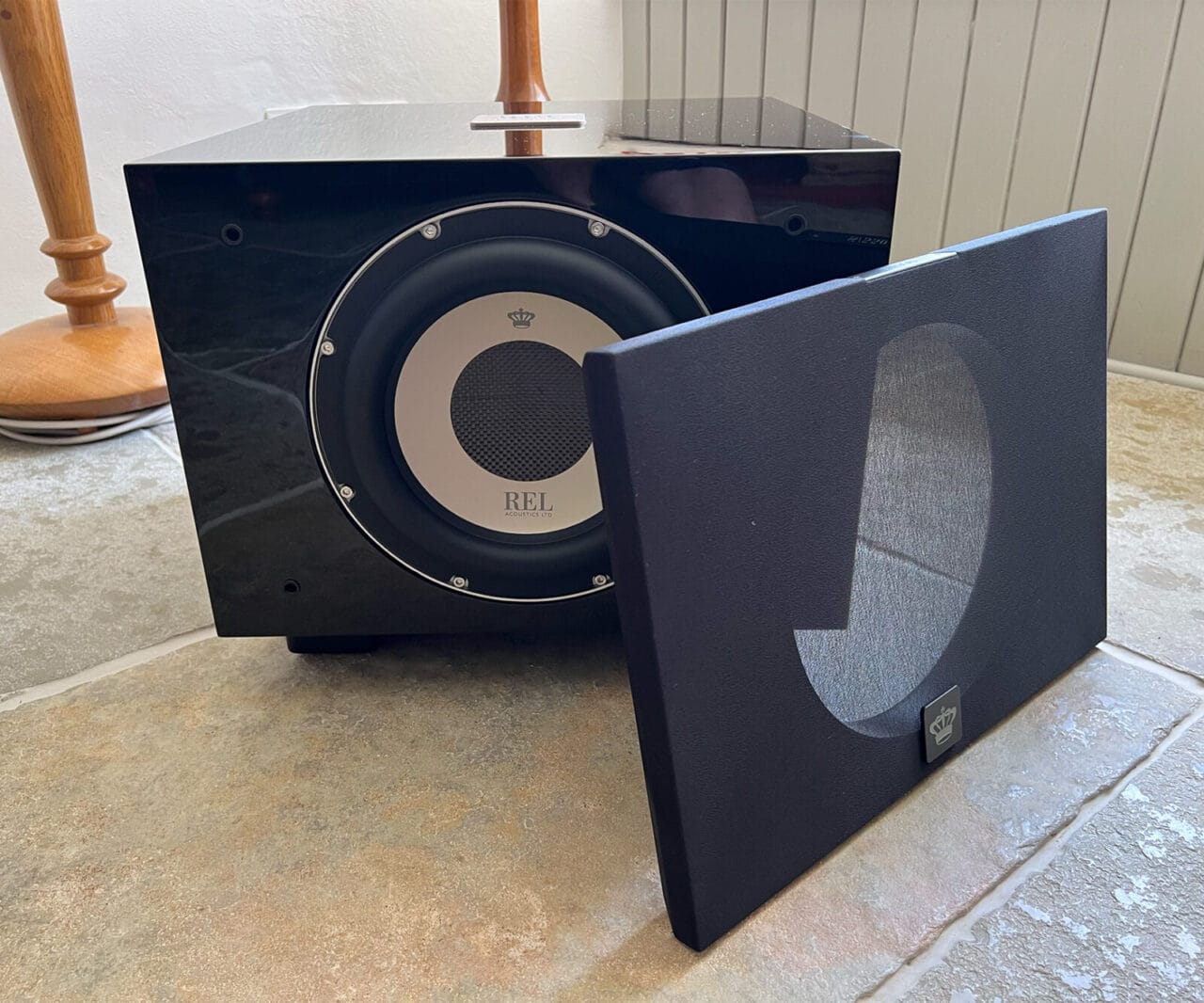
Grille on or off? And if one S/550 aint enough you can add more in a stackable array
Brace yourself
The cabinet’s extensive internal bracing and stabilising rails on its underside means multiple S/550s can be stacked on top of one another, should you crave even more low frequency wallop. Or you can run two as a stereo pair – which is a configuration that seems to be gaining more fans of late (or both, as a no holds barred stereo stacked pair as we saw at Bristol) meaning there are plenty of upgrade options.
And the stack approach lends itself to the the S/550 well, being shorter than its predecessor (372mm tall compared to 410mm for the S/510). Yet despite the cabinet redesign, REL has managed to keep driver sizes the same, although as you might expect, the drivers have been refined for the newer model.
Remove the grille and the front baffle incorporates an entirely redesigned long-throw, forward-firing 10″ (250mm) carbon alloy driver with carbon fibre cap. Although it doesn’t look much different from its predecessor, REL says that the rebuilt driver is lighter, and combined with a revamped suspension, is more efficient.
On the cabinet’s underside there’s a downward-firing 12″ (305mm) passive bass radiator that’s said to be 40% stiffer and significantly lighter than the version used in the S/510. The redesigned drivers are combined with an increase in power from the internal Class D amp, which now stands at 550W (up from 500W on the S/510), making it ideal for my medium-sized listening room.
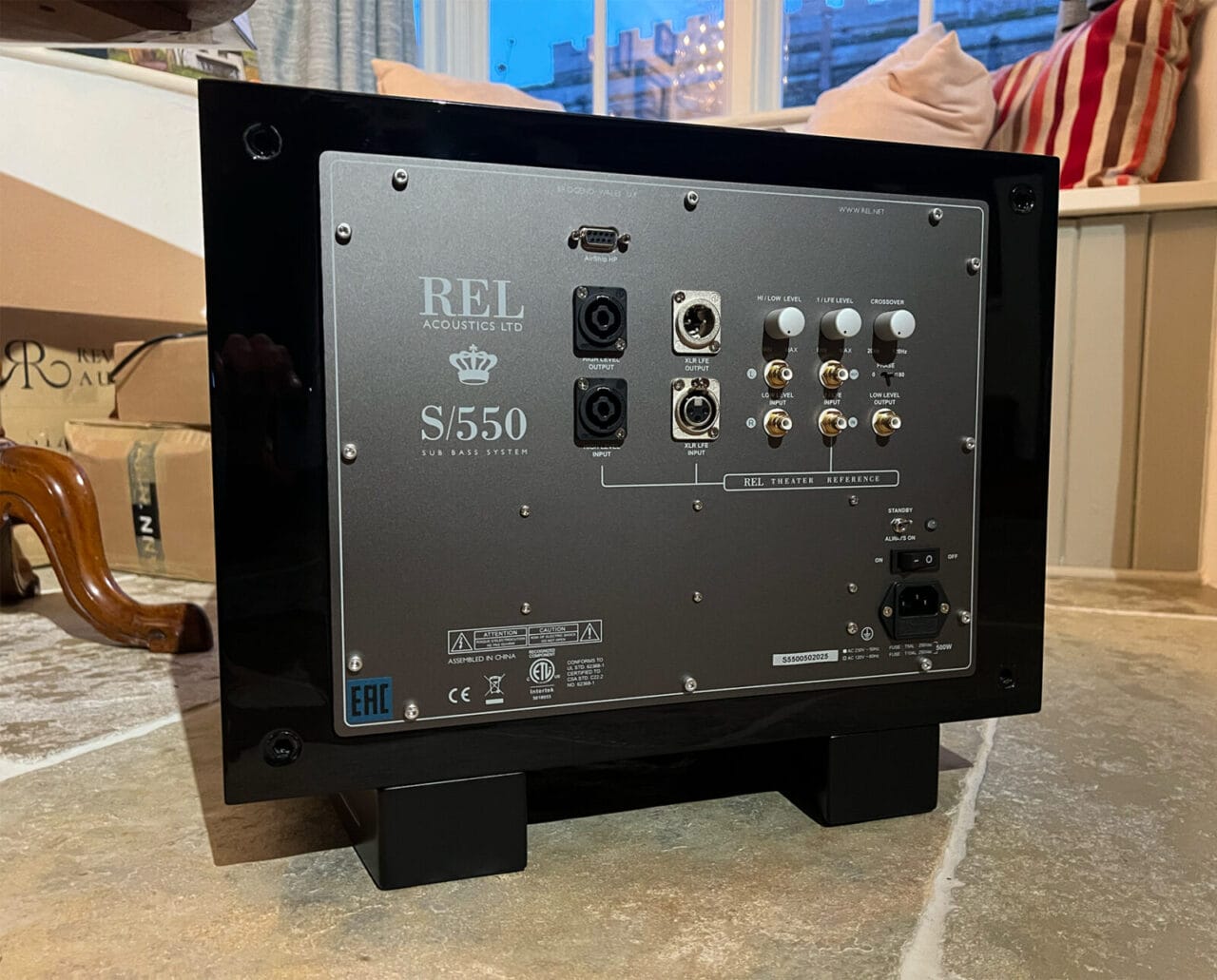
The S/550’s rear panel is clearly laid out with RCA and Speakon connectors, plus Hi/Low level and LFE .1 Level trim, alongside crossover controls and a Low Level output socket
REL understands the complexities of integrating a subwoofer into an existing speaker system and has developed a helpful pairing tool to assist audio fans with finding the right model for their speakers and budget. If you need more help, there are also practical user guides and videos to help customers through the installation process.
Performance
I know from experience where a subwoofer works best in my room, and so the S/550 is placed to the right of the stereo left speaker, firing down the room towards my listening position on the sofa. Integration controls provide high and low-level input adjustment as well as LFE (low-frequency effects), variable crossover control and standby mode. There’s also a reversible phase switch.
For another £349, you can opt for REL’s new Airship Direct add-on that’s designed to simplify wireless connectivity to the Serie S’s amp. I have REL’s older Airship II (also £349) from a previous review to facilitate wireless connectivity to my amplifier, and called this into action. It’s not as neat a solution as the new version, but both use a high-quality, zero-compression audio signal from the sending device to the receiver, and I’ve been impressed with the Airship II for some time.
For those who prefer wired connections, there’s a supplied 10m (33 feet) cable terminated with a high-level Neutrik Speakon lockable connector at one end and bare wires at the other, for connecting to the speaker outputs from an amplifier.
As with other REL subs, there’s no smart app to integrate the S/550 into a system from the comfort of the sofa. While that isn’t a major blow, it’s handy to have someone else around to adjust the controls at the back of the REL while listening for the best sound integration with the main speakers from the listening position.
REL says that the S/550 is designed for stereo pairs and line-array configurations, but even with just one in in my listening room, the S/550 makes its presence clearly felt.
With its high/low-level level set just a few notches above minimum, the S/550 sounds perfectly at home. It’s been part of my system for several months integrated with my Dynaudio Excite X38 floorstanders driven by a Musical Fidelity M6 500i integrated amplifier, and it never misses a beat.
Working in harmony
Streaming Lauryn Hill’s Ex-Factor via Tidal on my Cambridge Audio CXN100 network player, I’m impressed by the extra sense of gravitas the S/550 gives to the timpani drums. I love the way the notes hang in the air in their own acoustical space, as the S/550 works in harmony with my Dynaudios. The synergy between sub-bass and the lowest frequency of the speakers makes Lauryn’s vocal and instrumentation sound more convincing and believable than the Dynaudios producing soundwaves on their own. And because the S/550 makes it that bit easier to visualise the vocal and each instrument’s performance in their own spaces, the music sounds more delightful to my ears.
Returning to some tracks I’ve used before when testing subwoofer performance, the S/550 delivers all the low frequency energy, musicality and finesse I’ve come to expect from REL. Newton Faulkner’s version of Massive Attack’s Teardrop (16-bit/44.1kHz FLAC via Tidal) has oodles of ultra-deep bass notes which sound natural and controlled, without over driving my room.
My other favourite tracks to test out subwoofer nuance and musicality are The Ballad Of The Runaway Horse by Jennifer Warnes and Easy Money by Rickie Lee Jones (each streamed at 16-bit/44.1kHz FLAC via Tidal). Both feature a double bass that can often sound underperformed with some speaker systems. But with the S/550 in place, bass notes are clearly defined and have a sense of scale and pace to underpin each song with an assertive rhythmic precision, that makes me want to listen closer.
In summary
Although I was sad (almost to the point of weeping) to see the S/510 depart my system after several years, the replacement model sounds even better. The S/550 needed just 20% of its output power to drive my mid-sized listening room with toe-tappingly deep-down soundwaves, so there’s plenty in reserve for those seeking more or with larger listening spaces before you may feel the need for a second one.
While REL’s designs continue to be vital sub-bass systems for bringing high-octane movie soundtracks to life in home cinema setups, the level of musicality and hifi nuance it brings to music lovers, is what makes each new REL design impressive in how it can appeal to both audiences.
To quote Daft Punk, the REL S/550 delivers a sublime performance that feels “Harder, Better, Stronger, Faster”. It’s a terrifically engaging add-on to a two-channel music system, and represents great value even at the higher price.