

I am not one to change my gear with great regularity. It takes time to choose and then get the best from equipment, and its selection is frequently a matter of context and limitations. However, I have been trying to get my digital front end to a place I truly enjoy with most music for years, and only felt I had achieved this two years ago. More on this shortly.
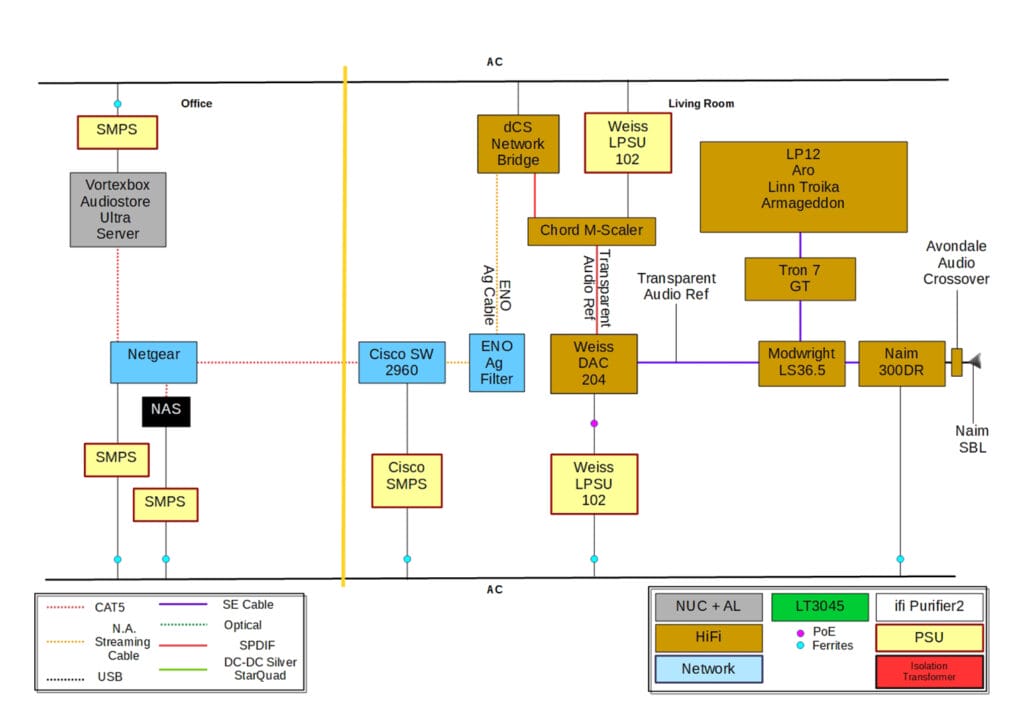
My analogue source is a redoubtable Linn LP12, Naim Aro, Linn Troika and Naim Armageddon, a combination I have had for decades, with the Troika being regularly fettled. I mention this to evidence my opening claim of longevity, but now I will undermine it.
The cat’s whiskers
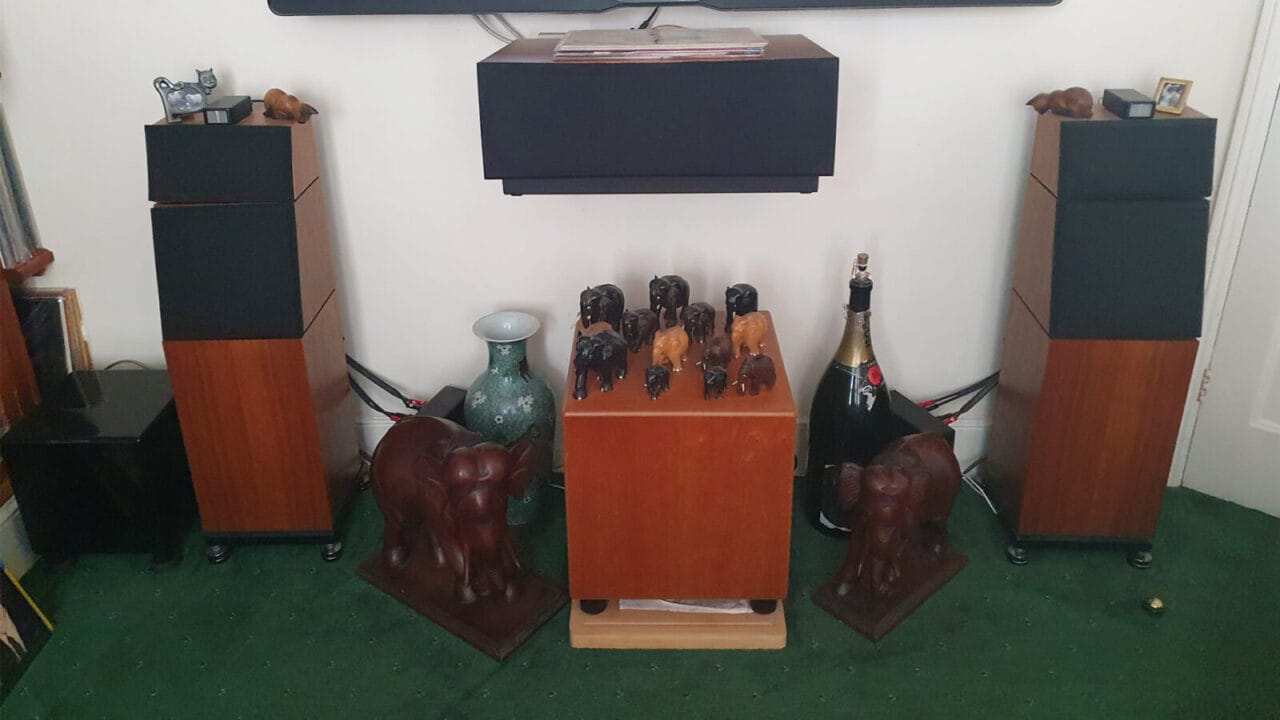
Four years ago our cats decided to destroy my Focal stand-mounts, and a friend offered me his old MkI Naim SBLs. What a difference they made! They were a revelation in my listening room. A boundary speaker that makes the most of my 11′ x 10′ space. Some would say a grown-up pair of LS3/5a, with a wonderful midrange, sense of imaging and that bit more punch down low. A pair of speakers that doesn’t require the wick to be wound up (an important consideration in a three-bed semi). Did I mention context and limitations?
It helped that the SBLs would have been developed using my era of LP12 as a source. I went on to buy a Mk2 walnut pair of the SBLs, and replaced the passive crossovers with a pair of Avondale Audio variants. These replicate the Naim jobbies, but with better quality components. I also squirrelled away a couple of sets of spare drivers!
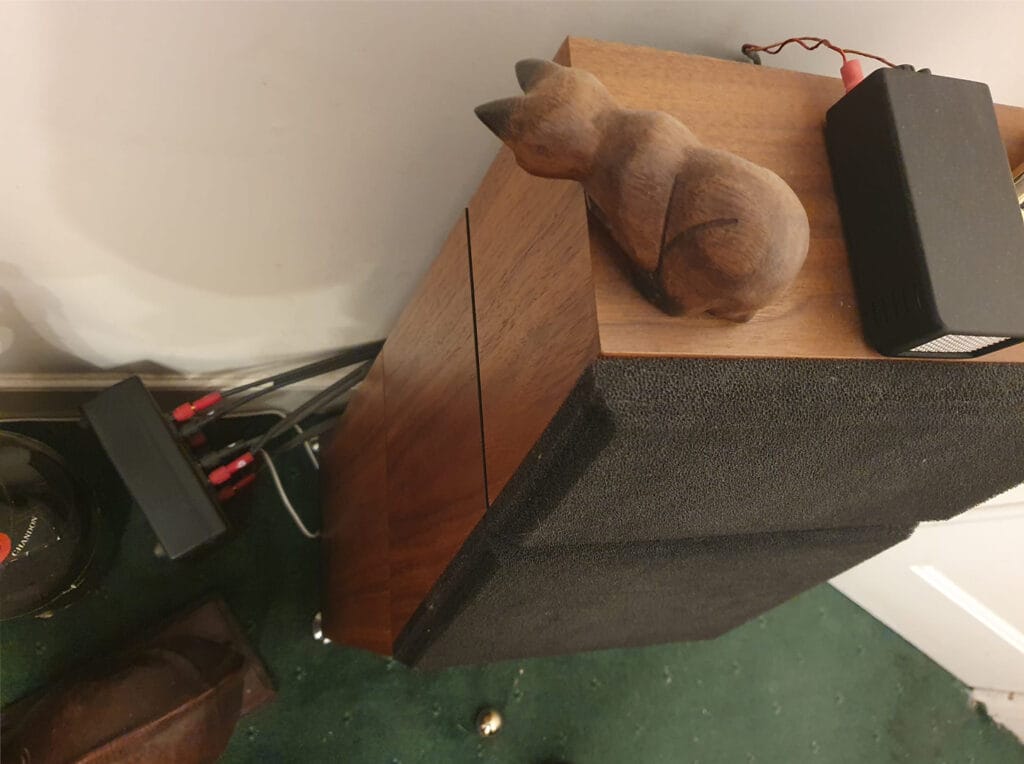
Naims SBL Mk2 with Townshend Super Tweeter
My digital front-end has been subject to a LOT of experimentation over the years. I kept finding that it was damned close to fully satisfying me, but then there would be some track or album that would irritate. I regularly sing, both in choirs and through amplification, and so I feel I know what the human voice sounds like. If a recording jarred or was sibilant then I would test the track through an alternative system; was the issue in the recording? If not, then it would irritate me and cause change.
At one point I ended up with a Heath-Robinson affair, covering three shelves: multiple power supplies; endless widgets; NUC (Next Unit of Computing) headless server with hand-crafted operating system; and, special power distribution. I got to the point where I was happy, and then found that dCS’s Network Bridge was as good, and one hell of a LOT neater. It has been my main streamer for a while, although I have a few others at other price points, for reference.
Let’s get digital
Digital Signal Processing (DSP) is a complex business, and that complexity is increasing; be it upsampling, upscaling, crossfeed and/or parametric EQ, amongst others. Would you prefer DSP done in your server, streamer, control point software or within your DAC? Perhaps a combination, or you could pre-process your files? A topic for another time methinks.
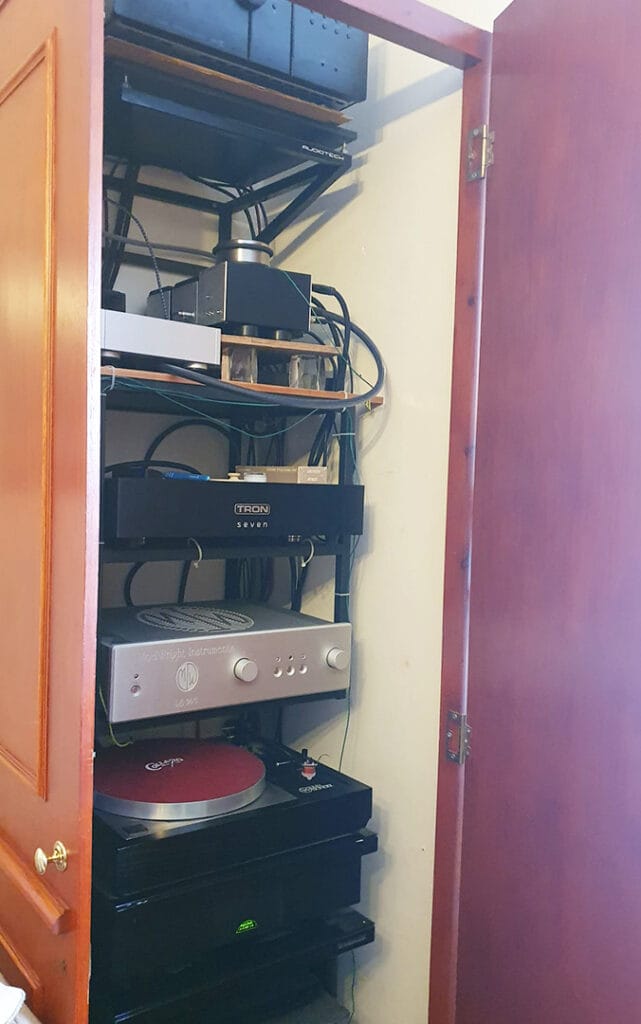
Analogue and digital are equally welcome, as it’s the music that matters
In my case the dCS output is fed into a Chord M-Scaler. This is not the absolute best I have heard for all music, but it is always pretty damn close, and is SIMPLE. A plug and play solution. When I turn to my hifi I just want to listen to music, not trouble-shoot a complex digital-audio stack.
I use a non-Chord DAC, which means I cannot use the M-Scaler at full bore, limiting its output to 24bit/192kHz, which is still a positive benefit with standard definition CD rips and files that I mainly use.
The DAC is a Weiss 204, with two Weiss 102PSUs, one for the DAC and one for the Chord M-Scaler. I don’t think you can over-state the importance of GOOD power, especially with digital audio.
One aspect that is frequently over-looked in a system is earthing. I pay it close attention. Another topic for separate handling.
Modright
My most recent change was to buy a Modright LS36.5 preamp, replacing my Icon 4 autoformer based passive preamp. While the Icon is an excellent preamp, my system didn’t quiet gel when I added a pair of Townshend Super Tweeters for my SBLs. The top-end became somewhat detached from the music in a way that was distracting, regardless of settings. I was offered the Modwright by a friend at a price that meant that I could experiment and, probably, not lose too much money if it failed the synergy test; always a consideration. And as it turned out, the Modwright fits like a glove.
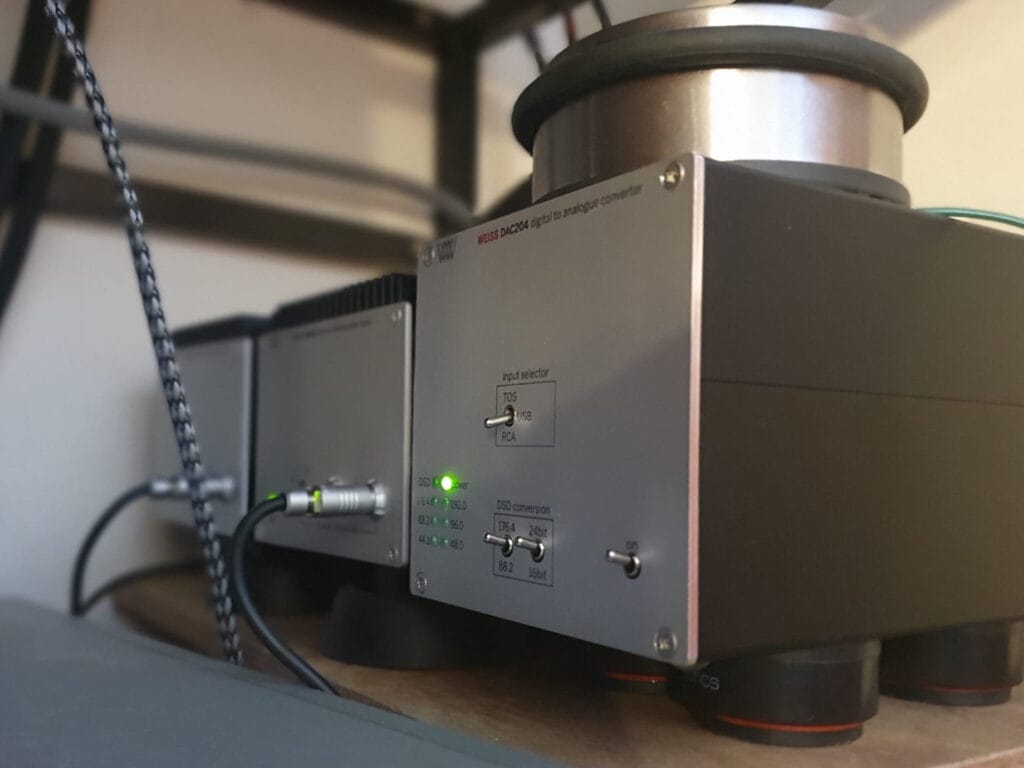
Weiss 204 joins a a pair of Weiss 102PSUs on power duties, one for the DAC and one for my Chord M-Scaler
Accessories can be a fraught topic too. I began experimenting with cables in the seventies, when some people recommended changing from bell wire to QED 79 strand, and then to twin and earth! Cables and supports make a difference, and the more of an open-window your system is the more you will notice the subtle changes (albeit not so subtle when changing from bell wire). That said, I do find that cable and support effects are rarely consistent across different hardware.
I enjoy listening to my system with both vinyl and digitally streamed files. But, which do I prefer? It depends on the recording.
Keepin it reel
A friend visited me a couple of weeks ago for a listening session. His is one of a number of systems I listen to semi-regularly.
I started by streaming music by Tears for Fears, as I know we both love their music. I could tell he was less than enthralled, and we moved to the LP12, where his musical appreciation perked-up. He asked why I thought my digital front-end was on a par with the LP12? I played him a selection of post-2000 recordings, and some re masterings, including Giles Martin’s AI re-masters of The Beatles, explained in this interview clip; he heard the difference. Tears for Fears were streamed from Qobuz, and not re-mastered, not that it is always a benefit.
Which is better, analogue or digital? I could play you music through my system to ‘prove’ either held the title, but in my experience a master tape via reel-to-reel is the ultimate winner, if you have the money and the space, and can live with a very limited repertoire!