



With some of the largest estimated annual sales figures across both professional and consumer markets, Bowers & Wilkins is arguably the UK’s largest loudspeaker manufacturer. Its products can be found in some of the world’s most prestigious recording facilities, including Abbey Road Studios, which installed its first models in 1980, with artists from Pink Floyd to Radiohead and John Williams all recording there.
Over the years, Bowers & Wilkins has expanded its range to include the 600, 700, and flagship 800 speaker lines. While the 600 Series provides a more affordable entry point, many enthusiasts regard the 700 Series as the sweet spot of three ranges, combining technology inherited from the 800 models with more accessible prices, making it perhaps the series with the most to live up to.
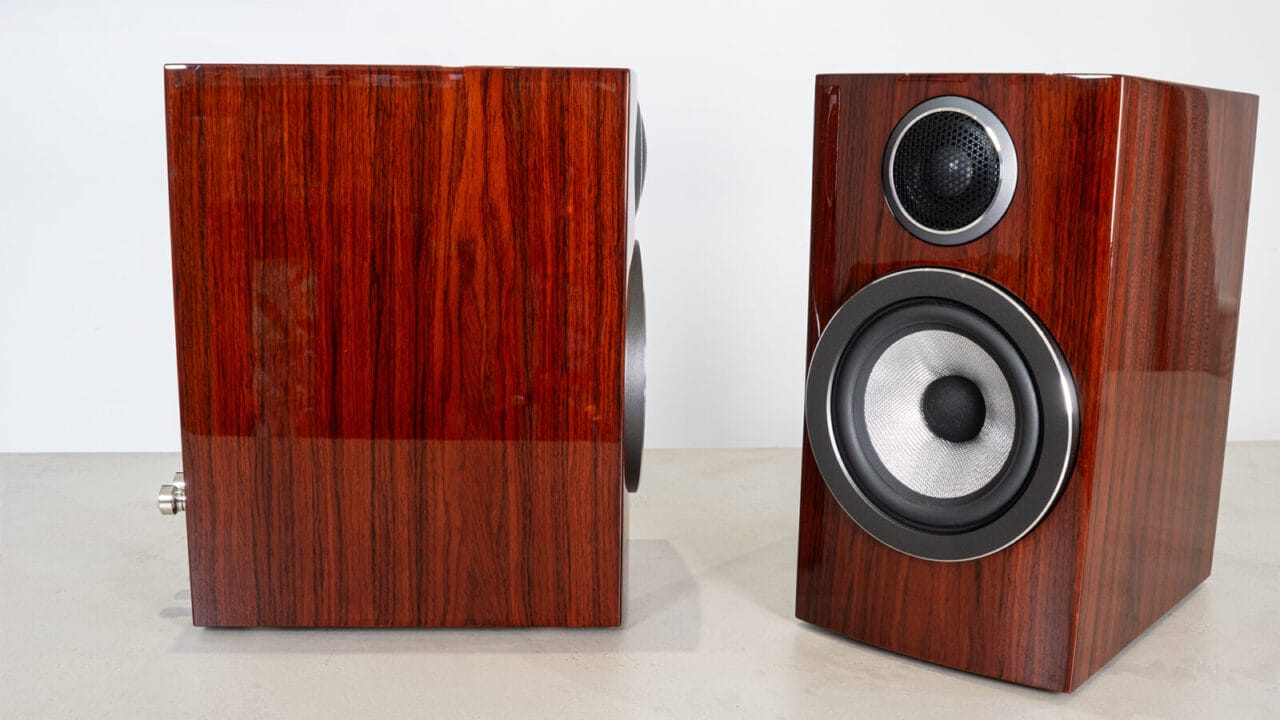
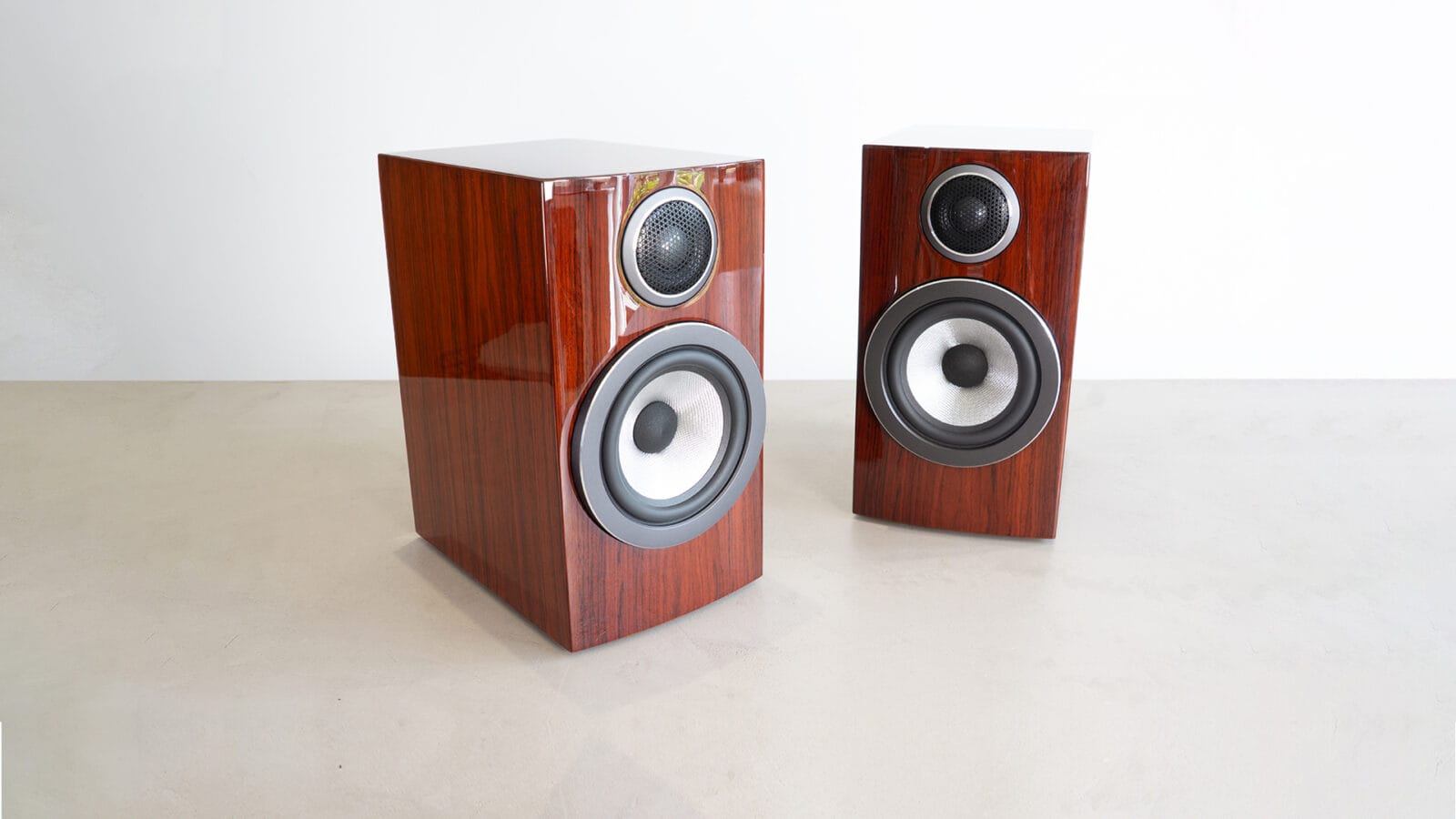
Exclusive to the 707 S3 Prestige Edition is its glorious real wood ‘Santos’ gloss veneer, in place of the standard model’s black, white and mocha finish options
Added extras
Priced at £1,550, the 707 S3 Prestige Edition under review here builds on the standard 707 S3 design which costs £1,400. Like its cheaper brother, it also comes in at 300mm high, 165mm wide, and 247mm deep, weighing in at 6.2kg (40g heavier than the standard model). Its compact proportions recall the classic LS3/5A, making it a genuinely small standmount loudspeaker.
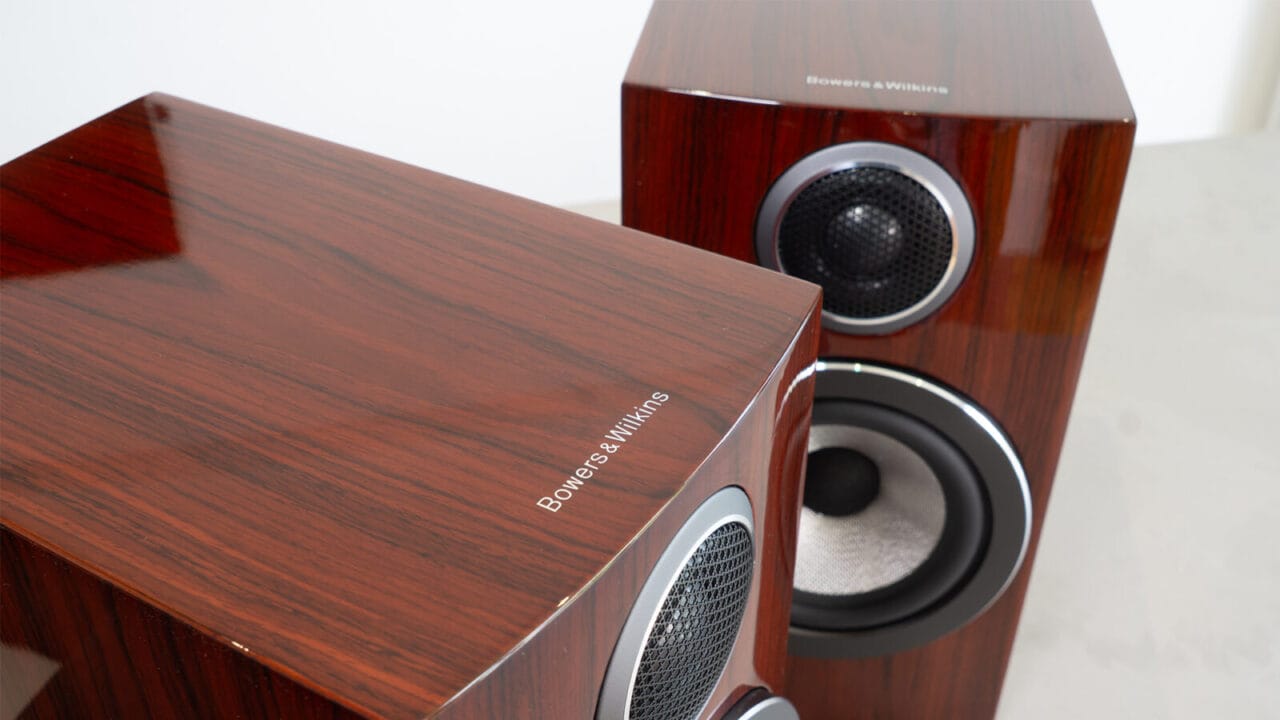
Note the subtle branding etched into the speaker’s top , and the curved front panel to aid dispersion
Unboxing these speakers, I’m struck by how beautiful they look. Bowers & Wilkins finishes the Prestige Edition’s cabinets in a rich dark-red ‘Santos’ gloss, achieved through a dozen layers of lacquer. The result resembles a finely crafted musical instrument rather than a conventional loudspeaker, and everyone who saw them at GS HQ delighted in their appearance.
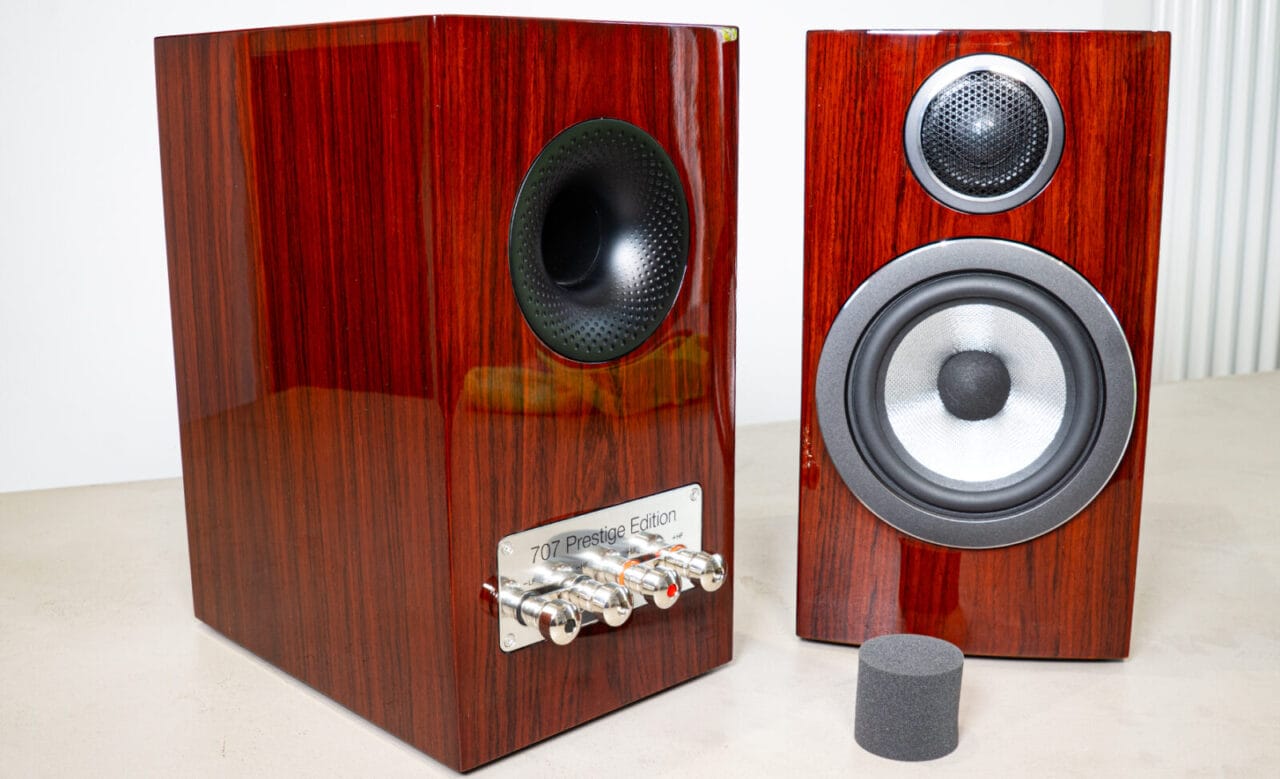
Upgraded lower-loss polished bi-wire connections are part of the Prestige Edition’s package. Foam bass port bung is provided to aid bass tuning
The rear panel is equally impressive. Bowers & Wilkins has spec’d the gleaming bi-wire terminals from the 700 Signature range for the 707 S3 PE, adding to its premium feel. Above the terminals sits the company’s ‘Flowport’ bass reflex funnel, that’s shaped to reduce turbulence.
The drive units are comprised of the brand’s well established 130mm woven composite ‘Continuum’ bass/midrange cone and a 25mm decoupled multi-layer carbon-dome tweeter from the 800 series.
For the latter Bowers & Wilkins states that the tweeter’s first break-up mode occurs at 47kHz, well beyond the audible range, and it also features a redesigned protective mesh made with less metal, to improve high-frequency performance.
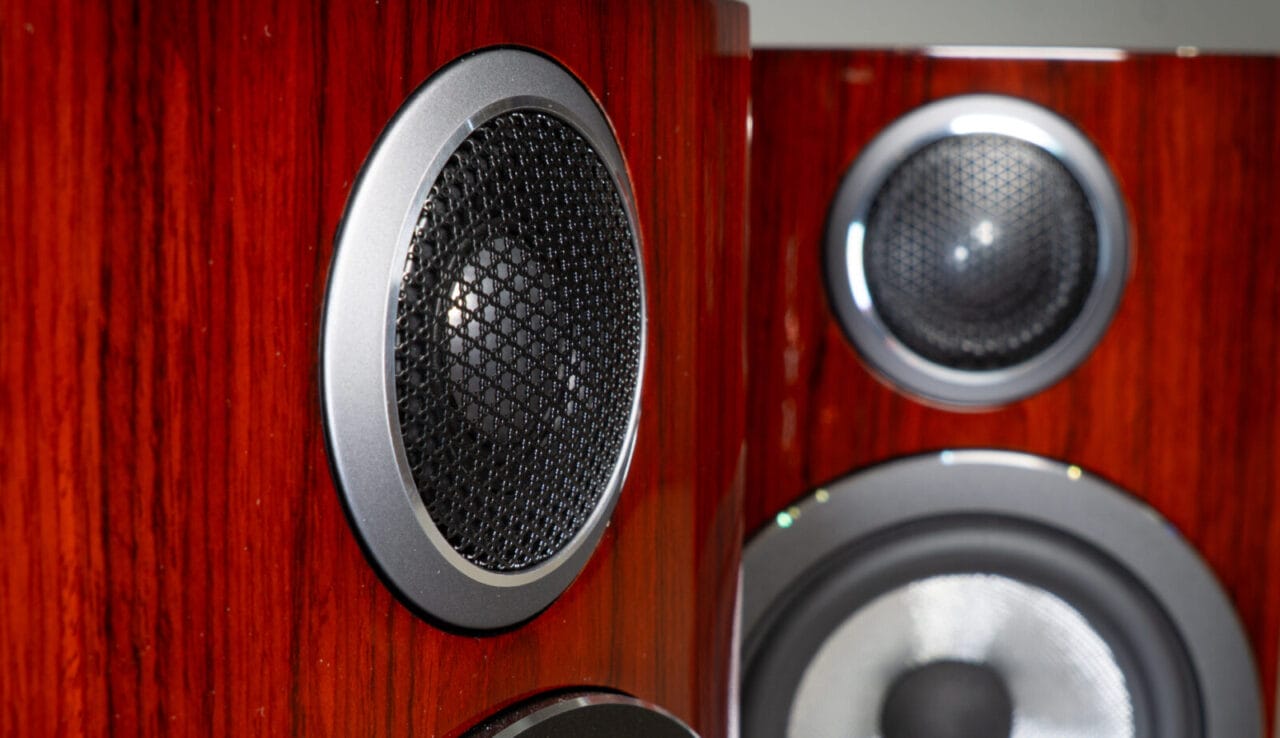
Updated tweeter grille sets the PE model apart from its standard counterpart, designed for improved dispersion
And if you want some dedicated stands that’s no problem, as Bowers & Wilkins offers the FS700 S3 at £800, with holes to securely bolt them to, recessed into each speaker’s underside.
Performance
I first got acquainted with the 707 S3 Prestige Editions in the smaller of my two listening room where my second system lives, placed atop some three-legged aluminium stands (filled with Atabites). The room measures 5m by 4m and houses an Audio Note CD2 player, Audio Note M2 preamplifier, and an Audio Note Kit 1 300B power amplifier. The system may be slightly long in the tooth by some folks’ standards, but it still sounds wonderful.
Rather than diving straight into critical listening, I started with some low frequency laden tracks to exercise the speakers’ bass drivers. The results came as a genuine surprise. These little boxes produce a huge soundstage for their size, and audibly disappeared completely from the room. Instruments occupied precise, stable positions within that soundstage and remained firmly locked in place, regardless of volume level. Such performance from a speaker this compact seems almost uncanny.
The bass proved tight, tuneful, and rhythmically assured. No, the laws of physics have not been suspended, but many listeners may be surprised by how little deep bass is in music, unless their tastes run to pieces with large organs at work or electronic genres. The resulting sound made running these speakers in more of a joy than a chore, over several musically filled days.
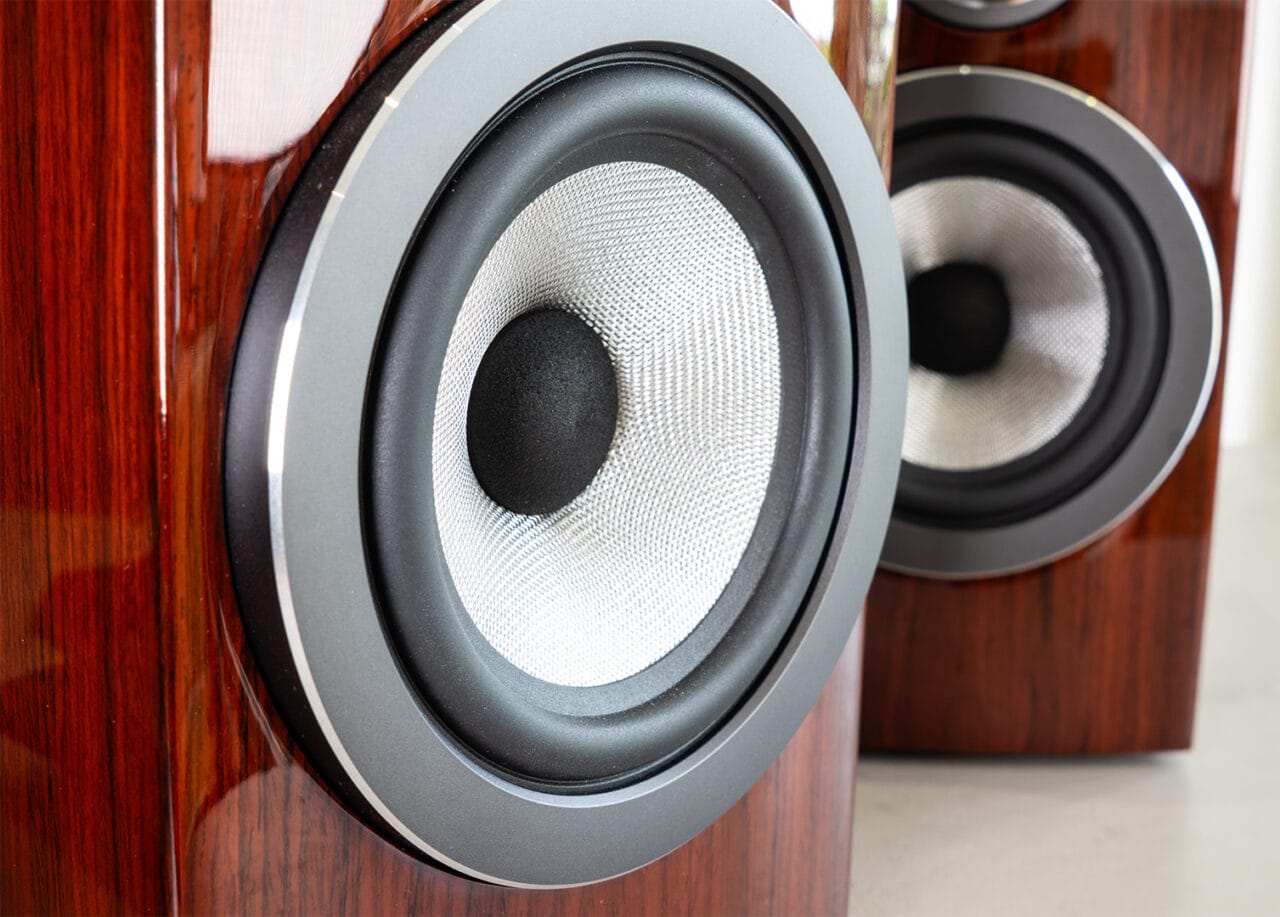
Bowers & Wilkins’ continuum cone mid/bass driver stands proud of the curved front baffle, emulating the reverse-wrap cabinet approach of its more high-end 800 Series cousins
Swimming in the deep end
It was time to move them into my main system, where they join a dCS Bartók digital player, Icon 4 Pro autoformer preamp and Hypex Nilai GaN power amplifiers, with Transparent Super balanced cables throughout. Once again, the speakers impressed. They deliver a vast, rock-solid soundstage, explosive dynamics, and exceptional insight into voices and instruments. Vocal performances carry both detail and emotional nuance.
Then a visitor arrived. After listening for a few minutes, he asked why I had placed those “cute little speakers” in front of my Wilson Sophia 3s. The answer surprised him: it was the Bowers & Wilkins he was hearing.
The only criticism I can level at them is honesty. Poorly recorded material from the ‘80s and ‘90s will sound like exactly that, without adding an artificial positive glaze. That said these speakers never became bright, but I sometimes found myself lowering the volume slightly when the source was poor. As always, the truth can be uncomfortable.
A most impressive system pairing was admittedly extravagant, adding my Audio Research Ref 6 preamplifier and partnering Ref 160M monoblocs into the mix. The 707 S3 PE deliver a remarkably natural and dynamic presentation. Imaging is fully three-dimensional, detail retrieval reaching exceptional levels, and vocals sounding particularly lifelike. And with these amps in the driving seat, even mediocre recordings remain enjoyable without any need to adjust the volume -perhaps showing how transparent and responsive these speakers are to the partnering gear feeding them.
After experimenting with several other system combinations I then enjoyed a stroke of good fortune. By chance, I had Synthesis’s Taurus A50 integrated valve amplifier on hand for a future review. This 65W KT88-based beast proved an excellent partner for the Bowers & Wilkins, with the pairing offering a wonderfully engaging sound which quickly became my reference setup for the remainder of the review period.
The 707 S3 PE were now utterly singing.
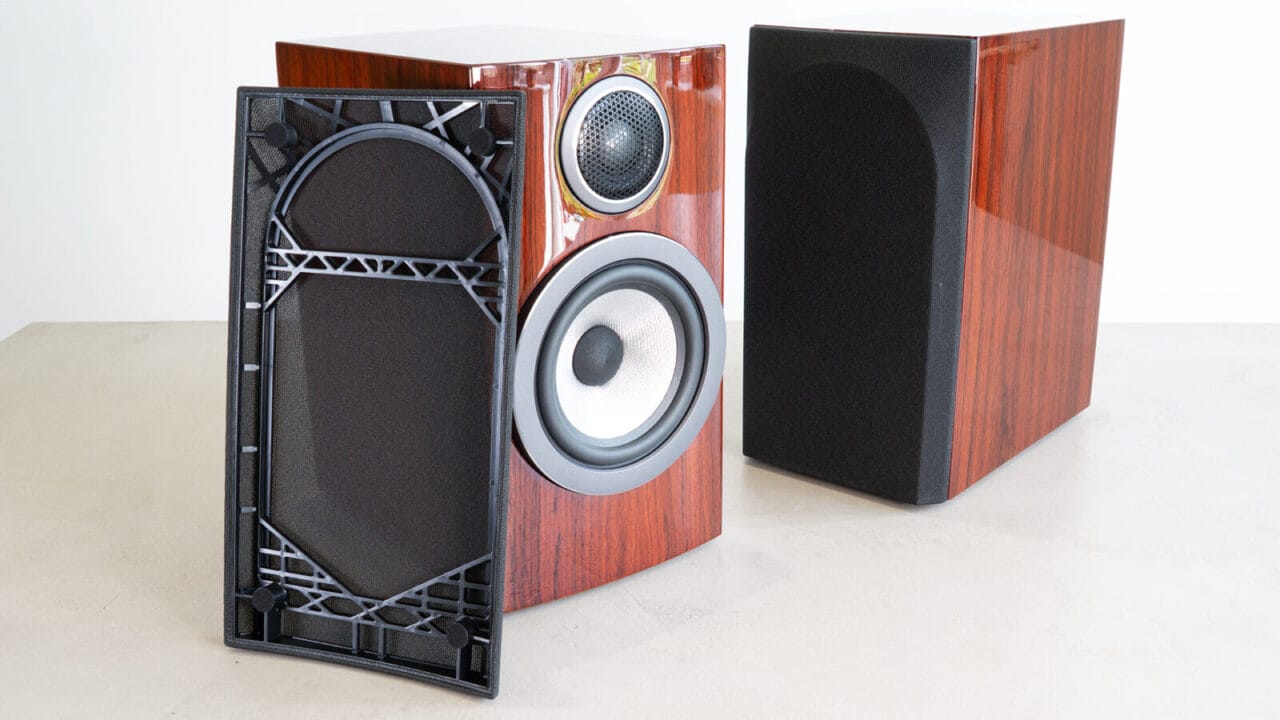
Grilles are included if you need them, but they look so much better ‘naked’ [steady on George! – Ed]
Simon & Garfunkel’s The Sound Of Silence (single version) came across as delicate yet intense, providing a stark contrast to Pentatonix’s interpretation (on its single of the same name), benefitting from a much higher-quality recording. In contrast, the Pentatonix version adds more upbeat energy to the song, and the realism of the vocal performances was striking. Here, the Bowers & Wilkins played to their greatest strength: a transparent and highly detailed midrange.
How would they handle material with more bite?
Pink Floyd’s Get Your Filthy Hands Off My Desert opens with the sound of an approaching aircraft before culminating in a huge explosion. The Bowers & Wilkins dealt with this transition impressively, delivering plenty of drama and scale. For such compact speakers, they retained much of the explosion’s impact. Switching to ZZ Top’s La Grange from the Tres Hombres album, the speakers captured the track’s sleazy, driving blues-rock with ease with their tight timing, giving the performance a really infectious feel.
In summary
These speakers impressed me throughout, with their outstanding midrange being the star of the show. Their presentation is exceptionally transparent, revealing fine detail without forcing it on the listener. And this is because their treble sounds clear, open, and refined, with their excellent tweeter contributing greatly to the speaker’s overall balance.
Deep bass extension is limited, but that may actually benefit listeners in smaller rooms or those living close to neighbours (and wanting to remain on good terms).
They also looked far more expensive than their £1,550 price tag suggests. And compared to what you get for the relatively modest extra outlay versus the standard version, dare I use the word bargain? I just did.