



Vintage hifi is dangerous. And I’m not talking about the risks associated with poking about, ill-equipped, in crusty old electronics. I’m referring to what happens when you start to sniff around for products past and the bargains that can be had in the right place (eBay) at the wrong time (circa 3am). Before you know it, a deal has been done and a credit card’s taken a good hiding.
What piqued my interest in this particular machine was two fold. Firstly a friend fixated on vintage LP12s had me determined to prove that there are plenty of worthy alternatives out there. And secondly our recent trip to Audio Note, which had me reminiscing about each aforementioned brands’ ancestors and affordable rivals.
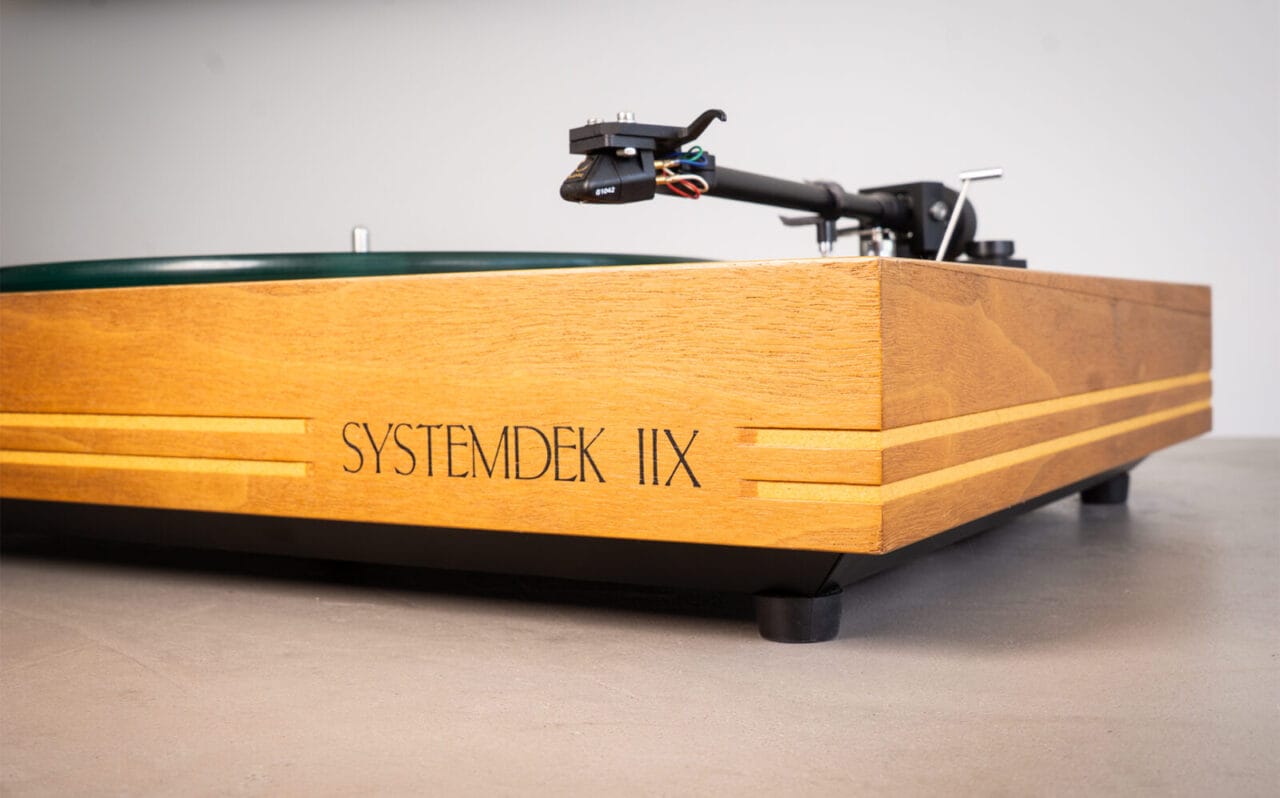
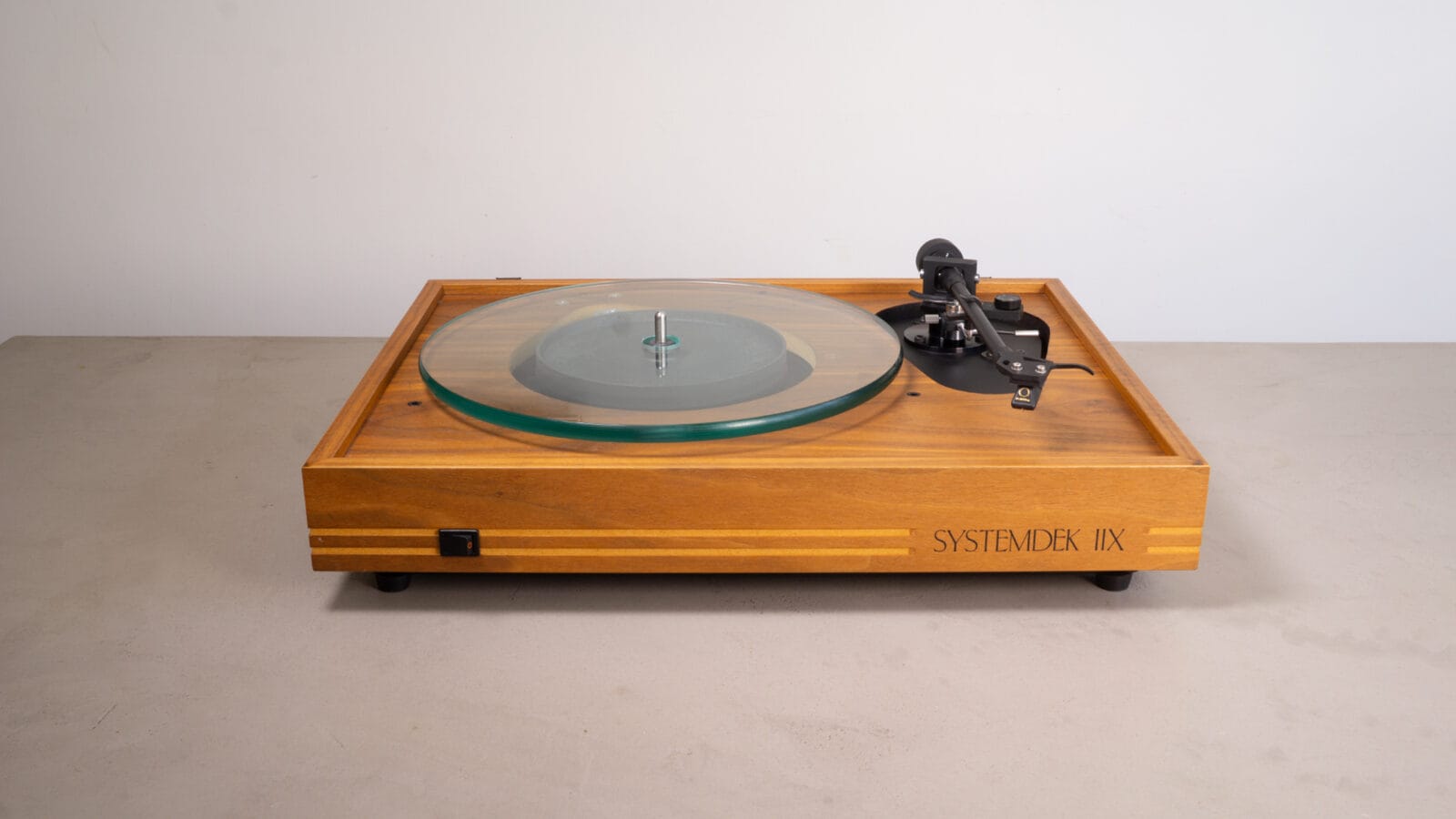
Our Systemdek IIX is a 1987 model, making it almost 40 years young. I just wish I scrubbed up this well at that age
Local support
It could be argued that the grandaddy to the modern enclosed suspension turntable came from across the pond via Massachusetts’ Acoustic Research, who then paved the way for a raft of UK brands to evolve its approach. These included Ariston and of course Linn (a history of this period in hifi warrants much more than a passing mention here). There were others too, such as STD (no smirking at the back please) and, of course, Systemdek.
What all of these companies share are their Scottish roots, which isn’t by coincidence, as this sudden upsurge was a direct result of a government initiative to promote innovation and manufacturing in Scotland, which meant local jobs and investment in what was then a burgeoning industry.
Systemdek was the brain child of Peter Dunlop, following in the footsteps of Ariston in the late ’70s (with early prototypes apparently being referred to as Aristodeks before the name change). These stayed faithful to the three-point suspension design, whereby the turntable’s main bearing (and therefore platter and playing surface) plus tonearm (thus cartridge too) are fixed to a hidden internal subchassis that’s suspended (and therefore isolated) by a trio of springs.
In Linn’s case these are compressed with the subchassis sat on them, meaning adjustment needs to be done from below. But for Systemdek, like Pink Triangle, its subchassis hangs from its spings, which avoids compression issues and also allows the suspension to be adjusted from above, including while the platter is spinning.
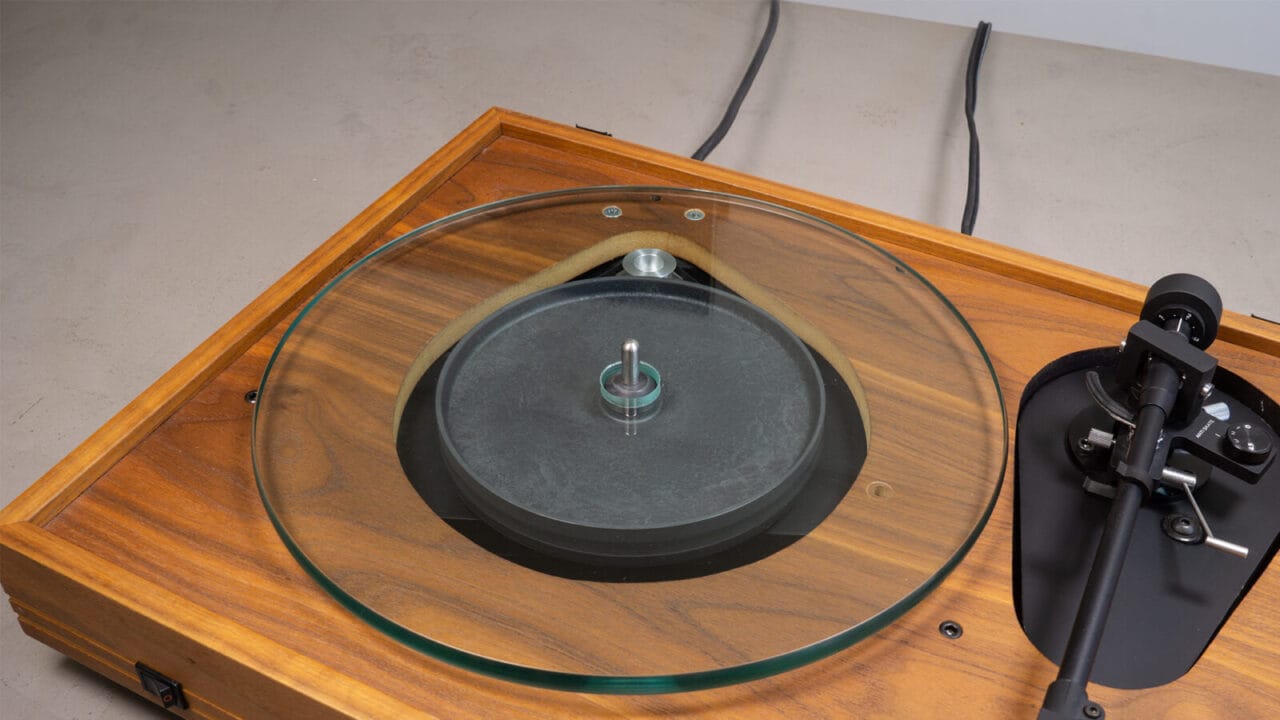
Note the IIX’s three black allen headed screws recessed around the platter for levelling
The IIX was launched in the early ’80s as a follow on from the visual biscuit tin styled II model and came sporting a glass platter and manual speed change in standard guise à la Rega, but suspended à la Linn & co – combining elements of both approaches to offer a turntable that could be priced competitively (around £115 in 1984).
Other variations on its theme included the IIX E (denoting electronic speed change, initially via an external PSU) and the IIX LVX (fitted with Linn’s LVX tonearm). The IIX morphed over the next decade, giving birth to the IIX 900 (that gained a metal armboard over the IIX’s MDF pear-shaped variant), eventually leading to the 2X2 model, which got a flush (rather than stepped) top plinth and acrylic platter, paving the way for Audio Note to move the design on, including by adding a second motor.
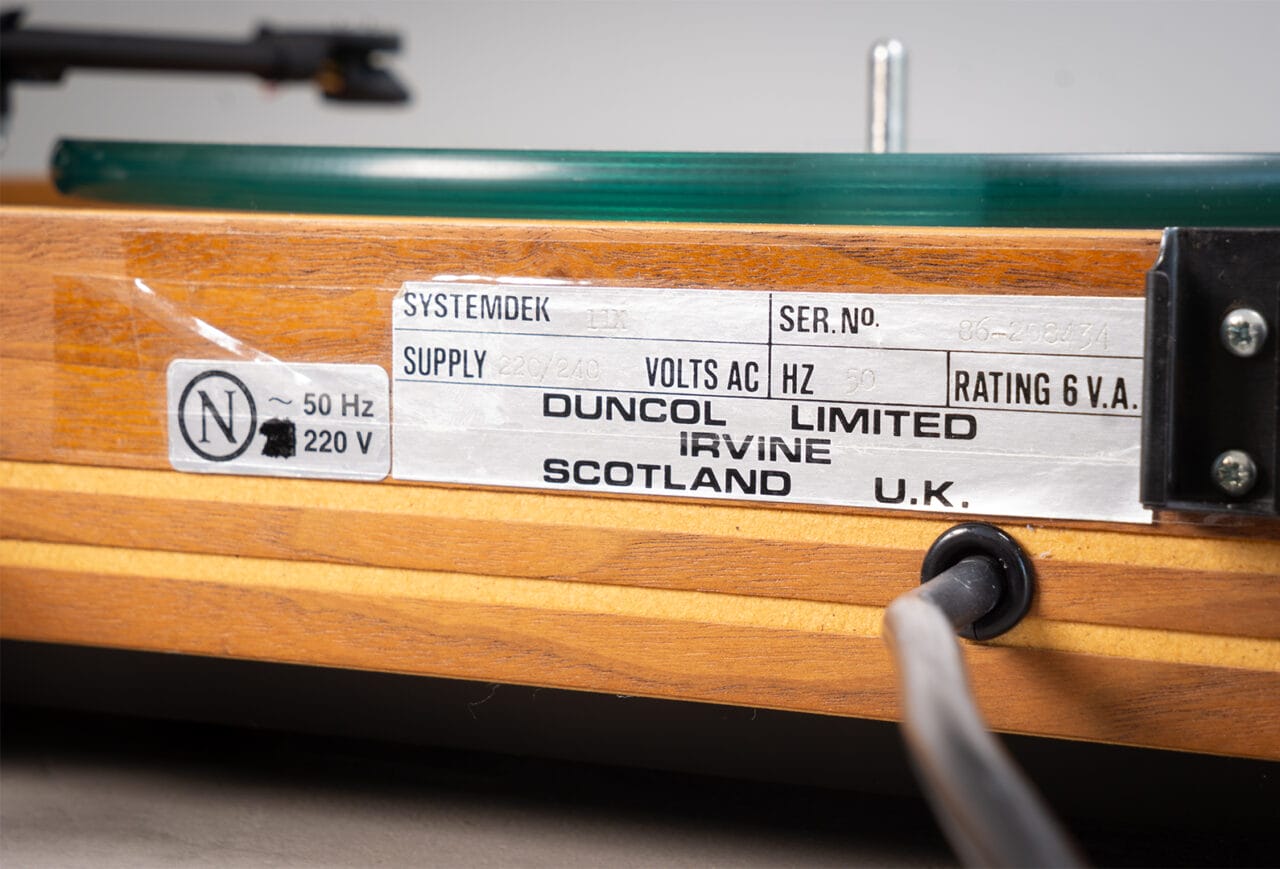
Made in Irvine, the build quality of the Systemdek means that many survive and are in good order
While the styling is of its time, the IIX does not look dated or like a relic of hifi’s pipe ‘n’ slippers past. Instead it’s dripping in retro appeal, like a suede jacket your dad once had or DM boots with a pair of Levis. Timeless, you might say.
You can clearly see the influence of Linn’s fluted plinths on the deck’s external frame, which Systemdek did sensibly (and cheaply) by simply chasing two tramlines out of the veneer for a contrasting finish, which sounds naff, but looks good.
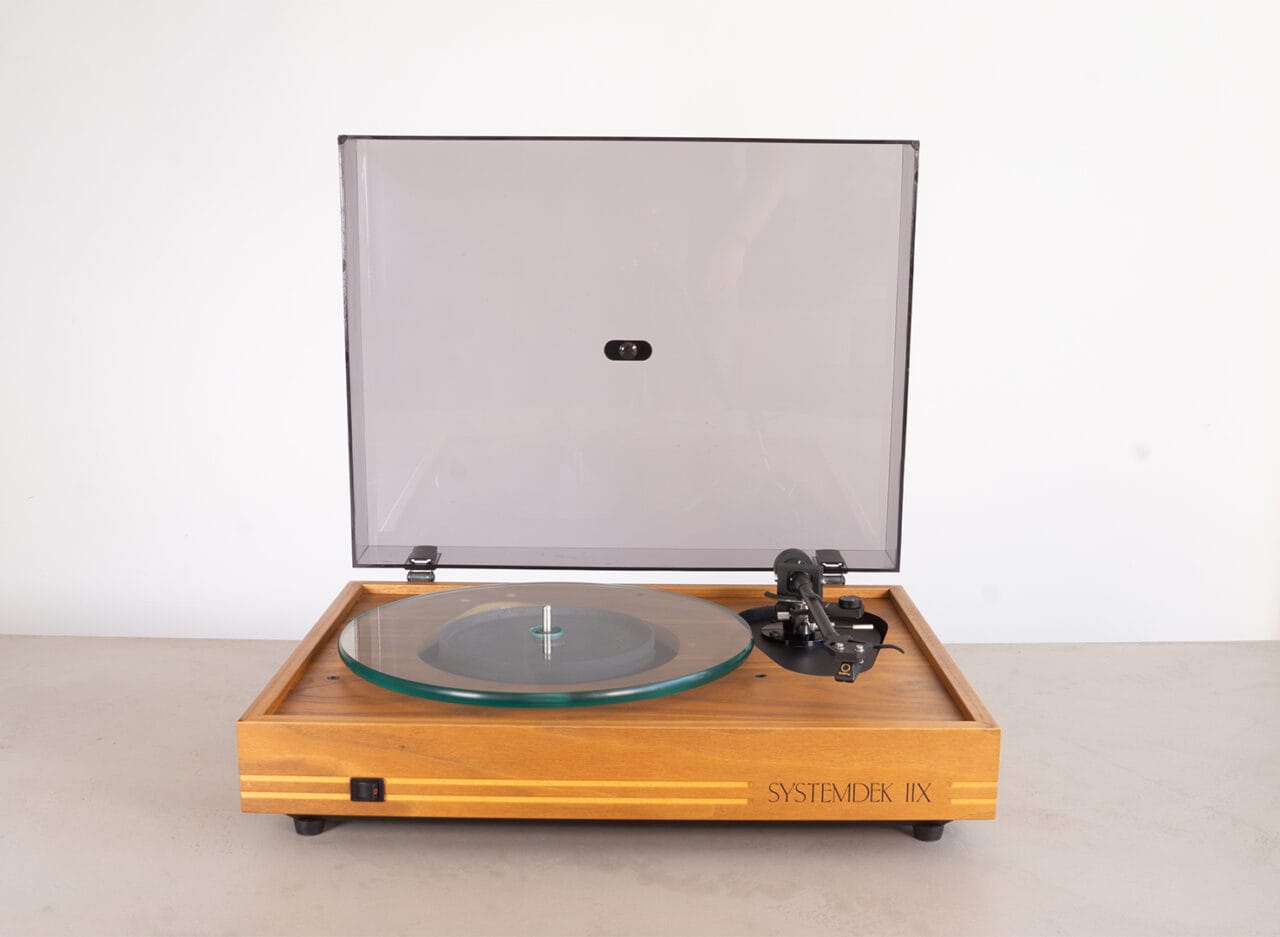
Smoked lid, glass platter, veneered MDF. What’s not to like?
Having bought this deck with my own (very) hard earned, I decided to strip, inspect and rebuild it before pressing it into service. And what a joy this was. Having refurbed other machines of the era, including a fair few Pink Triangles, the Systemdek is an engineer’s dream by comparison. Everything is easy to access, goes back together well and feels built to last. Even basic things such as lid hinges can be stripped, cleaned and oiled without fear of them falling apart in your hands. Have you ever tried sourcing a Pink Triangle lid hinge? Good luck…
Get your bearings
Particular attention was paid to the bearing and belt. This being an early model, the bearing shaft features a spiral groove to carry oil up its length, and for less than twenty quid on eBay you can get a service kit with correct bearing oil, replacement ball bearing (which sits at the bottom of the bearing well) and belt. The seller I found even chucks in some cotton buds for soaking up the old oil. Thanks mate.
To ensure all is thoroughly clean the lower brass bearing sleeve can be removed from the deck via three securing screws in minutes, meaning you can properly drain and service it before refitting (which I did). I also popped on a new mains plug for good measure, taking care to ensure firm contacts with fresh copper.
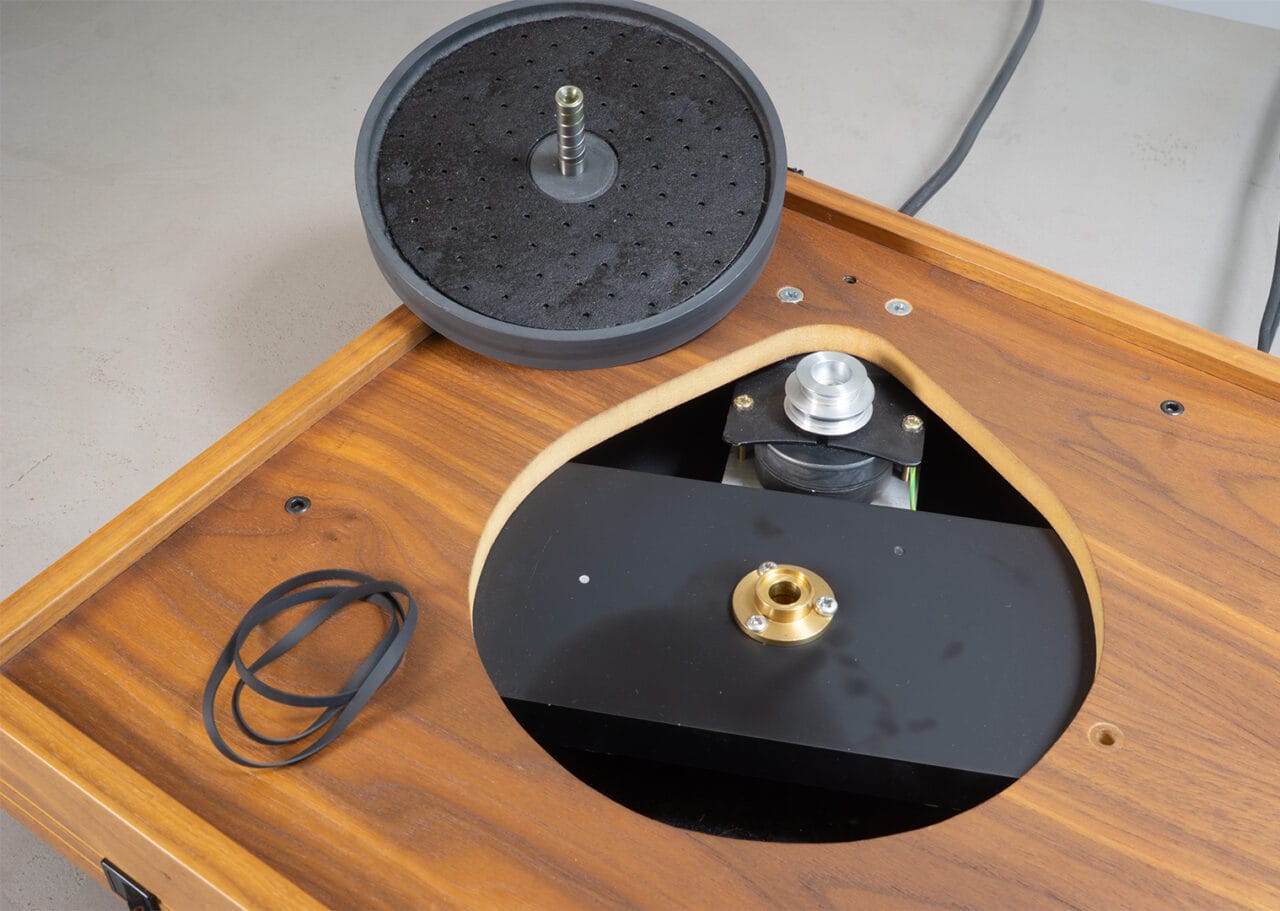
With the sub-platter removed and upturned you can see the grooved bearing spindle. Note the lower sleeve and twin stepped motor pulley for 33/45rpm mounted to the internal alloy subchassis
Golden oldie
Aside from its condition, the other element that drew me to this deck was its tonearm, which is a little further off the beaten track than many of the era, so much so I had to seek the counsel from the Systemdek Turntable Owners Facebook group. At first glance I had it down as one of Systemdek’s own Profile arms (made by Jelco) but no…that squared-off vertical bearing housing tells a different story and the Facebook folks revealed it to be a Goldring G202 from 1987.
As Goldring confirmed, this was a low to mid-priced arm (costing around a hundred quid back then) offering plenty of features and likely built by Jelco at the time. It’s a small world eh? And back in the late ’80s, if you were an affordable tonearm that world belonged to Jelco…unless you were on planet Rega of course.
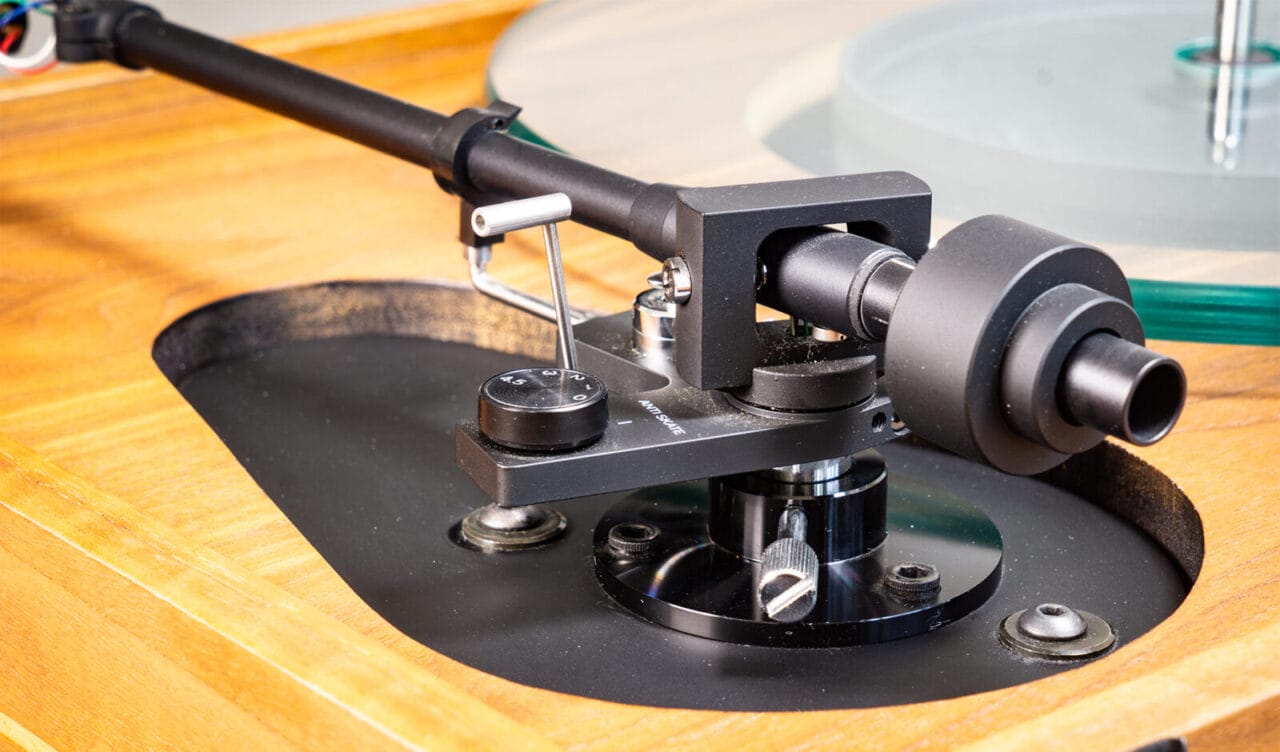
Unbranded Goldring G202 arm offers plenty of sensible adjustment and is a period specific match for the Systemdek IIX
Features include azimuth adjustment via a clamped collar at the headshell, tracking force via a sliding counter weight with printed scale, and arm height adjustment via a large threaded lever at the base of the arm pillar. This lever also clamps the arm in place, so by simply unscrewing it and pulling the din plug from its base, the arm can be removed entirely in seconds.
This also makes setting arm height easy, if a little clumsy, as you simply lift by hand and eye before tightening the rod again. A similar adjuster is also fitted to the arm lift mechanism, should you wish to finesse it. And being detachable means the external cable can be upgraded if the mood takes you.
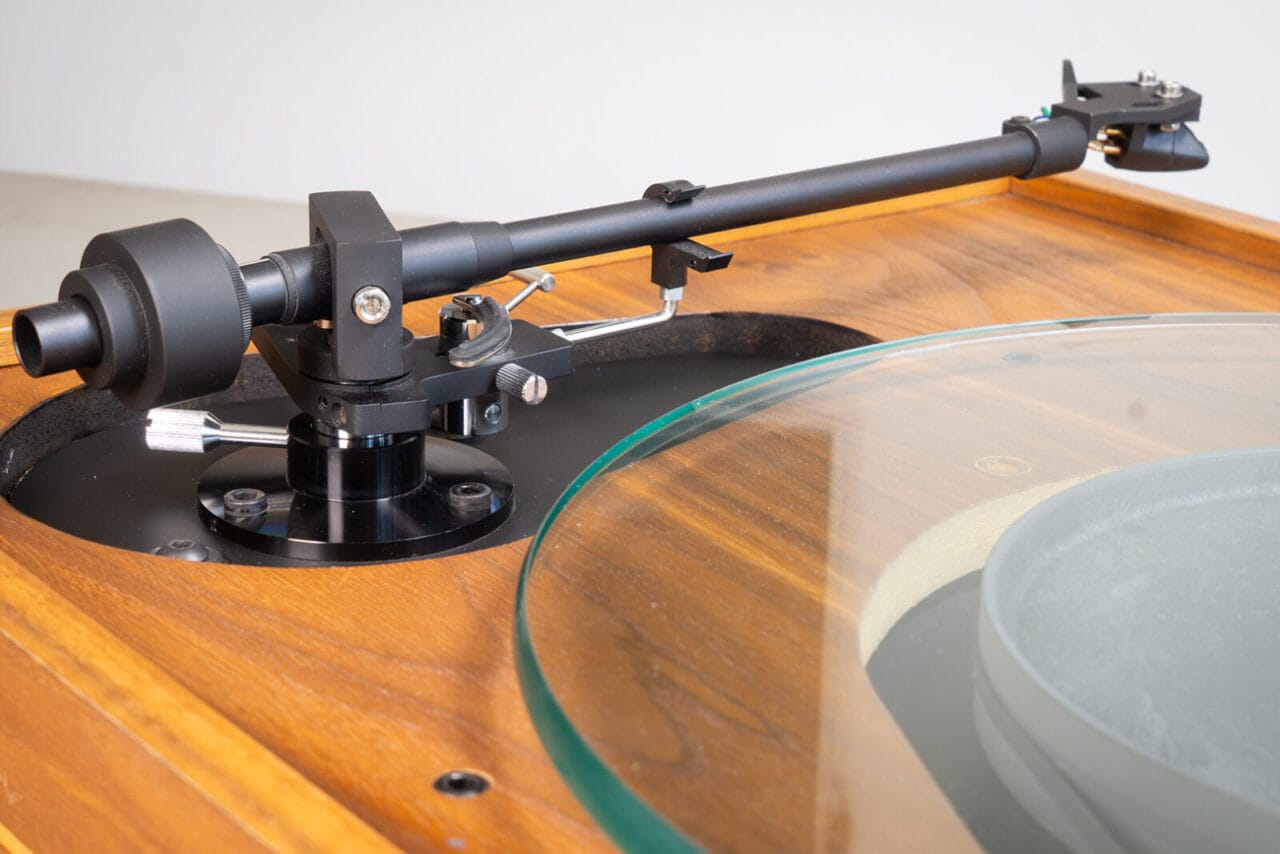
From this angle you can see the polished silver adjuster knobs for arm height and raising/lowering the arm lift mechanism. Simple but effective
Class of ’95
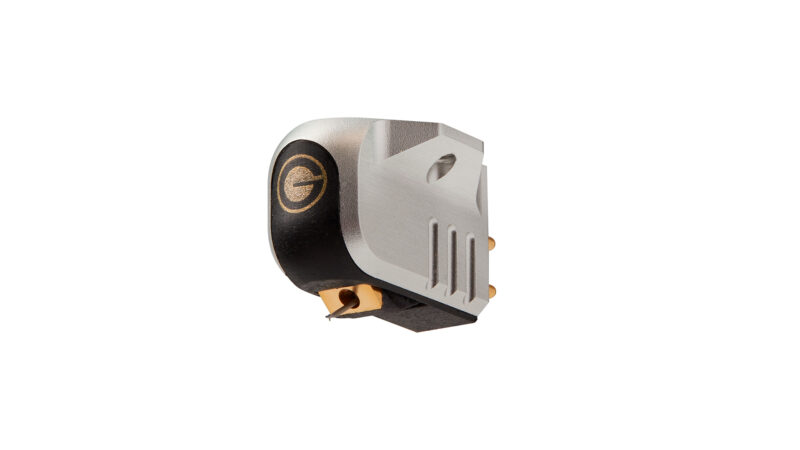
Time to fit a cartridge, and having experimented with various models from MoFi and Rega amongst others, the sound I was craving wasn’t quite there. While each brand offers its own flavour of bombast and detail, I was looking for something in between, while also matching the deck’s period looks. Step forward Golding (again), with its longstanding G1042 being the obvious choice, having been made for tonearms of its own ilk and better since it first hit the market back in 1995.
Being the top model in Goldring’s more costly moving-magnet (MM) range, at £449 the spec this pick-up offers is still superb value today. This translates to a refined Gyger S stylus, ultra-low-mass, micro-miniature Alnico V magnet and laminated mu-metal pole pieces hosting formerless coils of four thousand turns each, all housed in the brand’s iconic ultra-rigid, glass reinforced ‘Pocan’ polyester body.
I say iconic, but icons still have room for improvement and Goldring threading its cartridge pass-through mounting holes would lift it from icon to legend in my eyes, as trying to pop the nuts on while holding bolt and cartridge steady requires three hands or a third dan in finger gynastics, but when installed, the results are more than worth it.
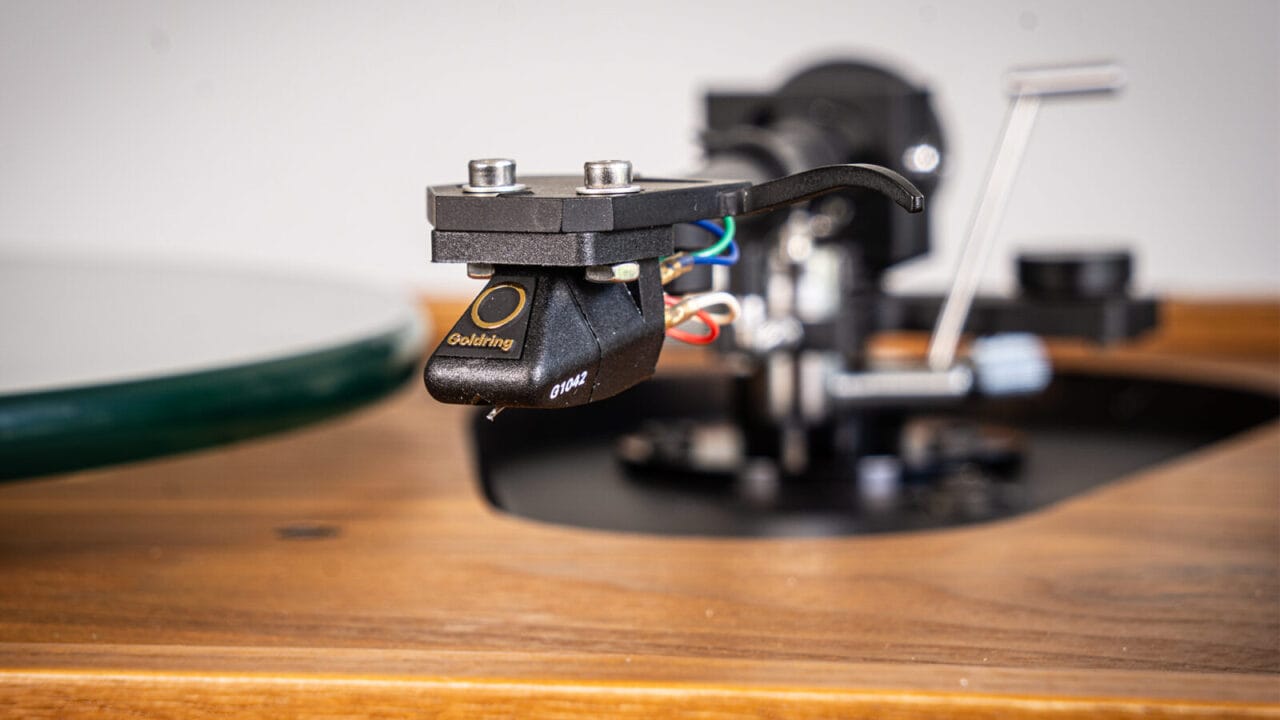
Goldring’s stalwart G1042 remains a benchmark MM pick-up and is a perfect partner for the Systemdek IIX
Performance
I do like a glass platter to look at, but sonically they can ring a bit. Hence before getting down to audio business proper some mat experimentation was required. After trying various types from soft rubber through to felt and plastic, a blended cork and rubber variant was settled on for its levels of damping while still affording the Goldring excellent levels of focus.
For review purposes the obvious amp of choice is Audio Resurgence’s Class A Kraken that continues to impress us, while complementing the Systemdek’s modern/retro vibe, partnered with Dynaudio Emit 20 loudspeakers which remain my reference affordable standmounts.
There are rare moments in hifi when everything just clicks and sounds right. It’s these moments that probably get us hooked on this hobby in the first place, and which we then spend decades chasing again.
Hearing the Systemdek and Goldring combo in this system is one of these moments. It’s just enjoyable hifi as it should be, making the music that graces its platter a delight to be absorbed in. All of these products have traits that makes them standout, and when combined it’s grin inducing to face ache levels.
Peter Gabriel’s So album is one of the cleanest recorded of its era, and hit the shelves right about when the Systemdek was leaving the factory, making it a fitting listen now. The way this turntable package seems to soak up and project the energy contained within it, from the funky bassline to the partnering horn section makes for a captivating listen. And what really stands out is how deep the G1042 can dig into the grooves, extracting levels of detail I’ve not heard in quite some time from a MM pick-up.
Into the wild
On to another epic album. Released some ten months later in March ’87 takes the Systemdek into America’s expansive landscapes, overlaid with spiritual metaphor is what U2’s The Joshua Tree is all about. And what this recording demonstrates is the deck’s ability to do scale, both large and small, from expansive soundstaging with cavernous depth and imaging, to up-close and personal intimacy. One Tree Hill is one of those tracks that that when rendered right, literally walks you into the mid-west as its intro descends into the opening verse.
And the Systemdek just does what it should in getting out of the way to let the track’s rich production with lush rhythm section and atmospheric backing vocals set the scene. I also really like how the Goldring pick-up manages to place Bono’s more-restrained-than-usual vocals deeper in the mix while still affording them plenty of clarity, so that when he does let rip towards the end of the song, it lands with greater impact. But when the album takes it down a few notches on Running To Stand Still, the fragility of the performance is all there and feels so personal in its delivery, that you almost feel like you’re intruding. What this alludes to is how this turntable can turn its hand to whatever you throw at it, which cannot be said for many mid-priced decks of four decades ago.
Fast forward past the millennium to 2020 and Evening Hymns’ fourth album Heavy Nights on equally heavy weight vinyl, underlines this last point. The way the Systemdek is able to capture the LP’s laid back jazz infused folk rock style reveals some stunning musicianship here, highlighting each musician’s maturity as they play off off each other without feeling the need to jostle for attention.
The deep bass, thickly textured keyboard notes and contrasting soft tenor sax for example on the title track is framed just right, as are Jonas Bonnetta’s widely spaced vocals. In many respects the Systemdek IIX reminds me of Michell’s Gyrodecs of the era. And while the Systemdek’s soundstage isn’t quite as expansive as its suspended skeletally framed rival, it’s not far off, with perhaps a slightly hotter treble (perhaps due to its glass platter). Placing the Systemdek alongside such accomplished company performance wise shows just how good the Systemdek was and still is. It’s “punching up” as my son would say. And no son, you’re not having it…this is dad’s to keep.
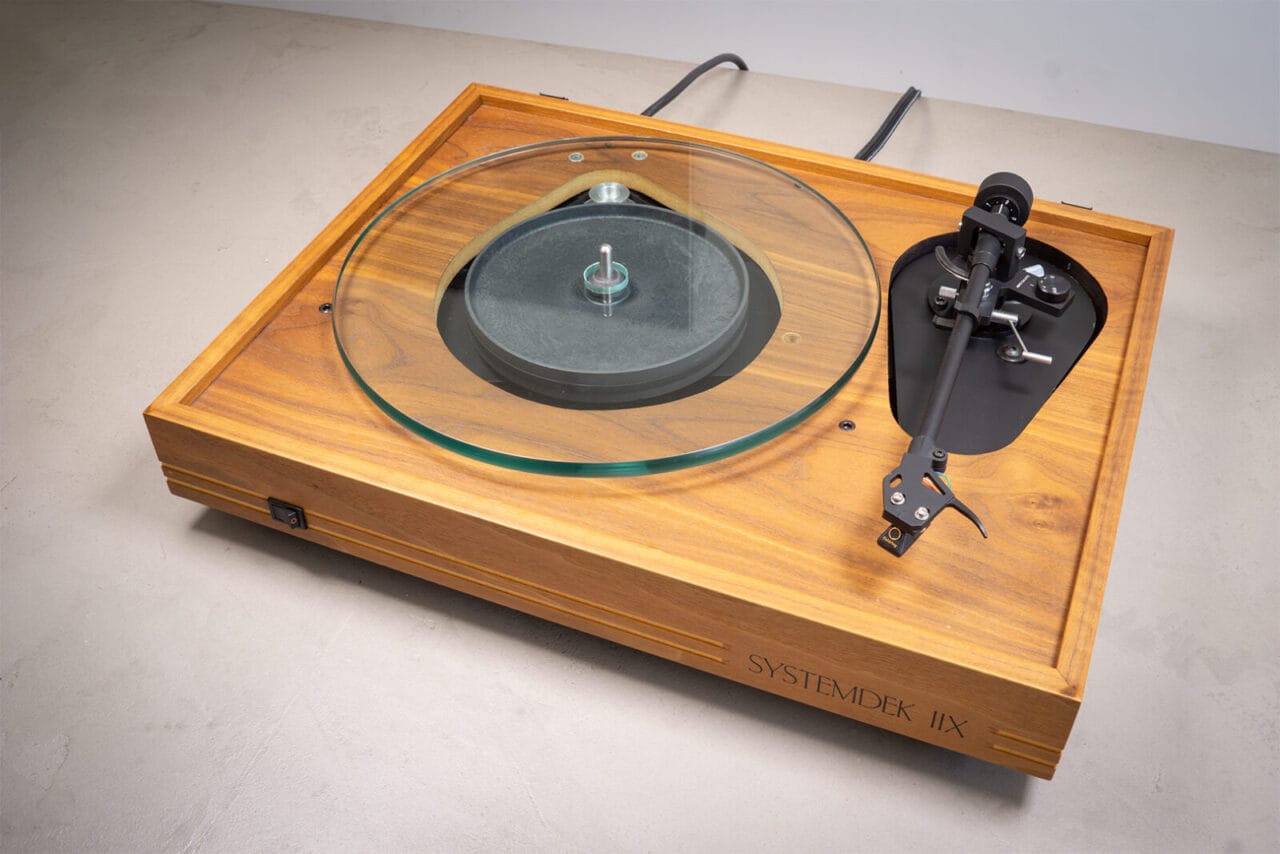
Systemdek IIX – one of the best value used turntables on the market
In summary
With used prices between £200 and £450 depending on condition, arm and cartridge, this is a helluva deck for the money. Well made, well spec’d and with plenty to choose from – it’s an underrated classic.
Longterm I’d be looking to upgrade its platter to something like SRM Tech’s acrylic option to bring it up to modern standards, but even in standard guise it’s bags of fun, full of charm and communicates the music with a wonderful sense of flow and rhythm.
The other takeaway here is Goldring’s G1042 cartridge, which still sets the benchmark for MM pick-ups under £500 and comes highly recommended. A modern classic you might say. It’s just a shame Goldring no longer makes an arm to go with it.
____________________________________
A huge thanks to everyone who’s got in touch since this feature was published, sharing what you love about your Systemdeks alongside your turntable pics.
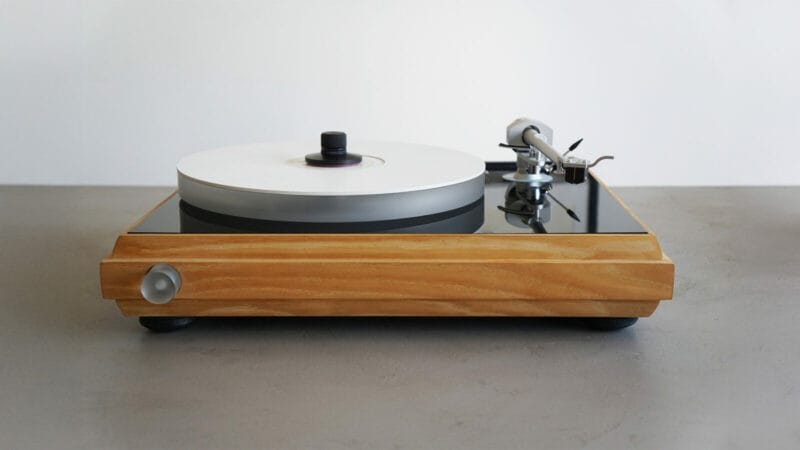
Here’s Jan’s Systemdek II sporting upgraded feet, clamp and branded mat 😍
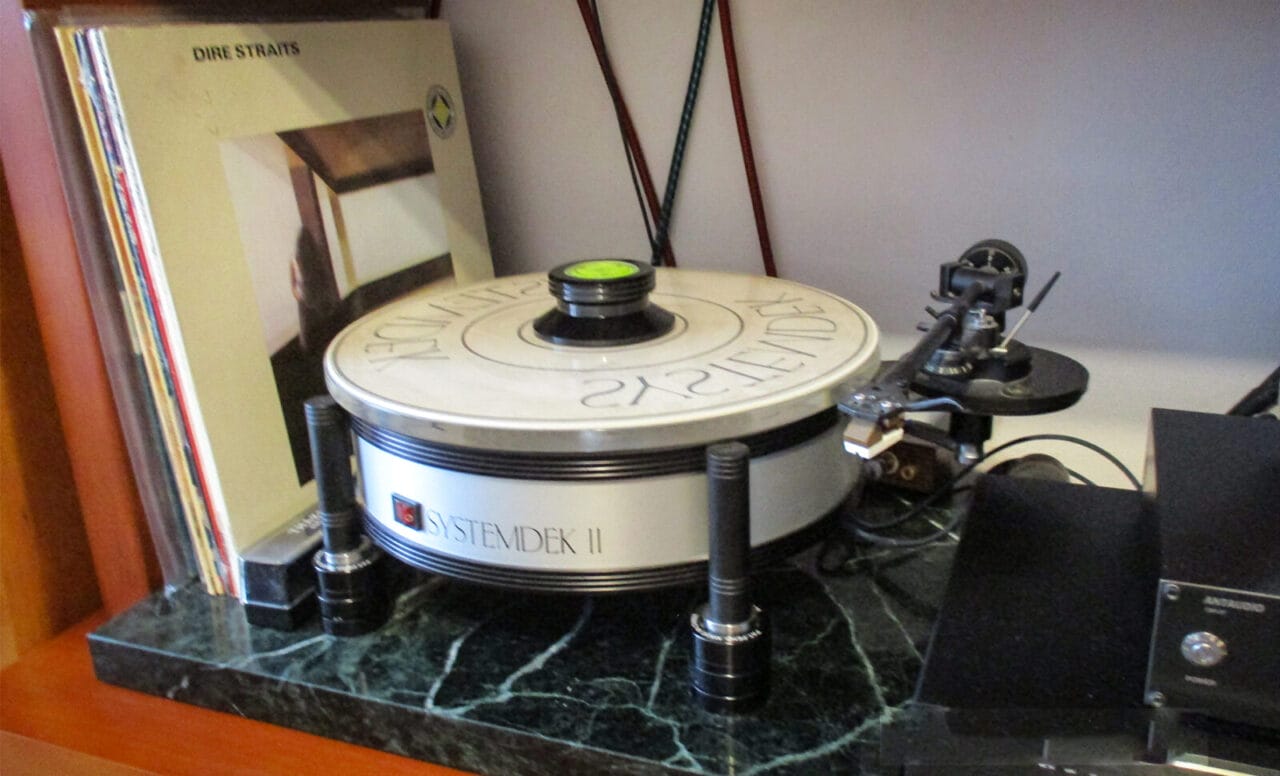
Do you have a Systemdek turntable or comments on this article? If so we’d love to hear from you and see your deck. You can get in touch with us at contact@audiograde.uk.