



When was the first time you heard good solid-state Class A amplification?
For me it was in the early 1990s, following owning a series of Class AB amps. At that time, my gear included Naim’s 32.5, HiCap and NAP 250 amplifier stack, and I thought I had a grip on what good audio sounded like. Class A changed my mind.
Is it better? Yes, in some ways. Like most worthwhile things in life, it’s more nuanced.
Burson proudly proclaims its Conductor Stellar’s Class A credentials, and plugging in a pair of Quad planar headphones upon its arrival led to an immediate ‘oh wow’ moment.
That wow wasn’t just me either, as when our weary Editor popped round I dragged him into my office, ramming the phones onto his bonce, he seemed to enjoy it too, or maybe that was the wine I’d poured him (which he rarely refuses). This is a good start.
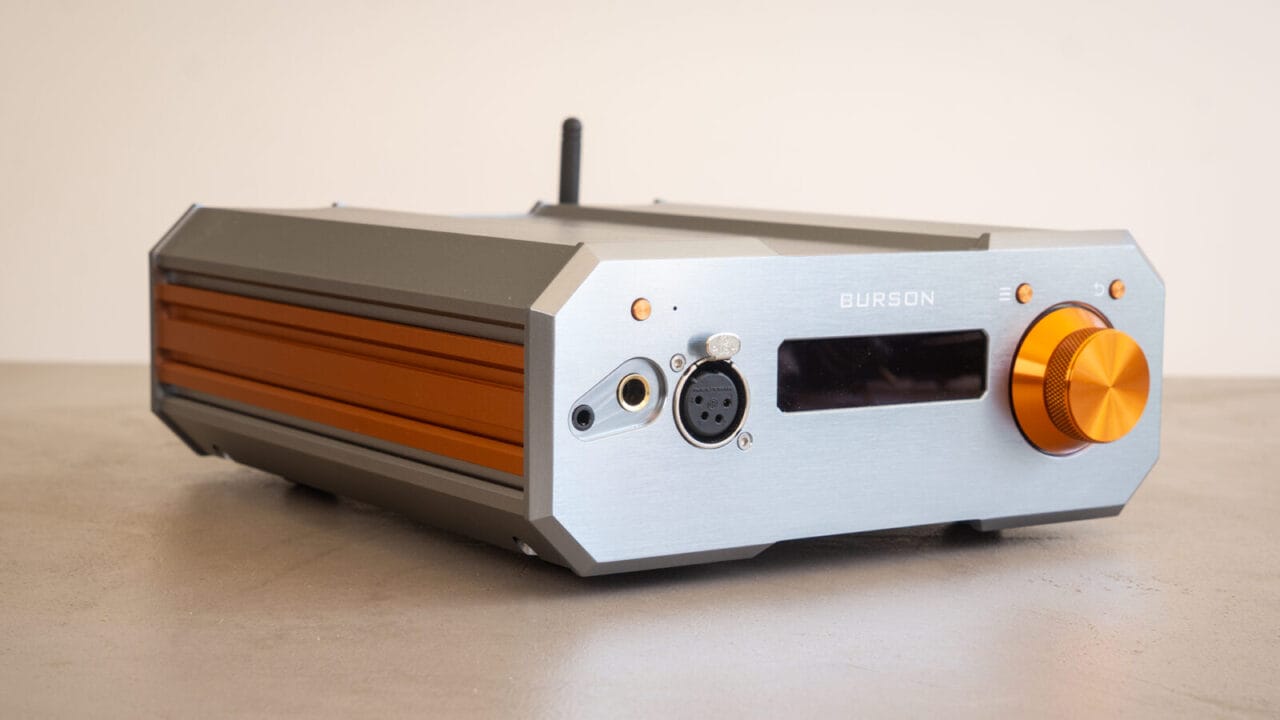
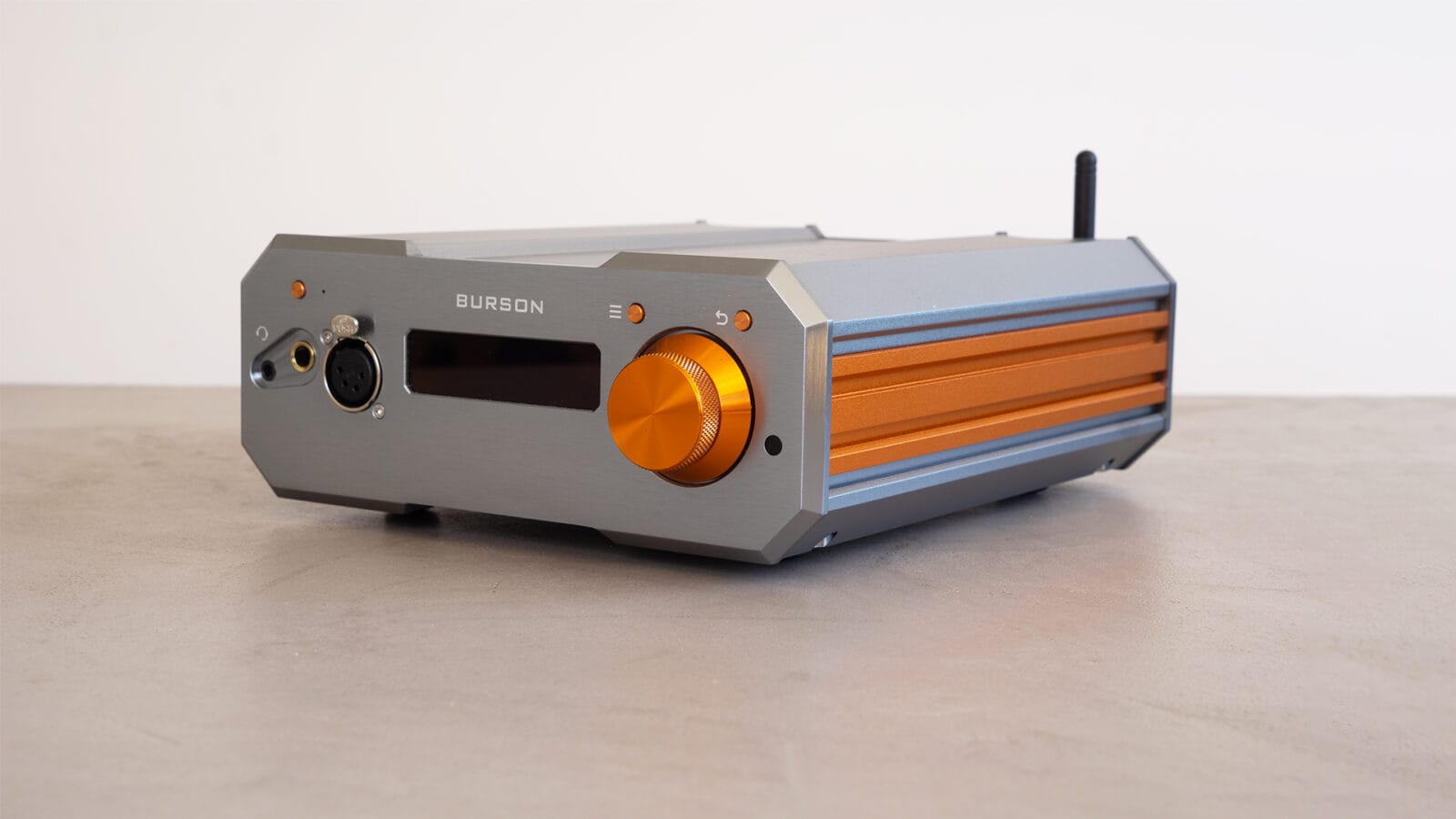
Looking good from any angle, despite its 200/75/230mm (WHD) dimensions, the Stellar makes a real desktop statement
Burson Audio was created in 1996 in Melbourne, Australia by a group of audio engineers. As a company it has concentrated on Class A amplification from the off, with a focus on creating transparent sounding equipment using innovative tech, all developed in-house.
The Burson Conductor Stellar fits this mould precisely, being a Class A headphone and preamplifier, with an on-board DAC. This is the Standard version (£1,999) but Deluxe (£2,600) and Max (£3,200) variants are available, with upgraded opamps and power, as a special order.
When unpacked it has a brushed silver aluminium case with copper metal sides and controls, and looks like the dog’s danglies (if your silver dog’s danglies were also copper coloured).
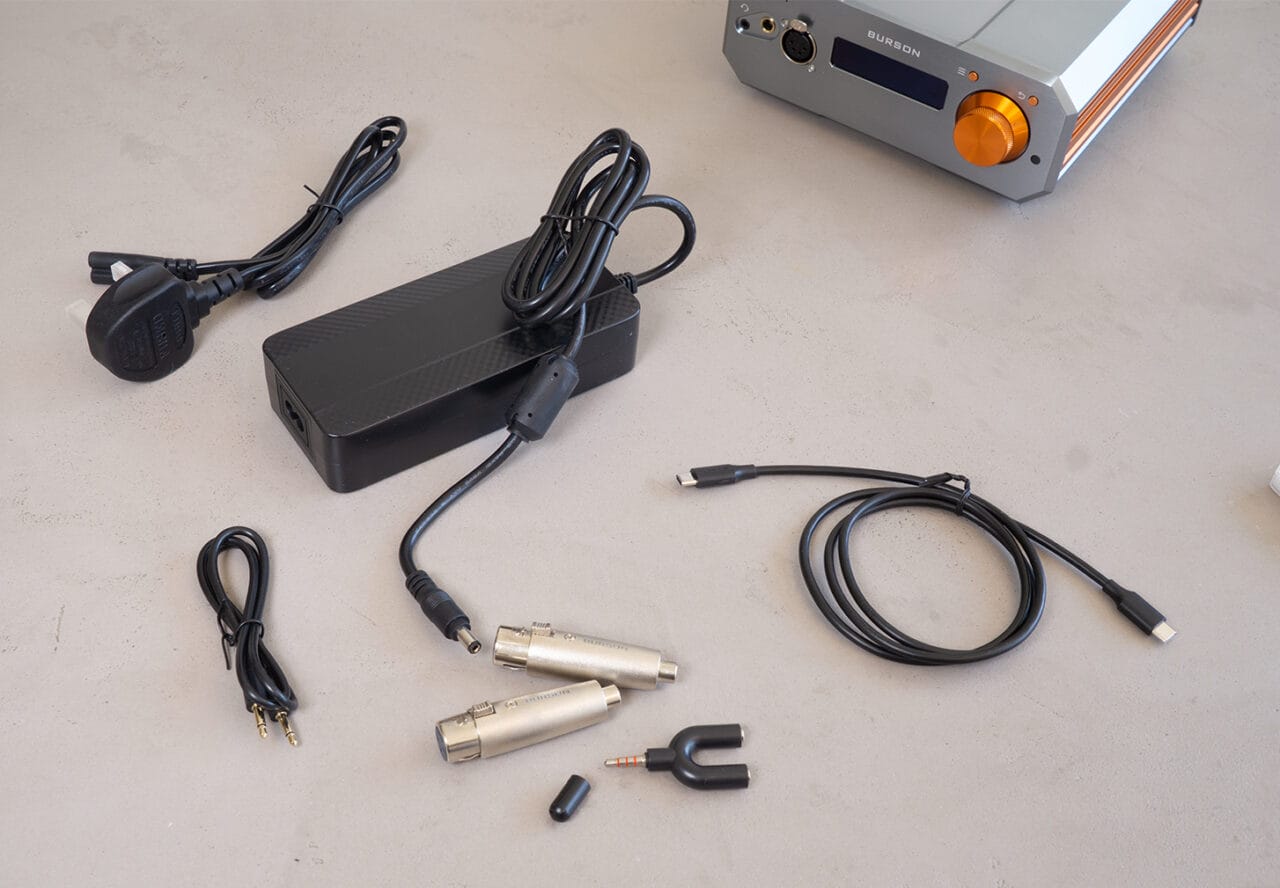
The petite Stellar comes fully loaded with external PSU, cables and RCA to XLR converters
The Stellar has a half-width form factor that I love (I did mention my Naim history).
In addition to the main event, the box contains a large computer style 24V 5A power brick, special balanced XLR to RCA adapters, single to double 3.5mm adapter, balanced 4-pin din to 4.4mm jack, and two allen keys.
The online manual tells you not to use simple XLR to RCA adapters when connecting to an RCA input power amp (shame there isn’t a manual in the box).
Minor gripe here with my customer-first hat on, with this warning in mind there should at least be a clear info card provided, with the URL for the manual and the important advice somewhere obvious inside the box, labels on the sockets perhaps? How many eager hifi fans will plug it in first and hunt online for the manual only when they get stuck (or worse)?
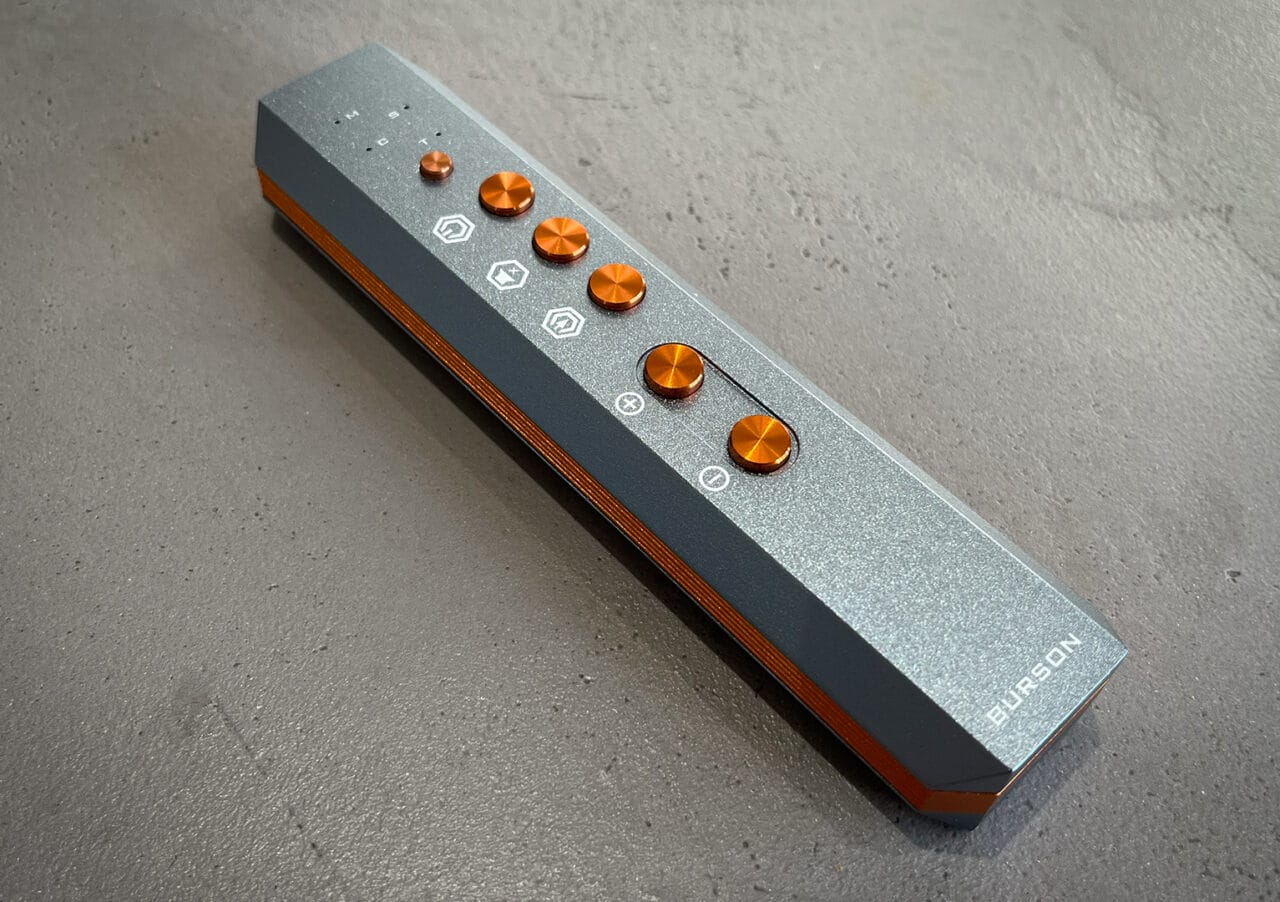
Supplied remote in matching metal livery is no mere afterthought and also so solid it could double up as a personal protection device!
Planning to use some cans? Then you’re in luck as the Burson’s front-left panel hosts three inputs for 3.5mm, 6.3mm and balanced 4-pin din plugs. Above these is a small brass on/off button. The large machined volume dial sits to the screen’s right with two menu control buttons above it.
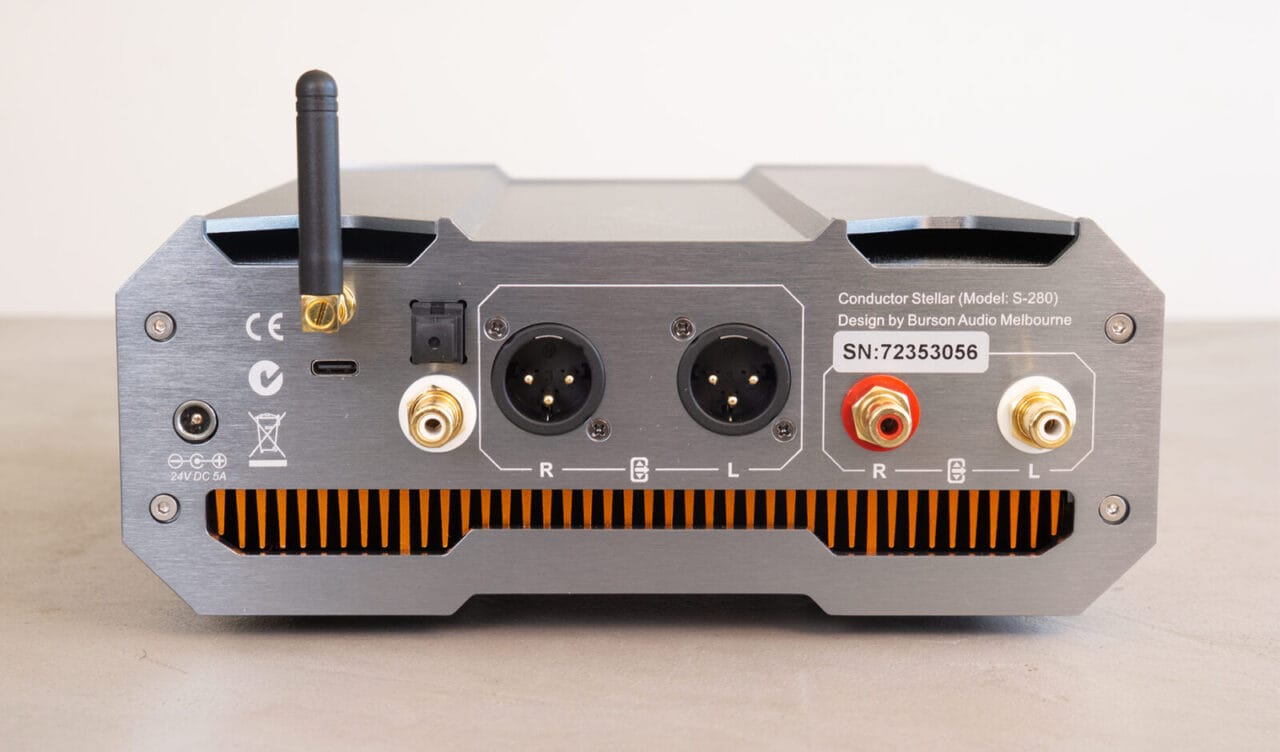
Rear panel sports digital inputs alongside a stubby Bluetooth antennae, while analogue outputs span XLR and RCA
The Burson’s digital inputs span USB-C (for native DSD up to 512 and 32-bit/768kHz PCM), coaxial and toslink (up to 24-bit 192kHz). Burson states that the unit is Roon tested and works with any Roon Ready system, which proved to be the case.
The unit’s Bluetooth antennae allows for simple connection, for instance with your phone, while its Qualcomm chip supports aptX, aptX HD and LDAC codecs (up to 24-bit/96kHz).
I always like seeing a DC power barrel connector, as it opens up the potential for a quick PSU upgrade. Burson obviously agrees, as it sells a GaN transistor power supply option titled Fusion Core at £1,800. Hence quick, but not cheap. That said I tend to find that good quality power supplies are not cheap, but do make a difference.
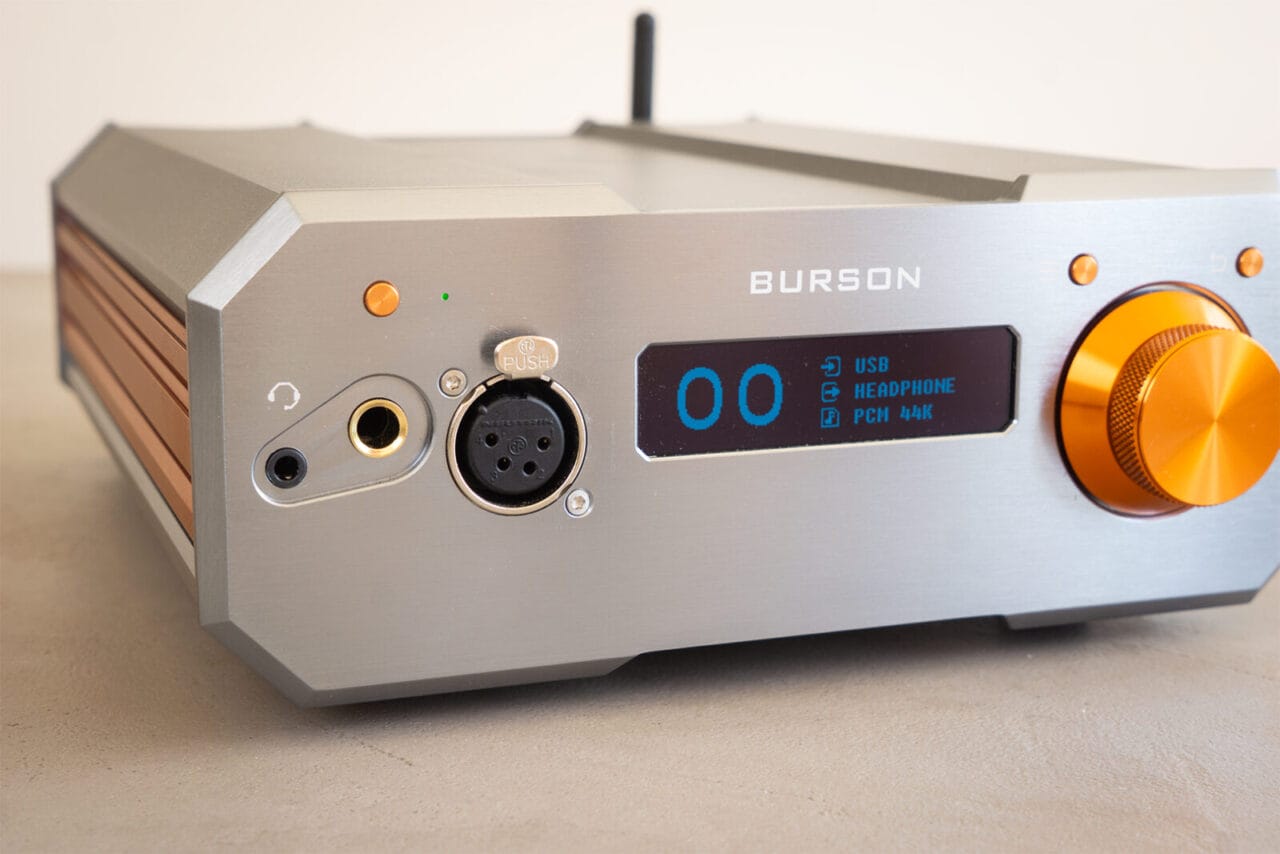
Burson front panel menu showing volume (0-99), input, output mode, data type and sample rate
The menu sir?
The clear front screen and menu allows you to set the unit to DAC, preamp/DAC, preamp/IEM (In Ear Monitor) or preamp/headphone mode, alongside a plethora of DAC options. Of which more anon.
The online manual is efficiently laid out and not overly verbose, while reflecting the graphical user interface (GUI) usage, although it is not always accurate. For instance it states that the unit has RCA single ended and XLR inputs – if it does they are well hidden! I’m guessing this was pasted over from the Soloist’s manual.
That said the GUI itself is well laid out, just be aware that the settings continue beyond the bottom of the screen, revealed by twisting the volume control to bring them into view. The unit also turns itself off after twenty minutes if unused, which is an EU directive, and one which I chose to deactivate.
The manual states to ‘Always power on source devices first and power amplifiers last. Reverse this sequence when powering down’. This is good advice, as powering the unit up or down is not a silent process, sending a substantial thump and whistles through my partnering speakers, unless the volume is down. Burson goes on to say that the shut down noise is safe and that the Stellar has speaker protection circuits, but worth being aware for real world use.
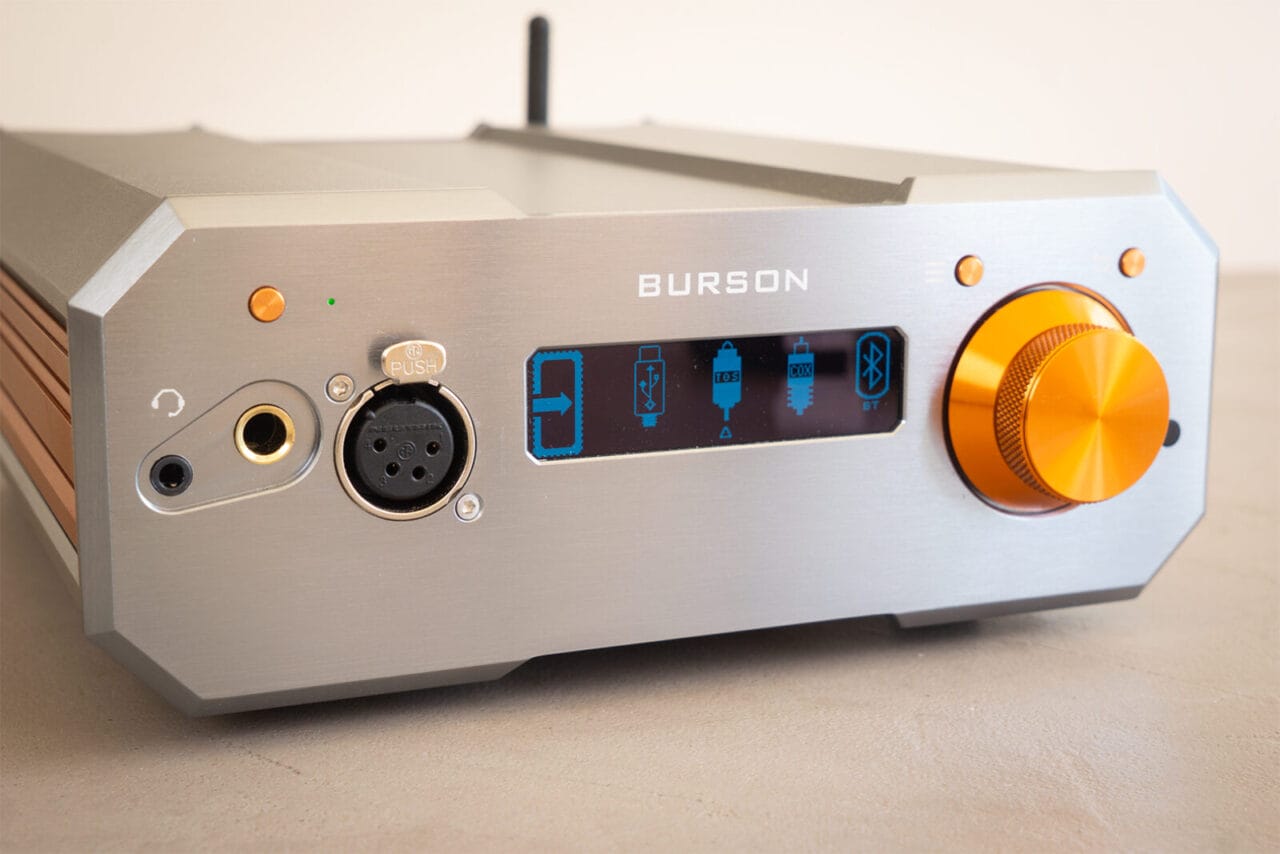
Front panel will also display handy visual icons for each input
DAC’s the way to do it
The Burson’s internal DAC is built around Sabre’s ESS 8 core ES9039PRO chip, with four chips per channel working in parallel, to increase its signal-to-noise ratio. As mentioned earlier, headphones have been fully considered, beyond just output sockets. In addition to single-ended (SE) and balanced (XLR) options, for which the Stellar outputs 4W and 8W, selecting IEM employs a specific dual mono amplifier module which winds the wick down to 0.5W (SE) and 1W (XLR), which Burson has engineered to reduce noise and hiss.
Good power is an essential foundation for good audio in my book. Hence I’m glad to see Burson making much of its ‘Max Current Power Supply’, where you won’t find a transformer, having been replaced with Onsemi transistors in a bid to make the power it delivers far more instantaneous.
Burson’s Silent Power Modules are now in their second generation, making use of LT3045 regulators which, having used them myself in homemade units to remove electrical noise, I can vouch for these being effective little beauties – all of which underlines the Stellar’s quality and close attention to detail credentials.
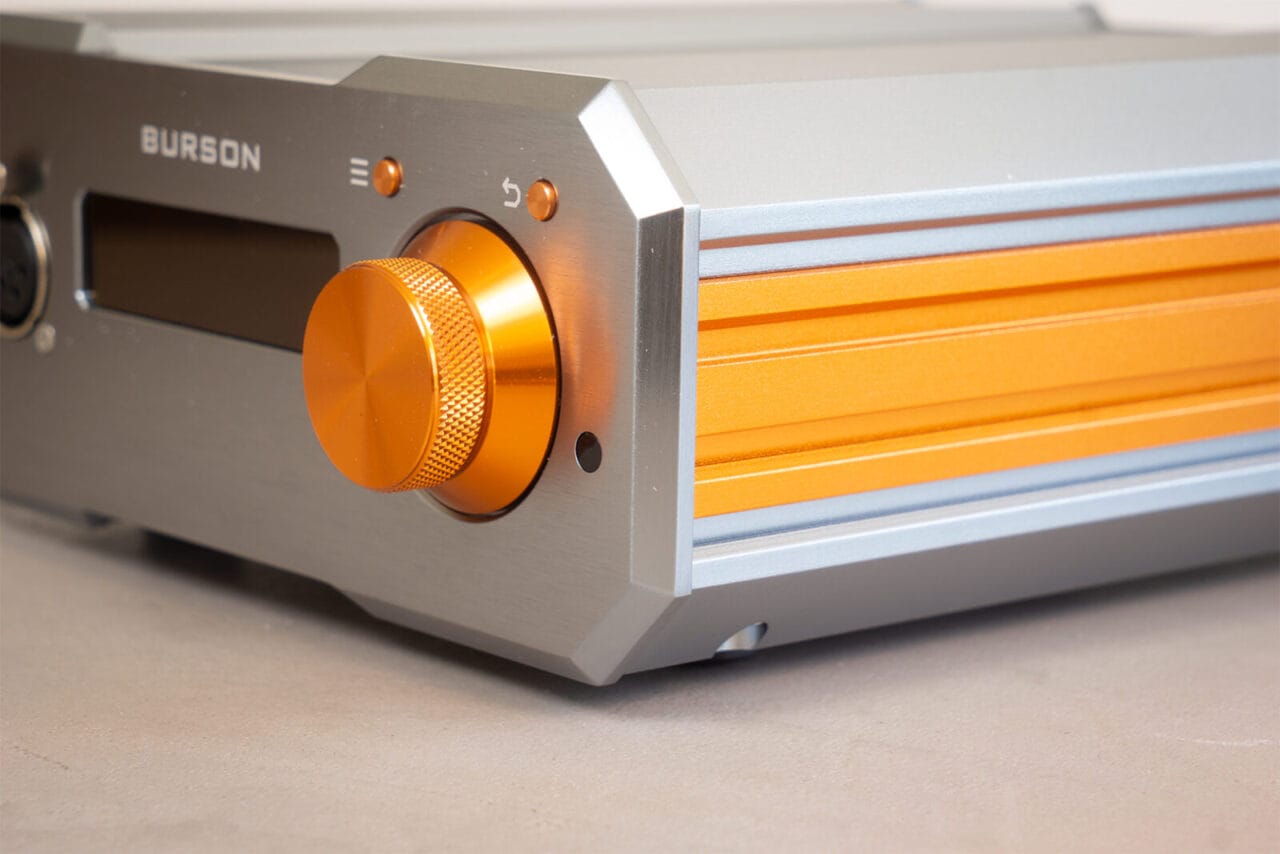
Knurled volume knob feels nice and tactile, while matching the accented metal of the casework and push buttons
Performance
Burson advises that the unit will break in over a few weeks’ use, and it therefore seemed unfair to assess it before then, at potentially less than peak performance, and so I listened to it for an extended period. It’s a tough job, but someone’s gotta to do it!
I started off testing proper with the Stellar in my nearfield system, flipping between my balanced Bel Canto S300 and Naim NAP140 power amps, into my Chartwell LS3/5a speakers, with the Stellar in preamp/DAC mode. This was thoroughly enjoyable.
I then swapped in my Linn Kans (Mk I), but for my tastes this required a degree of customisation, so I placed the Burson into DAC only mode and dived into the settings. This is a good exercise, as it makes you read the manual properly to try and understand all that’s on offer. In the event I changed the settings to: DPLL BW to low, the FIR Filter to MP, THD COMP to BP ALL, IIR BW to BW, DAC PATH to BP IIR (did you get all that?).
This helped remove a slight top end emphasis that the Kans were imparting. I was really enjoying this, both for the music but also to have settings that make a genuine difference.
When fed properly, the Kans are an incredibly kinetic speaker. They handle drums wonderfully, letting you know how taught the skins are and how they are being struck, allowing you to hear the resonances in a way many speakers fail. The Burson Conductor Stellar was supplying a very welcome feast. At this point I should mention that the unit is typical of Class A, in that it gets warm. I estimate that its top panel reaches well north of 40°C, while the copper sides are nearer 60°C – just what you need in a heatwave!
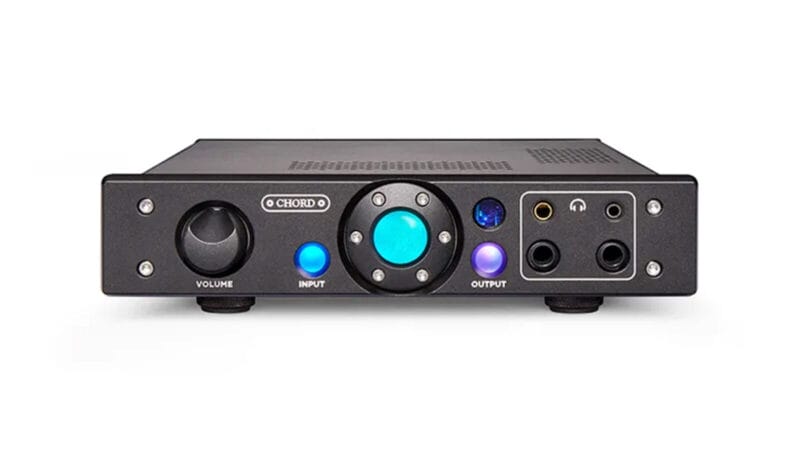
I now swapped in our recently reviewed Chord Alto integrated amp which is heavily biased into Class A. This was enjoyment on steroids.
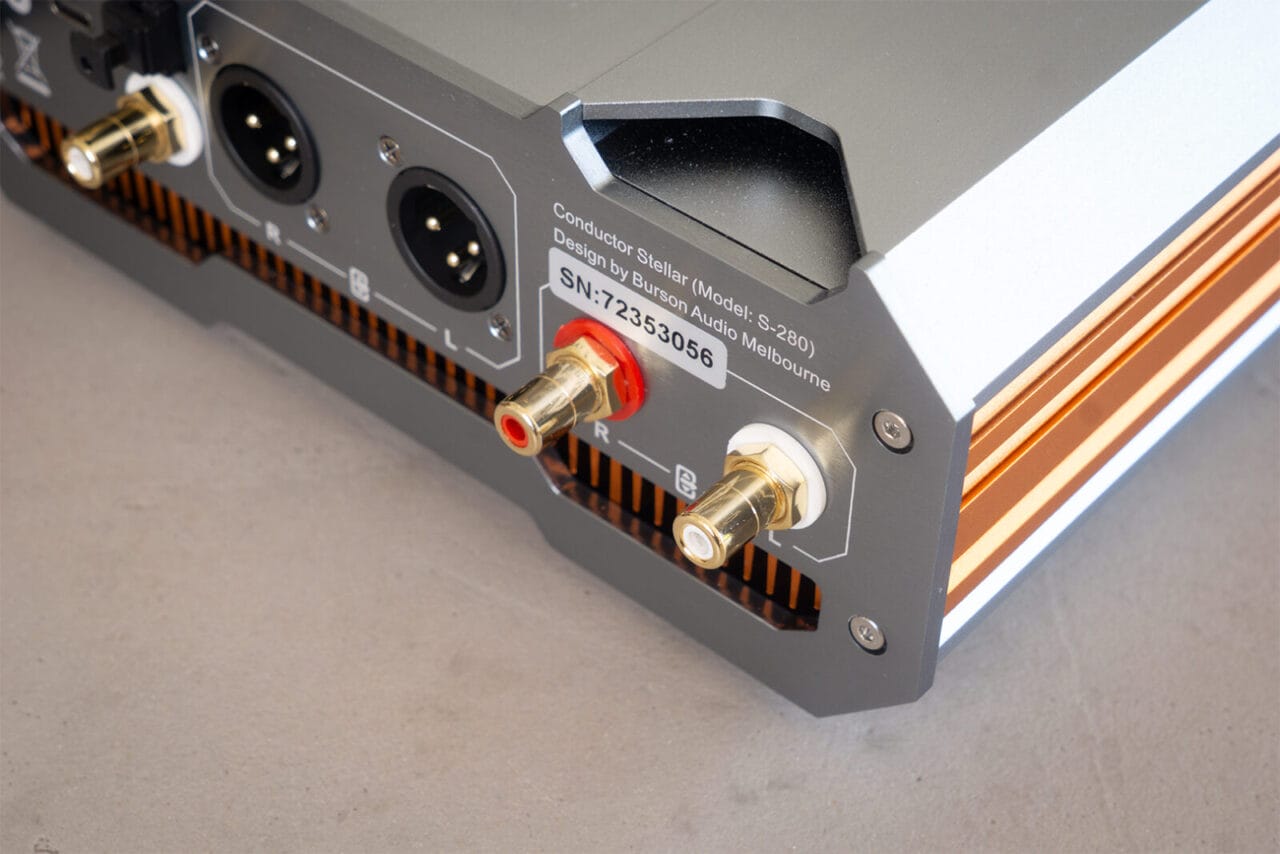
Rear socketry is top quality, while the casework hosts rear cut outs, presumably to allow heat to escape from its Class A carcass
Getting physical
On to the music, sourced from Qobuz via Chord’s 2go/2yu streamer.
Led Zeppelin’s Physical Graffiti (HD Remaster) at 24-bit/96kHz is a powerhouse of a recording, but has a tendency to disappoint on some systems, failing to connect and almost becoming boring. An album that is frequently thought of as requiring vinyl to perform well. But not here. The synths have a growl, as does Plant’s voice. The electric guitars are picked with aplomb having genuine attack, without becoming sharp, or worse, muted.
The Burson Conductor Stellar was delivering a mass of musical detail. Kashmir is one of the best known tracks from this album. The string resonances on the left guitar were a constant presence as Plant does his best to destroy his voice with rasping vocals.
Take 5 (16-bit/44kHz) by The Dave Bruback Quartet is a classic jazz track that is easy to take for granted with its familiarity almost allowing it to become part of the scenery, and yet it is a great reviewing tool. Superb music with swing recorded by a group of virtuosos.
Here the Stellar does a first rate job of presenting the infectious and controlled energy. Opening with Joe Morello on drums (left), joined by Brubeck (stage right). The percussion showcases superb rhythmic control between skins and cymbals. Desmond’s alto sax carries the main harmony, and when the double bass arrives it underpins the piece, filling in the missing weight. Morello steps up the dynamics and this is all presented beautifully by the Burson.
The impactful qualities of the Stellar were further underlined by a 2015 remaster of Phil Collins’ In The Air Tonight (24-bit/96kHz), as the drum line explodes, tracking Collins’ vocal frustration. This was a most satisfying listening session.
To test the DAC’s ability to build an acoustic space, I threw Procol Harum’s Conquistador at it from their Live In Concert With The Edmonton Symphony Orchestra album (16-bit/44kHz), which resulted in well recreated interactions between Brooker and the audience on the opener, at once removing the 50+ years that have passed since, while offering excellent musical detail.
Swapping out the Alto for the Bel Canto power amp with the Burson in preamp/DAC mode brought an immediate change of character. On Take 5 for example, I was far more aware of the reed on the sax, while its leading edges were not as apparent, but the drum body resonances increased.
This repeated on the other test tracks, providing subtle changes in perspective while still managing to sound equally musical.
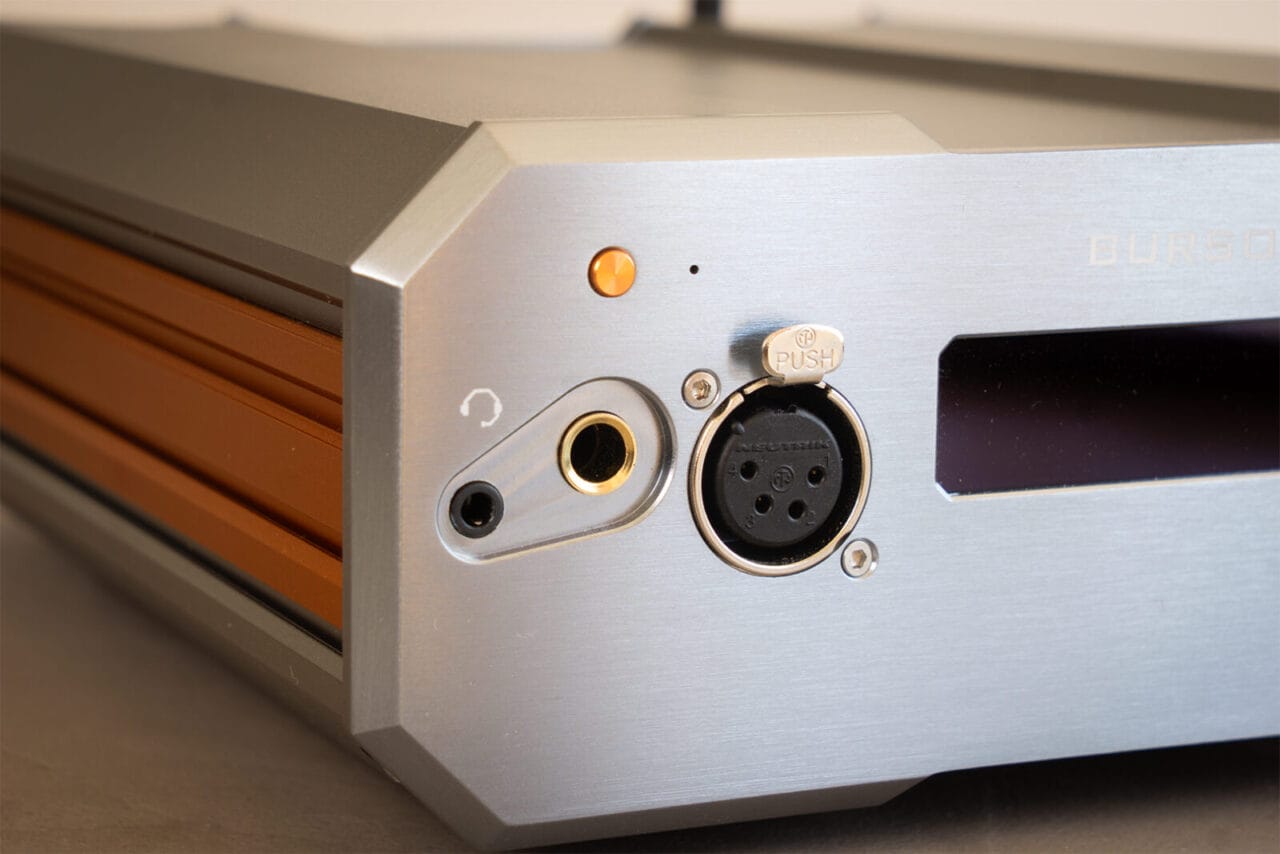
If you’ve got the cans then the Burson’s got the connections
Gone to my head
To test the Burson’s headphone driving capabilities, I gathered a quartet of transducers with Quad’s ERA-1 Planars, Meze’s Empyrean II and IEMS via Shure’s SE215 and Westone Audio’s Mach 20. After some initial tests I reset the DAC to its default settings, rather than those that suited the Linn Kans.
The ERA-1 have an impedance of 20 ohms with a sensitivity of 94dB, so these are not a difficult load, even so I find many headphone amplifiers do not get the best from these cans. In contrast to this, the Burson has no issues getting them going, leaving them sounding excellently balanced, with well controlled deep bass, good vocals and top end detailing.
A track that illustrates this is Jamiroquai’s Canned Heat (Remastered 2006) at 16-bit/44kHz, slap-bass anyone? This is a manufactured acoustic, and it is well presented by the Quads via the Burson. The track’s synth bass is also nicely differentiated from the slap variety. Voices left, right and centre, with some modest depth.
In another direction, Chris Botti’s live rendition of When I Fall In Love from 2008’s Live In Boston album (16-bit/44kHz) had the Quads and Burson combo hitting all the right marks tonally.
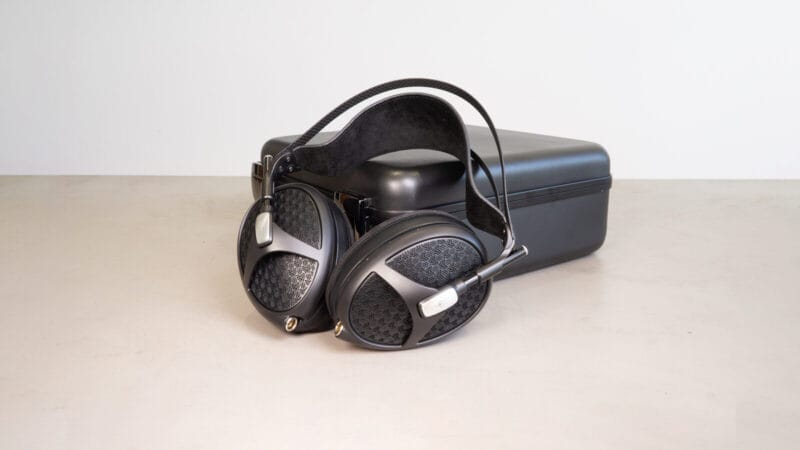
Time to break out the big guns thanks to Meze’s Empyrean II (32 ohm/90dB) which offer all the positive attributes of the ERA-1 and then some, with the Boston Symphony Hall expanding and a wealth of additional detail coming into focus.
Of course this had me exploring more acoustic music, with Orff: Carmina Burana (Cantiones Profanae) under conductor Jos Van Immerseel (24-bit/96kHz). This is an interesting recording which includes instruments from the 1930s and a smaller choir. The Burson allows you to hear what great diction is being delivered. The gong has a nice metallic ring, and when the bass drum arrives at 1:40 it does so with imperious drama.
But these abilities are not relegated to a subset of music. I reached for something a tad more processed via Grace Jones’s Slave To The Rhythm (Hot Blooded Version) at 16-bit/44kHz. The vocals on this track can frequently get a bit, well, hot. But the Burson kept everything cool thanks to how it rendered the nice swooping bass lines with electric guitars left and right, drums centre, and my head in the middle bopping along to the beat.
Using the Mezes in balanced mode via the supplied 4.4mm to 4-pin din convertor has the Botti track sounding even more grin inducing, as much as I had enjoyed the drum impacts and resonances from the Kans, this is a step up. From metallic cymbal brushwork to the brass body of the trumpet, here was clarity with tone.
Switching to the IEM module, with the Shure (17 ohm/107dB) and Westone Mach 20 (96 ohm/110dB), and thanks to the Burson’s headphone mode being more powerful than its IEM setting, it still achieves a similar sound pressure at a reading 10 points below when using these IEMs.
Another feature this revealed is how the the Burson sets its volume to 5 when switching between Headphone and IEM via the menu system. Protection for your ears, and your IEMs. On the flip side, an option I’d welcome would be the ability to save a group of settings, so that a user can quickly switch between different components, without diving into the weeds of the Stellar’s menu system.
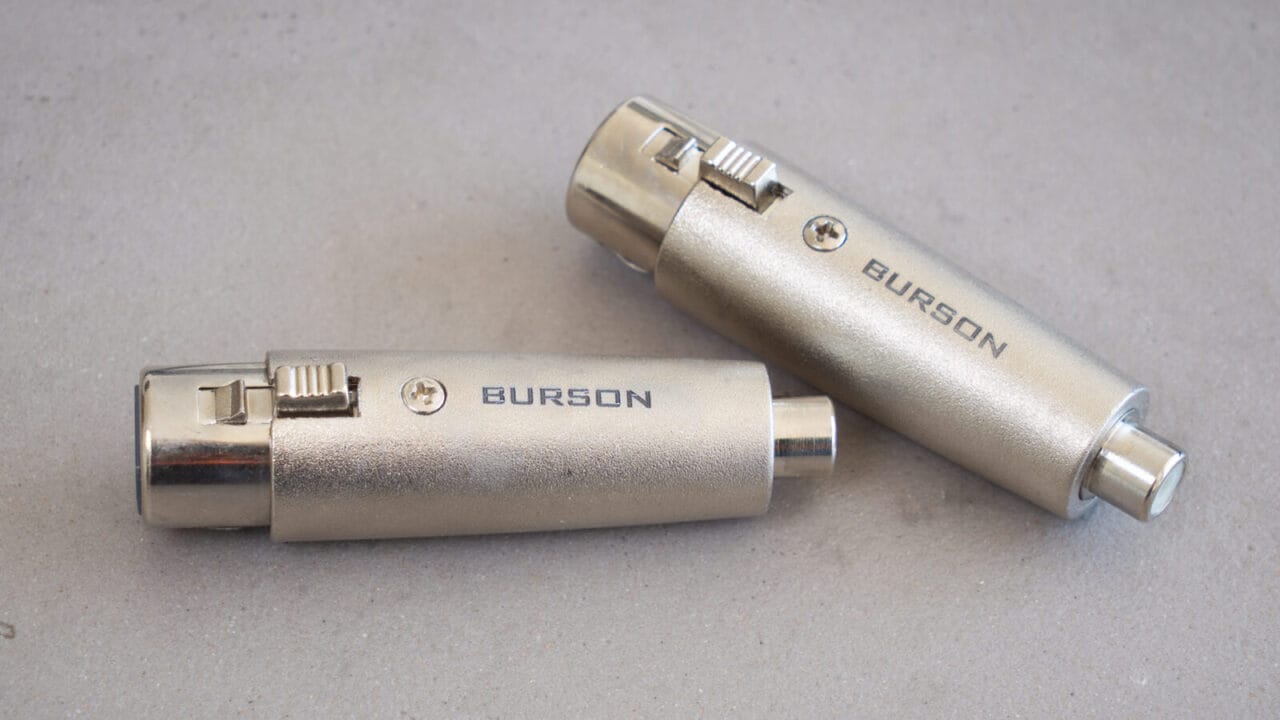
Burson includes its own XLR to RCA plugs, tailored to its model range
Centre stage
Placing the Stellar into my main system opened another window into its capabilities (in both DAC and pre/DAC modes). I initially regretted leaving the Burson unplugged on the side for a few days as vocals sounded sharp at first, having me considering fiddling with its settings as I did for the Kans. However, after ten minutes or so things began to equalise. And when left in standby this acclimatisation period shrinks to just a few minutes.
After that time, all of its Class A clarity is back in spades. The sense of air surrounding the higher frequencies manifests itself in two areas: imaging, and presenting leading edges, with the latter allowing drum strikes and percussive string plucks to really come alive. Revisiting Conquistador and its opening moments, with the orchestra and band members arriving is thoroughly rewarding, as for when the drums come in, you can not only hear the power, you can feel it – bravo!
In summary
The Burson Conductor Stellar is an excellent pre/DAC/headphone amp as its Class A qualities shine through in the music it delivers.
And it also offers plenty to play with, with its settings having a genuine impact on its sound quality, allowing for tailoring to systems, environments and listening tastes – underlining its flexibility.
This is a musical, well styled, versatile and attractive unit at an affordable price.