

Why have a nearfield system? In the professional sphere, where Chord Electronics’ Alto is aimed, monitoring and mastering are the primary reasons, requiring clarity and resolution.
From a domestic perspective there are a few reasons. I spend a reasonable amount of time working at my PC, and want well reproduced music to accompany my desktop hours.
And as much as I enjoy my main system, a nearfield system with headphones also gives me an alternative perspective on the same music (and sometimes leads to a preferential way to experience it).
The other element to consider here is the Alto’s pro origins. Personally, I’m not searching for a musical autopsy in my daily listening which can equate to detail without emotional connection. And in the past I have found that professional gear can sometimes come laden with specifications, but leaves me cold sonically. Chord Electronics though seems to be able to walk the line between pro and consumer better than most, and I’ve previously enjoyed what its ULTIMA technology delivers (in its Etude power amp for example).
So the Alto integrated is a tantalising proposition, boasting the brand’s cutting edge ULTIMA dual-feed-forward error-correction tech in its power amp section, while keeping things compact by fitting it into the company’s diminutive Hugo form-factor, making it easily destined for desktop duties.
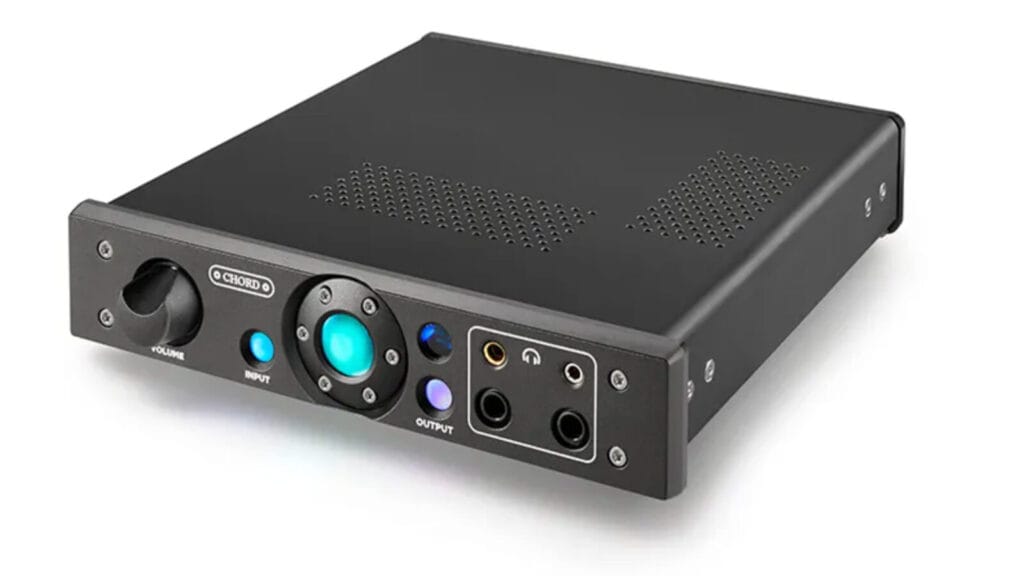
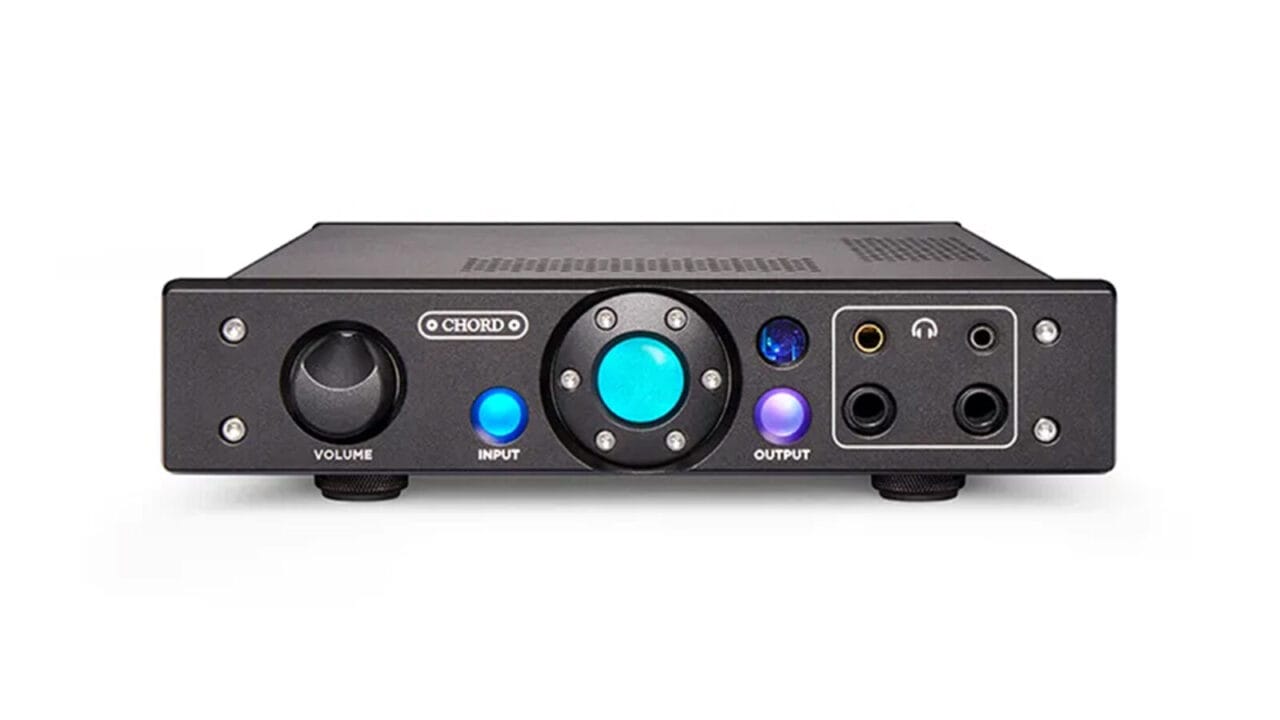
Cutting-edge tech in a compact case is the Alto’s appeal, with four headphone sockets to pick from
The Alto also comes with a laptop style PSU brick which you know will be up to scratch, given company MD John Franks spent many years developing Chord Electronics’s switch mode power supplies (SMPS).
The Alto’s carcass is formed from pressed aluminium, with a solid aluminium faceplate. Its controls follow the company’s playbook, which I like, although it means I have a number of Chord Electronic’s manuals on my phone, as my memory for what each colour corresponds to can fade (if only there was a Chord Electronic’s equivalent of Richard Of York Gave Battle In Vain).
Multi-talented
Inside the Alto beats a vertical MOSFET Class AB heart, churning out 25W into an 8 ohm load (doubling to 50W into 4 ohms) based on a sliding bias approach. The company says that this means the Alto spends most of its time operating in Class A (something borne out by the clarity of its audio delivery, which I’ll come on to).
This versatile little unit offers a preamp out option over XLR sockets, to supply a separate power amp or active speakers for example. Headphone users are even better served, with four sockets to pick from, made up of a 3.5mm, 4.4mm (Pentaconn type) TRRRS pseudo-balanced and two 6.3mm outputs (working in parallel), meaning you can have multiple sets of cans all being driven at once.
Chord Electronics describes its Alto amplifier as a “fully balanced system”, but also notes that the amplifier itself is not a balanced design. I therefore interpret this as being able to fully integrate with other balanced components.
The Alto comes with a remote control, I confess that within my nearfield system I found no need to use it, but the motorised volume control it governs is very nice and slick in operation. The large central on-off orb is colour coded, and at no point did I experience any issues using it. The additional orbs work as advertised, you just need to remember the colours when selecting different functions as mentioned, welcome to the world of Chord Electronics!
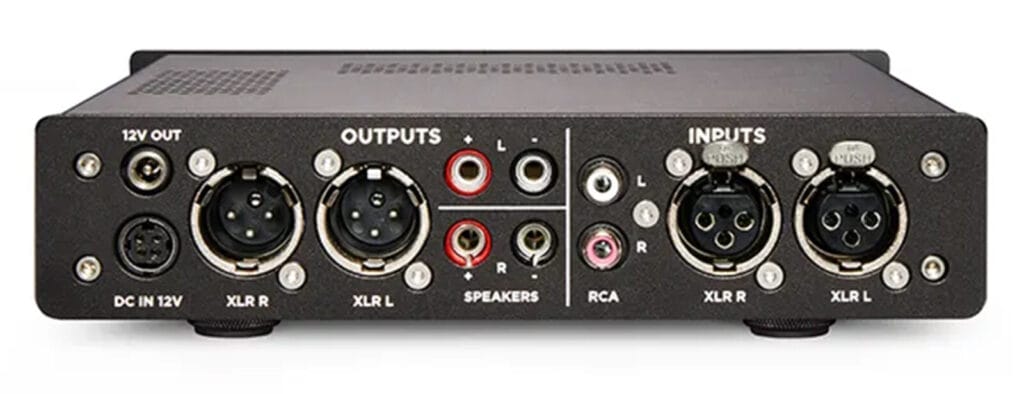
Rear connections are analogue only and include XLR in/outs alongside RCA plus a handy 12V supply. Speaker sockets are recessed, designed for banana and X plugs, but not spade or bare wire
Having rear panel XLR outputs is a handy feature, meaning you can use the Alto to feed a separate power amp. But given the quality of the Alto’s power amp and that it only has two sets of inputs, I’d also welcome being able to bypass the preamp and feed the power amp directly from a separate pre…but you can’t have everything!
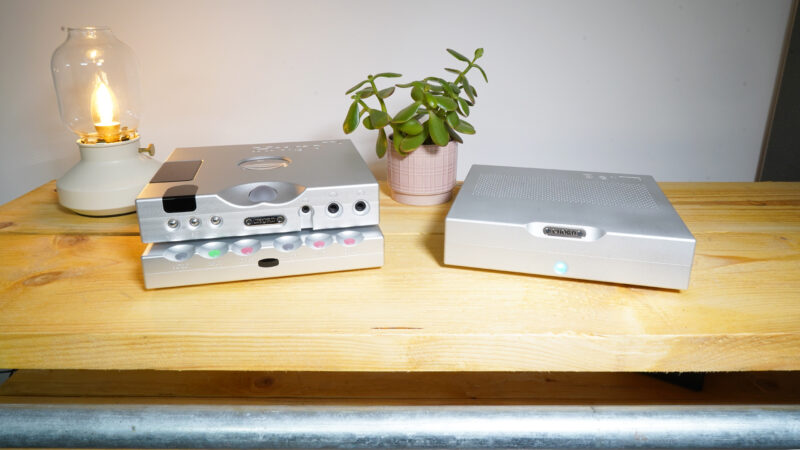
The nearfield system set-up I use usually includes my Hugo TT DAC and headphone amplifier. However, when I noticed that the Alto has a 12V DC output on its rear panel I decided to initially use it to power my matching Chord Electronics M-Scaler, swapping out the Hugo TT for the company’s Qutest. The latter is an excellent DAC which is equipped with dual BNC sockets, allowing full bandwidth upscaling and upsampling from the M-Scaler.
On speaker duties are my go-to Graham Audio Chartwell LS3/5a. Having listened to a fair few LS3/5a models over the years, the Chartwells are perhaps the most amplifier agnostic of the breed, in that they work well with both thermionic and solid state amplification (not true of all LS3/5a!). These loudspeakers sit on angled acoustic foam on my desk, about one metre from my ears, angled at about 30 degrees. They are placed so that their drivers point at a place just in front of my seating position.
Performance
I’ll cut to the chase – I found the Alto an excellent and very informative performer right from the off, that made my nearfield system sing, while also showing that the world of headphone amplifiers has moved on since Chord Electronics first produced its Hugo TT. What has led me to this judgement? Let’s dive into the music I listened to in some detail, strap-in.
The source in all cases was Qobuz via Roon, hosted on my Vortexbox Audiostore Ultra Server.
First up was my Chord Electronics 2go/2yu, M-Scaler and Qutest with the Alto and LS3/5a. I generally listen to music at about 65db, with peaks at about 74db. With this setup, I found I was upping the average to around 70db with an 80db peak, something that I find happens when hifi equipment gives an especially clean signal. I set the Qutest output to 2V, at this output the Alto volume dial lived at around the 12 noon position.
I generally like to have some valves in my replay chain to tame vocal fricatives, but this system behaved impeccably without any bottles in the mix, while problems in the recordings were heard where they existed (as they should be) they never became objectionable. I would say that this system’s sound signature sits on the slightly warmer side of neutral, something I generally prefer, especially when it is done well, as it is here.
The Piano Sessions by Parmalee (24-bit/48kHz) from 2020 is an album I love, with a well recorded aforementioned lead instrument and vocals. Its simplicity really pulls you in to the music, which is only compromised by slightly sub-par backing on a couple of tracks. It’s easy to follow left and right hands on the keyboard: the notes, the applied pressure and pedal application, all sounded excellent.
Newton Faulkner is another favourite. His album, Hand Built By Robots (Live & Acoustic) at 16-bit/44kHz (also released in 2020) offers a very dynamic delivery with his singing closely miked. This can open up the possibility of spitting and dynamic over-loading in some systems, but not here.
With the Alto involved my immediate impression is how well the guitar is realised. I had never been more aware of the sound-box, along with Faulkner’s percussive hand drumming, and his attack on the strings. This was all very well conveyed, staying just on the
right side of not being too hot.
Sticking with male vocals, Johnny Cash was never an award winning singer in terms of scale or purity, and his career closing American albums expose its vulnerabilities even more so, like the audio equivalent of an old leather chair that’s been well worn, but is full of character.
His 2002 album, American IV: The Man Comes Around (16-bit/44kHz) epitomises this, showing that he’s lost none of his talent to really deliver emotion within a performance from his aged tones. The title track, penned by Cash, sounds at once arresting and immediate in equal measures via the Alto (as does the whole album), which adds to its intimacy. Was the Book of Revelation perhaps playing on the author’s mind as he approached his own end? I’ll never know for sure, but the way the Alto renders the lead guitar’s detail aligned to the muscular piano and guitar bass backing, really brings this number to life.
Mind reader
Dialling back the decades to Gordon Lightfoot’s 1970 album, If You Could Read My Mind Love at 16-bit/44kHz makes for a warmer and somewhat less dynamic delivery, having less high frequency presence and instead being perhaps what some might call ‘analogue sounding’ the Alto makes the differences in recording and mastering practices over the decades easy to track. The guitar virtuosity is on full display, being ‘doubled up’ in certain sections. Violins are constantly present on the left channel, cellos right, as Lightfoot’s voice holds centre-stage. A reed organ occasionally adds texture in the right channel. The detail is all well delivered from the Alto, in positive support of Lightfoot’s emotionally charged singing.
Next up I decided to play something less well recorded to see how the Alto responded. R. Dean Taylor was the only white artist signed to Motown Records. I was introduced to his music in the mid ‘70s via his Indiana Wants Me compilation album (1973). The
opening track Gotta See Jane is a personal favourite, and if you’re keen to explore, Qobuz has a mono version. The Alto takes no prisoners here though, showing that Taylor’s voice lacks tone and the music is dynamically flat.
Getting back to its analogue roots for comparison, I reached for my ripped (stereo) version from the original LP, which reveals much more texture and dynamics. While it’s better, Motown was never known for the quality of its recordings and mastering. The differences are therefore subtle but still easily revealed by the Alto, while not destroying the positive musical experience.
Moving on to something rather more propulsive, Slash’s eponymous 2010 album’s track, Ghost (feat. Ian Astbury) at 16-bit/44kHz is no shrinking violet, sounding very ballsy, and loaded with rock and roll swagger. Again, I’m getting detail with musical engagement in spades, underlining how his guitar solo projects are on an epic scale.
To test the system’s higher frequency behaviour means a visit to Graceland with Paul Simon at 24-bit/96kHz via a 2012 remaster. Although this recording was analogue, Roy Halee mastered the music using a digital workspace, which can often result in some vocal sharpness. I also compared it to my original 16-bit/44.1kHz CD rip, revealing both to have issues with sibilance. I would not consider the newer master as being better, and while the issues are apparent across both versions, they are not objectionable or overly emphasised via the Alto, which reveals how it throws open a window into the music technically, but also musically and emotionally.
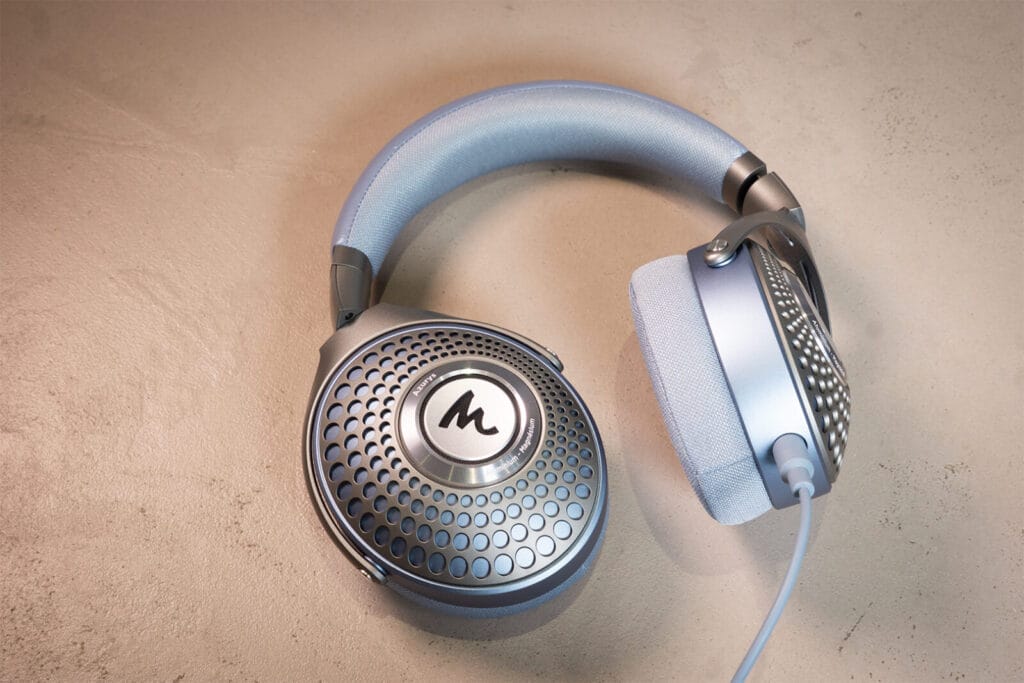
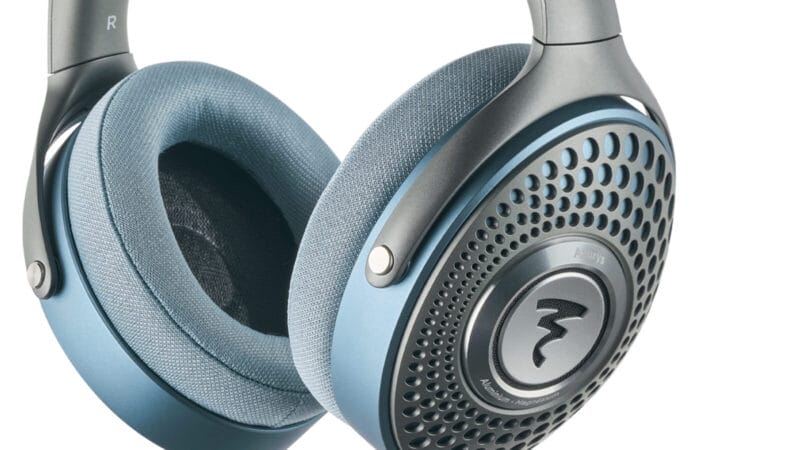
At five hundred quid, Focal’s Azurys is a great headphone to get started with on the Alto
Cans out
Given many owners will value the Alto’s headphone outputs as much as (if not more than) its speaker jacks, it was time to add some cans into the mix, starting with the affordable Focal Azurys closed-back models I tested last month.
As I plugged in the Azurys’ 3.5mm jack, the amp turned off the output, dimming the output button, until the jack was home; a nice touch. (You select the required output cyclically by pressing the ‘Output’ button, changing its colour.)
I also used this opportunity to swap out the M-Scaler and Qutest for my usual Hugo TT DAC and SMSL’s bargain PO100 Pro Digital Data Converter and the clarity of the differences stood out straight away. The Qobuz / M-Scaler combo is highly resolving, however, the Hugo TT gives a larger and more tonally rich landscape, with a tad more bass prominence. Any move away from detail is matched by an increase in tone and timbre. I usually power the Hugo TT with a Ferrum Hypsos PSU and this was fully matched by the 12V output from the Alto, what a shame you can’t adjust its output voltage!
Focal’s Azurys are very efficient headphones and as such the Alto volume control was hardly engaged. I couldn’t drop the output voltage from the Hugo TT and so had to live with this less than ideal situation.
Lopsy Lu / Silly Putty (Medley) by Marcus Miller, Victor Wooten and Stanley Clarke, is a great way to determine the quality of this system’s bass response, which was delivered with great tone and aplomb. The Alto also improves the dynamic punch and control of the Azurys, for example the three bassists existed far more consistently, as their supporting occasional notes were made just that bit easier to hear and appreciate.
Jeff Buckley’s cover of Hallelujah, from his Grace album continued in a similar vein with all the previous strengths mentioned being equally present, but with added detail, tonal richness and warmth. In short, despite the Azurys being the entry level on-ear can from Focal, the Alto was able to push them that bit further to get the most from them, making them sound more able than their price tag would suggest.
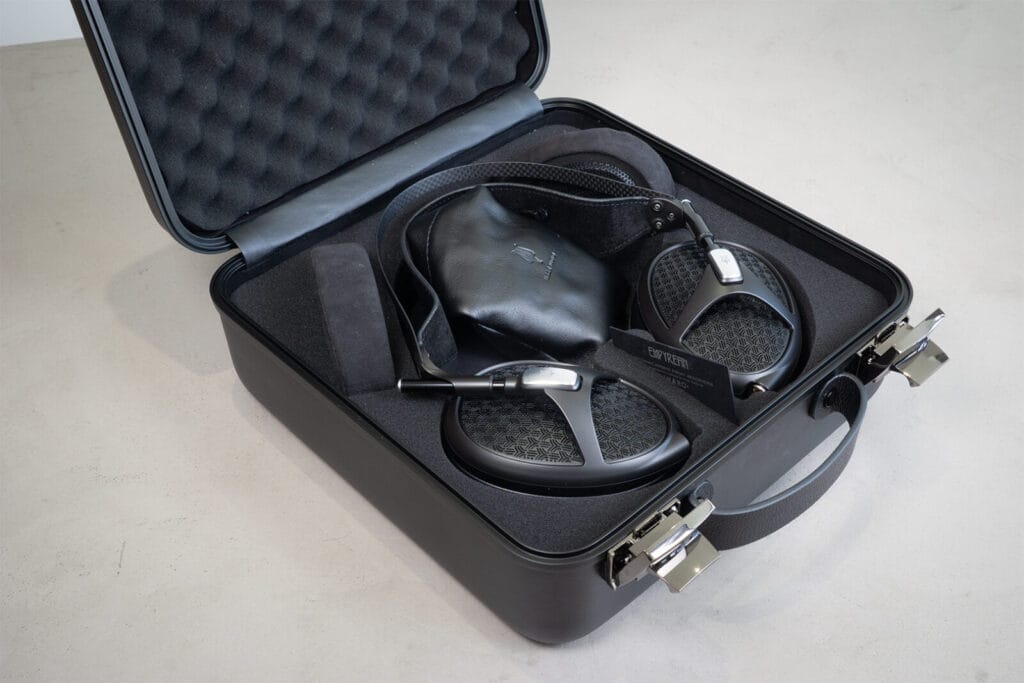
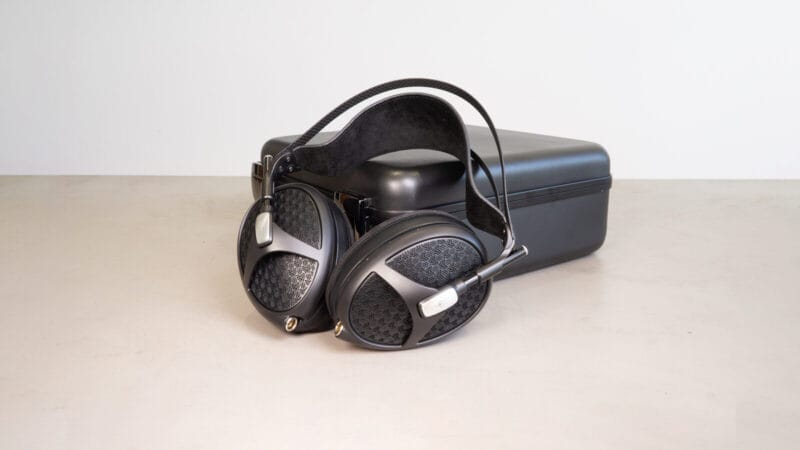
Meze’s recently reviewed Empyrean II really allow the Alto to weave its magic
Make way for the Meze
But let’s not beat around the Alto’s bush, as this amp was destined for headphones with considerably more to offer, step forward Meze’s Empyrean II that have been my go-to hi-end cans in recent months. These are less efficient than the Azurys, and so allowed me to get the Alto’s volume cooking up at almost 9 o’clock on its dial, while revisiting my headphone playlist.
First up was Goldfinger from The Best Of Shirley Bassey and straight away I could sense an increase in bass and how much air was being shifted. Vocals were also improved too, being clearer sounding and less limited, increasing my enjoyment of the music.
This was followed by Hugh Laurie’s version of St. James Infirmary. The dynamics of the piece as a whole, as well as the individual instruments, were more evident via the Alto and Meze medley. As the introduction builds the musical energy was a delight to experience, while their combined control of the ensemble meant that the bass and drums had greater verisimilitude, without making the other performers in any way opaque. Inner detail of the band’s technique was there to be heard, whether that was the percussionist beating a drum’s edge, Laurie bearing down on a note, or gently playing a chord – the Alto simply delivers more performance to whatever headphones it’s serving.
In summary
Chord Electronic’s Alto is an interesting mix of functionality, features and sound, which allows it to support a variety of nearfield contexts – making it a hifi Swiss Army knife, and in this context it’s a superb performer.
As a desktop integrated it ticks a lot of hi-end boxes, thanks to the brand’s technical expertise encapsulated inside, and as a headphone amp it goes the extra mile, being able to get the best from any cans it feeds.
It also pairs really well within a wider Chord Electronics’ ecosystem, for example its 12V rear DC output is high quality and was put to immediate use with my partnering Chord gear for impressive results.
Delivering detail can often be done in a musically inert way. Not here, instead you get harmonic richness that’s perfectly partnered with resolution. The Alto will readily tell you the differences between musical sources and mastering decisions, in addition to changes in your replay system. But, it does so in a way that is truly musically engaging.
Am I a fan? Well let’s put it this way, I’ll be clearing some Alto sized desk space longterm!