

Want to radically change your system? One oft-repeated piece of advice is to change your speakers. Easier said than done, at least done well.
Speakers have an intrinsic relationship with your room, not to mention your personal chain of components.
Changing headphones, or should I say HEDDphone, is a tad more straightforward. Although there is still a dependency, your lugholes! Yes, the physical shape of your head and ears will, of course, impact the way the headphones sound.
No-one said hifi is simple, or straightforward which, yet again, emphasises how important spending time listening is when spending your cash.
In my case I have a selection of headphones as reference points for reviews, it is a humble sacrifice I know, and one the editor forces me to make. At least that’s what I tell my starving wife and children.
Each pair of cans have their own subtle and sometimes not so subtle strengths. So, what of this Teutonic bit of kit?
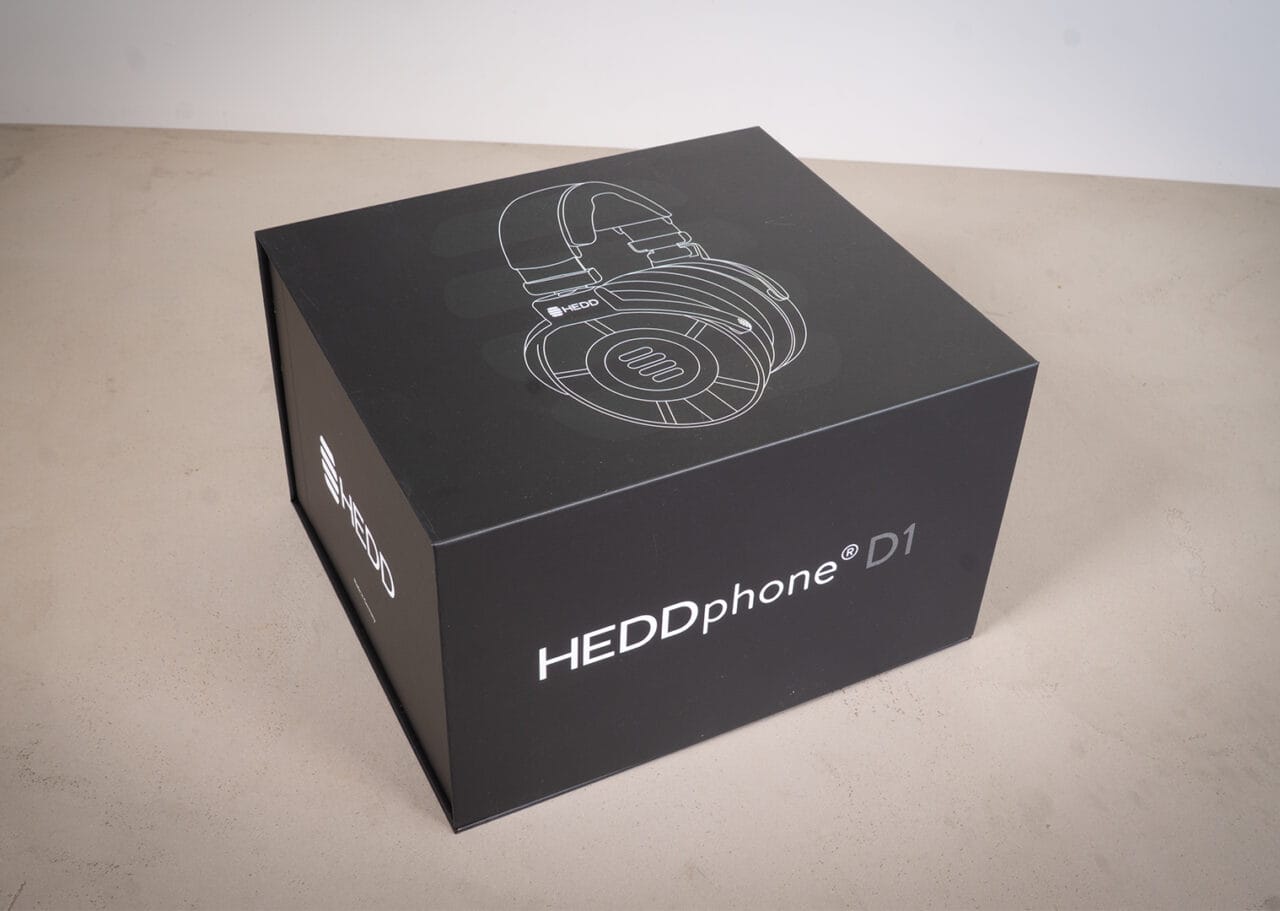
A complete HEDD case
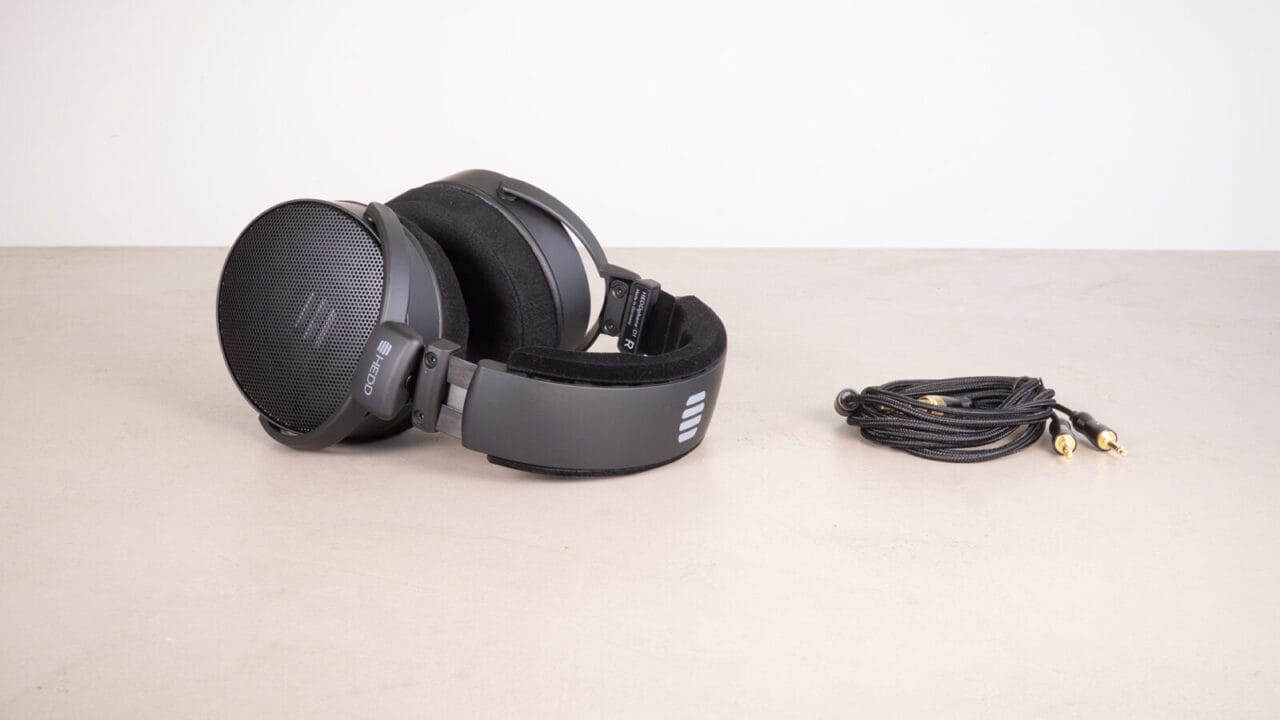
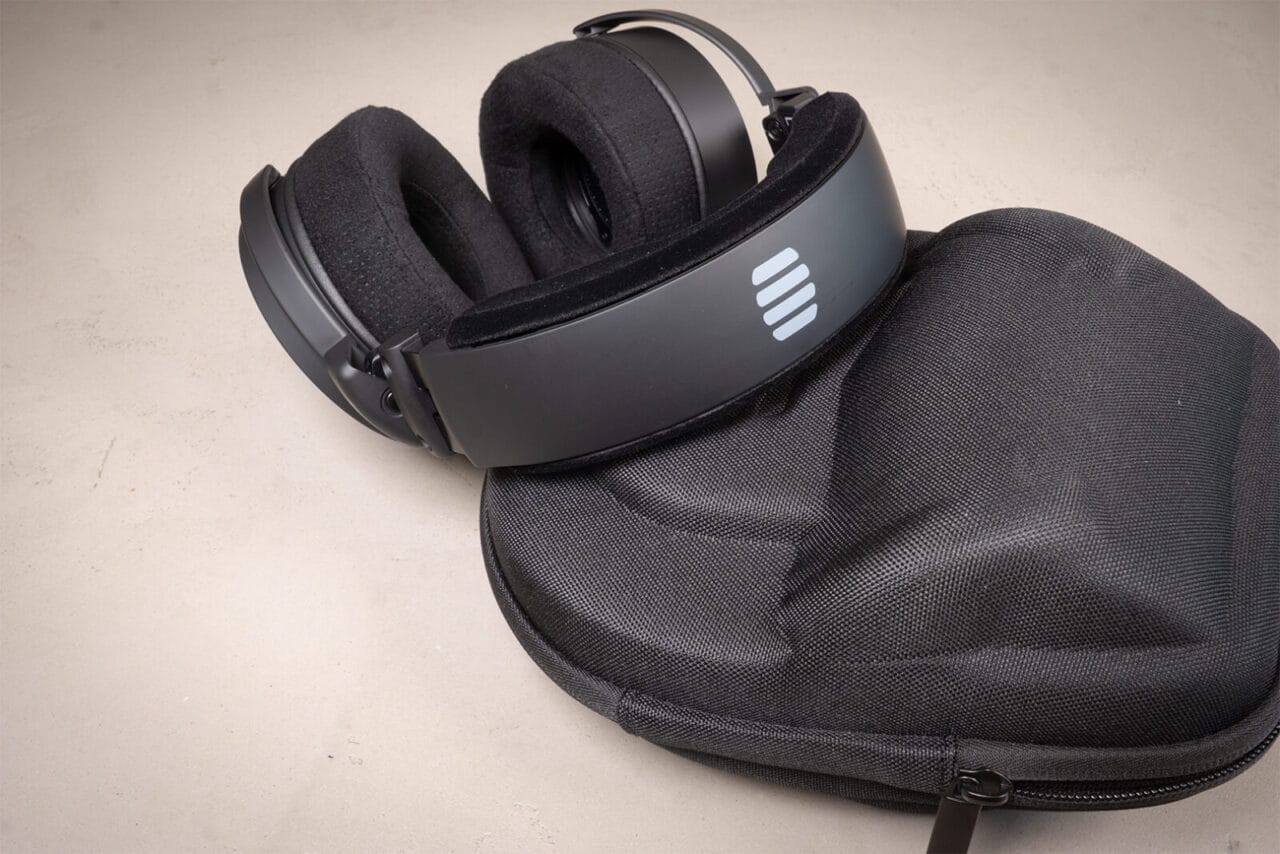
The £599 HEDDphone D1 arrives in a good quality magnetised box. Once flipped open you remove a protective padded card, beneath which is the flattish compact case containing the cans themselves.
I love well made, low bling, serviceable hifi, and the HEDDphone D1 hits the bulls-eye. Almost Germanic in its efficiency you might say.
HEDD is an acronym, or at least most of one, standing for Heinz Electrodynamic Design. Based in Berlin the company was set up in 2015 by Heinz Klaus and his son, Frederik Knop.
The D1s are manufactured and assembled in Berlin by HEDD’s staff, which it describes as artisans for their precise fine motor skills acquired over the years (many of the team have been with the company since its founding). Listening is also part of their quality control process, alongside instrumental measurements (nodding to their foot also being in the pro-gear camp).
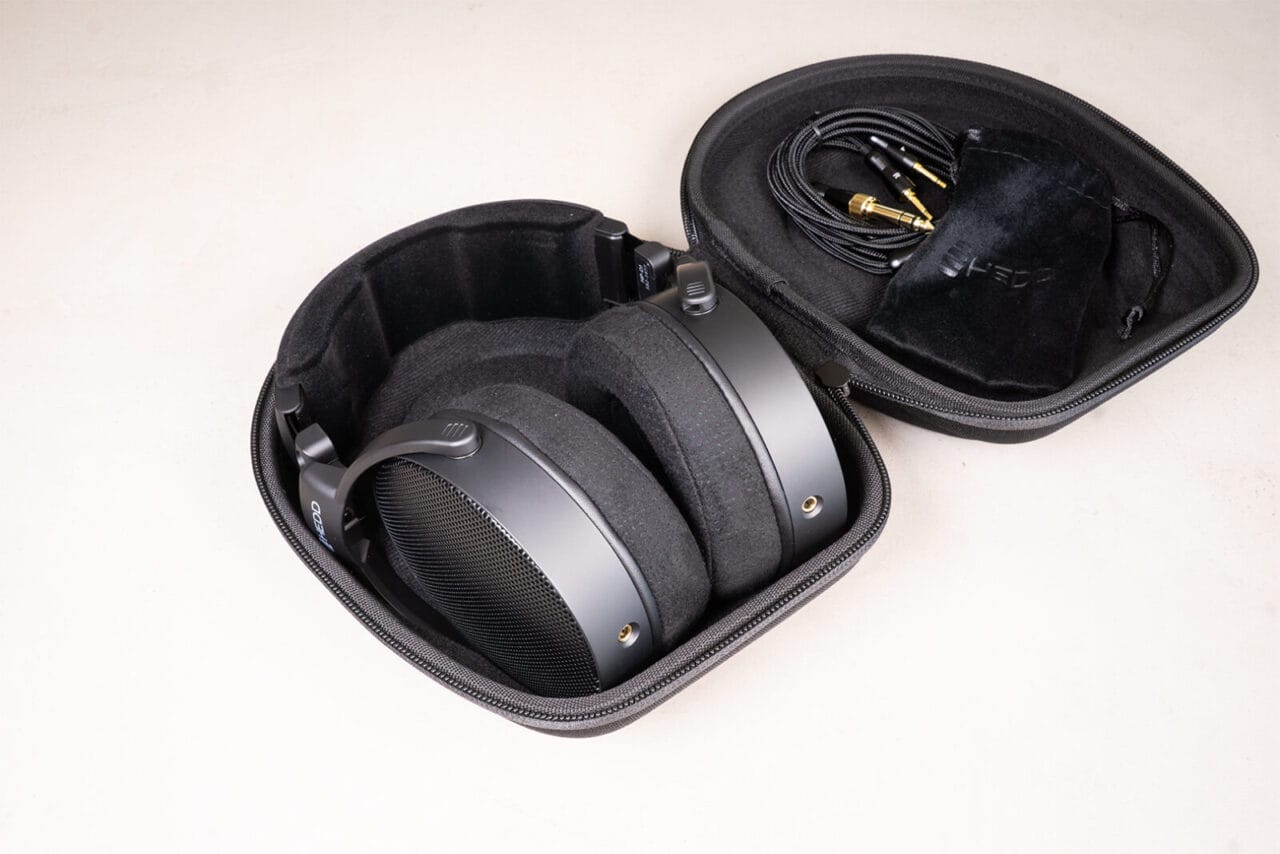
Cans and cables neatly nestle in their protective shell
HEDD Space
The 350g HEDDphone D1 is an open-back over-ear headphone with dynamic thin-ply carbon diaphragms (TPCD), a first for the company, which also informed me that these were developed to be super thin, which took hundreds of iterations to get right, including for their directional stiffness.
I did push for some detail on the manufacturing processes and was told “That’s a secret”. I can but try! That said HEDD did reveal the D1’s driver magnets to be neodymium. They also boast a 5Hz to 40kHz frequency range with a maximum SPL of 100dB at 1mW, and an impedance of 32 ohms.
The D1 pads are perforated velour with an approximate internal void of 50mm (W) by 60mm (H). They fitted my age expanded ears, comfortably and the cushions are easily removed should you want to replace them.
The headband pad is also removable. In fact as a unit the screw-heads are exposed making the whole HEDDphone easily serviced and maintained, as long as the parts are available. The D1’s five-year guarantee also offers peace of mind in this respect, highlighting HEDD’s expectations for long-term ownership.
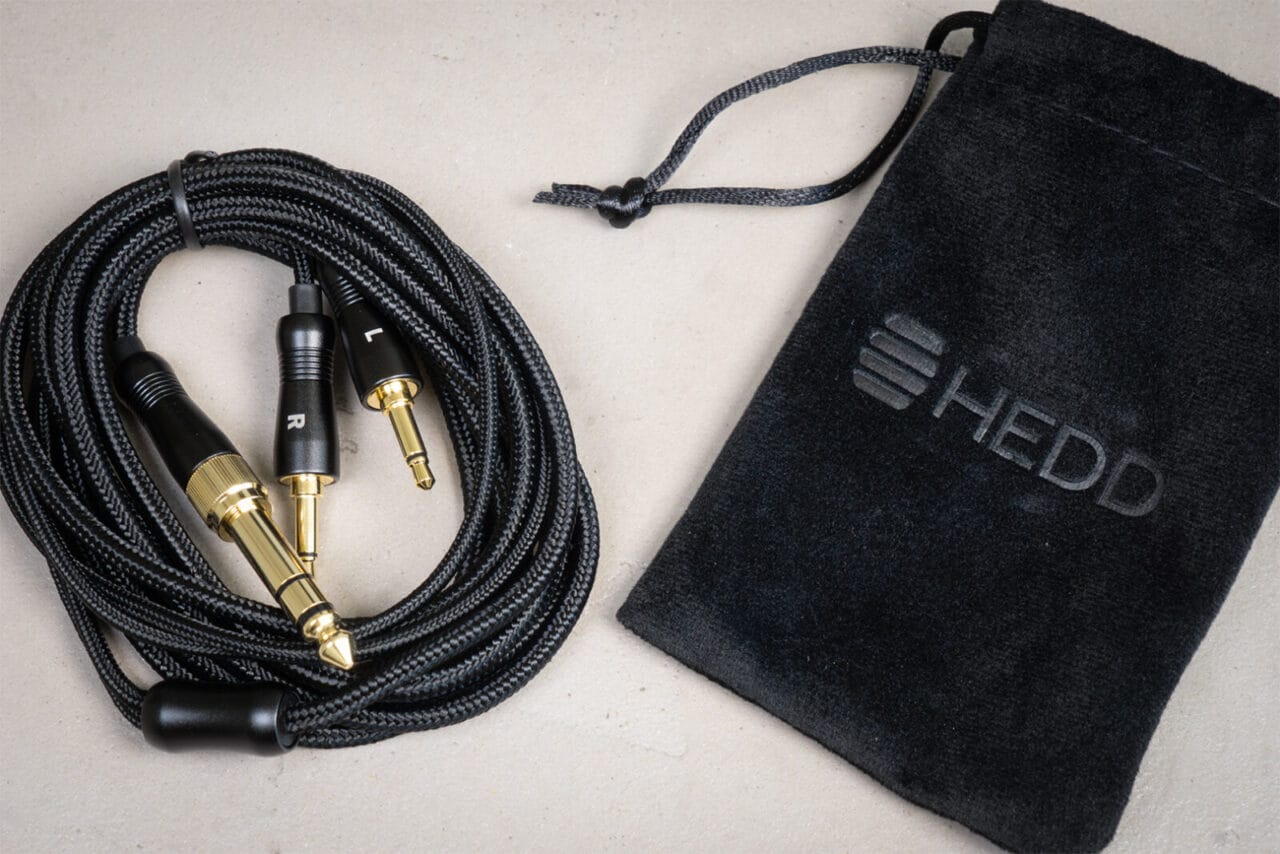
Wired for sound – supplied cables and soft case are decent quality
The supplied connecting cable is a generous 2m long, terminating in 3.5mm plugs at the earphone and amp end, with a screw-fit 6.35mm adapter supplied for the latter. A two metre balanced cable is also available for extra £262, should you want to upgrade with one from HEDD’s own stable.
Performance
The D1’s headband is firm, and initially made itself felt (sic). The pads were a tad tight for the first couple of hours but as they settled they became more comfortable hour by (many) hours of use.
In terms of usage, I ran the gamut. Initially direct from my Samsung smartphone. Despite the easy specs I did find I needed to wind the volume up higher than usual. First impressions? The D1’s sound has a bit more bass weight than I am used to, but it’s nicely balanced.
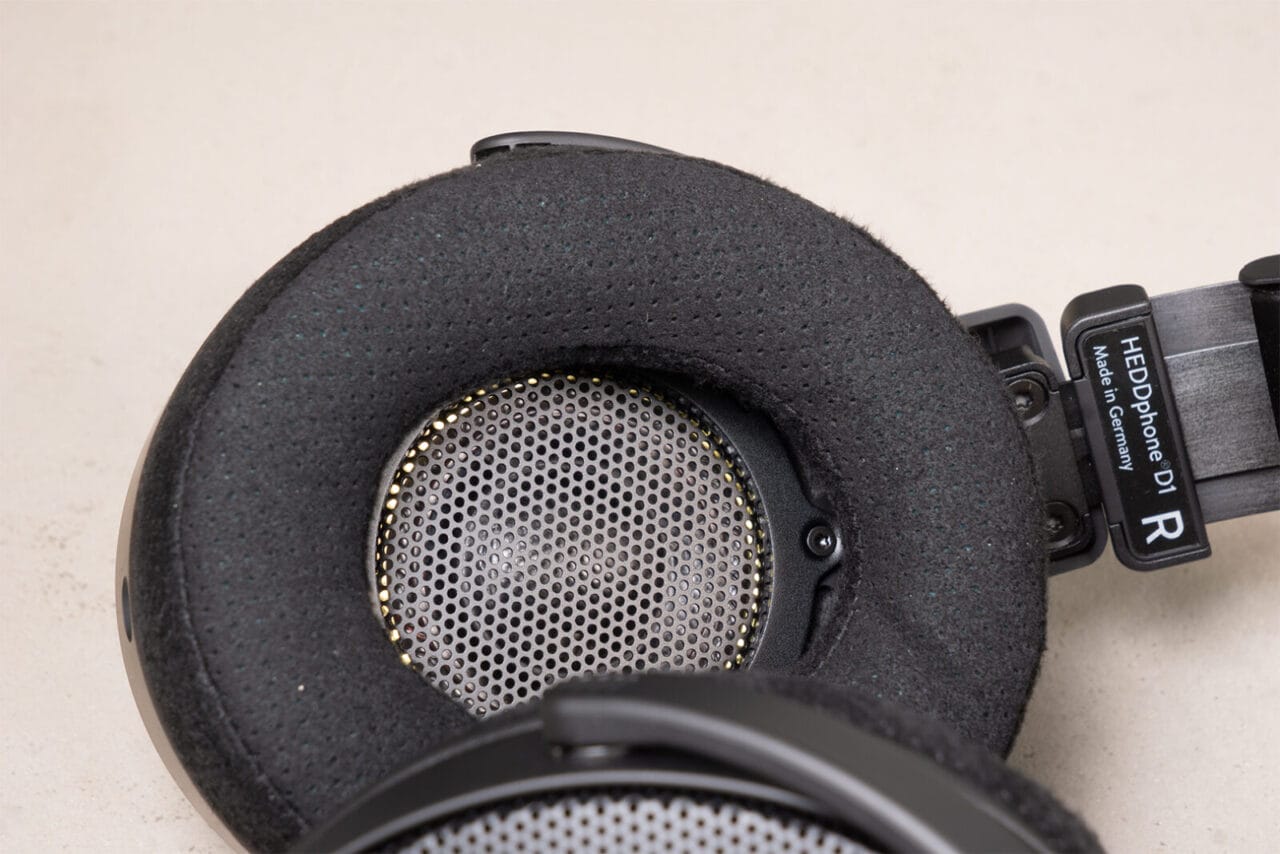
Perforated earpads get more comfy with use, note the ‘R’ right ear designation on the inner headband
Time to introduce my Chord Poly Network Bridge and Chord Mojo2 DAC to the HEDD cans. Unsurprisingly the D1’s sound quality improved in terms of resolution and dynamics. These days, I often find myself listening to music in bed before going to sleep, which is rather better for my mental health, versus staring at YouTube. There is an advertising campaign here!
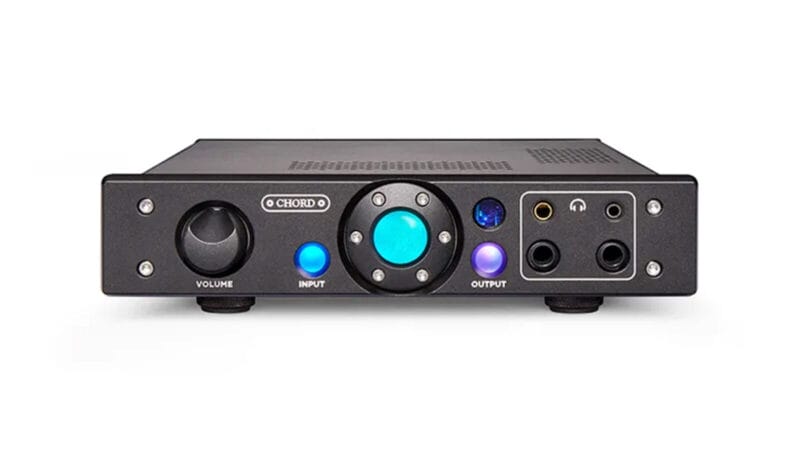
For the full-fat headphone experience I plumbed the D1 in to my nearfield setup comprised of Chord 2go/2yu Network Streamer, Chord Hugo TT DAC and Chord Alto amplifier. Using the Alto purely as a headphone amplifier, although it was also powering the Hugo.
Further gains in terms of resolution and dynamics are evident in the D1’s sound, and this is the system that I used for most of my performance notes.
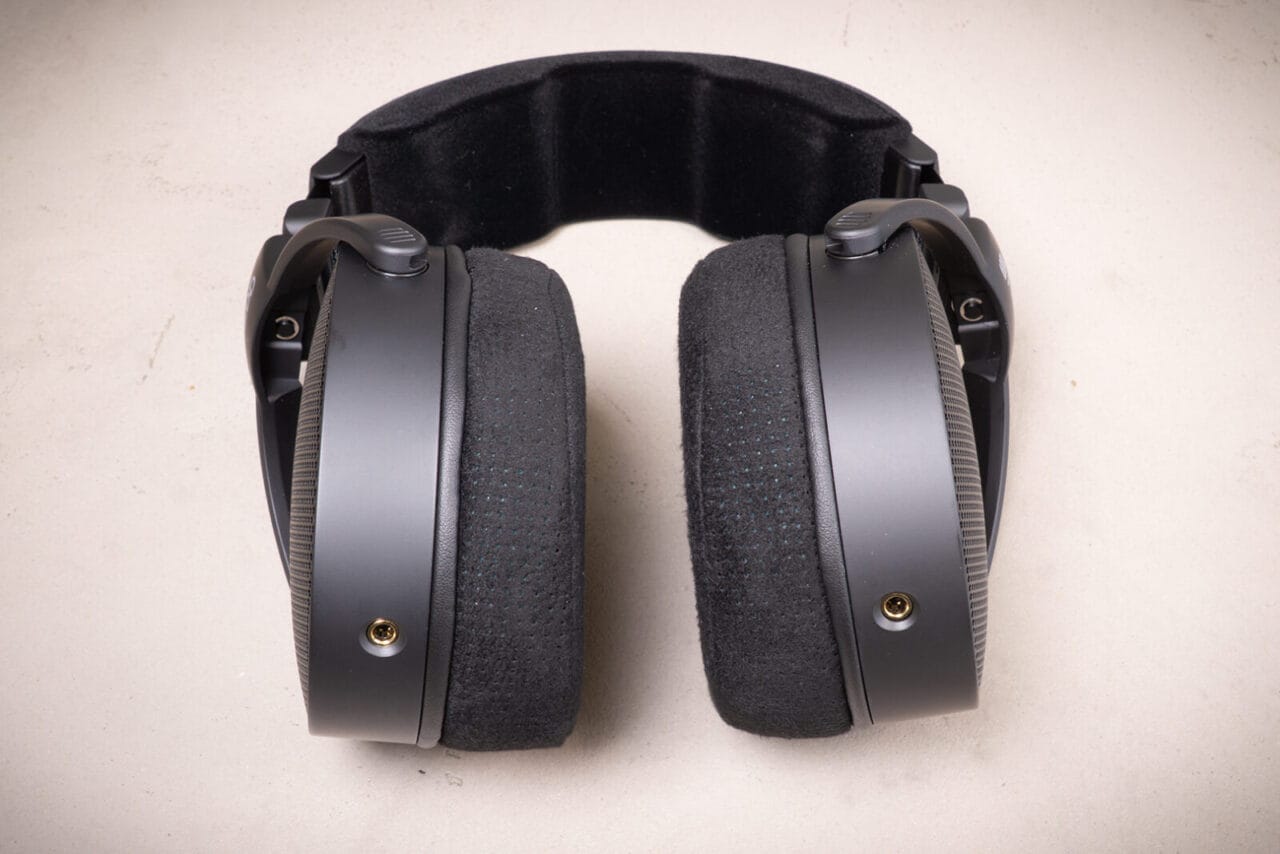
The HEDD D1 comes in any colour…as long as it’s black
HEDD Phrenology
As a headphone, HEDDphone D1 is that bit darker sounding than I am used to. It is as resolving as many cans at this price, but the higher frequencies are not overly pushed at the listener.
Jimmy Hendrix’s, All Along The Watchtower (Qobuz, 16-bit/44kHz) is much loved, but I find it is very easy for this track to come slightly unhinged through many systems. Higher frequencies get emphasised and cohesion lost. The HEDDphone managed this test with ease.
The hard strummed acoustic guitar easily comes across as strident. The D1 shows the attack, but is not wearing. The drums echo the rhythm of the guitar and then push the beat as Mitch Mitchell starts to let loose. It is easy to follow his and Redding’s contributions behind Hendrix’s peerless playing.
On to Take The Veil Cerpin Taxt (Qobuz, 16-bit/44kHz) by The Mars Volta. A ‘tiny’ bit of dynamic contrast here, and nicely tracked and delivered by the HEDDphone. I love the piano in this track, but I felt it isn’t well recorded. When I visited Crescent Studio’s their recording engineer, Damon, showed me a few of his approaches to piano recording, and the difficulties!
I now moved on to a recording that I feel does portray the piano very nicely, Jon Batiste’s album Beethoven Blues (Qobuz, 24-bit/48kHz). A more musically unorthodox choice for me, but a rather good recording. Beethoven’s 7th Symphony is, of course, superb and 7th Symphony Elegy is thoroughly engaging. The tone and the range of the piano is fully on display, as Batiste slurs and delays chords with aplomb. All is on full display in the D1s, including Jon’s vocal interjections, which reminds me of the ever-green The Koln Concert – where Keith Jarret can be heard vocally accompanying his flowing fingers.
For Fugazi’s sake, listen to the rendering of that bass. The band’s 1989 album 13 Songs (Qobuz, 16-bit/44kHz) had somehow passed me by, but no longer thanks to the D1’s take on it. The bass playing is now as much a part of the percussion as the melody. Forceful and delivered with aplomb, tick.
I love the Telarc soundtrack recordings with Eric Kunzel and the Cincinnati Pops Orchestra. The bass pops, and has a lovely bloom – when well rendered. Finale From Dragonheart (Arr. J. Price) (Qobuz, 16-bit/44kHz) is an excellent example with resounding bass beats from 30 seconds in, which the D1 gives you with nice tight drum strikes to savour.
Playing Caroline No’s Crystal Ball (Qobuz, 16-bit/44kHz) further emphasises the D1’s ability to deliver a pressurised bass line, as the underlying pulses do a grand job in supporting the piano and delicately delivered vocal.
Listening to all these problem tracks I obsess over was not a problem with the HEDDphone D1. Even Son Of Man from Phil Collin’s Tarzan Soundtrack anthem (Qobuz, 16-bit/44kHz) was defanged for me to enjoy.
Smooth operator
Okay, so the D1 can do bass, with texture, nuance and scale. But what about accuracy? I don’t want my music neutered by removing extension, and as I stated above, the HEDDphone D1 doesn’t do this, but it also doesn’t amp up the detail through high frequency emphasis. What you get is well balanced music that doesn’t trigger poor mastering.
Josephine Oniyama’s 2022 Kindred album (Qobuz, 24-bit/48kHz) is a thoroughly enjoyable slice of pop, but with a top end that can occasionally get too hot. Via the HEDDphone you can hear where this is happening, but in a way that minimises the sharp intrusiveness of those notes.
Which brings us on to Diana Damrau, who is a superb soprano. Her album Arie Di Bravura (Qobuz, 16-bit/44kHz) is a well recorded introduction to this talented lady. The HEDDphone allows you to hear her stunning diction and breath control. A true virtuoso clearly in focus via the D1.
I always find discussions of sound-field with headphones interesting. Sitting the cones either side of your noggin will inevitably give you a different experience from speakers placed a short distance in front of you.
A number of years ago Bowers & Wilkins ran a music club, which delivered hi-res files monthly, these included binaural albums. Even these do not echo the speaker sound-field experience, but does that matter? I think not. Headphones give a closer perspective, and the D1 immerses you in the recording.
Headphones are a different medium – more immediately intimate, detailed and less expansive than more distant speakers. You are placed in the middle of the performers, it is more akin to being a part of an ensemble rather than being in its audience. The HEDDphone seems to fully get this, and delivers this experience with an ability to give you the individual performer’s contributions, and transmit their musical passion. In this respect, it can hold its own against anything I have heard in the £500 to £1k category, which makes the D1 great value.
Rest assured, the HEDDPhone D1 is a lot of headphone for the money
In summary
The HEDDphone D1 is a very well made, well balanced and informative headphone that’s able to perform with a wide range of hardware.
The more capable the source, the more you will extract from these beauties. They mean business and as such, I thoroughly recommend them.
These will certainly be remaining as a new reference point for me, I just need to cancel the groceries for next month.