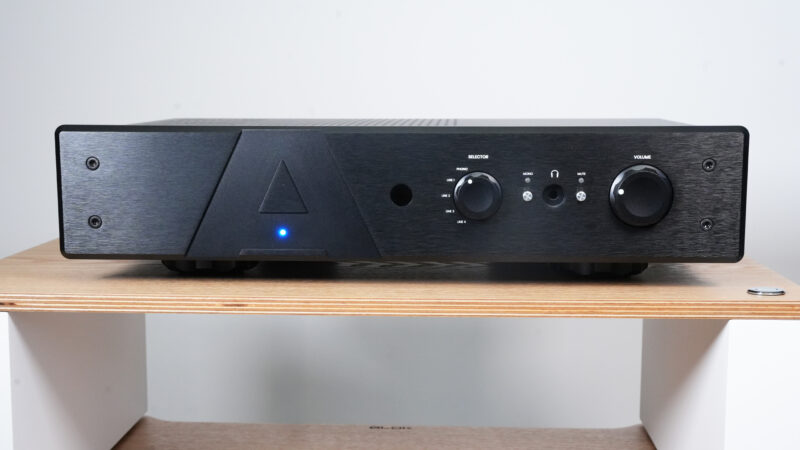



To quote the lyrics of the great Philip David Charles Collins, “I’ve been waiting for this moment…all my life”. While that may seem a bit of an overstatement, reviewing an AVID deck has felt like the elephant in our listening room. Because having been seriously impressed by the brand’s top flight Nexus tonearm, Ionic cartridge and Accent amp in recent times, we’ve not had a matching deck in from the Cambridgeshire based brand to get to grips with. This is partly due to how in demand its turntables are, perhaps driven by the gap that’s opened up since SME pushed its reference decks to almost unobtainable prices.
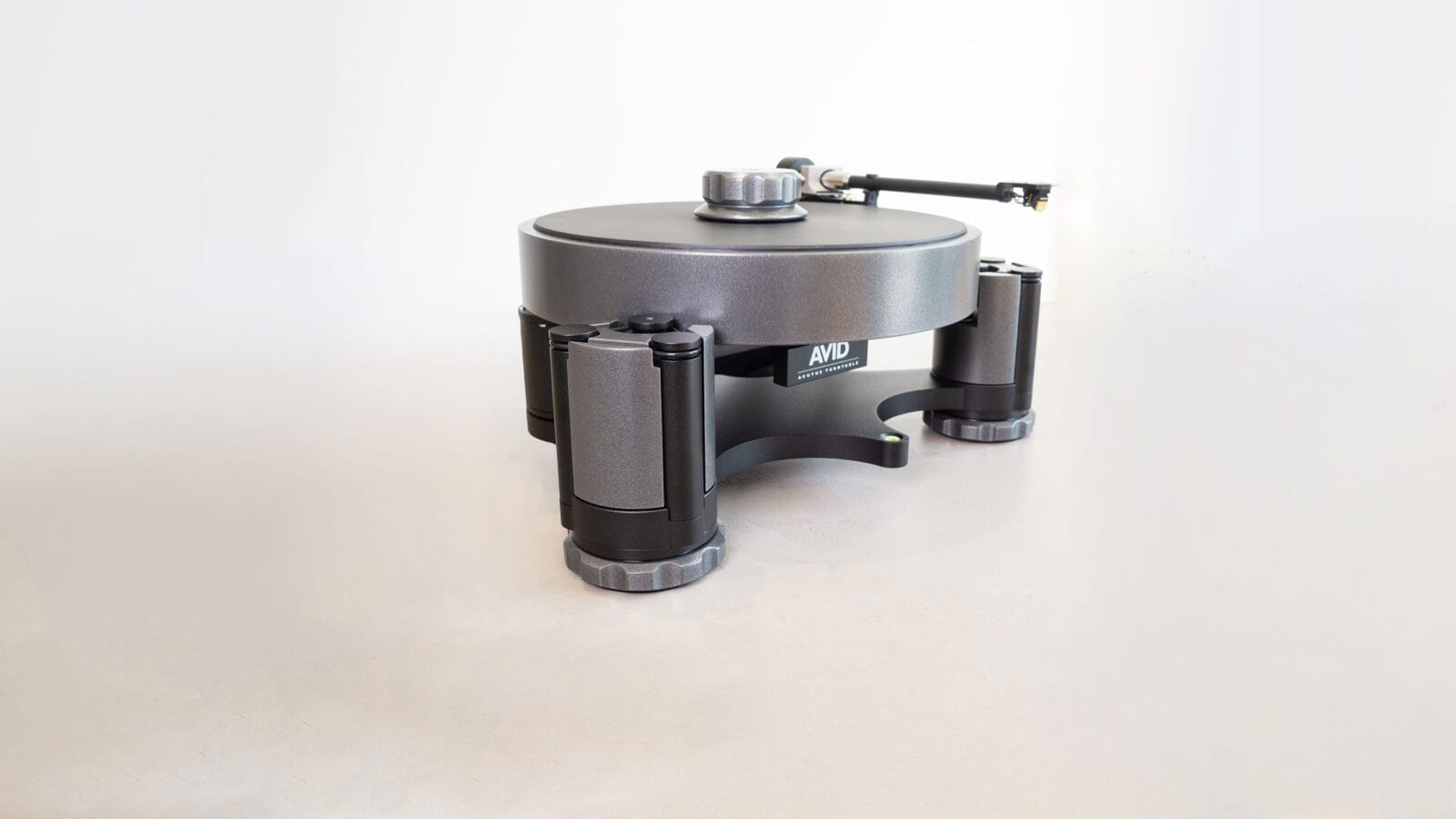
The Dark Iron isn’t a new machine of course, being released in 2024, with AVID’s Relveo and Ingenium SE both following in its footsteps since. The reason we’re starting here though, is because the Dark Iron spans AVID’s more affordable Master Series models (the two mentioned above) and flagship Acutus line. As, at £10,500 (sans arm and cart), it’s basically an entry Acutus in a stealthy black finish like AVID’s cheaper models, instead of the mirror finished metals of its bigger brothers.
Dial back the decades to AVID’s genesis in 1999 and the Acutus is where it all began, which shows how strong the original’s blueprint was, allowing for decades of evolution while retaining its DNA. Its longevity speaks volumes about Company Founder Conrad Mas’s approach to hifi design, which follows two fundamental rules. First up – make products that last, in terms of quality and design. And secondly, design from the top down by starting with something that’s the best that it can be, allowing you to retain elements for more affordable models to get maximum bangs for their bucks (as opposed to starting with something compromised, that you then ‘improve’ upon and charge more for).
This translates to AVID’s turntables sharing the same levels of quality in critical areas, such as bearings, motors, fit and finish, no matter where they sit in the range. And the more you spend, the more deck you get.
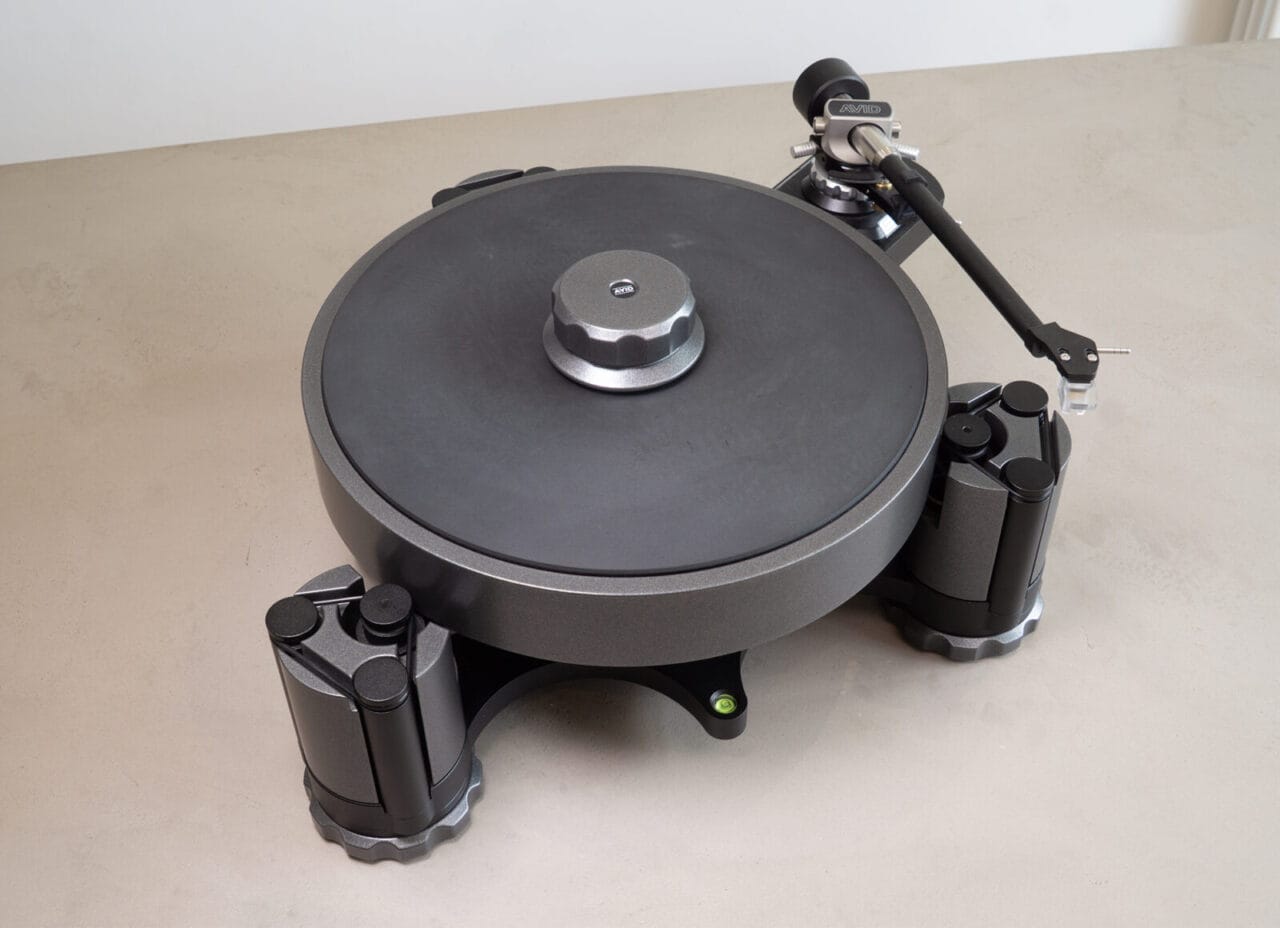
The view from above. Despite its 20kg heft, the Dark Iron takes up a relatively compact footprint at 460/400/210mm (WDH) and looks like it means business
Speaking of its bearing design, the Dark Iron gets AVID’s (that’s short for A Very Interesting Design by the way) long-length no-compromise stainless steel shaft with self-lubricating sleeve and tungsten/carbide ball, running against an upper sapphire thrust cup. Being inverted improves stability, but means that the contact points (and therefore source of potential rumble) is placed much closer to the surface of the LP, so those all important touch points need machining to exceptional standards, which they are, with no metal to metal contact within the bearing’s operation.
On to this sits the Dark Iron’s all important 10kg aluminium platter, with AVID’s unique resin mat affixed to its top. Stemming from years of development and hundreds of thousands of pounds in R&D, the resin’s internal structure works to keep vibration within the record, then rapidly channels it away by grounding thanks to clamping it to the bearing, while temporarily absorbing vertical energy so that it doesn’t feed back under the all important stylus. Despite looking black in finish to match the deck, this special mat material is actually transparent, and what you’re seeing is the surface of the platter underneath.
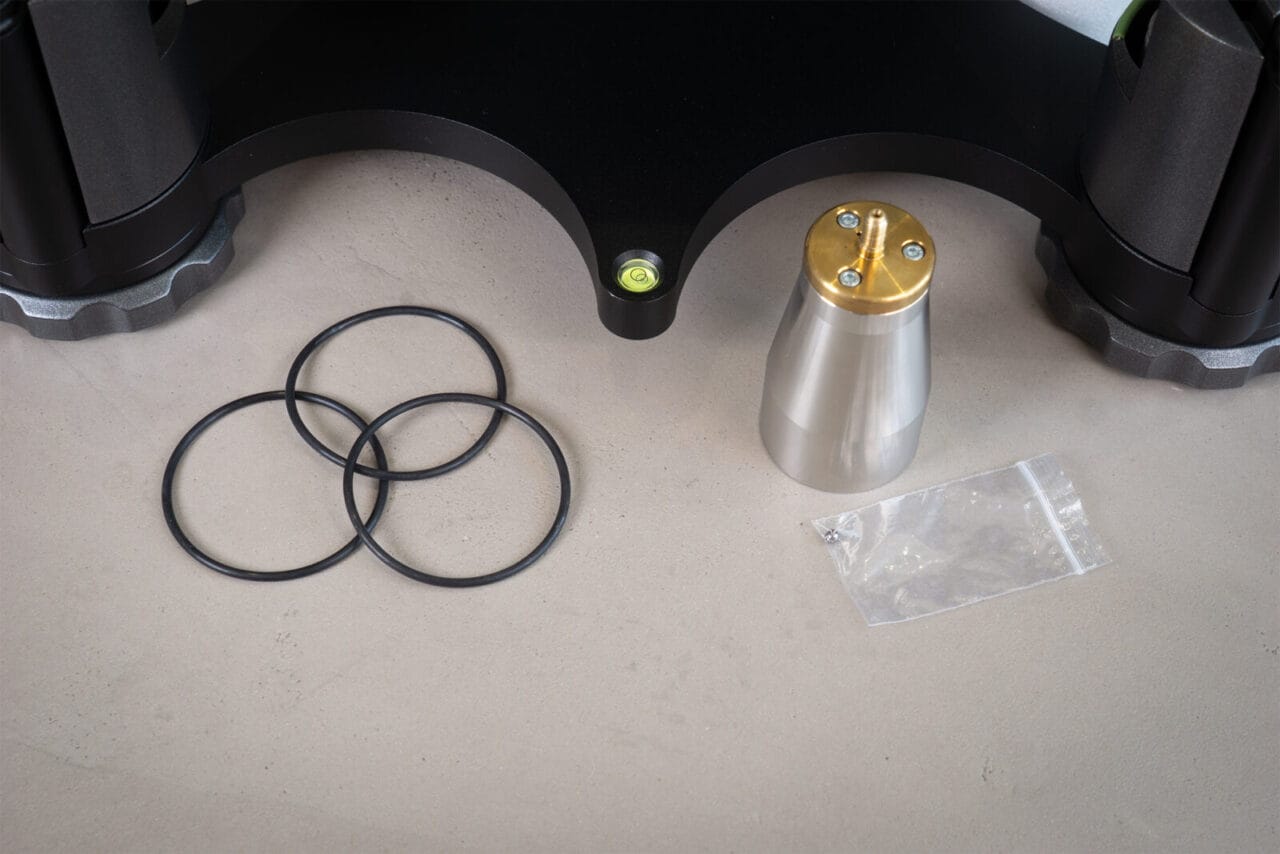
Upper bearing sleeve and suspension tower rubbers ready for fitting. Note the handy inbuilt bubble level (and yes I know…my studio’s table is a few mm out!)
Spring loaded
The deck’s reference grade suspension comes courtesy of three chunky legs fitted to the base, with each housing a beefy spring that’s tuned to 2.5Hz, well below the range of any human’s hearing. These are then compressed to allow them to ‘bounce’ evenly in unison, aided by large horizontally tensioned O-rings made from a special rubber, to control lateral movement. And this is borne out in its performance, as AVID’s Acutus decks are perhaps the only turntables I’ve experienced which will still track a challenging groove perfectly while bouncing vertically, due to the how the deck’s load is evenly distributed across the three points, showing just how well each one is engineered.
Getting everything moving in the right direction is a 24V 140mNm AC synchronous motor, which is also class leading (so much so, that a certain rival brand has recently followed suit, moving to AC after years in the DC camp). This is fed from a dedicated external PSU, which is basically a mini Class A amplifier boasting an 80VA mains transformer feeding the motor’s twin coils, with DSP generated frequencies. Each deck’s PSU is also individually matched to its motor, with speed fine tuning offered via the PSU’s front push buttons when pressed simultaneously to enter adjustment mode.
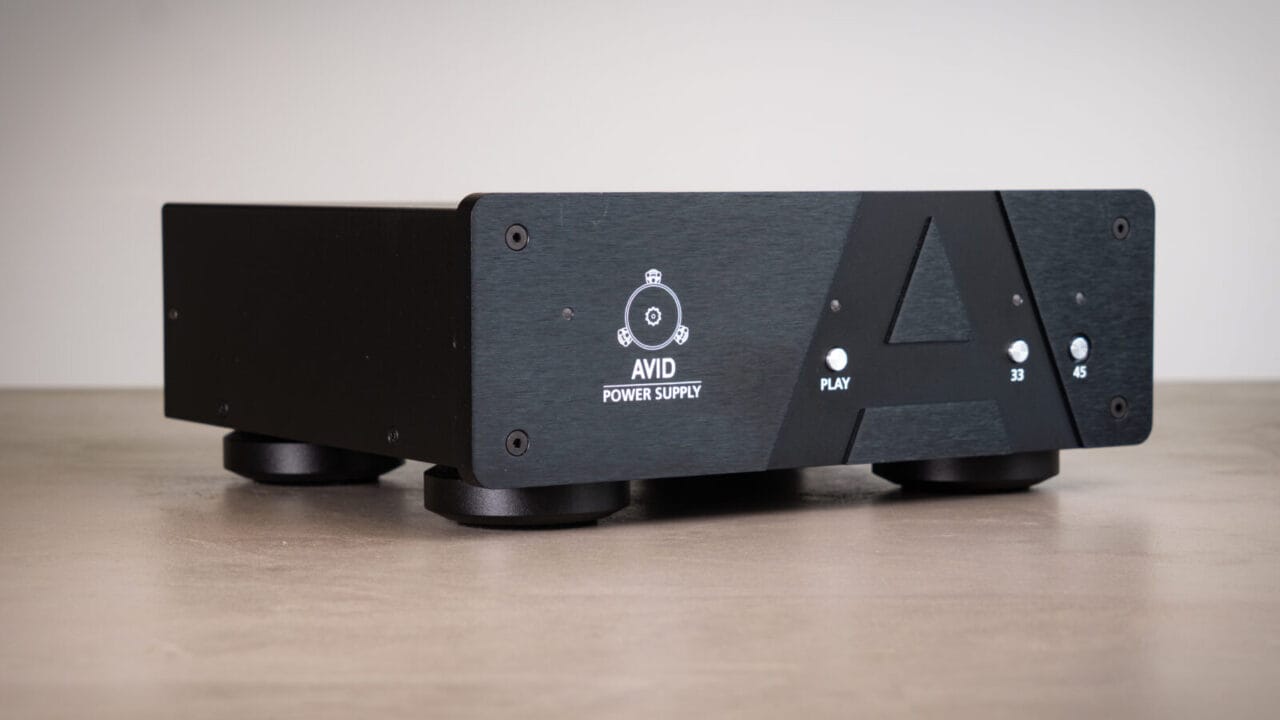
Standalone dedicated PSU sits on four large isolation feet, with speed selection for 33 and 45rpm (no 78) and a hidden on/off switch on its underside
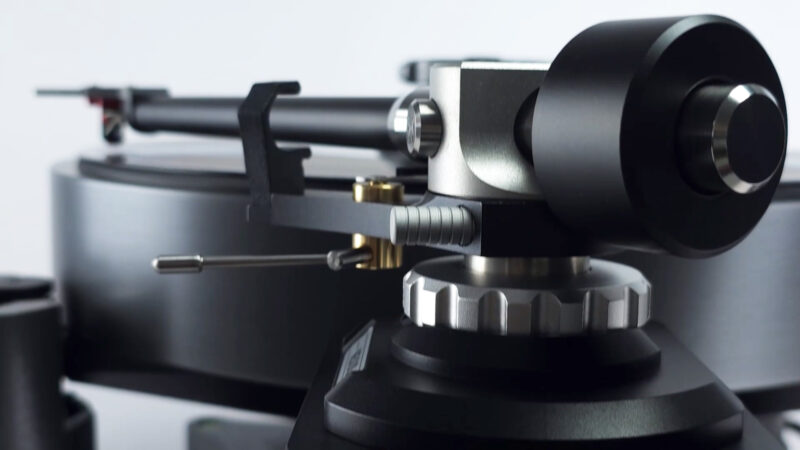
Of course any good turntable needs an equally accomplished tonearm and cartridge to do it justice, and it would be churlish to specify anything other than AVID’s own, via its updated Nexus V2 arm (£4,950), that now boasts dual stubby rods for its ‘Adjustable Progressive Bias’ system, to help compensate for the varying bias demands of the inner and outer grooves of a record.
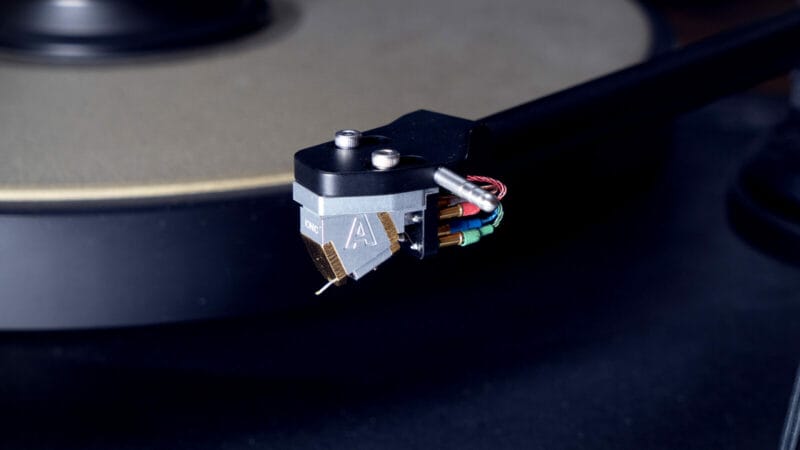
On pick-up duties, we went one up from the Ionic that graced our platters previously, opting for AVID’s mid-model moving-coil (MC) Boron (£4,500), boasting a cantilever of said material with micro-ridge profiled stylus (over the Ionic’s eliptical), giving a wider frequency range of 10Hz-45KHz (vs 15Hz-25KHz for the Ionic).
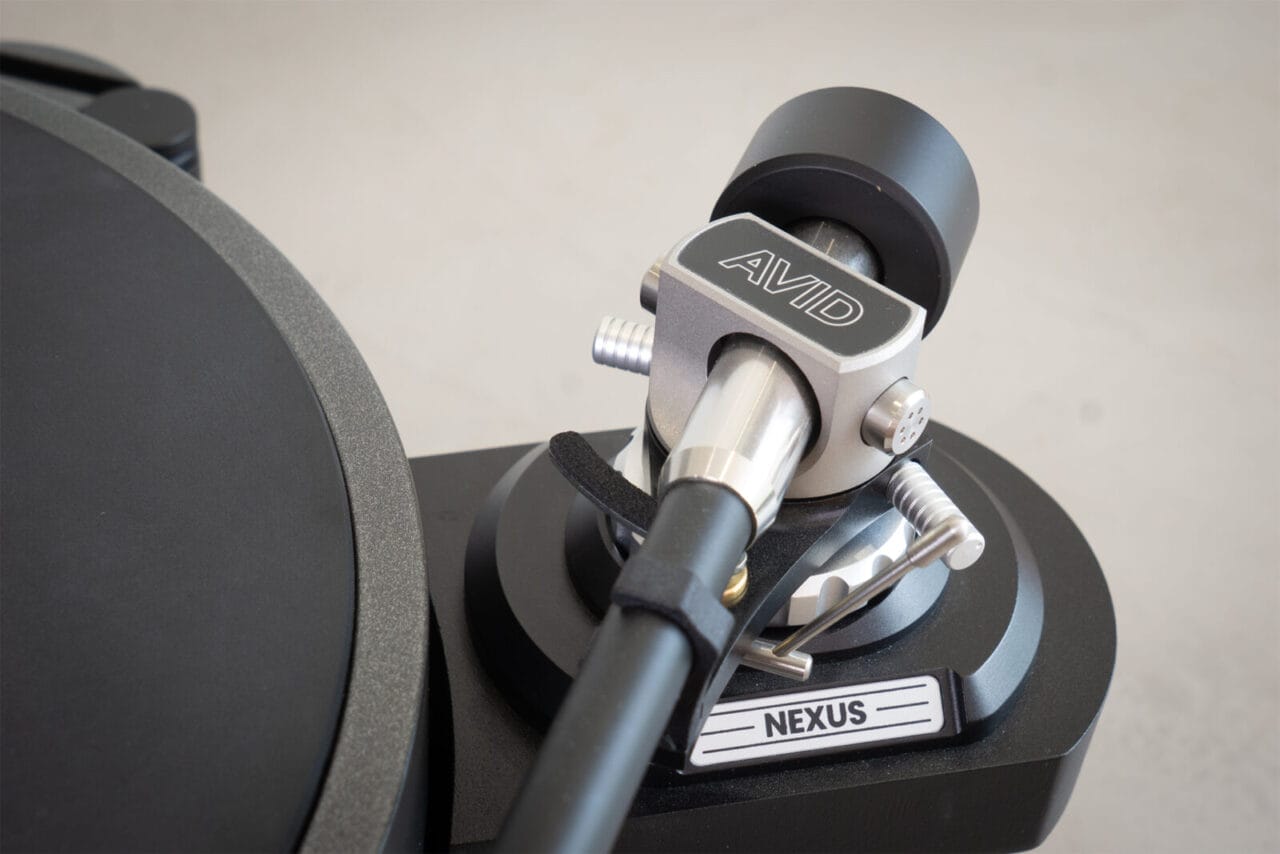
Sporting a 1.3mm thick-walled titanium arm tube and high-tolerance ball-races in its bearing, AVID’s Nexus V2 is an ideal match for the Dark Iron
A right set-up
Despite this being a high-end suspended turntable, set-up could not be more straight forward, thanks to how AVID engineers its decks for the home user. Sure you could have your dealer round to install it for your for peace of mind, but as long as you’re careful and have 20 minutes to spare, you’ll feel much more at one with your machine doing this yourself. And if you want a handy guide, AVID’s video tutorial on setting up its Acutus Reference has all the steps to take, being a similar beast.
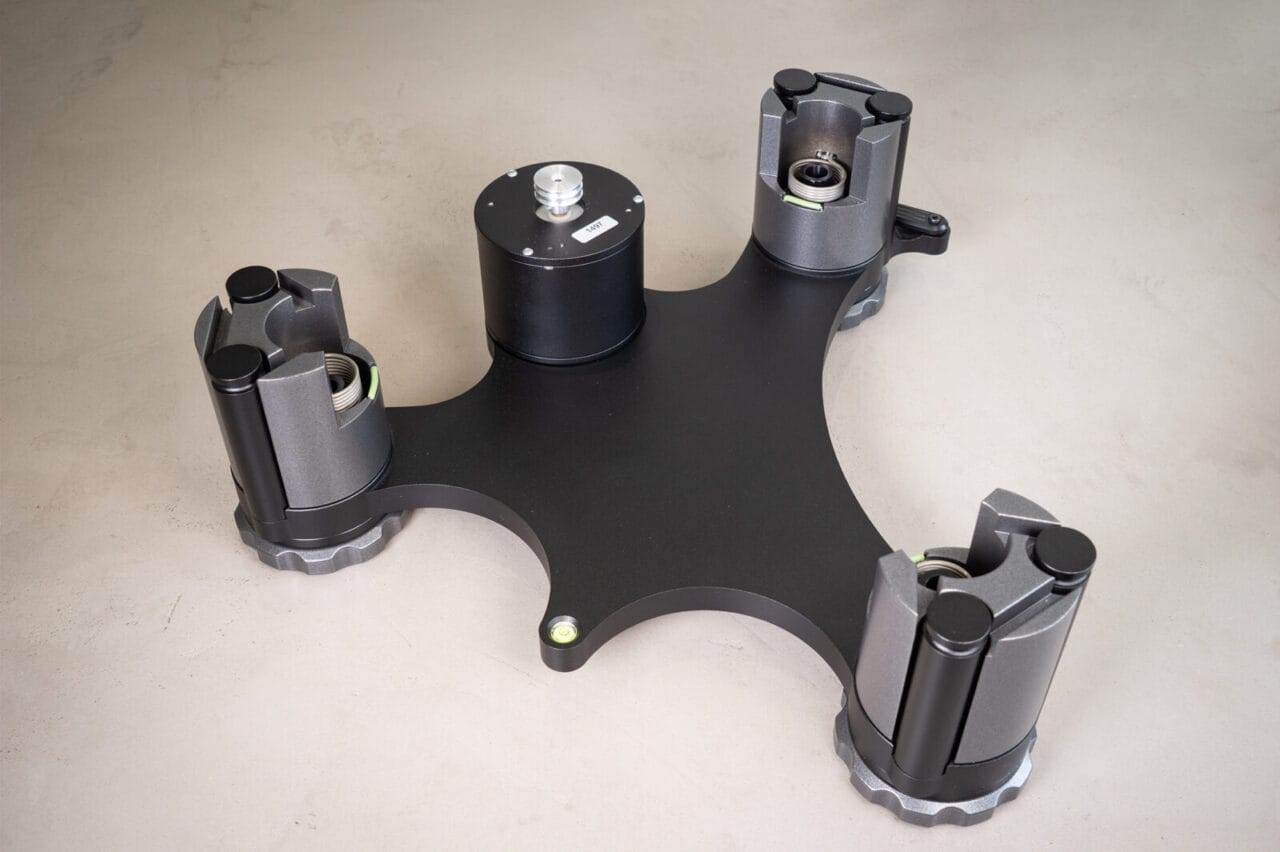
Dark Iron’s 18mm thick steel base plate may look like its from the Batcave, but its curved profile is there to minimise standing waves. Note the large diameter suspension coil springs within each leg
After unboxing everything, first site the base using its three large threaded feet and in-built bubble level, to ensure it’s flat. Next you need to prep the subchassis, by carefully adding the ball bearing atop its central spindle before placing the upper bearing sleeve over it. Now lift the subchassis onto the base, locating its trio of rubber pins into the centre of each suspension tower.
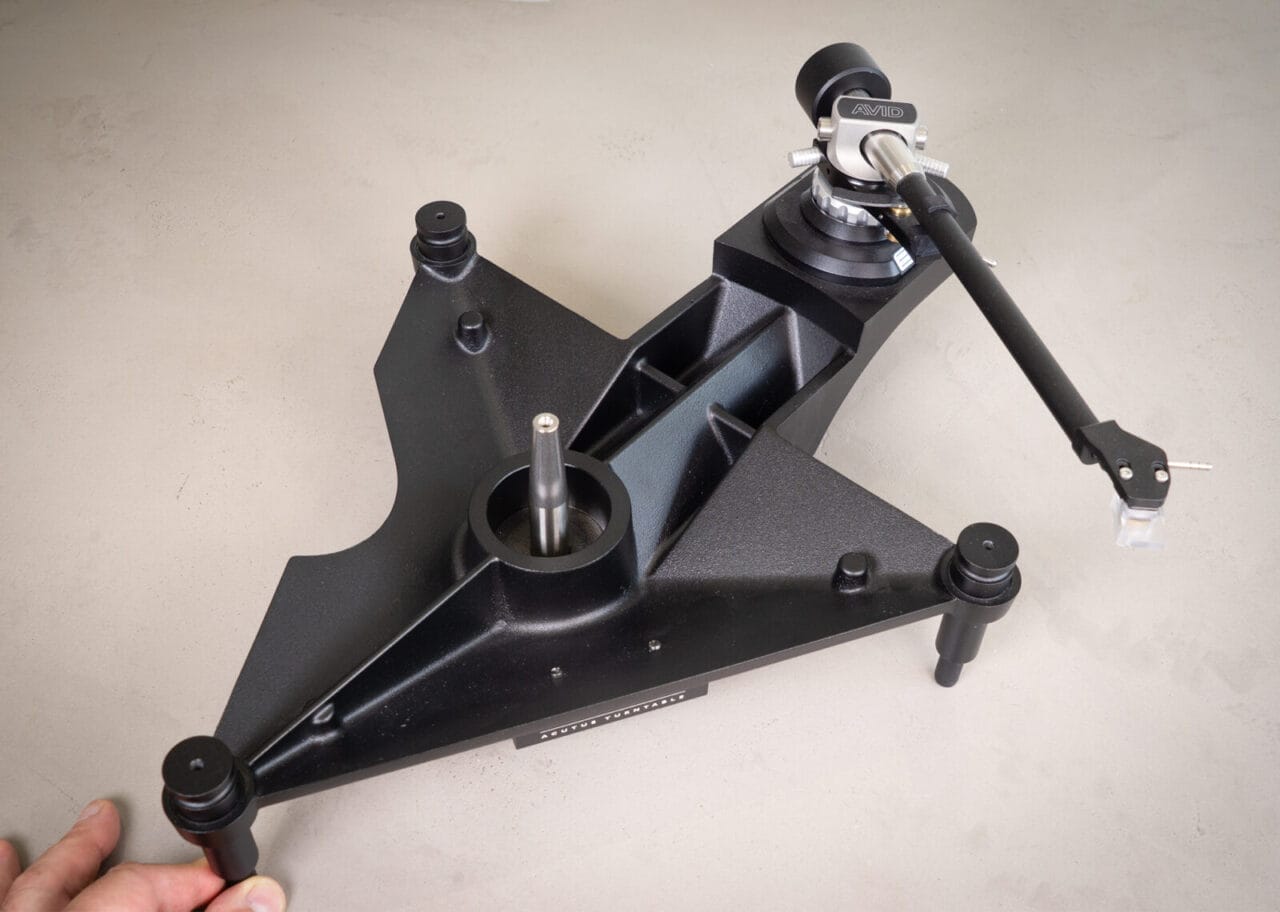
Dark Iron subchassis is formed from cast aluminium, with extra beef and bracing in critical areas. Its angular shape is also designed to increase rigidity (akin to folding paper) while keeping its weight down
Then comes the platter, which needs its twin belts fitting to its underside before carefully lowering it over the central bearing and motor spindle, with the latter running in a large recessed groove honed out of the platter’s underside. Having had 20+ years of Pink Triangle ownership, my usual approach to this type of platter is a flimsy piece of string to hold the belt in place while tugging it over the motor spindle. But AVID isn’t in the flimsy string business, and instead you get a nicely engineered fitting pin which sits in the platter’s underside to temporarily hold the belts taught enough to pass over the motor wheel, which can simply be pulled free once the belts are located. This makes belt fitting a breeze, even with two of the suckers to align.
All that’s left to do is fit the trio of rubber bands atop each suspension tower that control lateral movement and then gently rotate the platter (with the threaded record clamp fitted for additional weight), so that the belts settle into position.
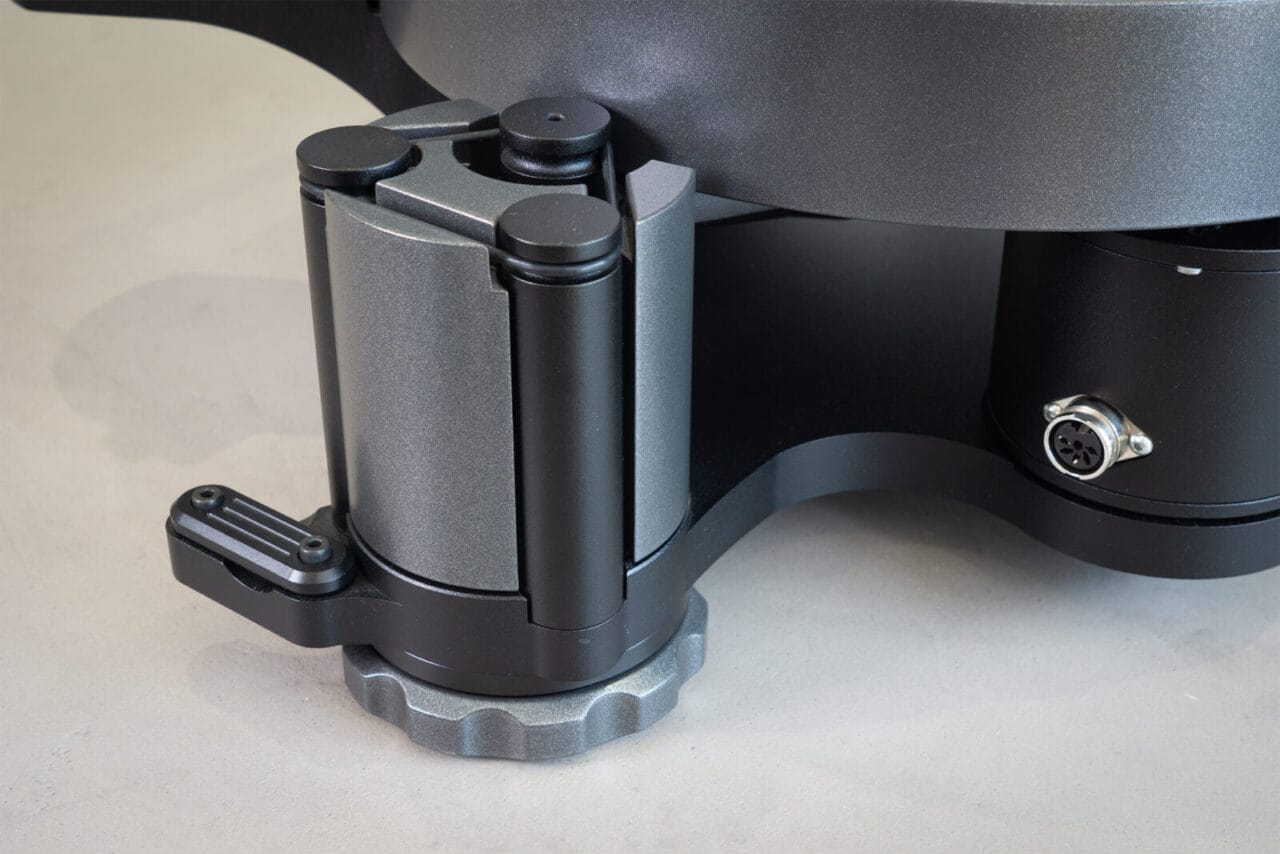
Rear suspension tower showing its rubber retaining band at its top with arm cable clamp bottom of foot and the motor’s PSU connector
Of course there’s arm and cartridge fitting to sort. But with the Dark Iron boasting an exposed external armboard (and with an option to specify a second) plus thorough fitting guidance, neither is taxing. (If you want the specific details of each, you can read our accompanying reviews, linked further up the page and below.)
Performance
While the lure of this hobby is swapping out components to tune and tailor a system to your listening demands (often with rewarding and frustrating results in equal measures), occasionally you hear a package from a single manufacturer that just sounds ‘right’ from the off. This, dear reader, is what we have here.
And while labelling something that costs a few quid short of twenty grand ‘greater than the sum of its parts’ may seam a bit detached from reality, this is also what we have here – allow me to explain…
My reference high-end rig is an SME deck with arm and cartridge from other manufacturers, which all-in costs similar to the AVID bundle. Does is sound as ‘together’ as a one-brand deck? Having heard a few, I thought it did, and exceeded many. But then I heard the Dark Iron, which shifted my perception. Because this is one of the most balanced sounding machines I’ve encountered, in terms of how the sounds it serves up combine for a beguiling musical performance that seems to be that bit more engaging.
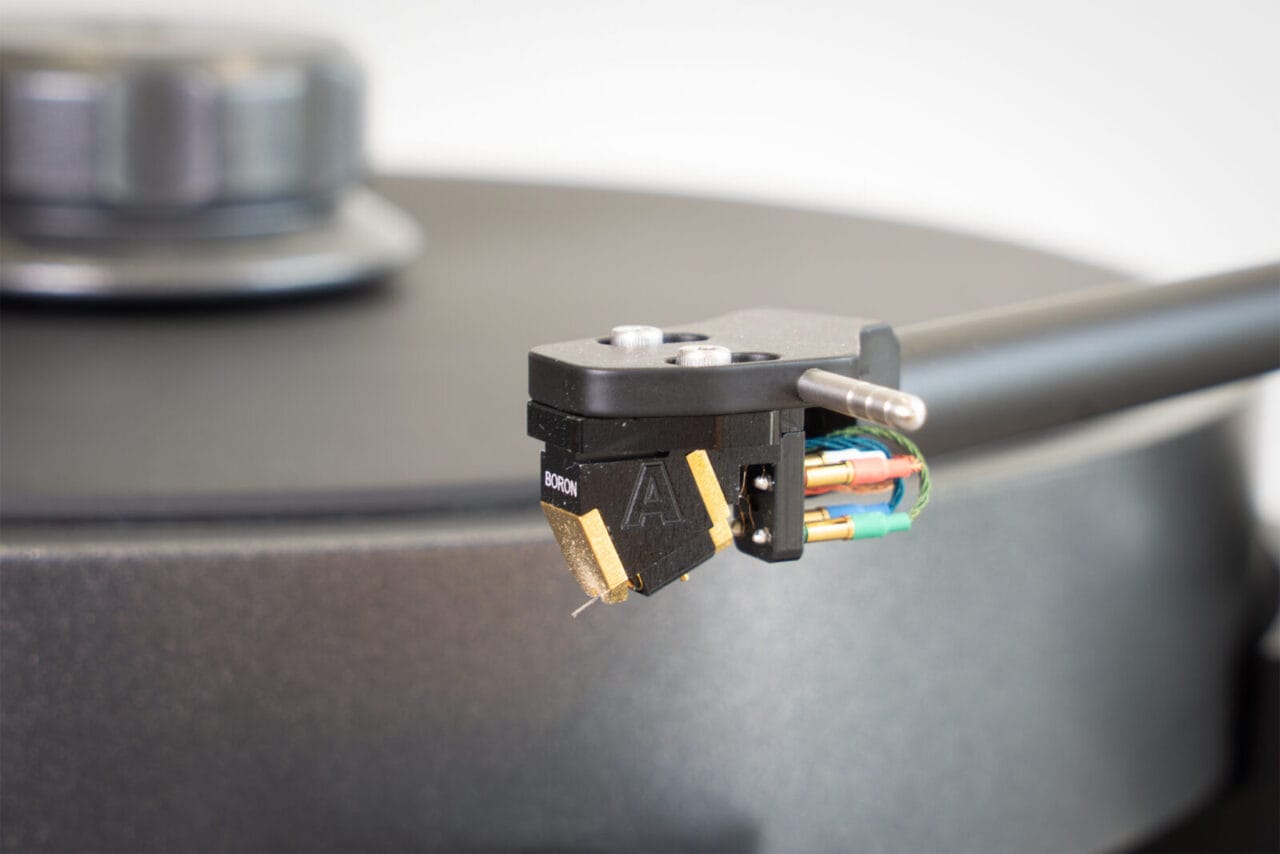
AVID’s Boron pick-up is the middle model in the company’s three strong MC-only line-up, sitting below the ruby-cantilever’d Reference flagship
Many high-end decks will major on detail or realism in certain areas, but they can also sometimes sound a little too sanitised (and I know many a hifi fan who has traded down to get back to that ‘vinyl magic’ because of these reasons). The AVID however manages to nail the drama, dynamics and detail of a performance while also capturing its emotional conviction.
Take Fink’s breathtaking cover of Bowie’s Modern Love from their The Lowswing Sessions LP (recorded fully analogue with zero digital input by the way) and you’ll struggle to find a high-end deck that won’t hit your senses with the vocals, so well captured are they. But it’s how the AVID also captures the rest of the track, from those subtle guitar and synth notes to that lush bass which sets this deck apart and has me going back from more…and more. On lesser decks this track is a sublime vocally led piece, but on the AVID it’s a much more musically holistic performance, elevating it from standout to stunning.
It’s so good in fact, during my time with it one evening I dragged my (long-suffering) wife into the room for a second, valued opinion. “Are you hearing this??” She was, including the body it brings to the music, which just makes the music come alive. This is praise indeed, of the highest order.
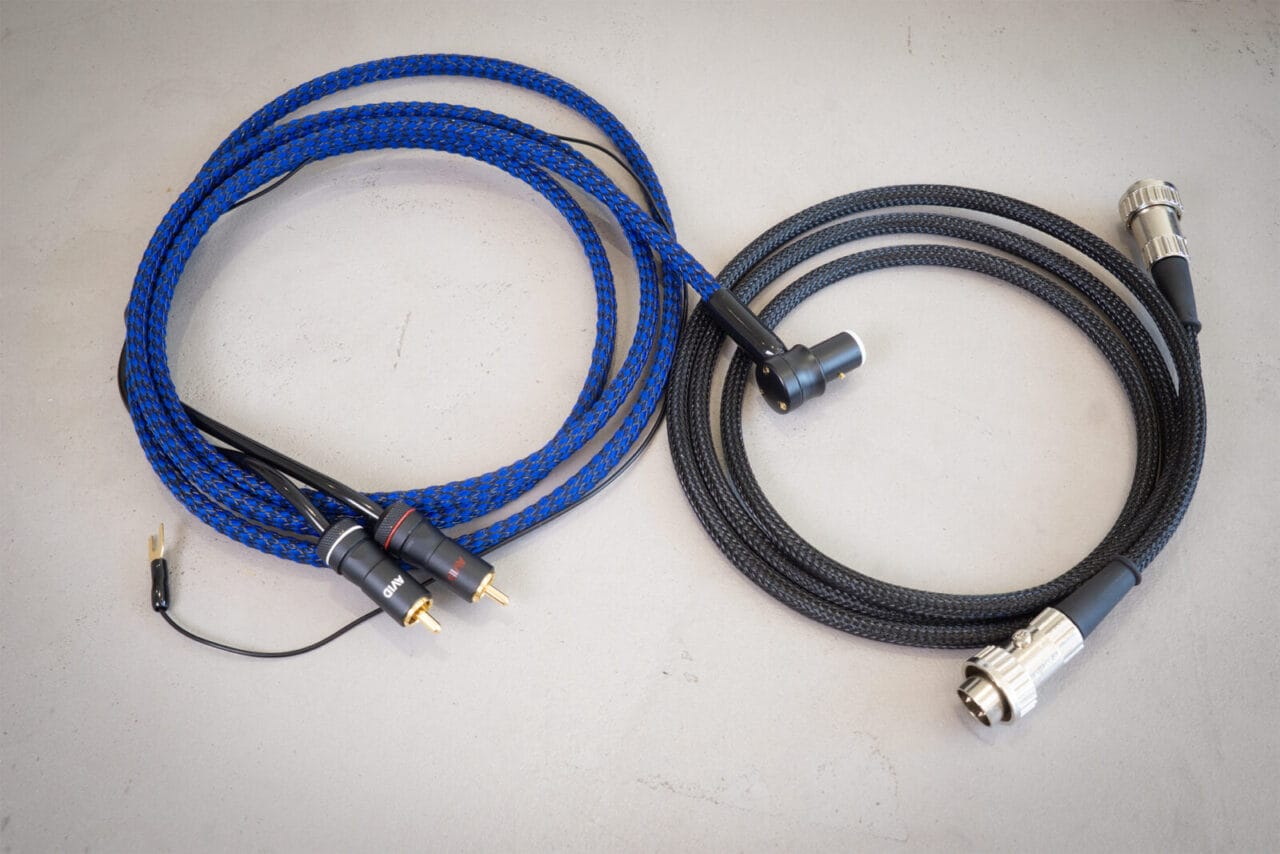
Supplied tonearm and PSU cables are decent quality, with braided outer jackets
Fine fabrics
This is partly due to how the AVID package is able to focus its attention equally across the frequency spectrum, while conjuring a mammoth soundstage that’s as dense and detailed as it is deep.
The atmospherics on Evening Hymns’ Heavy Nights LP for example (a superb recording which I’ve referenced a lot in recent times, as it gets a lot of platter time) are embodied with a rich, thick velvety texture that you can almost touch.
And this trait manifests itself across all areas, especially bass. How the AVID seems to revel in the deliciously descending bass line from this album’s opener is a delight to experience, complemented by the breathy qualities brought to the lead sax, where I can hear how the air is flowing through it at varying rates, rather than just its resulting notes.
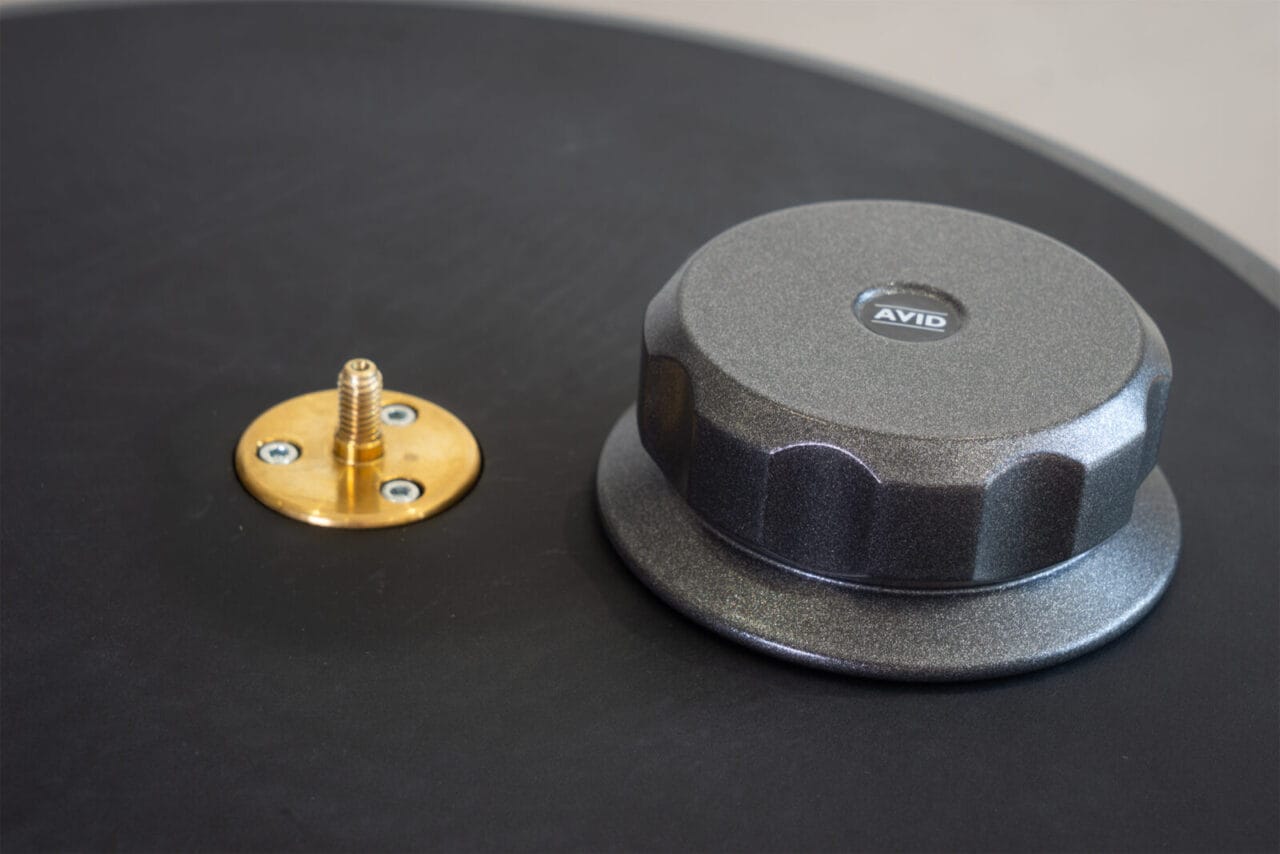
No need for easy-to-lose washers here to raise your record so that it can be clamped flat. Instead AVID simply sits the bearing slightly proud of the platter surface. Take note SME and VPI!
Another area that this deck really excels in is timing. I sometimes find that where vinyl machines of the high-mass variety lead the way in low frequency delivery, they then lag a little behind in that long standing hifi cliche of pace, rhythm and timing, where lighter machines thrive. But the AVID is no slouch and instead boasts an iron fisted grip on things, perhaps thanks to the power of its unstressed PSU and motor driving those twin belts.
Stevie Nicks and Don Henley’s Leather And Lace from the former’s ’81 Bella Donna LP is a point in case, sounding so bang on its like you’ve been granted the privilege of sitting right alongside them, watching as they react and feed off the music and each other’s vocals in real time. And when that rhythm guitar’s simple riff pauses for a nanosecond just as the vocals switch, the anticipation afforded by the AVID is exquisite.
In summary
AVID has been knocking at the door of best turntable builder in the UK for some time, and decks like the Dark Iron prove why it’s a worthy contender.
Not only is it built like a tank, the performance it delivers does that rare thing of managing to sound high-end in terms of sophistication yet also hugely engaging in a carefree way, no matter what your throw at it.
If I had £20k would I buy this deck? Probably. What if (and my fantasy Lottery win is really working hard here…) I had £30k? I’d probably still buy the Dark Iron, leaving a fat wad of cash to buy a load of vinyl…and a massive shed to store it in. The point being that for many, this combo may be all the deck you’ll ever need, it really is that good. And thanks to its build quality, it should also last a lifetime and beyond.