



Headphones have always had a place in professional circles, and with some keen consumer cognoscenti. For a time they were perhaps considered something of an afterthought, to be used late at night to avoid annoying the family, or neighbours. This has changed substantially over the past thirty years. As technology has digitised and shrunk, indeed as homes have shrunk, headphones have come more to the fore. Meaning that for many, this is now their principal mechanism for enjoying their music.
People run, commute, study and work to the sound of their own music, frequently delivered from their smart phone or personal player.
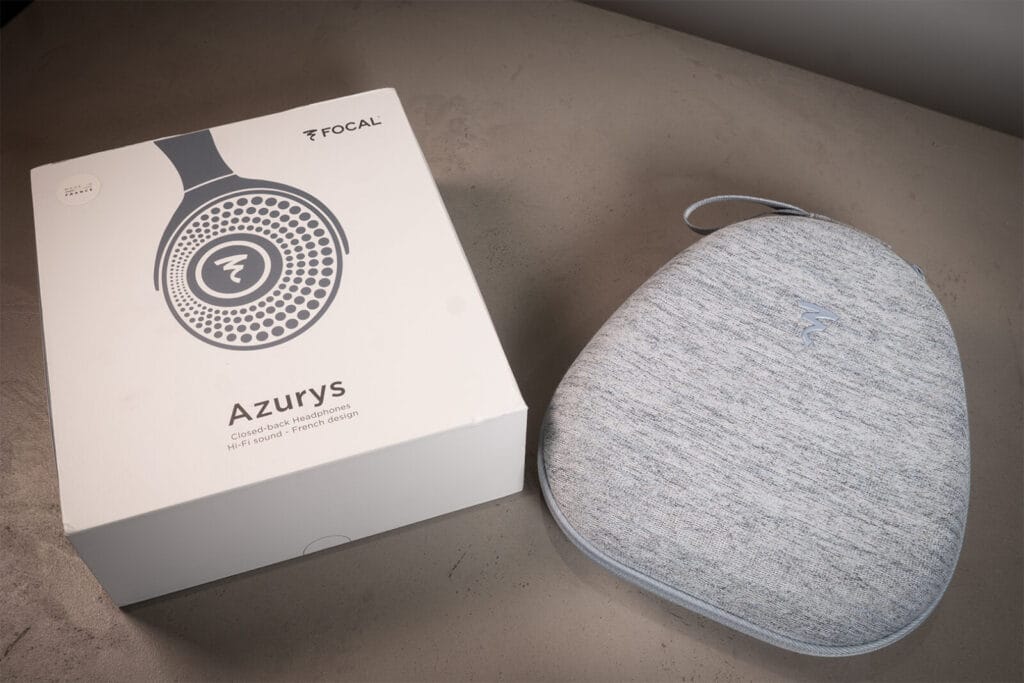
For the price, the Azury’s packaging feels premium, including the handy carry case
This has led some into the world of better quality musical delivery, with portable headphone amps and DACs. The quality of what is available today, even for a relatively modest outlay, makes my younger self feel a tad jealous.
Focal is an audio manufacturer that not only makes quality components, but also invests in and develops its own technologies, so applying these to a range of headphones seems an obvious area to cash in on.
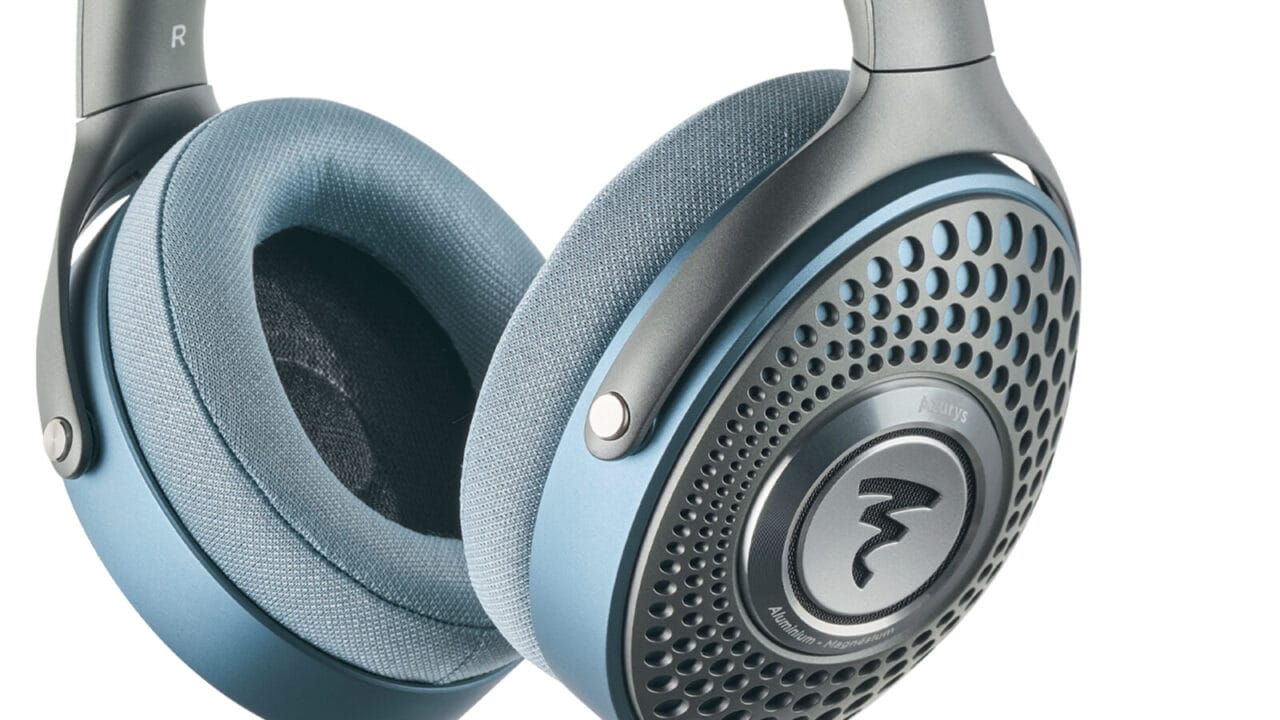
The Azurys are Focal’s entry level, closed-back headphones. They arrived in what I have come to think of as ‘Apple Grade’ packaging, with a magnetically sealed box. The cans themselves are in a light blue cloth covered hard presentation case, which echoes the colour of the headphones, with the Focal sigil embossed thereon. Blue is the colour, which, apparently is inspired by azurite, a semi-precious stone with healing properties (hence the inspiration for the model name).
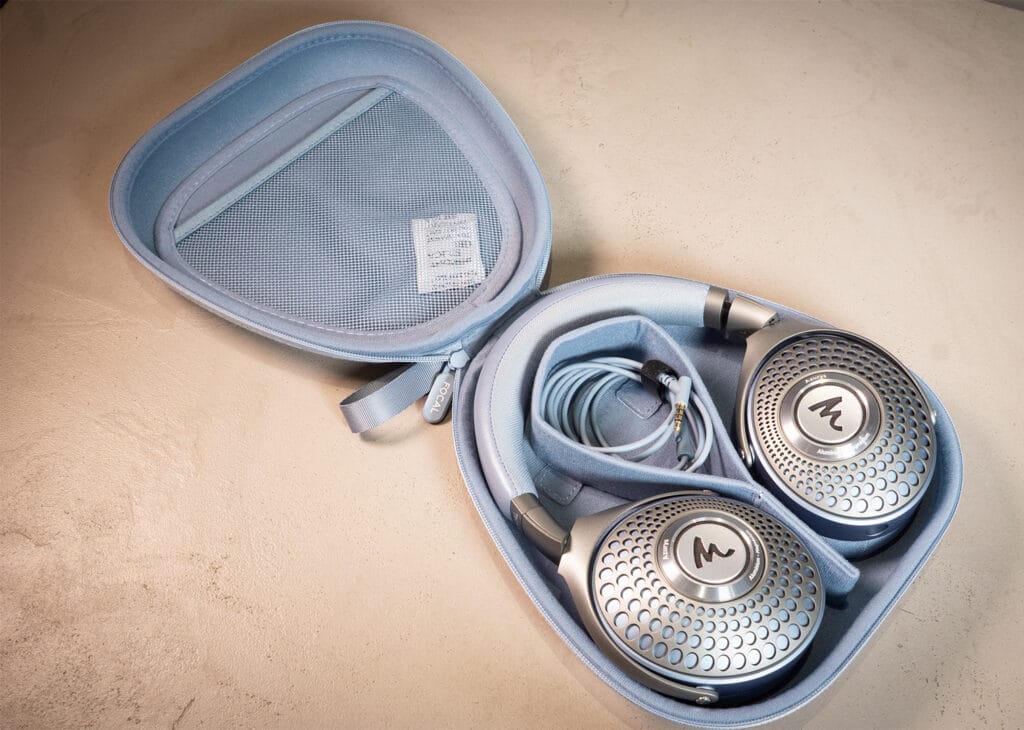
Get the blues – zipped carry case reveals a nicely laid out headphone with accompanying cables
The Focal Azurys have the company’s signature magnesium shell, with the Focal badge displayed on their outers’ centres, a style that repeats across the brand’s entire headphones range.
The headband and drivers sport a breathable braided textile fabric where they come in contact with your skin, with memory foam within the earcups, which sit on a support that swivels with respect to the headband, allowing for a comfortable fit.
The earcups are easily removed, these can be replaced by any from the Bathys, Bathys MG, Hadenys or Azurys range. Focal did advise that earcups from the higher ranges are tuned, so while they will fit there is a small chance they might slightly affect the sound quality.
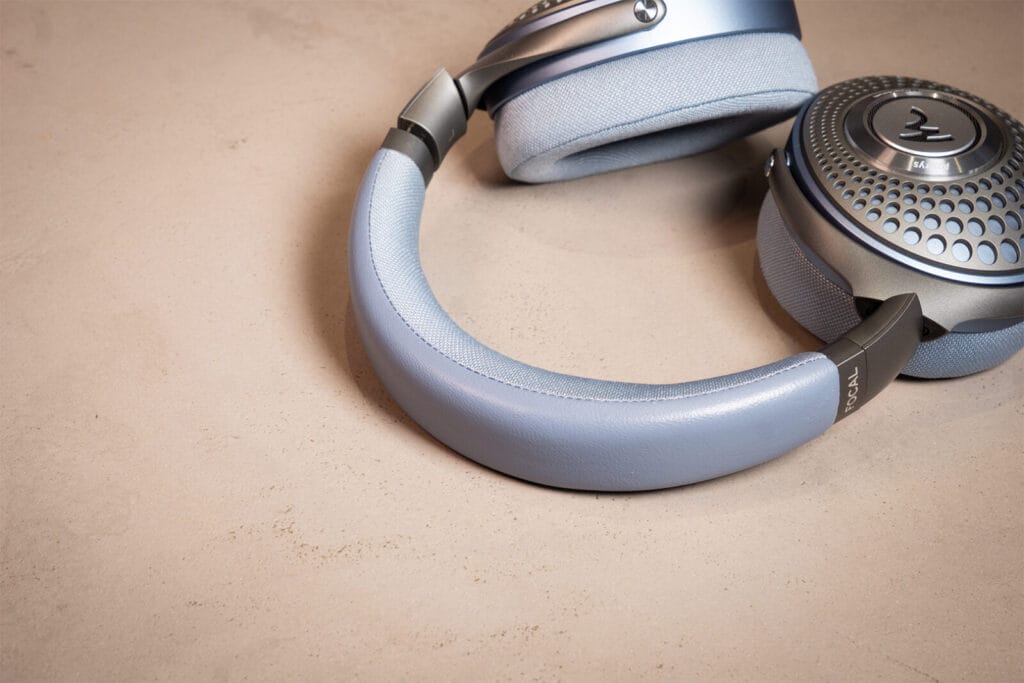
Padded headband in contrasting fabric and genuine leather, from a rare blue cow
The supplied cable is designed to fit one way, with a small squat cylinder firmly connecting to the driver housing. The 3.5mm jack housing is offset, hence if you require a 6.35mm jack you’ll need an adapter with a flush face.
The drivers are of a patented M-shaped 40mm wideband electrodynamic aluminium and magnesium construction, chosen, Focal says, for its abilities deliver deep bass, smooth treble and clear vocals.
The phones themselves weigh 306g, have a frequency response of 15Hz to 22kHz and a claimed impedance of 26 ohms. This identifies them as a low impedance design, so they should be easy to drive. I certainly found this to be the case, as regardless of whether I used them connected to my phone, or fed from something of a higher quality – volume was never an issue.
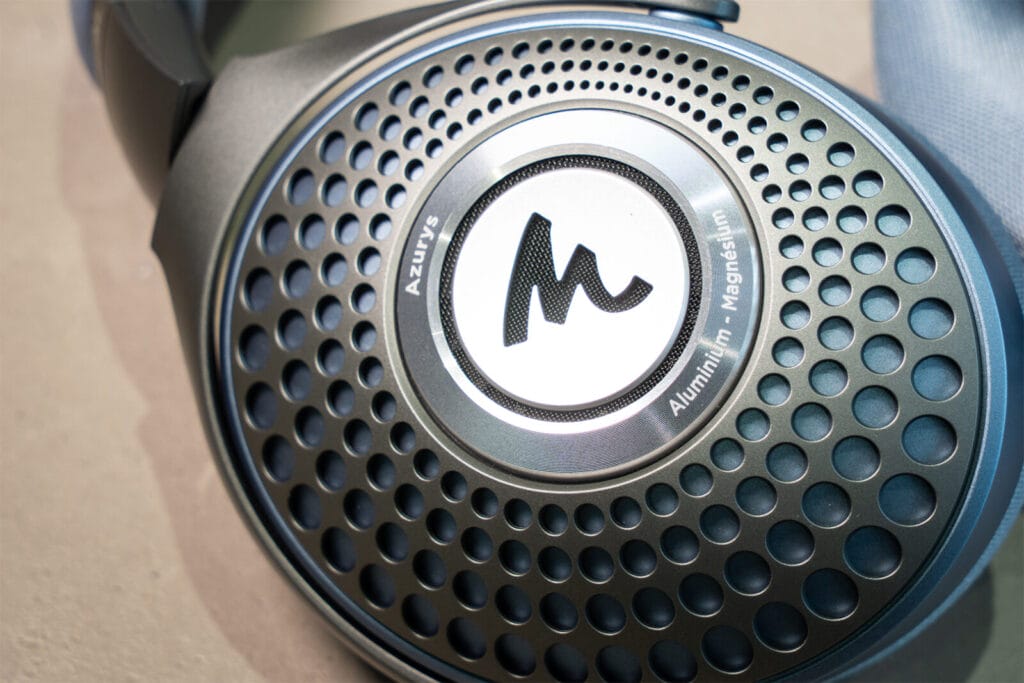
The Azurys’ outer cup may look open, but is in fact a closed-back design
Why would you select closed or open-backed? This is more than simple personal preference, and may be dictated by where and when you want to listen to your music. Open-backed may be too intrusive to those with whom you share a room, or transport perhaps. I use both variants, and would not point at either as being automatically better than the other.
Affordability wise I would classify the Azurys as being low to mid-priced. I appreciate that one person’s mid-priced is another’s King’s ransom, but as you are reading Audiograde I assume you’ll be sympathetic to this judgement, my wife wouldn’t be. And while the list price is just shy of £500, they can be found for substantially less if you shop around, making them even more affordable.
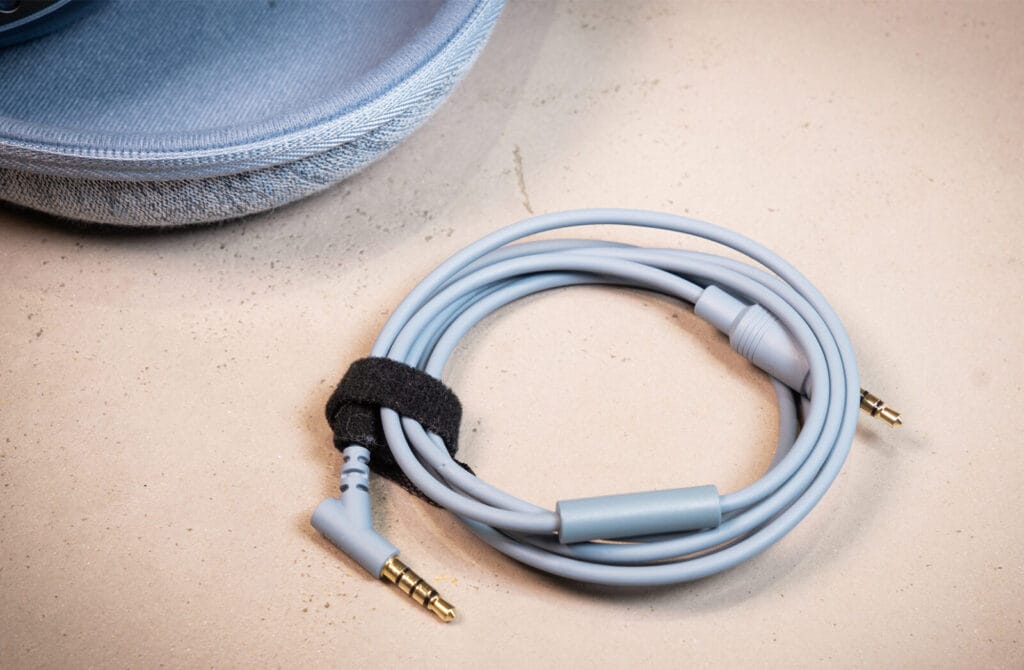
Supplied cable with 3.5mm jacks in matching blue includes an inline controller
And while these buck the trend for wireless Bluetooth connectivity, being a wired and passive design, there is a degree of user-control thanks to a captive cylinder on the supplied four foot cable which hosts a microphone and button offering play/pause/skip/rewind, governed by how many presses you give it in quick succession.
I used this set-up while out for walks, it worked well and when on the move I found the fit nice and snug – at no point did I fear that they would shift unbidden.
Performance
I have a go to Qobuz playlist that I call upon for headphone reviews, and from this I chose a subset. This covers a number of musical genres, and also tracks allowing me to listen for bass, mid-range, treble detail and extension. In addition I used a couple of songs that I have found to trip up equipment, especially with respect to vocal reproduction – a personal bête-noir, if you will.
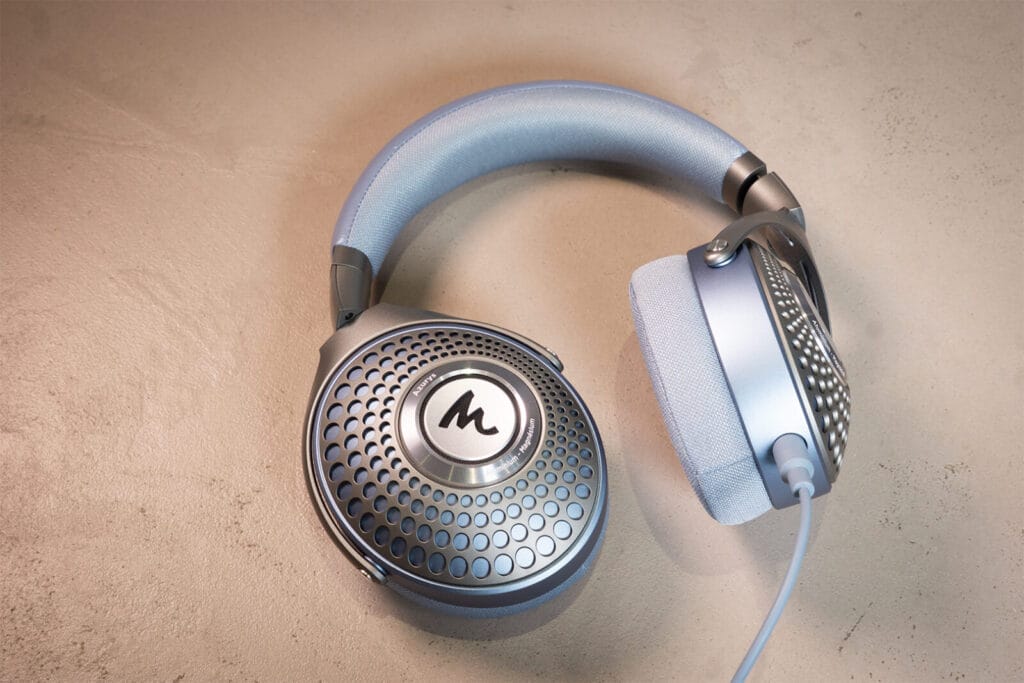
Get connected – having a detachable connecting cable means it can be replaced, should it develop any issues
I started by listening to the Focal Azurys with my Samsung mobile phone, using the excellent Bubbleupnp app and with settings chosen to ensure I was getting the best audio quality available.
I then moved through a selection of devices, including Chord’s Mojo2 and Hugo TT.
First impressions are that the Azurys are voiced on the warmer side of neutral. Everything I heard through them sounds musical and enjoyable and the presentation had me pondering whether the top end was being rolled off slightly in some way.
Eric Clapton’s Acoustic Live album (16-bit/44kHz) opens with Signe, a track with no vocals but a wealth of string and percussion (including the percussive use of strings). There is a wonderful smattering of cymbals and triangle too, the latter of which is played open and cupped, with the percussionist hitting it at different points and with varied strength. All this was recreated by the Focal Azurys, with no sense that upper frequencies were being curtailed unnecessarily.
The sound-stage was a bit less expansive than other headphones I have to hand, but the bass was more present and with a nice kick, a bit like the difference between listening to a standmount loudspeaker vs a fuller range floorstander.
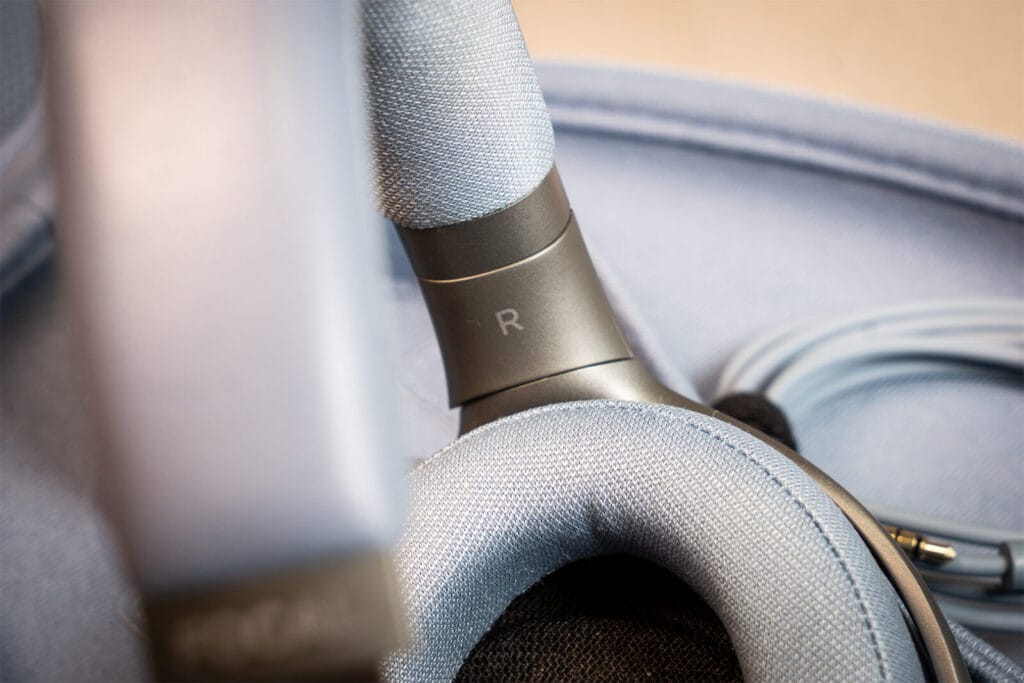
Subtle L-R ear denotations can be found on the inner edges of the swivel arm rather than outer where some brands like to print it, which saves the you embarrassment of not knowing your left from your right in public!
Another notable positive is in how forgiving the Azurys are, as never did they poke me in the ear when using lesser sources to highlight a flawed performance, even my Android phone provided enjoyment.
That said, with each step up in source material and componentry the Azurys were able to reveal the gains, even when somewhat subtle. At the higher end of things I progressed up to using Roon into a Chord 2go/2yu, with a Chord Hugo TT via an Audioquest Diamond coax cable. In this system Digital Signal Processing (DSP) is available to me at multiple levels.
DSP is something I have experimented with extensively, but use sparingly. Of course, our hardware is doing all sorts of manipulation under our feet, but that is a part of the manufacturer’s design choices. For this review the only ‘extra’ I decided to add was Crossfeed, adding some of the opposite channel into each ear. The chorus of the 2022 remix of Eleanor Rigby (Revolver, 2022 remaster) has some manipulation added to McCartney’s voice, including some extra reverb. This was clearly revealed by the Focals.
By adding a small amount of crossfeed, McCartney’s voice was still in a different acoustic, but was now standing forward and was far more of a piece with the music.
The Real McCoy
Bass is good and well controlled via these cans, with a convincing low end specification and perhaps a slight rise in the low bass response, which I thoroughly enjoyed.
Listening to the Lopsy Lu / Silly Putty (Medley), with Stanley Clarke, Victor Wooten and Marcus Miller, from the Thunder album, there was lashings of slap bass via the Focals, delivered with great tone and aplomb.
Sometimes albums which centre on the bass can start to lose my interest, becoming a bit one-note, no such problems here, as the Azurys not only conveyed the bass repartee between these three virtuosos, but allowed them to be followed and appreciated, including through the contributions of the supporting musicians.
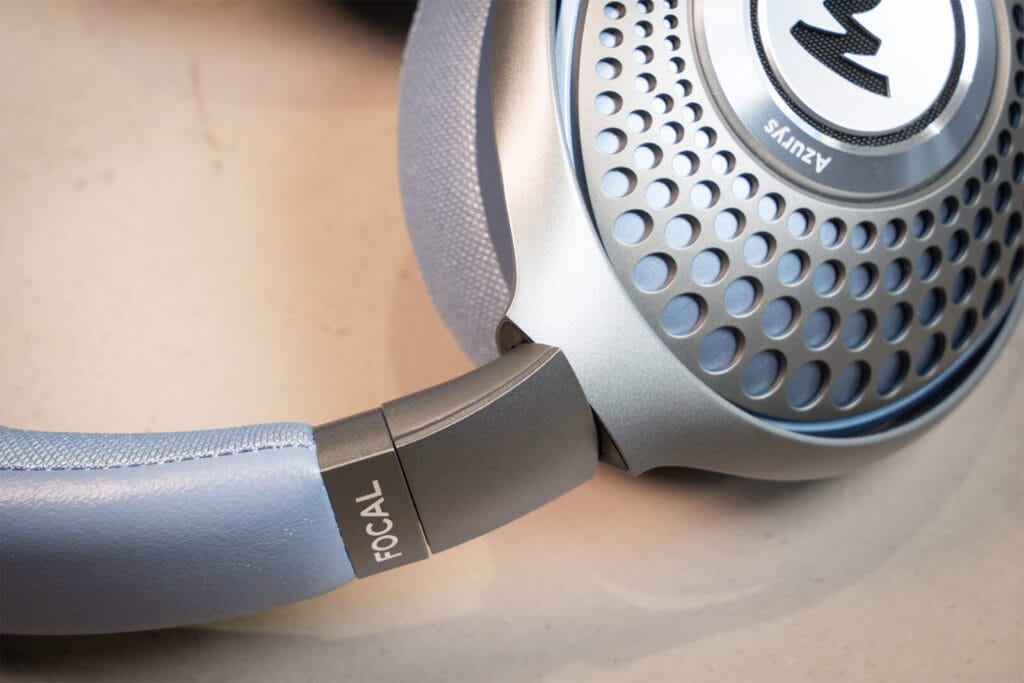
Built for at home and on the move, the Azurys have a commanding presence that stands out from the headphone crowd
An old bass favourite of mine is Angel, by Massive Attack, in this case the 2019 remaster from Mezzanine (20th Anniversary Deluxe Edition). This further demonstrated the Azurys’ ability to render loooow bass. The Azurys did not replicate the experience of large cones moving volumes of air, but they produced a very satisfying account of the music nonetheless.
Berlin to Vienna
Jeff Buckley’s era defining 1994 Grace album has a wealth of mid-field detail, being superb both musically and in its production, especially via the 24-bit/192kHz Qobuz hi-res version. And with Buckley’s re-telling of Hallelujah the Focal’s delivered lovely levels of intimacy thanks to how they captured his breathing and more liquid vocal contributions.
Getting a sound-field from a pair of headphones is a challenge, the music is usually mastered with stereo speakers in mind. Crossfeed assists, but is not a panacea. Images can fall more left and right, which works better for some music. For me the strengths of cans reside elsewhere, in detail and insight. And in this regard, gaining an understanding of the spacial setting and size of the forces at work was perhaps less available on the Azurys than more costly models. This in no way diminished my musical enjoyment through these cans.
This is not to say that the headphones had any issues with image placement though, Yello’s Magma (Live in Berlin) being a suitable case in point: sounds move, in position and pan. All clearly heard and delineated.
This precision was confirmed by the Azurys’ ability to resolve the sounds of Vienna Symphony Orchestra’s 1979 live performance of Beethoven’s first piano concerto.
This piece can cause issues in my main listening room if I use less capable equipment. The live acoustic can mix with the orchestral resonances to create an effect akin to a dirty needle! No such issues here though as the separate re-enforcing reverberations were easily distinguished.
When putting any piece of hifi hardware through its paces, I always listen to tracks that I know are troublesome, perhaps by being somewhat sharp or spitty. The Focal Azurys coped well with these tests. Not eliminating them entirely, which would indicate some musical massaging, but minimising the problems while allowing me to enjoy the music, which ultimately is what they’re designed for
In summary
The Focal Azurys are a light comfortable pair of headphones that I could happily listen to for many hours. Whether it’s intimate late night listening, spoken word, musical programming while out and about, as desktop companions of for dedicated listening sessions at home, they delivered across all scenarios.
It is also a technically accomplished headphone, adept at revealing the music, rather than dwelling on issues in the source or musical production. If these are a good fit for you and your wallet then get them on your audition list.