
Who in their right mind would launch a flagship high-end CD player in this day and age? Rotel that’s who. And the gamble paid off. As its Michi Q5 released in 2024 served to remind hifi fans how good CD can still sound.
It also highlighted to the hifi industry how much this format has perhaps been neglected of late with gear at this level. Because while we all celebrate vinyl’s continued resurgence, CD still out sells it. Have you been into an HMV recently? If so you’ll have seen racks of silver discs rubbing shoulders with the black stuff, and what’s also interesting is the younger demographic buying it. But why shouldn’t they? It’s cheaper than vinyl, easier to store, and less prone to wear, while still offering a tactile product that can sound superb.
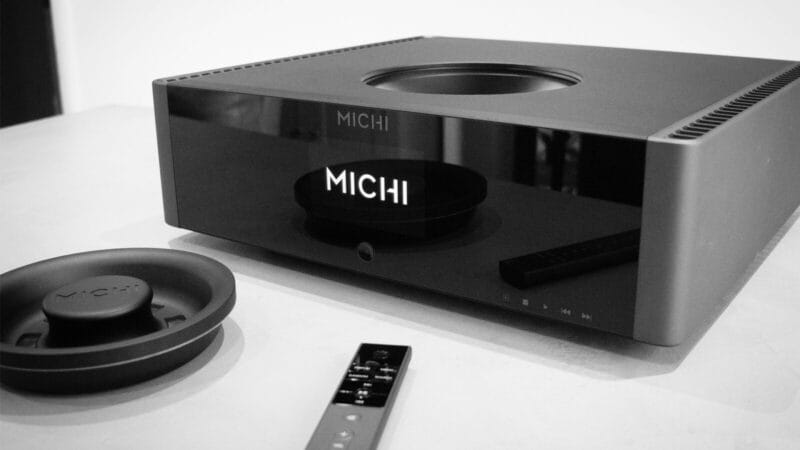
I’ll admit my CD collection was in semi retirement until that mighty Michi entered my life and scooped my not-to-be-given-lightly Editor’s Pick accolade. Since that review, compact disc has been firmly back on my repertoire. The Q5 is a standout player and has its quirks too, including that fabulous top-loading puck and underside buttons to keep its fascia clutter free – all of which comes at a price north of £5k (which I still think is good value, given it’ll compete with models well into four figures).
But it, along with the Michi range’s standard models, will still be out of reach for the pockets of many. So when Rotel announced Michi’s Prestige sub-series as a more affordable way into the brand’s hallowed line, hifi fans were delighted, as you can have much of that Michi magic, distilled down into more compact and less costly products.
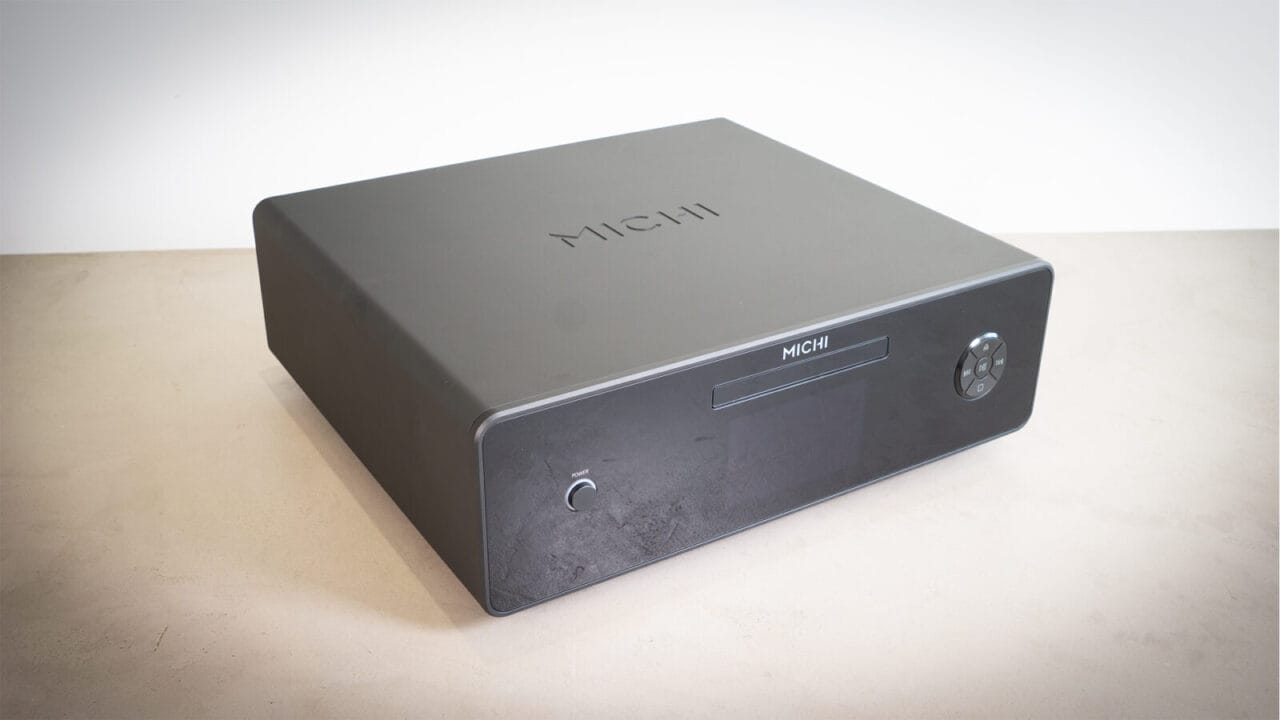
Michi Prestige Q430 fresh form its packaging, revealing its sleek (and reflective to photograph) fascia
Michi for the masses
The Q430 under scrutiny here is the Prestige series’s dedicated CD player, priced at £3,599, and designed as an ideal bedfellow for its matching X430 integrated amp at £4,499. To underline their more affordable nature, you could have the pair for less than the price of the Michi X5 S2 integrated amp, for example.
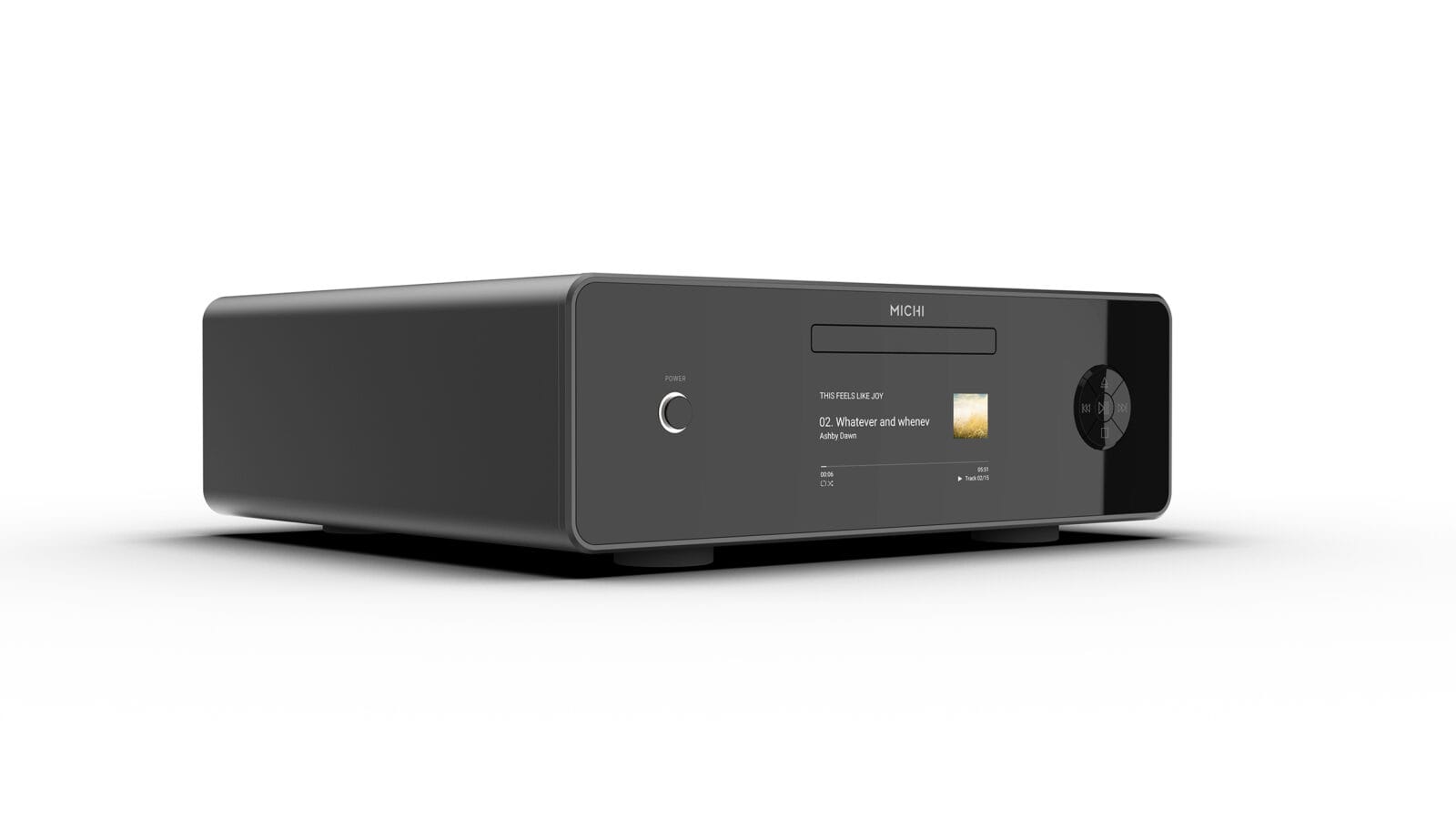
Despite it costing almost £2k less than the flagship Q5, the Q430 still packs in a lot of Rotel’s expertise to elevate it beyond the brand’s cheaper non-Michi models. First off there’s the casework, which while swerving the Q5’s beefy box with vertical side heaksinks, it’s still a full width design at 431 x 148 x 385mm (WHD) with curved casework, embossed top panel and full-colour TFT (Thin Film Transistor) display for album artwork and the like.
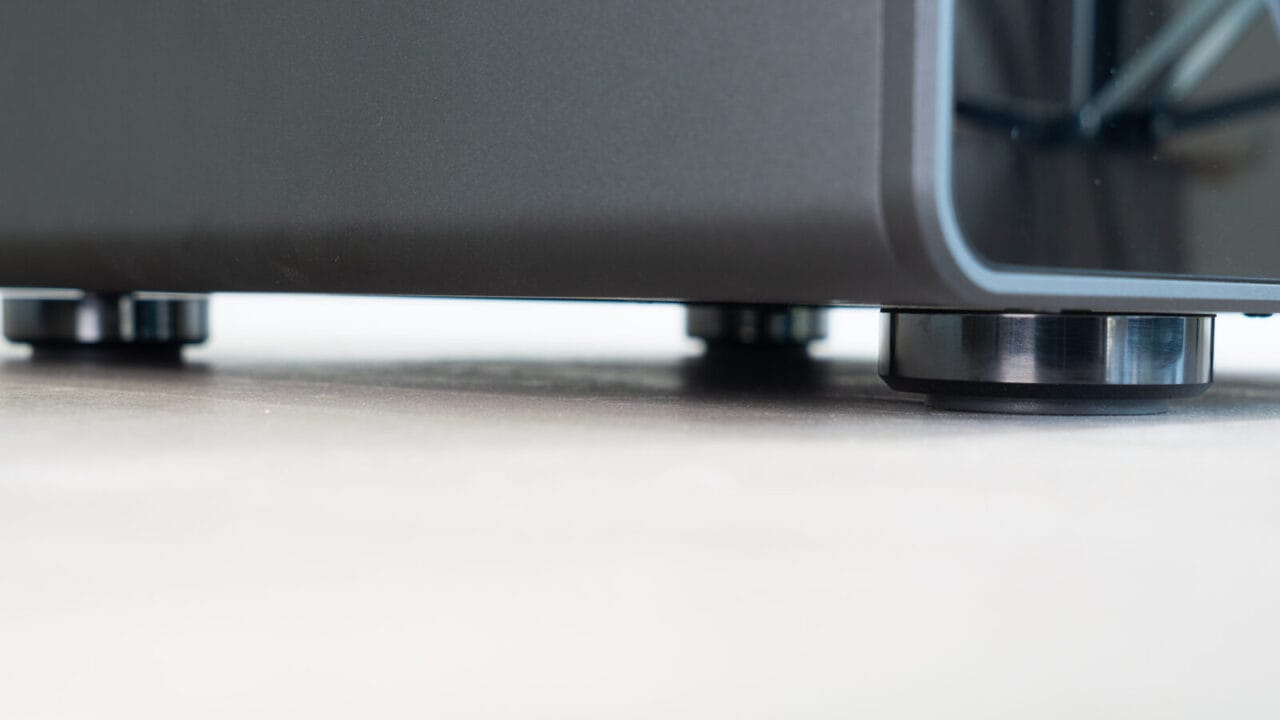
In its milled aluminium case, everything about the Q430 feels premium, right down to its chunky padded feet
Unboxed and the Q430 is thankfully lighter than the Q5, while still weighing in at a reassuring 8.8kg (versus the hernia tickling 23.5kg of its bigger brother). And this being Rotel, a chunk of its weight is accounted for by an in-house toroidal power supply that’s designed to be ultra-quiet, which sits in its own shielded case under the unit’s hood and feeds a raft of multi-stage, tightly regulated PSUs.
It also gets the same differential 32-bit/768kHz ESS SABRE ES9028PRO 8-channel DAC chip as found in the Q5 that’s configured for stereo, with four channels assigned to each side. Keen eyed readers will note this is instead of the ES9039Q2M chip gracing the X430 amp’s innards, meaning if you pair the Q430 with its matching amp, you won’t be duplicating DACs.
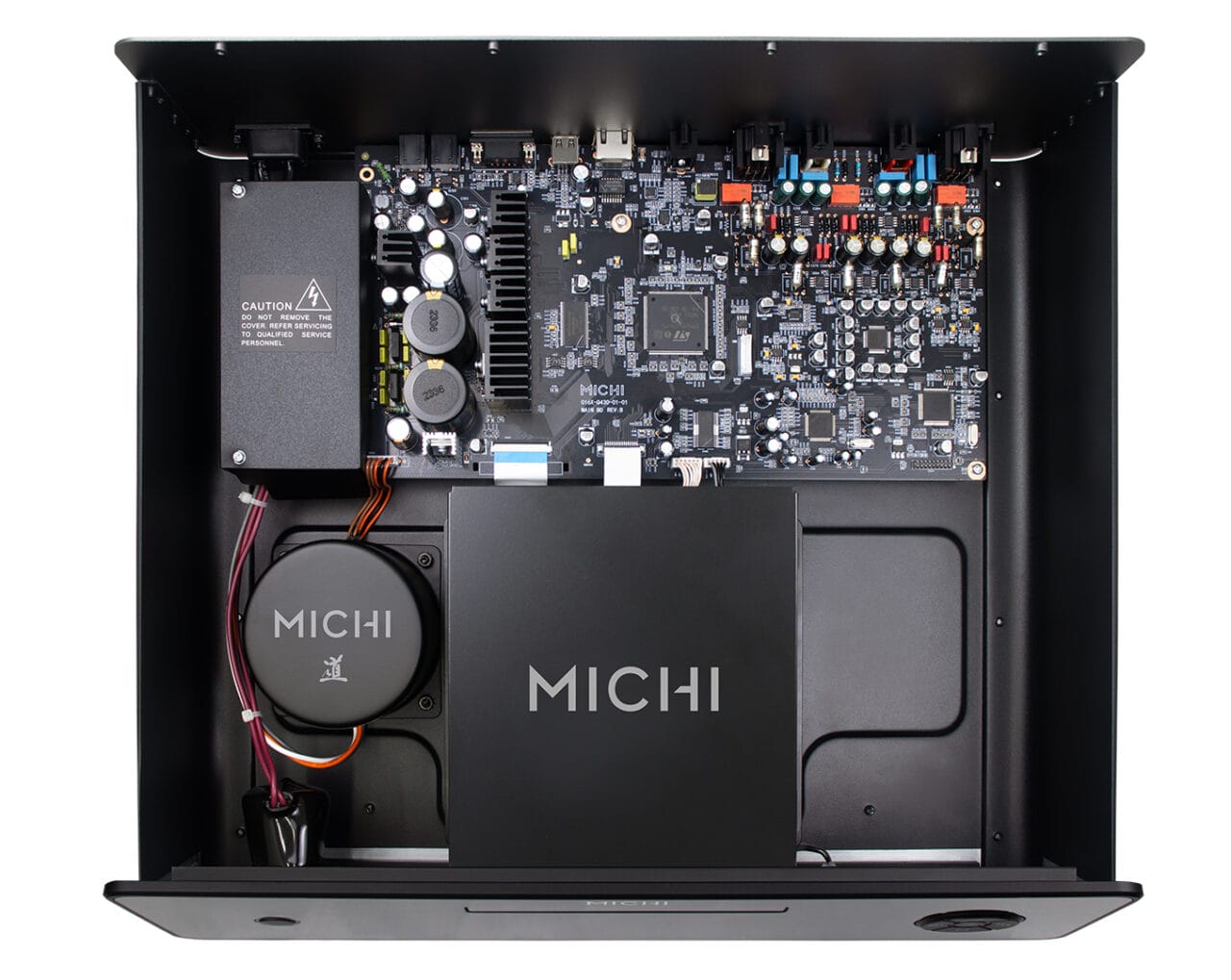
Rotel’s Michi models are renowned for their immaculate internals and the Q430 is no exception, with its main PSU, CD mechanism and circuitry all nicely separated
What’s not trickled down from the Q5 is its unique top-loading mechanism, which while being a real focal point for that model, also inhibits it a bit in real world use, for example when fitting it into equipment racks with little space above.
Instead, a front-loading drawer is far more practical and for the Q430 Rotel has specified a precision floating tray mechanism that’s been engineered to minimise mechanical vibration, which sits perfectly flush with the front panel when closed.
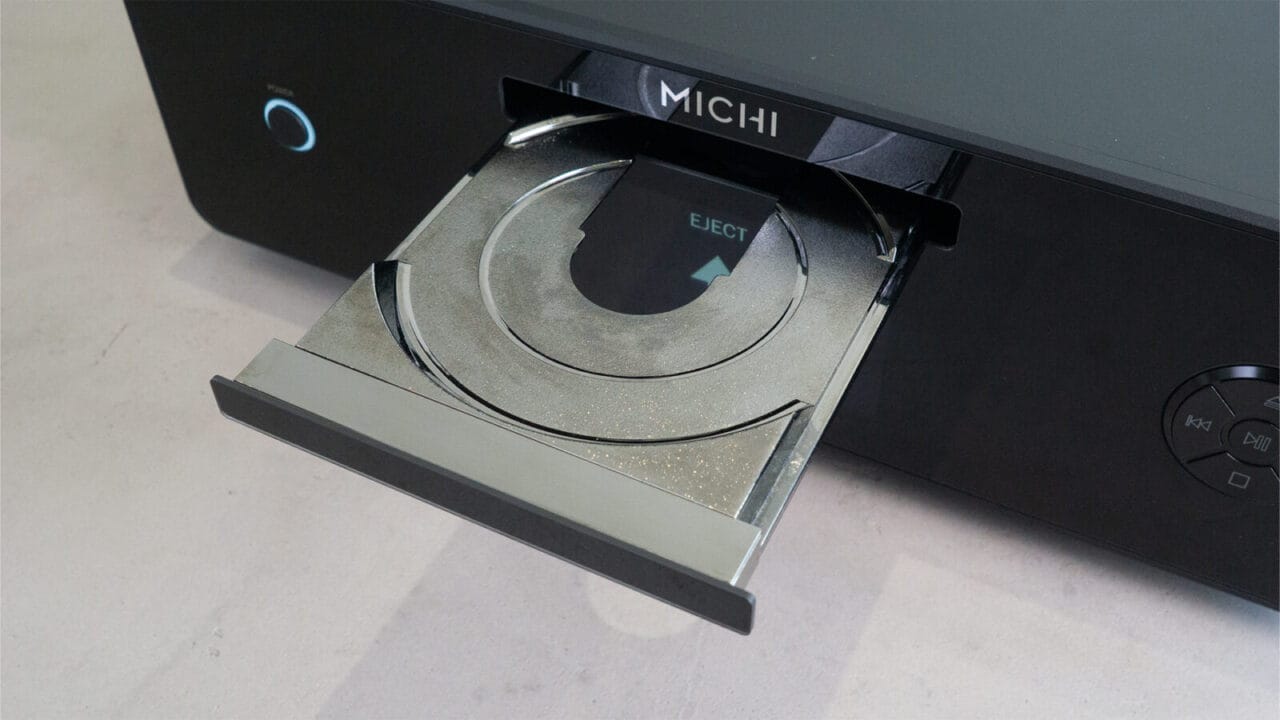
While less of a talking point than the Q5’s top-panel puck, the Q430’s CD tray mechanism works well and means there’s no issues slotting it into equipment racks with limited headroom
And continuing the easier to live with vibe, Rotel has decided to forego the clutter free front of the Q5 and instead added a well sized circular control panel that’s reminiscent of early gen iPods.
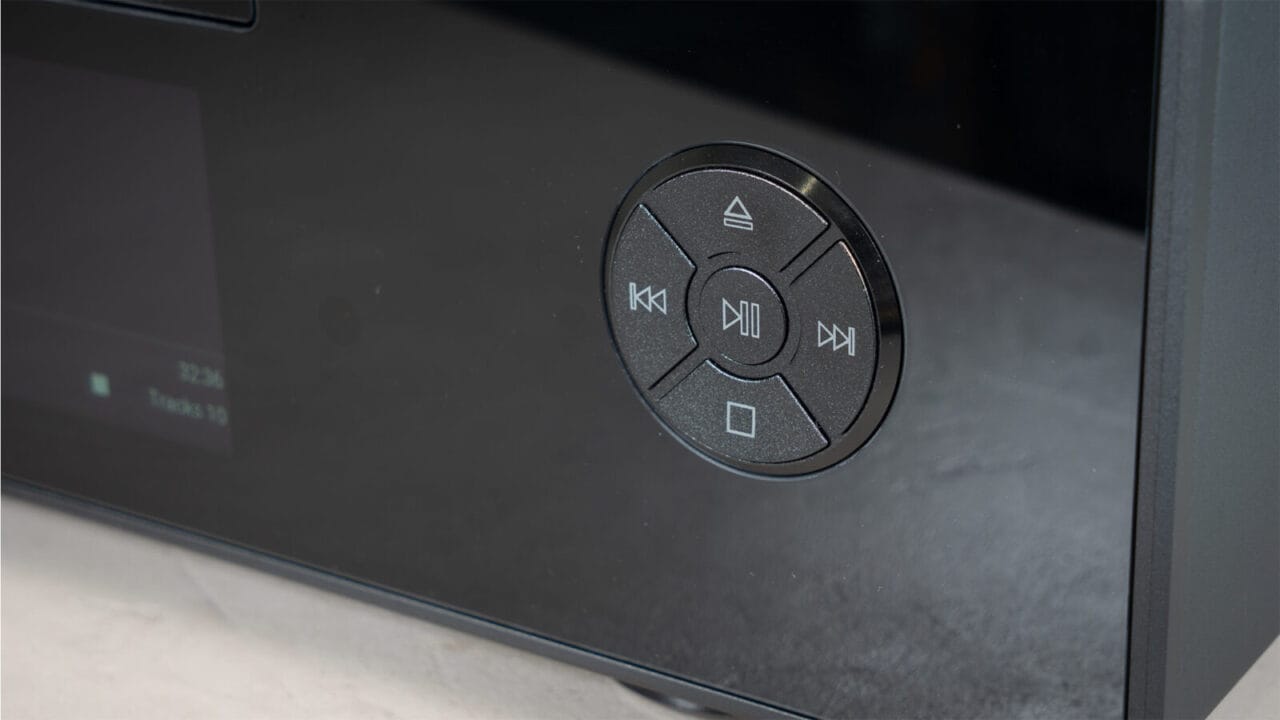
Main controls with their instantly recognisable icons
Connections wise, alongside single-ended RCA analogue outputs, you also get a set of XLRs offering balanced signals plus a coaxial digital output, meaning the Q430 can double up as a CD transport, should you want a different DAC flavour.
Unlike the Q5 though, there are no digital inputs, so you can’t pipe external digital data into the Q430’s DAC beyond that gracing its CD drawer.
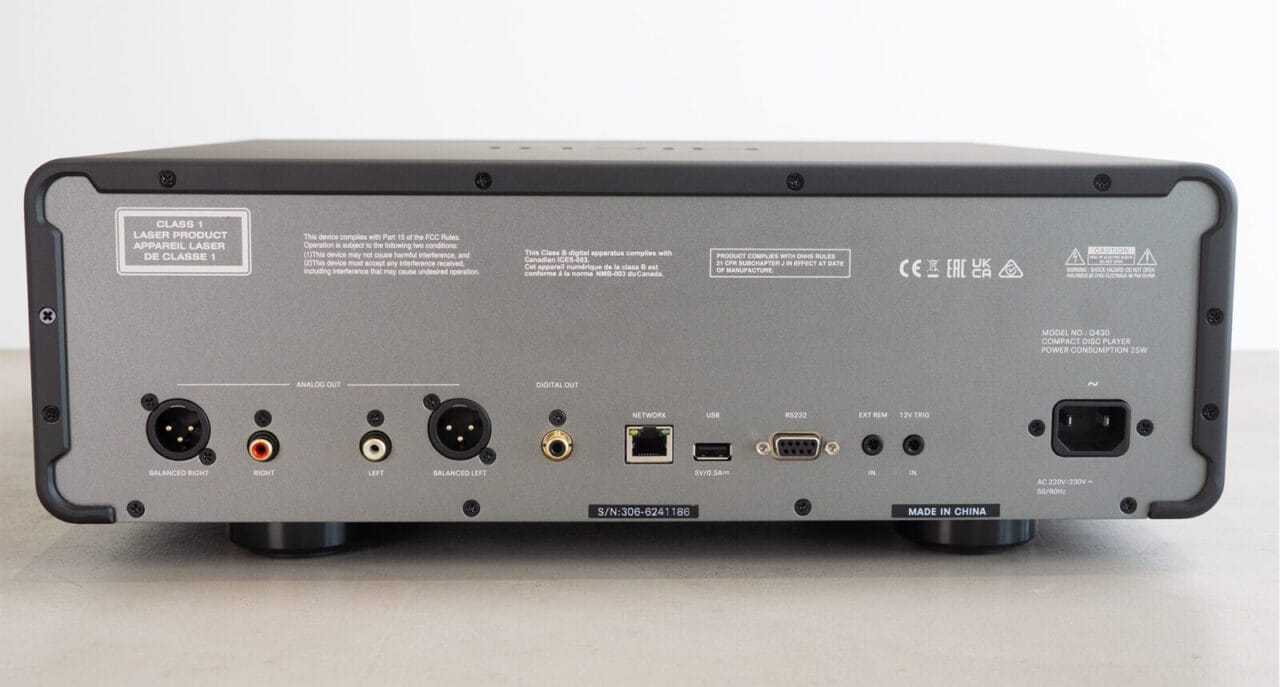
Nicely laid out rear panel includes balanced and single-ended analogue outputs plus S/PDIF. Ethernet port provides a network connection for artwork look-up, while USB is for software updates
Alongside the front panel controls, as you’d expect a remote control is included which also gets the Michi branding. This brings with it additional functionality including shuffle, repeat and access to the Q430’s internal menu that also sports options for tweaking the unit’s screen and LED brightness independently, plus auto-power off and firmware updates.
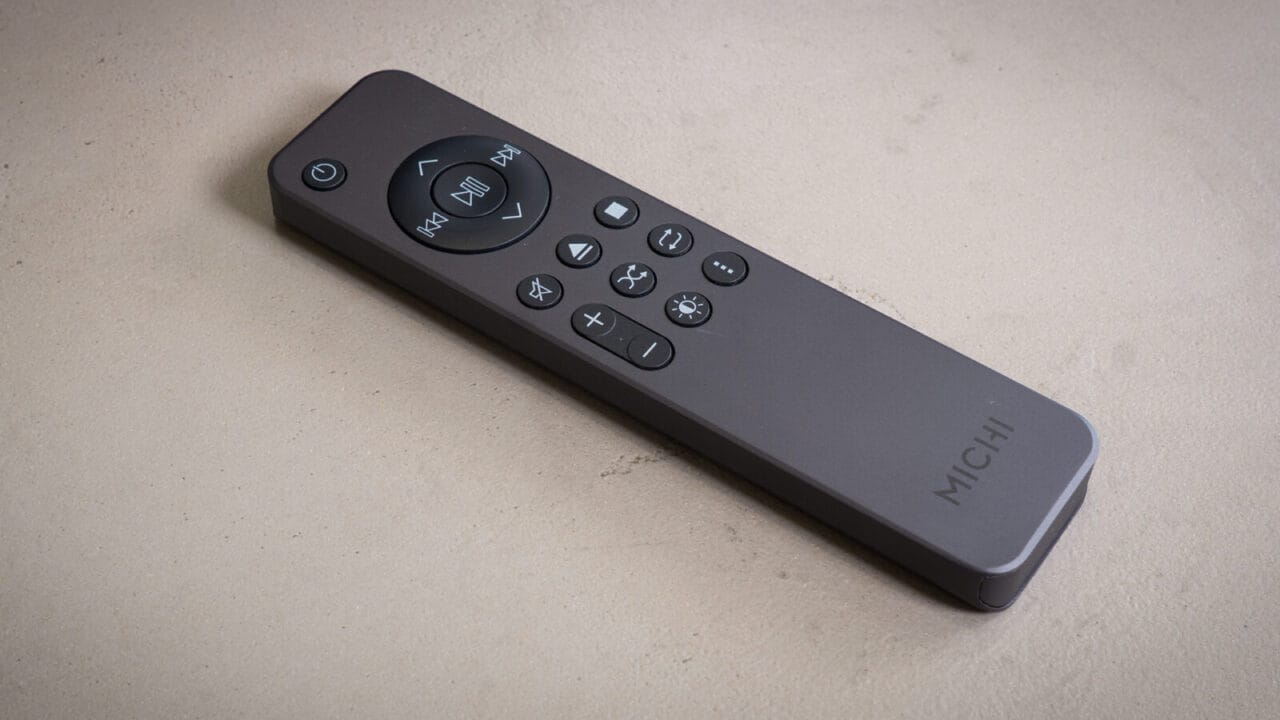
Functional Michi branded remote can also operate a Michi amp
Performance
Slotting the Q430 into my main system, it seems right at home alongside my Michi X5 integrated amp feeding MoFi SourcePoint V10 Master Edition loudspeakers, fed from Nordost cables.
What I really love about reviewing CD players is how it forces me down memory lane to the times when I first heard or bought an album. I’m from generation cassette, so buying CDs in my younger days was a big deal. I was also lucky enough to be on student radio some decades back (I had the face for it), meaning I got to hear early demos and live studio sets prior to polished album releases from many upstarts of the era.
One such band was Starsailor – and you couldn’t have met a nicer bunch of chaps (as I did) – who are currently celebrating the 25th anniversary of their debut Love Is Here‘s album.
The version that hit the shelves is superbly produced, even by today’s standards, making the most of lead singer James Walsh’s operatic vocals alongside layers of keyboards, guitars, percussion and a smattering of strings. And hearing it on the Q430 after all these years brings it bang up to date, as there’s a superb sense of soundstage depth and width to this player that elevates it above many rivals. Hear the CD’s opener Tie Up My Hands and how it builds from simple drumbeat and vocals, with layers of rhythm and electric guitars, piano and cymbals, all topped off with Walsh’s soaring falsetto as the track reaches its final crescendo, shows how well this machine does separation.
Even the most accomplished players can get a bit flustered at the end of this track, but the Michi is able to project each element without them colliding into each other in the soundstage, perhaps showing how well that DAC chip has been implemented.
As I found with its bigger Q5 brother, the Q430 is rich and detailed sounding, without being overly bright or saccharine in the treble as many digital players are, making them initially intoxicating before quickly becoming too much.
Instead the Q430 has been voiced for longterm listening, rather than sonic fireworks, which in my opinion is how CD should have always sounded – balanced rather than bright and brash.
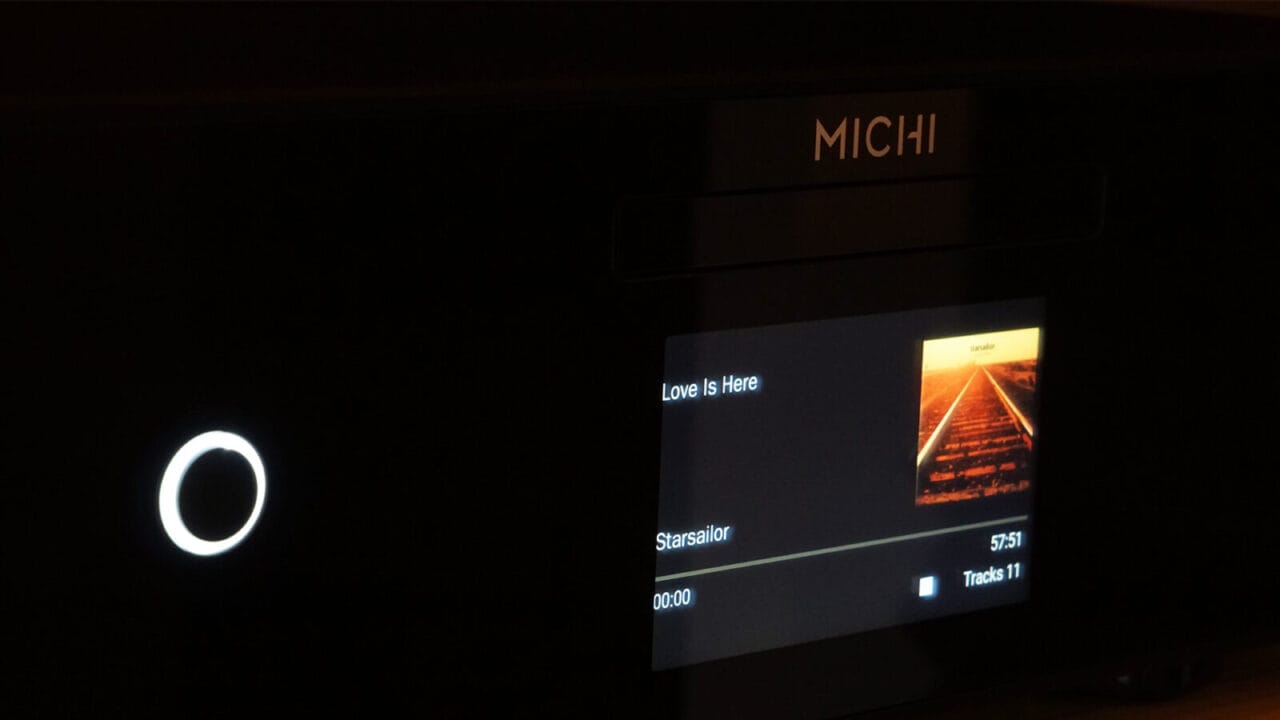
Nicely illumated power button sits alongside the Q430’s TFT colour screen
Striped back
I regaled you with my Starsailor example because I also have a demo disc from my radio days with three of those album tracks laid down prior to release, including the title track Love Is Here. Compared to the album version it’s a much simpler mix, with Walsh’s vocals almost peaking at points – and is much closer to a live take as a result.
I’ve played this CD from time to time, sometimes for nostalgia, but piping it through the Michi does something else, as it manages to convey all of the band’s rawness and pre-production innocence but with so much more meat on the bones than I’m used to. There’s real depth to the punch of the drums and a firmer sense of pluck to the bass guitar that’s been missing until now, alongside more air and space affording each band member.
What I’m hearing here is that even with lesser recordings, the Michi is able to add refinement rather than over focus – as in the wrong hands this version just sounds thin and hollow. Instead with the Michi in the driving seat there’s weight and body, but also a smoothness to the presentation that takes away those hard edges which are all to often CD’s downfall.
Giving it something more to chew on, Depeche Mode’s Walking In My Shoes from 1993’s Songs Of Faith And Devotion album is a tour de force of sweeping soundscapes and audio drama, and in delivering its message the Q430 does not disappoint. Because while this player may be voiced towards the easier-on-the-ear side of digital audio, it’s no slouch either. The visceral attack of the lead guitars and keyboards that underline the chorus are as firmly rendered as they are hard hitting. It sounds vast too, nodding to my earlier remarks about the soundstage this player can muster.
How does it compare to the Q5? It’s not far off. For 65% of its price you’re getting a good 75% of the Q5’s performance. Sure, the Q5 tips the scales in terms of ultimate resolution, but its clear that both players are cut from the same Michi matter. All the elements of the Q5 that I enjoyed are on display here, including how it just doesn’t sound overly ‘digital’ as some players in this category and price bracket can. Take how it handles the harmonies of Adam Duritz and Maria McKee on Counting Crows’ Sullivan Street from their remastered August And Everything After album (which I also enjoyed via the Q5) and you can’t help but revel in its analogue reverb. I’m generally a turntable guy, and it’s perhaps telling that during the Q430’s stay at Audiograde HQ when not head down reviewing, I’ve defaulted to CD just as much as vinyl.
In summary
If in crafting the Q430, Rotel set out to make Michi more accessible but without compromising on quality (of sound or build) then consider it job done, as this a superb CD player.
The fit and finish is everything we’ve come to expect from this elevated sub-brand in terms of fit, finish and understated finesse, while sonically it has all those Michi hallmarks of being able to paint a vast and detailed sonic landscape that you can get lost in for days. A longterm and more affordable Michi silver disc spinner for the purists.