



Alchemist is back. Three words I never thought I’d be typing on this website. Okay, so the new name is Audio Resurgence, which is emblematic of the company’s return to the hifi game (as the rights to the Alchemist brand name was sold years ago), but leaving that aside, I for one am delighted by its return, and here’s why.
Back in the ’90s Alchemist was a disruptor brand in what was a relatively conservative hifi era, defined by electronics housed in black metal boxes, matched to black ash veneered speakers. Then Alchemist came along and tore up the rule book. From its striking casework that made heatsinks a design feature (from gothic to steam punk) rather than a means to an end, to electronics that challenged the norm (Class A amps with toroids housed externally…who did that at the affordable end?).
You can read more about Alchemist’s history in my Spotlight feature.
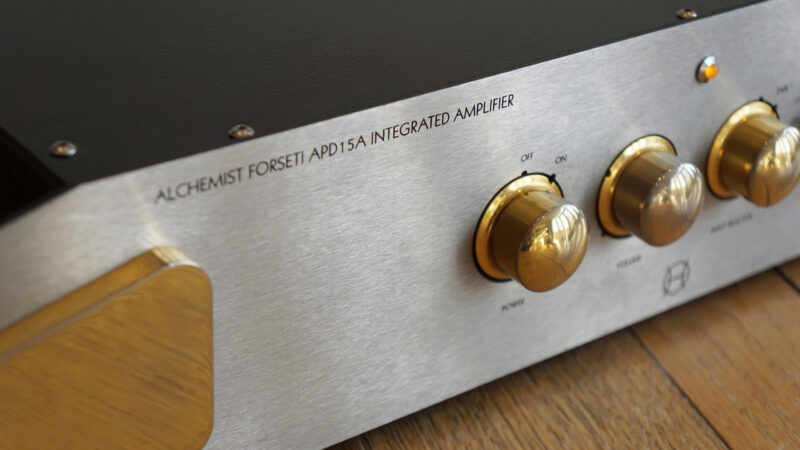
And then there was the sound, and I’ll fess up to being a long-term Alchemist user, having owned and waxed lyrical about my MkI Forseti amp for over twenty years. It’s an amp I still use on a weekly basis.
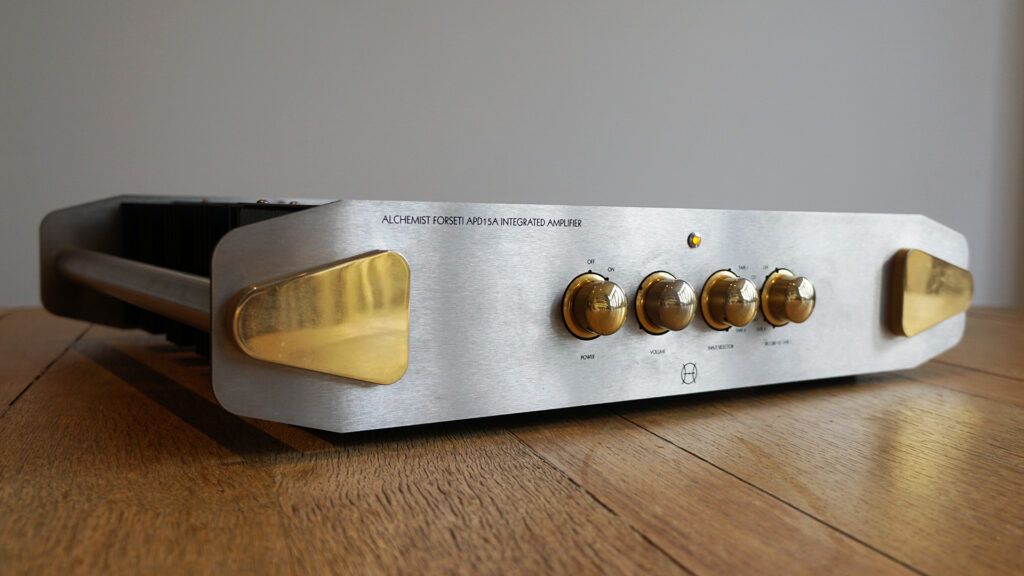
Any excuse to show off my Alchemist Forseti MKI, with design cues carried over to Audio Resurgence’s new models
Genuine article
Why this matters though is that this is the real deal, not just marketing hype for an electronics corporate buying production rights to cash in on products past. Instead this is the original founding members comprised of Andy Light and Glen Gayle deciding to bring back and update the legacy products they are so famous for, because they wanted to and felt the time was right.
Sadly the late Tim de Paravicini, who worked on the latter ranges, is no longer with us, but his memory lives on in Audio Resurgence’s new products – more on this later.

Getting the band back together – Audio Resurgence’s Andy Light on casework design and Glen Gayle on electronics
I’ve tried (and failed) to track both of these gents down for years, so boy was it a surprise when I stumbled into them at last year’s UK HiFi Show Live. After getting a bit giddy and babbling an intro, I composed myself enough to take some shots (some of which are now on Audio Resurgence’s website) and get down to business, i.e. listening to what we have here under review.
The Kraken awakes
While Alchemist made many standout designs in its day, the Kraken range is the one it’s most renowned for – being a compact (thanks to its toroid based PSU being housed separately), hot to the touch integrated (or separately boxed pre/power pair), with optional phono stage.
And this, fittingly, is where Audio Resurgence has chosen to kickstart its new product portfolio. There will be more amps to come (including special models with internals worked on by Tim dP that were never put into production, as teased in Bristol), but it’s the Kraken that put Alchemist on the map and it’s the product that is setting Audio Resurgence’s new stall out.
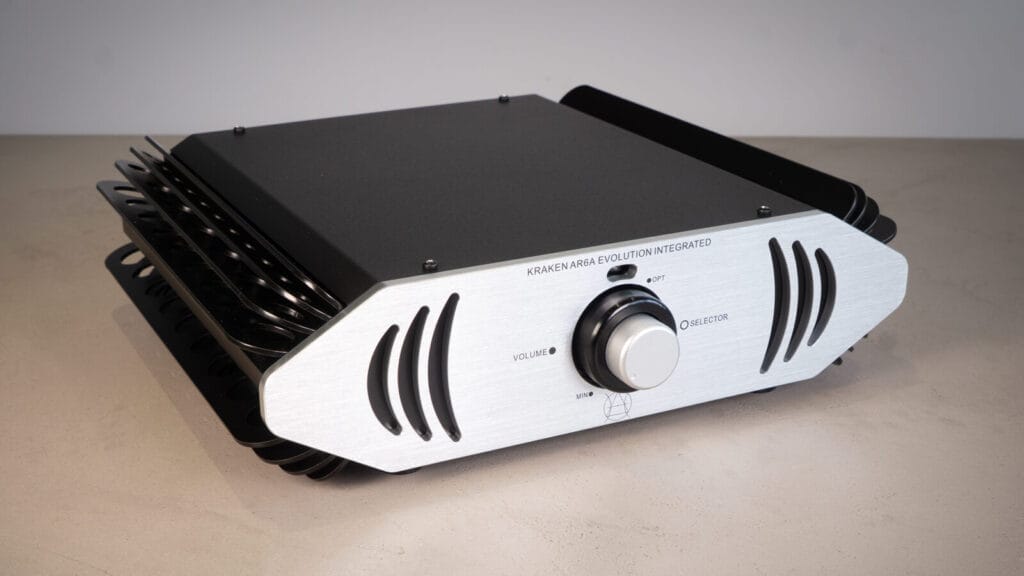
Alchemist resurged – the all new Kraken pays more than a homage to the original while also looking fresh for modern times
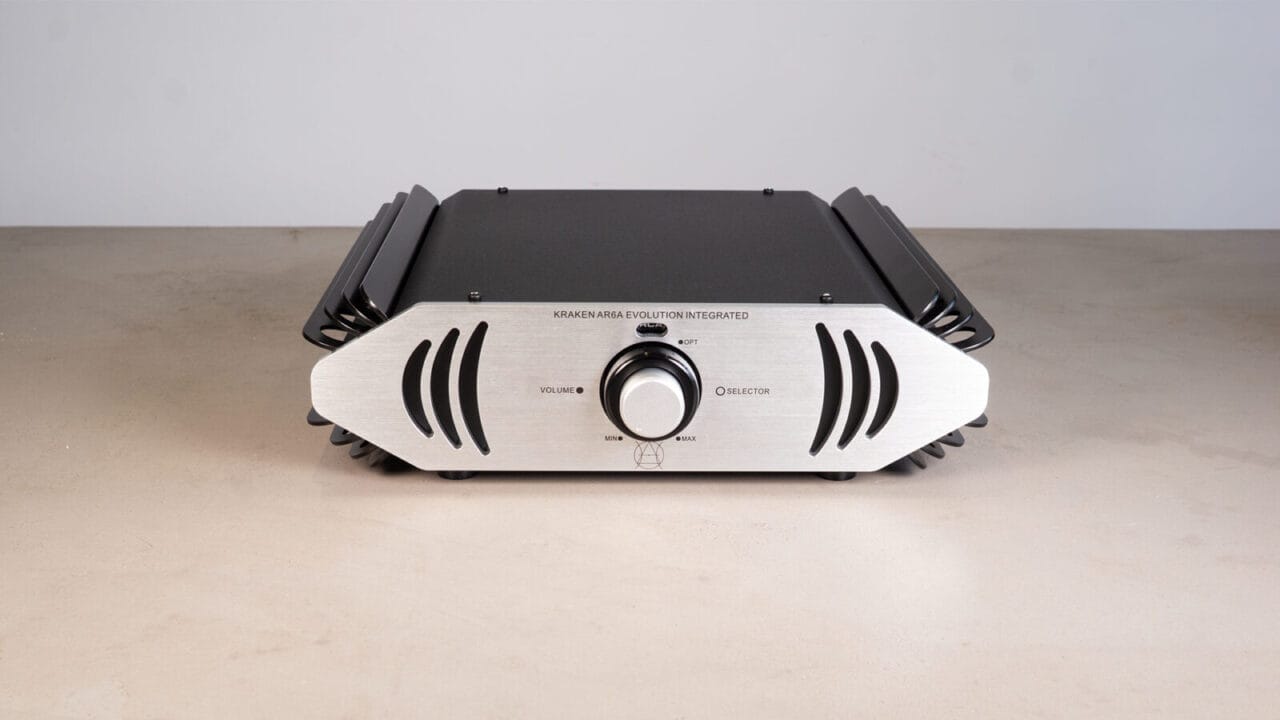
Unboxing the Kraken, designated the AR6A Evolution, and what I love is that while the original’s DNA is obvious from 50ft away, it’s updated just enough for today. That 6mm thick angular front panel with sculptured cut-outs, flared and fined side heatsinks and clever dual volume/input select dial is Andy Light at his best.
Inside, the new Kraken follows the original’s circuitry being analogue only, with six sets of RCA line-level inputs, all for an initial price of £1,250 in basic guise. And like the original, if you want one set of inputs converting to a moving-magnet phono stage that’s no problem, and adds on just £75. Want an extra toroid in its external PSU box it make it a true dual mono? That’s no problem either at £150 extra, bringing the total to £25 shy of fifteen hundred quid for a fully fledged Kraken, which is what we opted for – a fully formed sea monster, if you will.
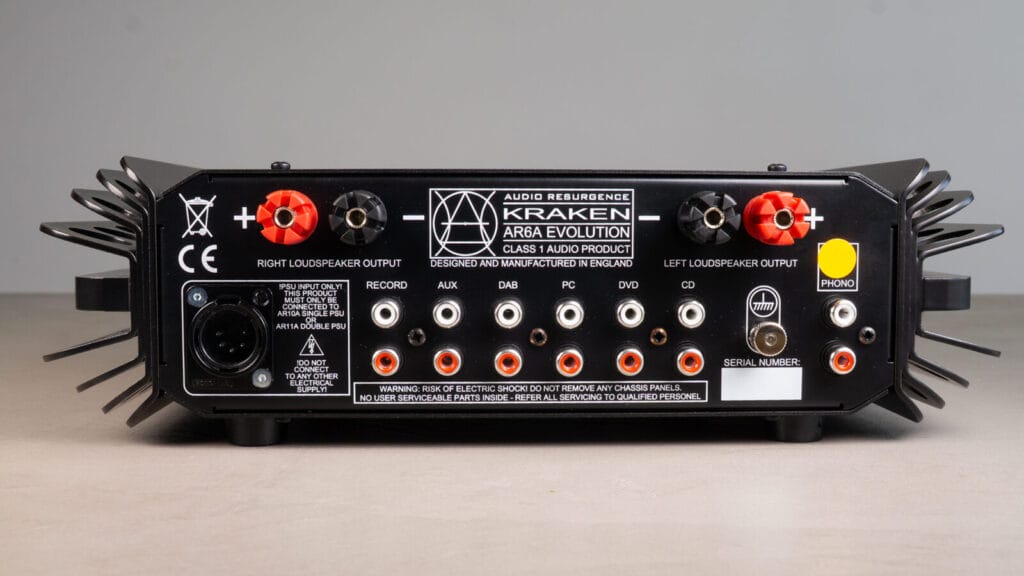
Clearly laid out rear panel hosts six sets of analogue RCA inputs, one set of fixed line-level RCAs outs, multiway speaker binding posts and a power connector for the dedicated PSU. Note the yellow sticker denoting the internal phono stage
The lazy legs amongst us might also hanker for a remote control, which is in the works too as a future option, and if you need even more Kraken action you can go separate pre/power as part of the range, with single or double PSU versions for the latter.
Out of its box the Kraken is bit of a cutie. “Ooh that’s nice”, is high praise indeed from my wife, being harder earned than our Editor’s Pick award in some respects. And it is nice because it’s compact, with the main unit measuring just 302/300/89mm (WDH), sitting on four chunky feet.
But it’s not just its size that accounts for its visual appeal, it’s also all the design language that’s gone into it, making it look striking from every angle.
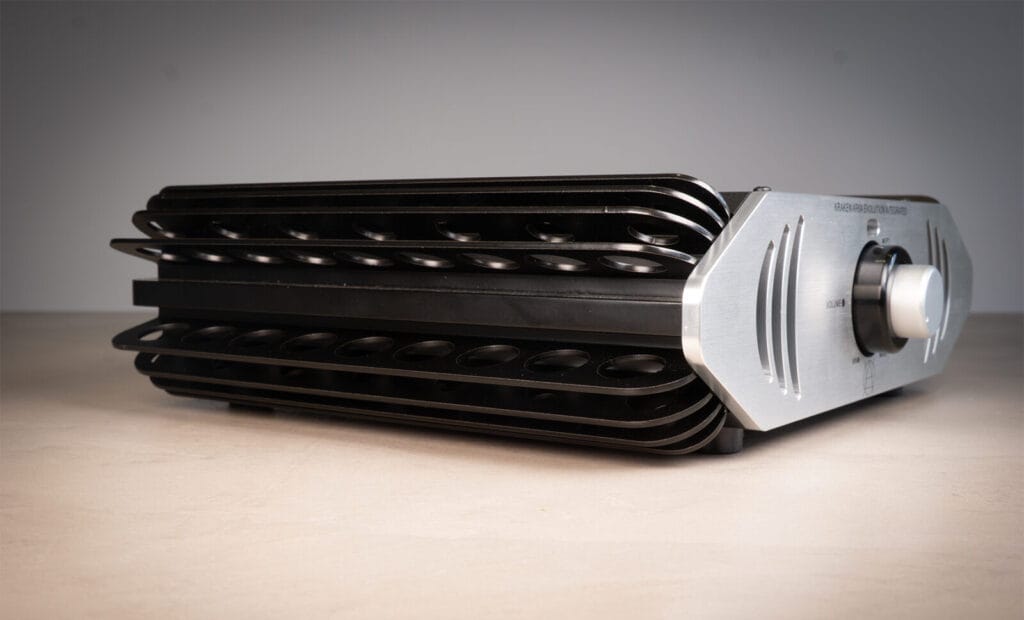
Even side on, the Kraken screams its own style, and those fins aren’t just for show, being also designed to aid optimum cooling
Being analogue only with just a PSU on/off switch, volume dial and input selector knob, set up and operation is as easy as it was back in the ’90s.
Inputs are pre-named as RCA (phono), CD, DVD, PC, DAB and AUX, visible via a small front panel window above the central dual concentric dials, with the outer black one for input select and the inner silver one for volume.
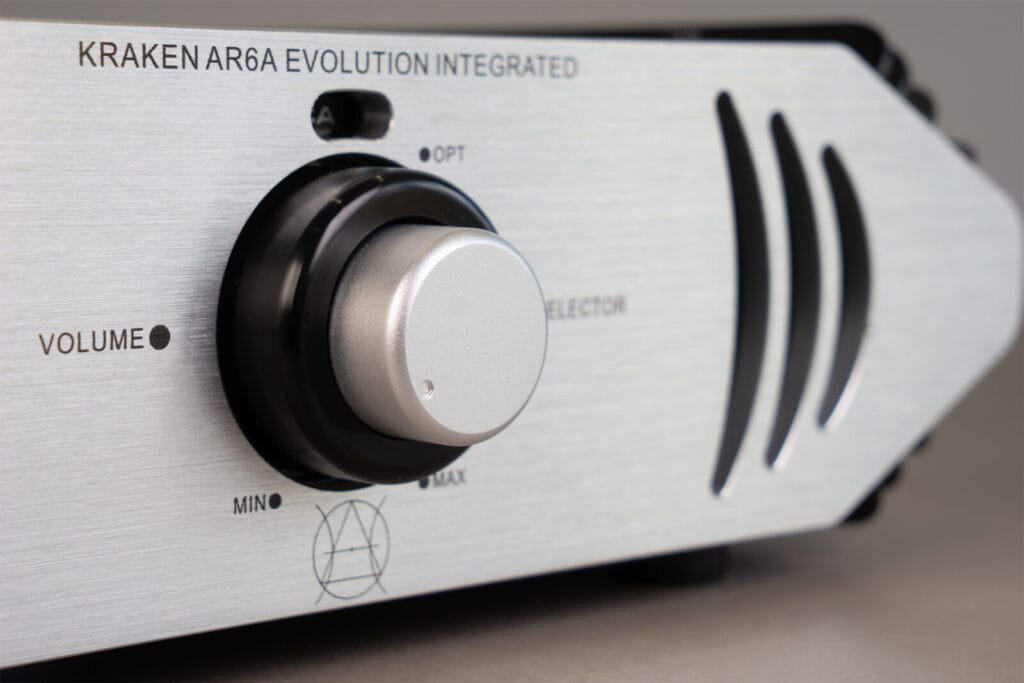
Staggered volume and select controller have a nice tactile feel to them. Note the updated logo with added triangle, denoting Audio Resurgence’s phoenix, rising from Alchemist’s flames
There’s an ‘OPT’ moniker at the 1 o’clock position, which I initially thought was a misprint for ‘optical’ (given the analogue only internals). This actually refers to the amp’s ‘optimal’ max volume position, before you enter clipping territory.
The internals mirror the original design’s, with its output devises biased heavily towards Class A operation and four large smoothing capacitors per channel.
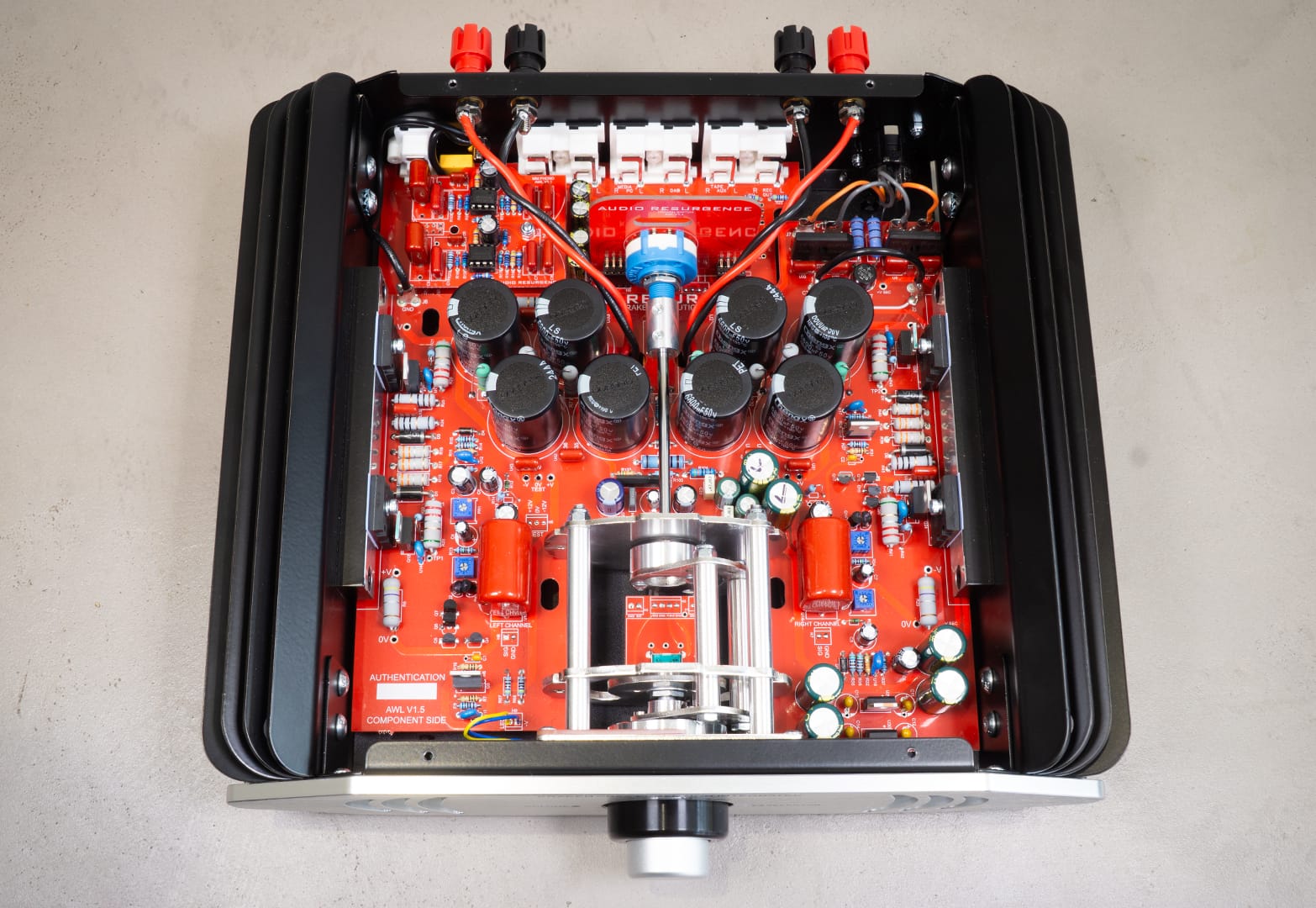
The blood red guts of the Kraken reveals some clever engineering. Note the large cage like rods bottom of shot that operate the input select via the connecting rod that runs to the preamp board (top of shot)
Was the original this nicely finished inside? I don’t recall it being so, perhaps it was of its time, but the all new model is exquisite under the hood and able to hold its own against any of today’s amps in this price bracket, and more.
The partnering AR11A PSU is more utilitarian in its execution, but with a 1m long umbilical connecting lead, I’d expect most users to hide it from view as needed, providing you can access its all important power switch.
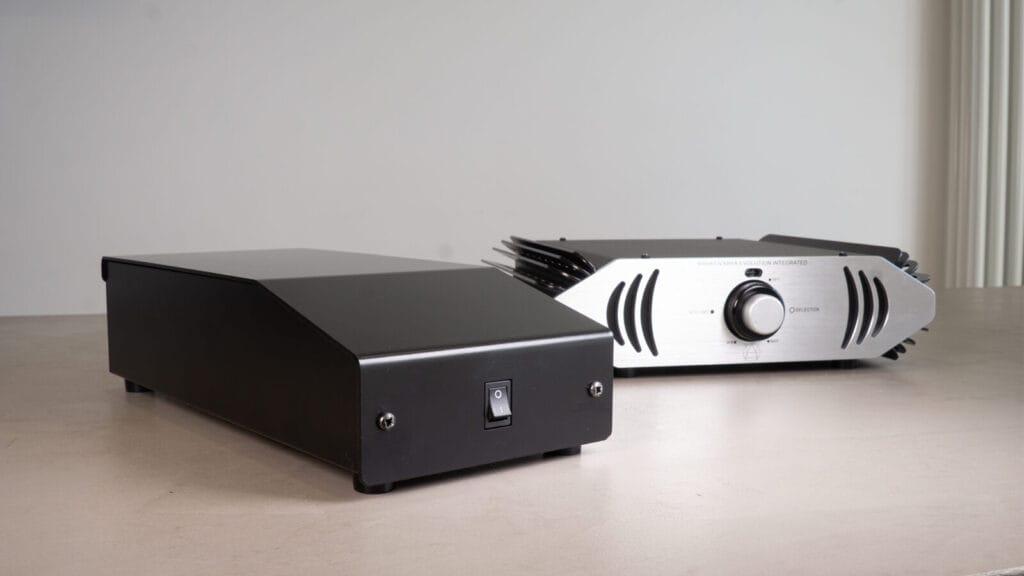
The Kraken’s dedicated box-like PSU is functional in appearance, housing double (or single) toroidal transformers to give the Kraken life
Powering the unit up doesn’t result in a visual light show like most modern hifi, instead you’re greeted with a green glow backlighting its input select window and a low level ‘click’ as the speaker relays engage after a dozen or so seconds, and that’s it.
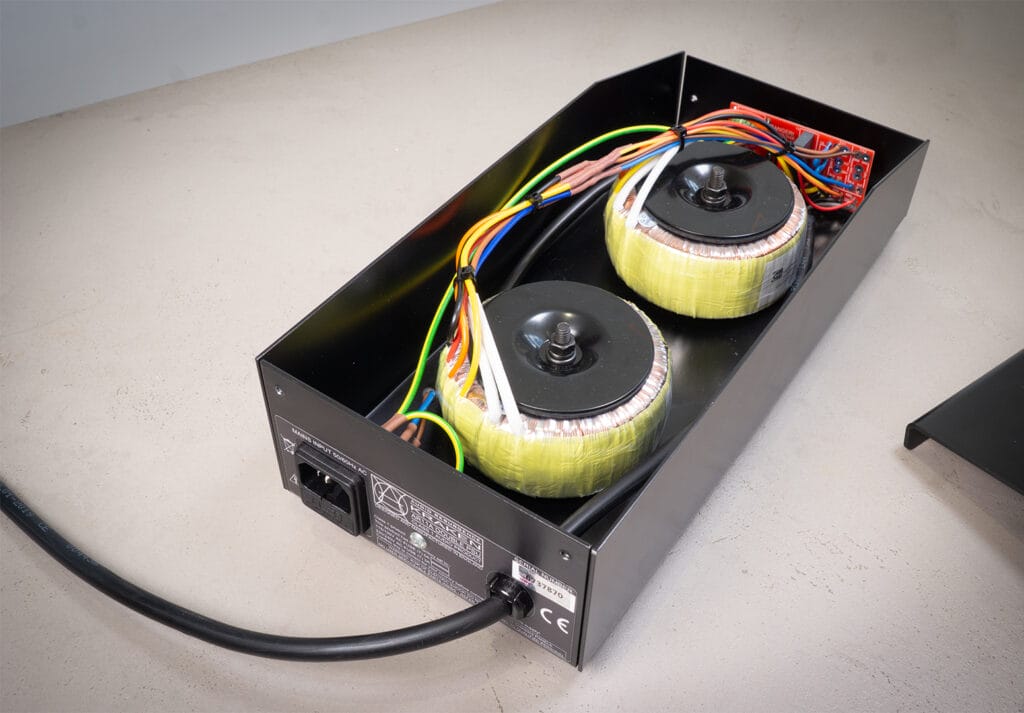
Lifting the lid on the PSU reveals twin toroids, afforded plenty of breathing space
Performance
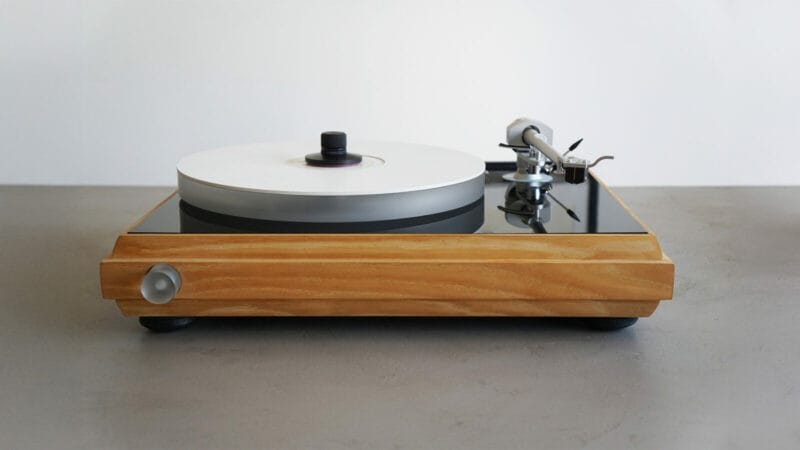
Initial partnering gear for review purposes is Primare’s CD15 Prisma on digital duties (which seems an ideal partner for the Kraken, being of a similar size, price and finish) alongside my legacy Pink Triangle Export GTi turntable with Audio Note arm and Rega’s new Nd9 MM pick-up, pushing Dynaudio Emit 20 standmount speakers.
An hour into listening and it dawns on me that if I wasn’t a dedicated hifi scribe, I could quite happily live with this combination longterm, so easily does the AR6A slot in and get the best out of the partnering gear.
Being such a demure amp and with its modest power output on paper, I was expecting the AR’s sounds to be proportionate to these factors. But I was wrong. As this amp sounds way bigger than its spec sheet suggests, with a soundstage that’s as dense as it is expansive. So much so, I can’t imagine many circumstances where you’ll need to nudge anywhere near ‘OPT’ levels, unless your speakers (or ears) are highly inefficient.
The sounds it lays forth are just as rewarding, with a lushness to them that seems to blend a valve-like velvety richness with solid state control. In other words the Kraken is Class A done right.
Play something like Bob Marley’s Exodus album (Qobuz, 24-bit/96kHz FLAC) and revel in the warmth that the Kraken affords the mix, combined with a vice-like grip on the bass notes. Tracks including Natural Mystic and Guiltiness are delivered as they should be, sounding laid back yet detailed and timed to perfection.
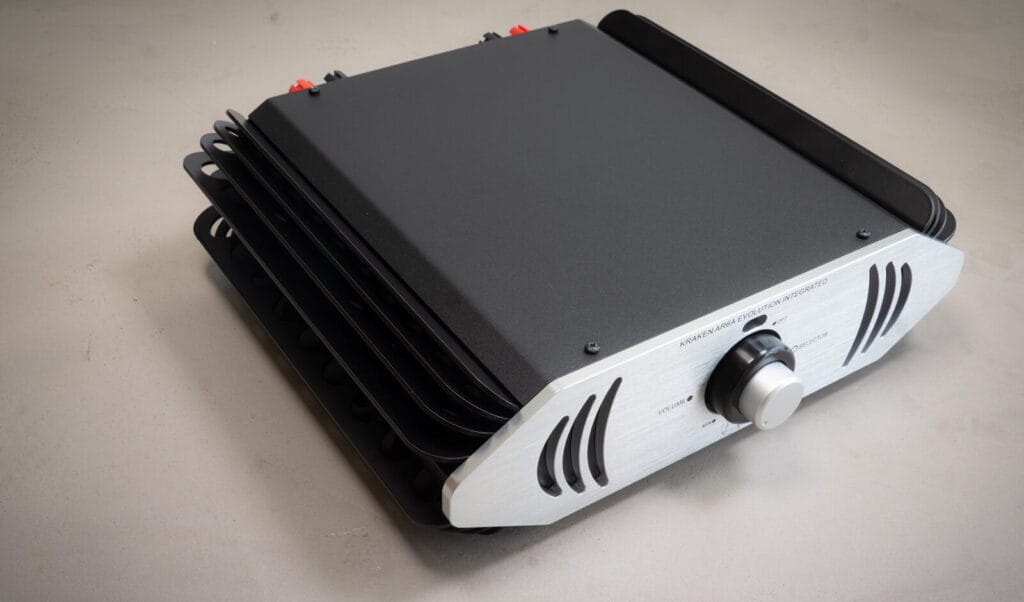
Don’t be fooled by its minimalist carcass, as the Kraken is no shrinking violet
Upping the ante
A week of so of daily listening across a variety of music with the amp fully cooking (literally, as those fins get hot 🥵) and I can’t help wondering if the Kraken is wanting to be pushed a little harder. Hence it’s quickly transported into my main system driving MoFi’s mighty V10 ME floorstanders which, given the price jump, could prove as revealing as they are rewarding, exposing the Kraken’s shortcomings alongside its strengths.
This question is soon put to bed though, as perhaps to my surprise the Kraken does the opposite, seeming to revel in having more air to shift via the MoFi’s dinner plate sized drivers. That vast and dense soundstage? It just expanded, but without any holes ripped in it. Boz Scaggs’ Thanks To You (16-bit/44kHz) for example can trick many an amp without a decent damping factor or low frequency control into making its bottom end flabby in the extremes, but the Kraken swerves this to stay in its lane, letting the bass extend and breath, without wallowing in itself and overly dominating the mix.
In comparison to my reference Michi X5 integrated amp, the Kraken’s upper bass is perhaps more pronounced and less refined at the edges, but let’s not forget the Michi commands £8k in its latest guise and to even be placing it alongside the Kraken for comparison shows how capable the latter is.
Where this capability really shines through is in the sweetness across the Kraken’s treble and upper midrange presentation. Take Youn Sun Nah’s delightful cover of My Favorite Things (16-bit/44kHz via Qobuz), a track I first heard on Martin’s expertly tuned system, and the Kraken’s voicing is a delight to hear, being as persuasive as it is gentile.
While I’m pleasantly surprised that this amp costs just £1,250 in base form, I’m full-on flabbergasted that the phono stage adds just £75 to the price, as it’s beyond many standalones costing treble that. Sure something from the likes of Graham Slee would be a worthy upgrade, but if you’re considering buying a budget add-on instead, then don’t, as provided you’re happy with MM only, then the in-built one in the Kraken is likely to better most budget boxes. It has no problem for example in dissecting the multi-layered production of Dire Straits’ American epic Telegraph Road which can easily wrong foot the entry breed, making it great value for the extra outlay – just like the rest of the amp.
In summary
These days this kind of money buys you a lot of amplifier options, and likely with many more features than the Kraken, but you have to ask yourself: Will it look like the Kraken? Unlikely. And more importantly will it sound like the Kraken? Definitely not. And that’s because it won’t have had Glen Gayle’s audio sorcery applied.
Instead this is a purist’s product made affordable, as its forefather was before it.
And while the cost of the Kraken is roughly what the original would have been with inflation added over the years, at under £1,500 it’s still a proper audio bargain for what it offers. It looks stunning enough to stand out from the mob and with a sound that’s oh so easy on the ear – I can’t think of anything else like it at the price. A legend reborn. Welcome back.