




Streaming has transformed the way we listen to music. Today, listeners can access tens of millions of albums whenever they like in full CD quality and beyond at the touch of a button, or swipe of a screen. Initially, only two services — Qobuz and Tidal — focused on high-quality streaming. Both have since expanded their catalogues, adding increasing numbers of high-resolution recordings, including up to 24-bit/192kHz PCM.
For anyone with a large CD collection, streaming offered another advantage. You could rip your CDs to a NAS (Network Attached Storage) drive and combine your own library with the vast catalogues of the online streaming providers. In theory, one system could give you access to every album you owned, plus millions more online.
In practice, however, bringing everything together proved less straightforward. Connecting local music and online streaming services to playback hardware could become frustrating as a result, and users often needed several programs to browse their own music alongside Tidal and Qobuz (for example).
Wouldn’t it be better if one application could seamlessly integrate every source, while remaining flexible enough to accommodate new streaming services as they appeared?
That was the idea behind Roon, which brought Tidal, Qobuz and a local music library together in a single system. At first glance, however, Roon can seem daunting. It introduced unfamiliar terms such as Core, Endpoint and Control, and its architecture looked considerably more complex than conventional music software.
Look beyond the jargon though and Roon’s philosophy is simple — music should be experienced, not treated as a collection of files. Roon presents albums with rich artwork, artist biographies, lyrics, reviews, recording credits and session personnel. It links performers, composers and producers, turning a music library into an interconnected catalogue of recordings and artists. It also combines streaming services and local libraries into one fully searchable collection, allowing you to move effortlessly between music you own and music available online. As a result Roon quickly built a loyal following among music enthusiasts and audiophiles.
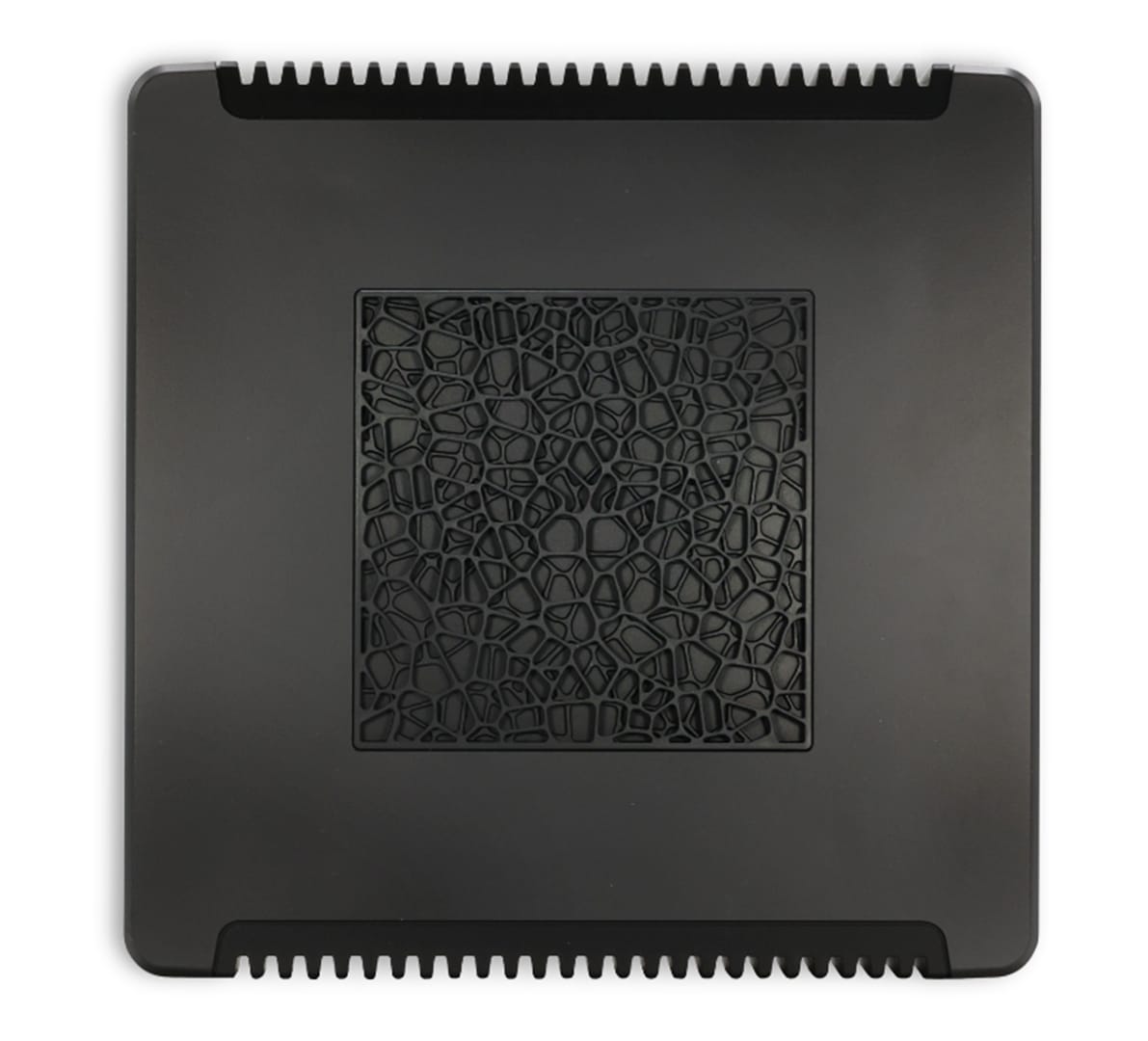
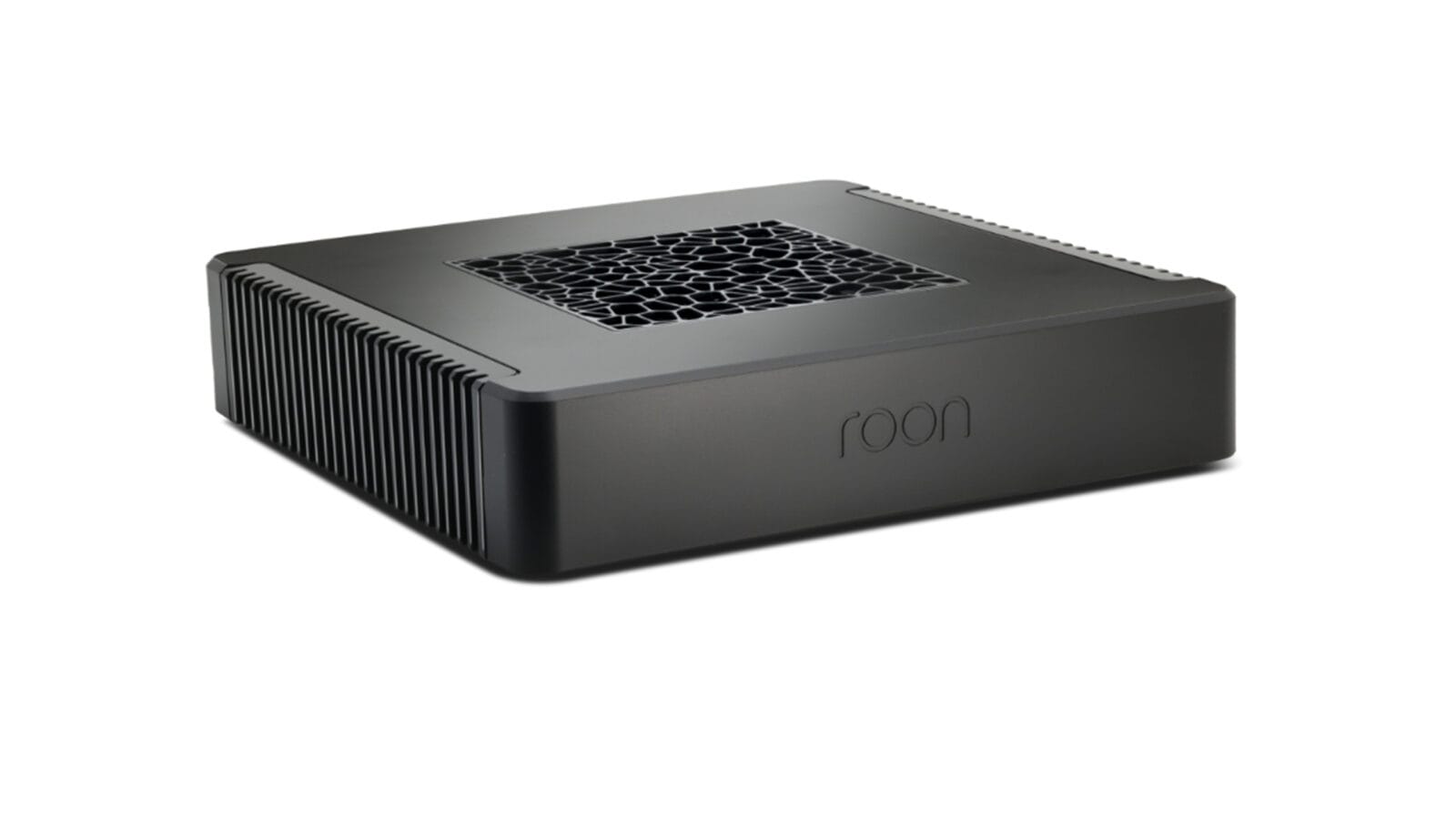
Unlike its more costly Titan brethren, the Nucleus One only comes in black, but does include a nicely textured top
How to Roon…
The system divides into three main elements. Roon Core runs the Roon software and can operate on a Windows PC, Mac, Linux computer or a dedicated Intel NUC (Next Unit of Computing). The Endpoint plays the music, typically through a network player or DAC. Control provides the interface you use to select and manage music, usually from a phone, tablet or computer.
This rich, integrated approach has made Roon the benchmark against which virtually every other music-management platform is judged.
Perhaps the natural next step for Roon was hardware, hence it was no surprise when a few years ago, the company behind Roon began producing its own hifi gear, optimised to run its software. Roon now offers two physical machines, the Nucleus Titan at £3,899 and the Nucleus One under review here at just £699.
Where the differences lie are in computational power between the two devices which has an impact on capacity. The Nucleus One can handle up to 10,000 albums, whereas the Titan targets folks with ultra-large libraries exceeding this. The bigger model can also support more than the six streaming zones that the One is equipped for.
Sculptured elegance
The Nucleus One’s compact carcass is formed from polycarbonate, measuring 241.3 x 63.5 x 241.3mm (WHD). A Roon logo sits on the front panel, while heat dissipating fins run along its left and right flanks. And while it doesn’t offer the wood and stone themed case work of the more costly Titan model (as let’s not forget this is only £699), its ventilation panel on top is nicely sculpted.
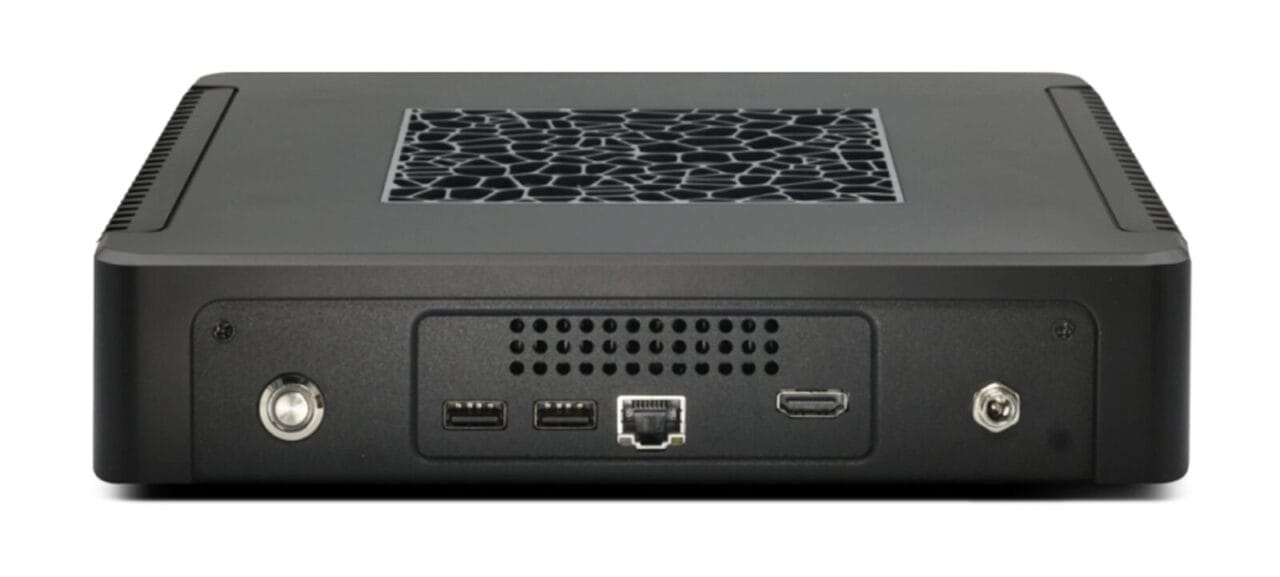
Rear panel furniture from L-R include the On/Off button, two USB ports, Ethernet, HDMI and power input
Chief librarian
Power comes via an included a wall-wart, supplied as standard, and being external opens the door to a PSU upgrade further down the line. Connectivity includes two USB-A ports, Gigabit Ethernet and HDMI, with the latter designed for audio only.
Setting up the Nucleus One proved a doddle. I signed in to my Roon account, followed by Tidal and Qobuz. And while getting my local music library onto the system took a little longer, following the video on Roon’s website helped.
A 2TB SSD handled my collection of more than 3,000 albums without difficulty, which includes DSD and DXD high-resolution recordings (alongside PCM). The USB ports work bi-directionally, so you can also use them to connect external storage devices.
I connected the Nucleus One to my network via Ethernet and to my DAC via USB and ran the Roon application on an iPad and larger-screened laptop, for when I needed to give my old eyes a rest. You will need a Roon account though which start at $12.49 p/m, although Roon offers a free seven-day trial to get you going. It took me about fifteen minutes to get everything up and running. Loading my music library took considerably longer, so I left the Nucleus One running overnight.
Once loaded, Roon proved extremely easy to use. When I added new hardware for example, Roon found it and integrated it into my playback system with very little intervention.
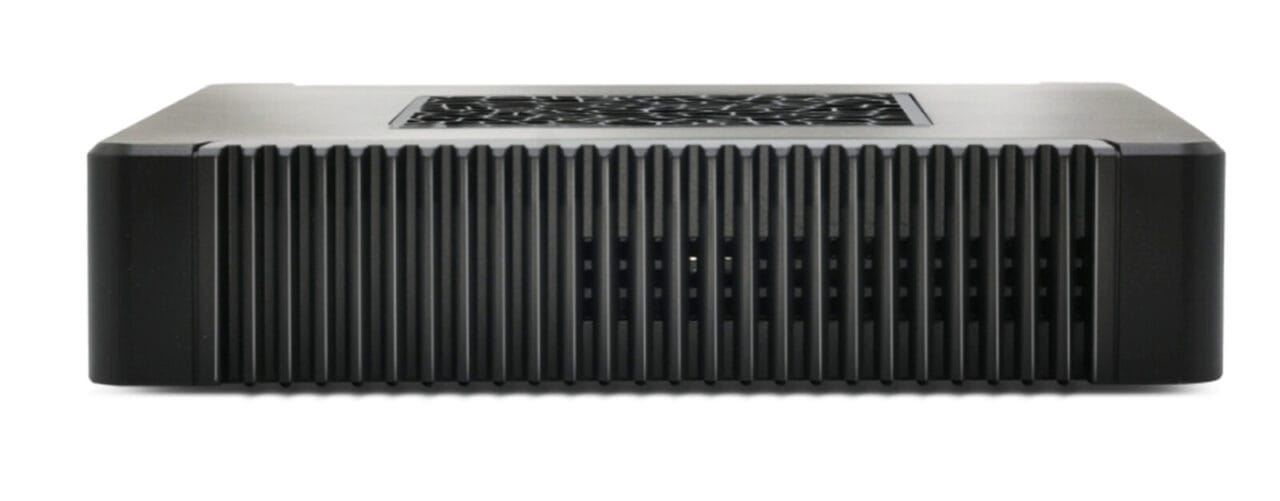
Fins on both sides help keep things cool
Performance
The Nucleus One took over streaming duties from my dCS Bartók’s internal streamer via USB, with the Bartók retained for feeding my Luxman 509Z integrated amplifier and Wilson Sophia 3 speakers. This isn’t my top system, but it should certainly show what the Nucleus One can do.
I dived straight into the deep end with a brilliant recording of Fanfare For The Common Man by Professor Johnson (Tidal 16-bit/44kHz). Eiji Oue conducts the Minnesota Orchestra for this Reference Recording. Big, powerful timpani and bass drums open the piece to immediately make a statement (so much so you need to take care with the volume to avoid rattling the windows!).
The tam-tam gongs add even more weight to the performance and the Nucleus One captures all of this drama while preserving the delicate decay of the sound into the large acoustic. I could easily hear the detail of how the timpani and drums were played. Following this bombastic introduction, the brass section enters with a wonderfully metallic sound, they are brass instruments after all, and they sound like it, rather than an artificial interpretation.
With the Roon in play I wasn’t missing the Bartók’s internal streamer, having enjoyed this track so much that I played the rest of the album with equally satisfying results. That’s always a good sign.
Alison Krauss’s cappella version of Down To The River To Pray (16-bit/44kHz, Qobuz) from the film O Brother, Where Art Thou? soundtrack starts with her voice and the First Baptist Church Choir of White House, Tennessee, in the background. The Nucleus One delivers this recording with remarkable clarity and emotion, and without turning the performance into an exercise in audio dissection. The sheer power and emotion of this simple song builds steadily towards a dramatic crescendo. I could easily sense the choir’s power, while being able to appreciate the individual voices and how its three-dimensional soundstage is layered.
Next came S.M.V.’s Thunder (16-bit/44kHz, Qobuz) album and its title track, featuring three of the finest bass players around. Stanley Clarke’s famed high-register work, Marcus Miller’s funky electric-bass groove and Victor Wooten’s complex bass-slap technique combine to produce some brilliant bass guitar work in a coherent and highly musical track with Butterscotch adding some interesting vocals to keep you on your toes.
The Nucleus One conveys the mood of this track as well as it does the superb virtuosity of each player. I could hear the sheer musical prowess of all three bass players, and the sound was tighter than when I’ve heard it via the Bartók’s internal streamer. The speed of some of the playing demands clean, fast bass, and the Nucleus One delivered. It also made it easier to distinguish the different tones of each instrument.
Up a gear
OK, time to bring out the big boys via my Audio Research Reference 6 pre and Reference 160M monoblock power amps.
With this combo in the mix, Mike Valentine’s WAV 24-bit/192kHz recording of Clare Teal singing the classic Too Darn Hot with the Syd Lawrence Orchestra sounds just glorious via the Roon.
The full brass band’s dynamics are to die for, while the soundstage offered is huge and remarkably even, without giving prominence to either the centre or the edges. And there’s something else here too — a sense of magic that was easy to hear, because the recording sounds so alive. Recorded in a single take as a Direct Cut, the Nucleus One really gets this and conveys its resulting sense of immediacy beautifully.
Mike Valentine’s recording of Beethoven’s Egmont Overture (also in WAV at 24/192) recorded at St Martin-in-the-Fields, London, had the Roon tapping into that special magic again. The system recreated the experience I’d had first hand, sitting in the guests’ area and listening to this wonderful music.
With so much potential, I couldn’t resist trying the Nucleus One with an upgraded PSU from iFi Audio and its iPower Elite, which improved its performance further, by reducing noise and making the presentation slightly smoother. However, proceed carefully, as some alternative power supplies cost almost half as much as the Nucleus One itself.
In summary
The Roon Nucleus One combines excellent usability with exceptionally good sound quality at the price, married to impressive reliability.
On a purely practical level it removes much of the complexity from managing a large local music collection alongside streaming services. Setup is quick, operation is intuitive, and Roon’s interface makes navigating a large library genuinely enjoyable.
If you already use Roon — or want to build a system around it — the Nucleus One provides a simple, polished, reliable and sonically accomplished way to run the platform. Would I recommend it? So much so I bought one!