


While the common conception was (and still is with some) that the lion’s share of your hifi budget should go to your loudspeakers, as no matter how good the replay chain is, your system will always be throttled if they are the weak link, there’s a similar case to be made for your amplifier.
It serves as your hifi’s engine, driving the rest of your system. And to continue the car analogy, a crap engine in a well built car will always underperform, not matter how good it looks. And like a car, an amp’s performance it’s not just about the power on tap, but how it’s delivered.
Having spent time at AVID HQ, I can vouch for the company’s mantra being “when not satisfied with what’s out there, we make it ourselves…and better”.
This is why AVID has evolved from a turntable disruptor brand in recent decades to making everything analogue from amps to speakers, tonearms and cartridges – gaining an admired reputation along the way.
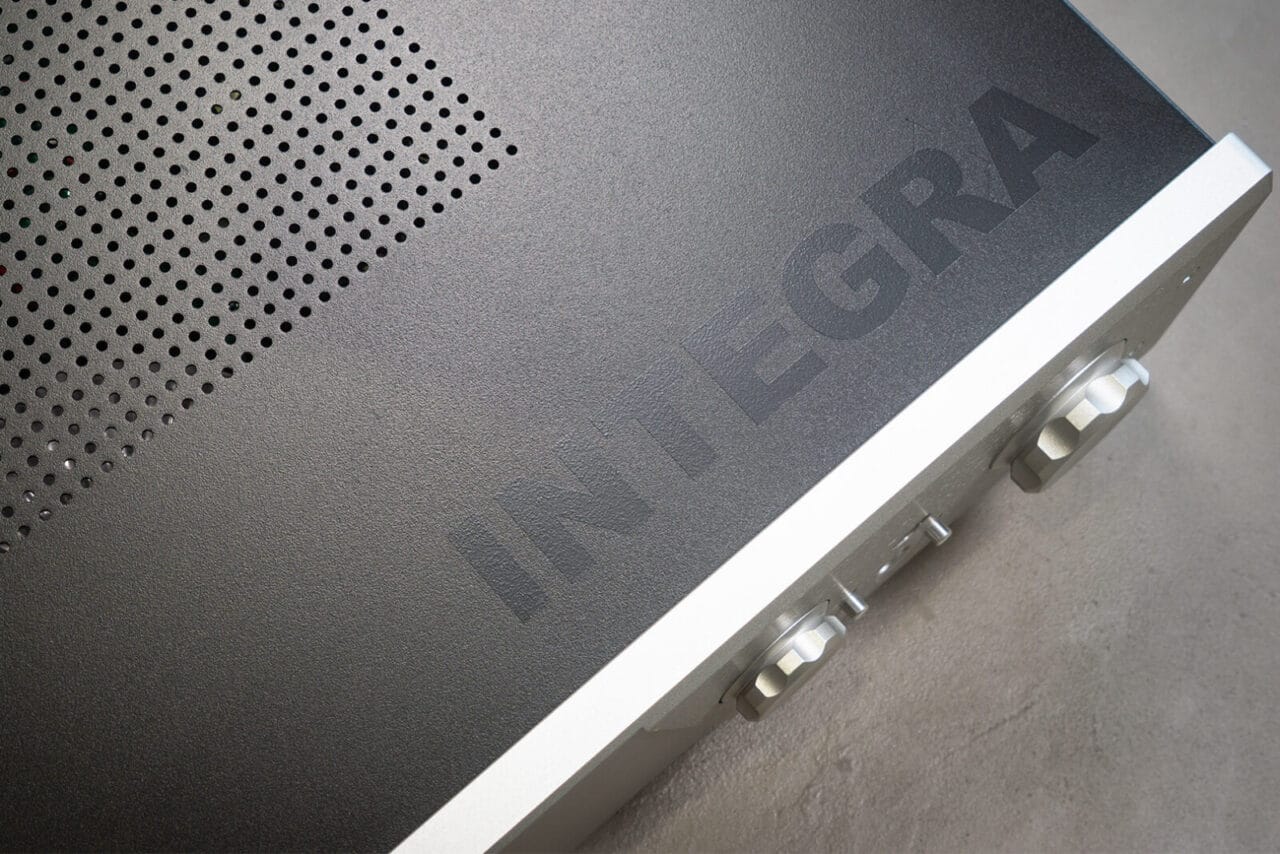
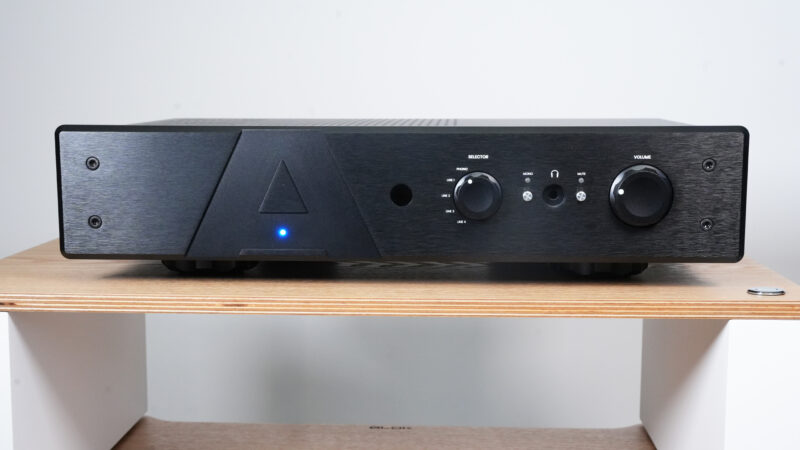
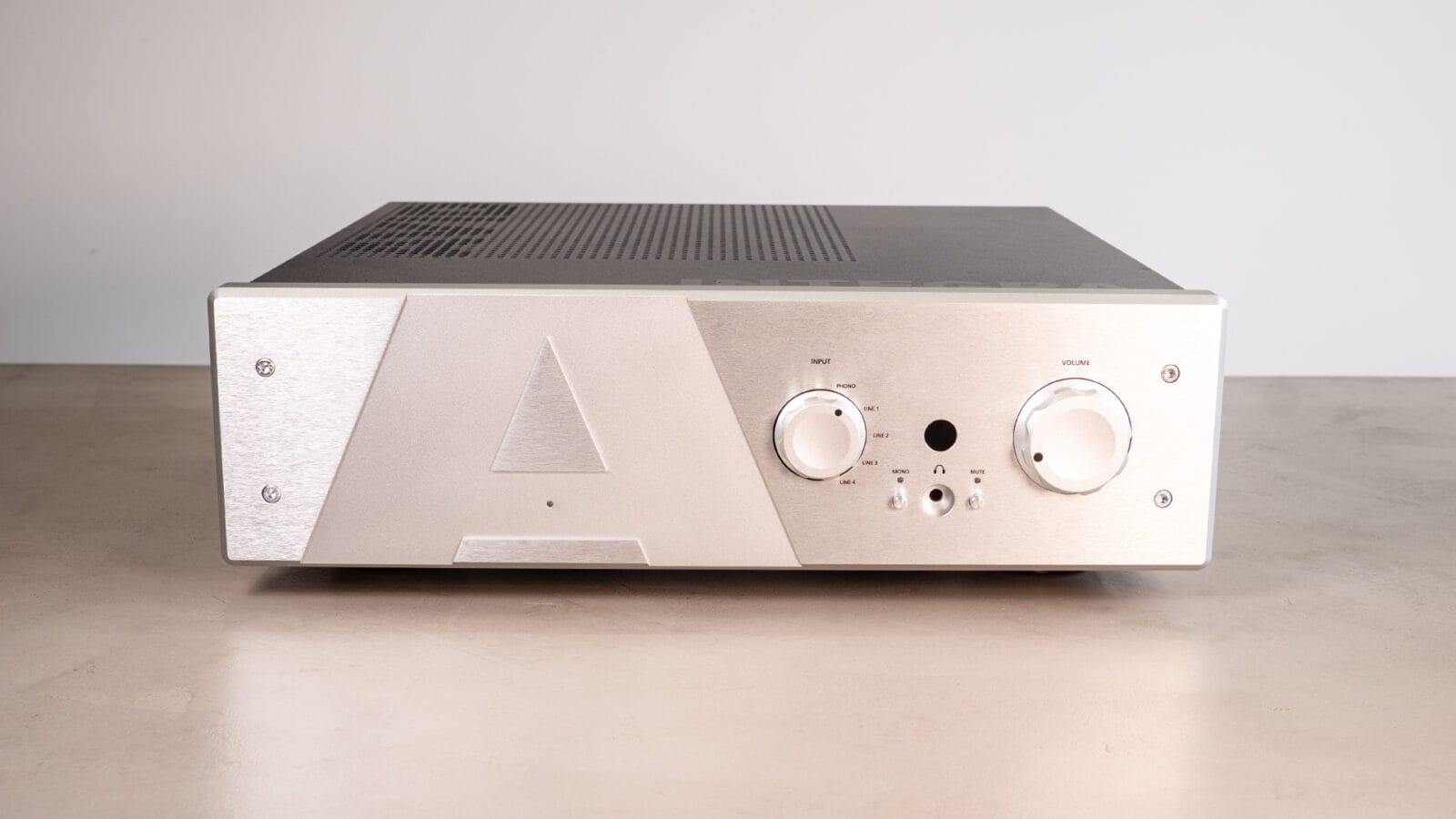
Integra’s industrial styling is all about metal, and lots of it, either in stealthy black or brushed silver
The Integra amp is the middle model in AVID’s three strong integrated range, sandwiched between the 70W Accent (£4,900) and 110W Sigsum (£20,000), with the Integra bang in the middle at £11,500 and churning out 90W (into 8 ohms).
Sticking to the brand’s raison d’être, like the rest of its amps the Integra is analogue only. To quote company founder Conrad Mas “we don’t build in obsolescence”, and digital internals are much more likely to get outdated than analogue (how many of us now use external DACs and streamers over our amp’s inbuilt ones?).
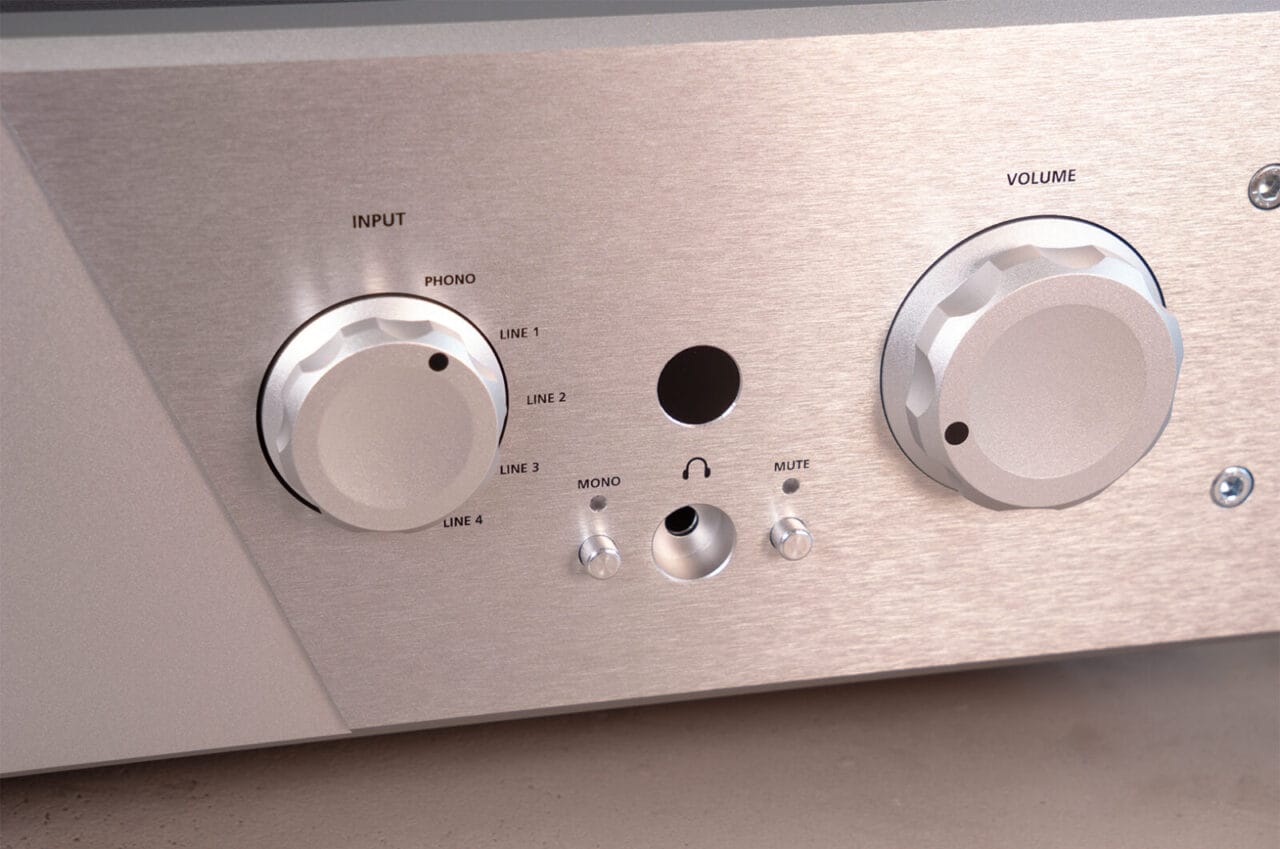
Clearly laid out controls include rotary dials for input and volume, alongside mono and mute buttons, plus a handy headphone socket. Can’t see the on/off switch? That’s because it’s hidden under the front fascia
While some may mourn the lack of digital inputs, others will celebrate the inclusion of one of AVID’s refined phono stages nestled inside (based on its award-winning Pellar, which has just been taken to MKII status). This means you’re catered for with moving-magnet (MM) plus high and low sensitivity moving-coil (MC) pick-ups, alongside four sets of line-level RCA inputs.
Cartridge loading is pre set to 47 kohm (MM) and AVID also includes a set of 500Ω RCA loading plugs for MC users, with other values available on request.
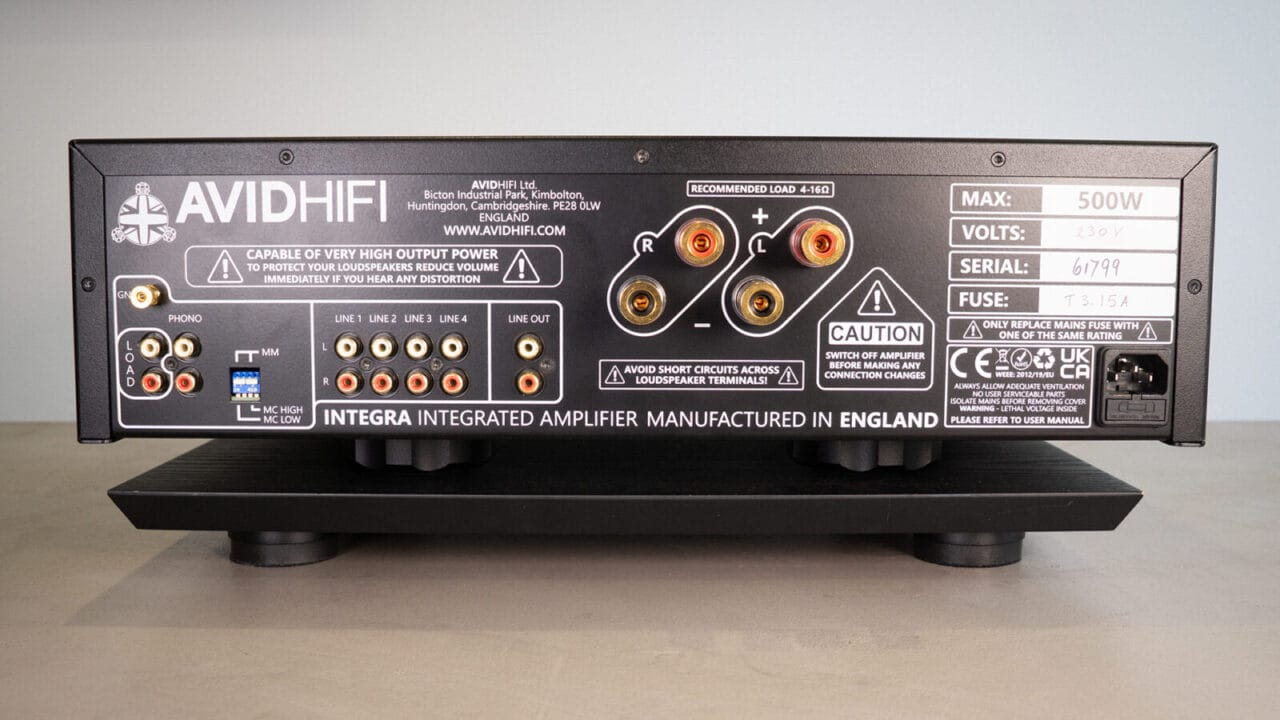
Rear panel socketry includes RCA in/outs (no XLR) plus AVID’s own gold plated speaker cable binding posts
Inside, the Integra’s componentry continues the no-nonsense approach to long-lasting amplifier construction. We’re talking (mil-spec) through-hole solder PCBs, discrete output devices, bespoke polypropylene capacitors in critical signal paths and an ALPS volume pot, alongside a dedicated internal Class A headphone amplifier.
And then there’s the all important power supply, as while 90W doesn’t sound over-spec’d compared to the trend for behemothic mains drinkers these days, the Integra packs a substantial 750VA mains transformer alongside 88,000uF of electrical storage capacity, meaning the Class AB power it does have at its elbow is readily available when needed.
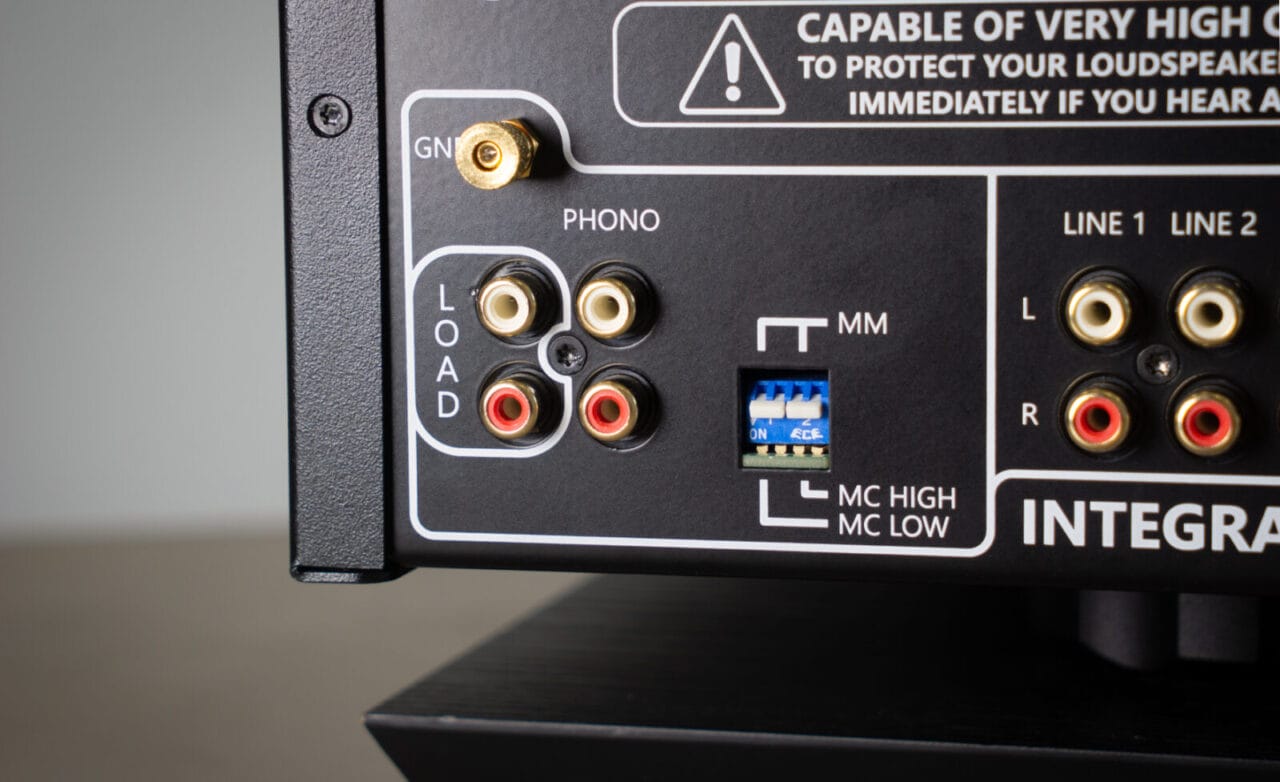
Internal phono stage caters for MM and MC inputs (right sockets) offering gain at 48/60/70dB, with bespoke MC loading options via external plugs (left sockets)
Unboxing the Integra and my first impression is how much heavier it is verses the Accent model I reviewed in January ’25. As while the wattage has increased by only 20W, the Integra adds 8.5kg to the Accent’s 14.5kg, being taller and wider (at 470/495/155mm WDH vs 470/410/110mm for the Accent). In other words, this feels like a lot more amplifier for the extra outlay.
Fancy footwork
Eagle eyed readers will also notice the black equipment stand that the amp is cited on in our review images, which I couldn’t resist also trying with the amp. Pragmatically title AVID’s Platform and costing £400, in black ash or oak finishes, its main material is wood while also employing custom developed Sorbothane within its feet. That’s not to say the amp’s own tootsies are lacking, instead their massive cog-like design also feature rubber compression rings in their undersides for serious grip.
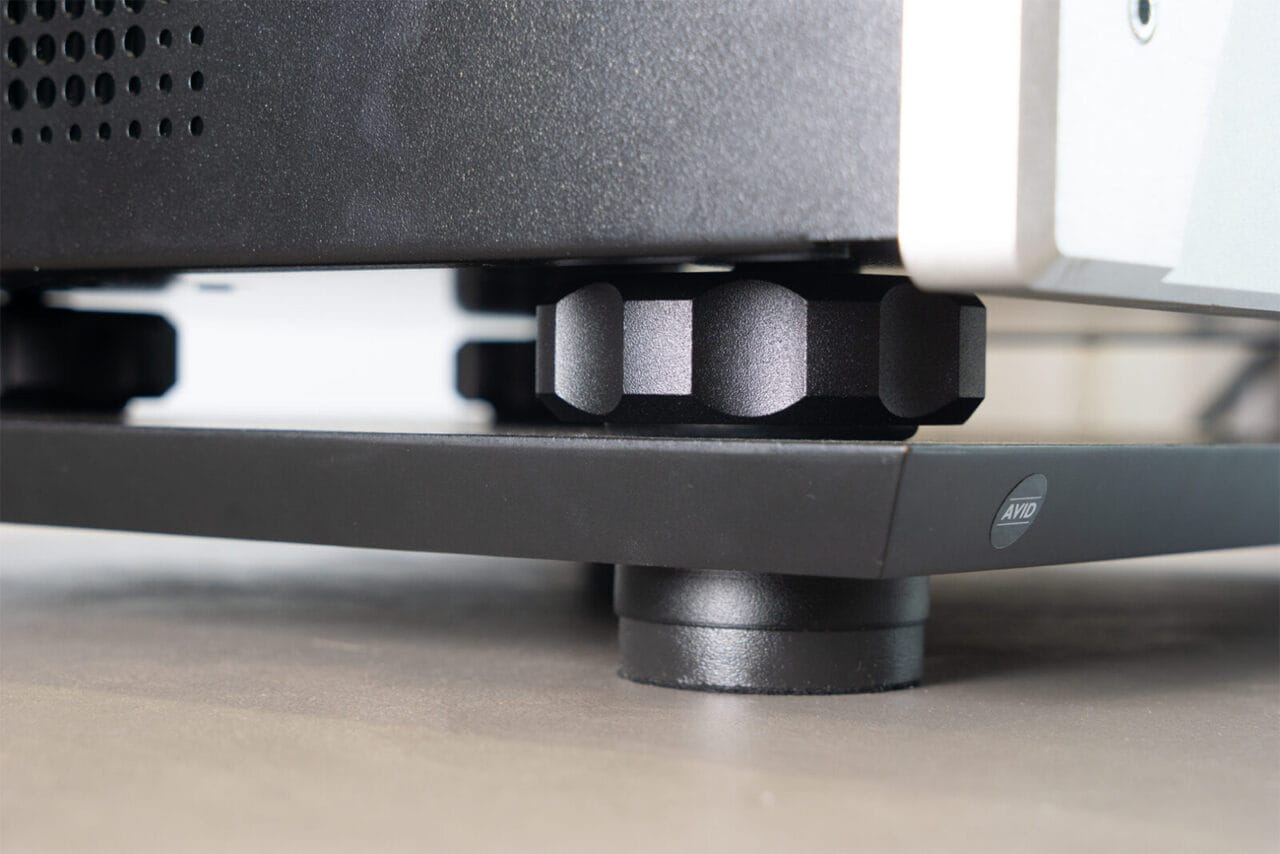
AVID’s Platform taking the Integra’s 30kg strain. The former features a compound in its feet made in collaboration with a local university and the manufacturers of Sorbothane
Being an analogue only integrated, setup is a relative doddle and involves little more than siting, plugging in and switching on.
Everything feels tactile and solid to the touch, with reassuringly audible relay clicks when selecting inputs or plugging in headphones to mute the speakers. In this respect it feels more traditional in its user experience, which I personally welcome. This also extends to its in-house remote, which is simpler than many rivals in only offering control over volume and mute. But in its favour these are the main functions you need and it’s more responsive and better made than most.
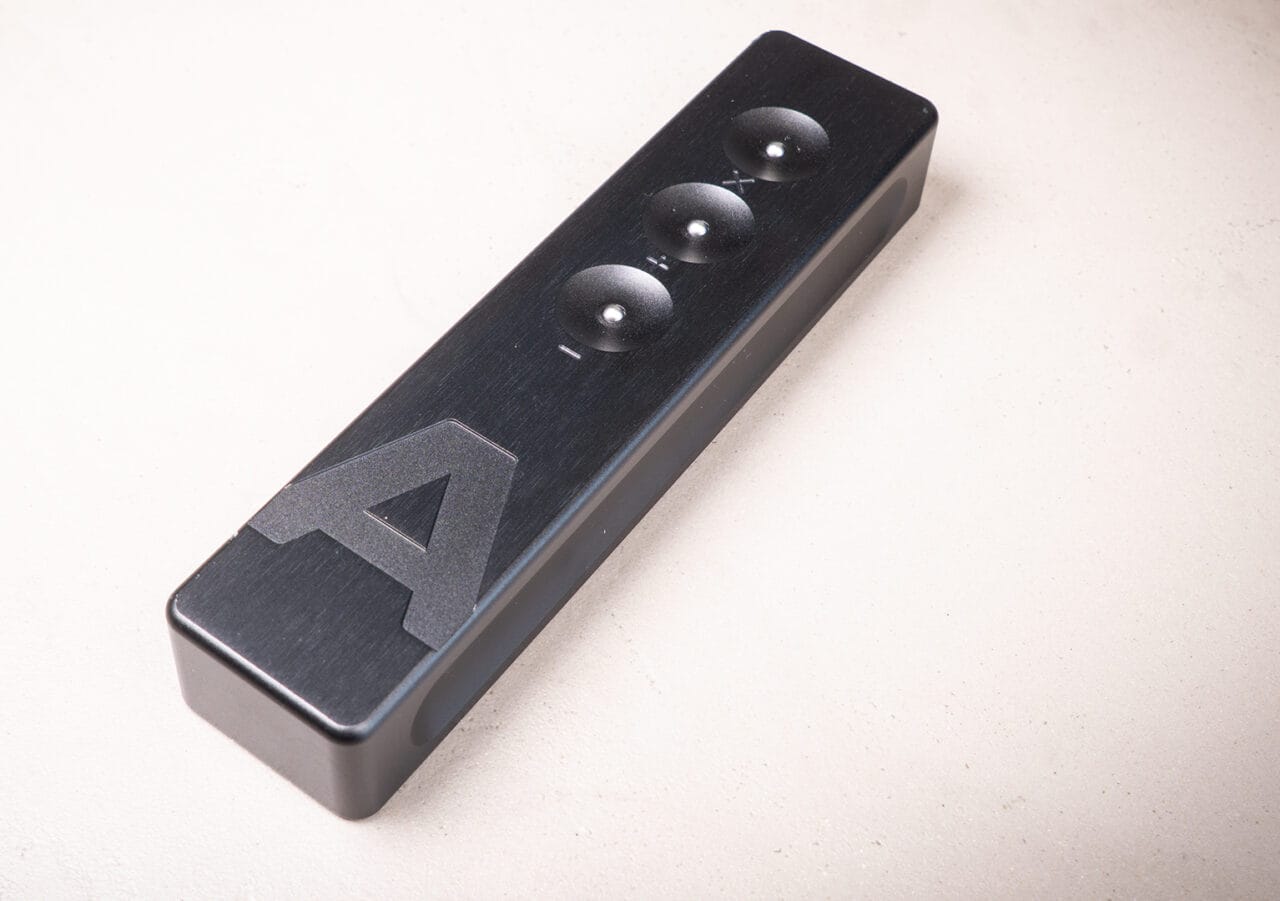
AVID’s own remote is as well made as its partnering amp while keeping things simple
Performance
With the amp installed and spinning back over my notes from the Accent review, this also gets me comparing the two finishes on offer. The black is nice and classy yet unassuming, but at a push I prefer the brushed silver with contrasted matt finished massively embossed ‘A’, perhaps because it harks back to hifi of old, when amps were amps and OLED screens were the stuff of CD players. Simpler times, but I digress.
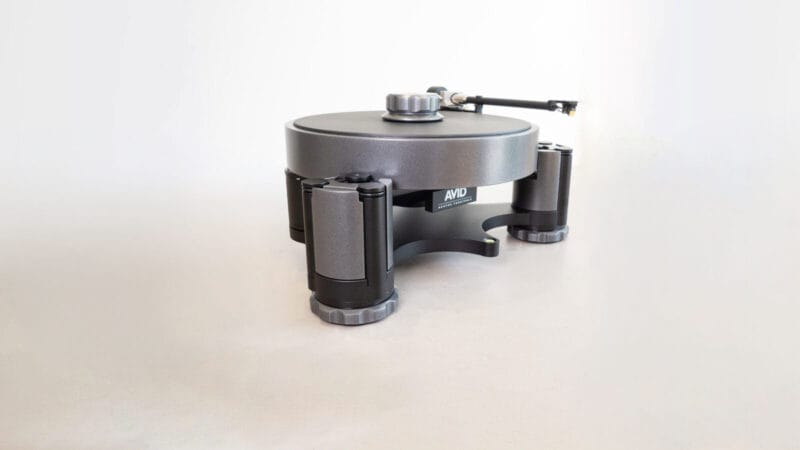
Vinyl playing partnering gear is AVID’s class-leading (and soon to be returned 😢) Dark Iron deck, alongside an SME 20/3, with digital audio served up from Primare’s CD15 Prisma CD/streamer, all feeding MoFi SourcePoint V10 Master Edition speakers via Nordost cables. All in this makes for a thoroughly modern system that screams retro, perhaps revealing my own personal audio tastes.
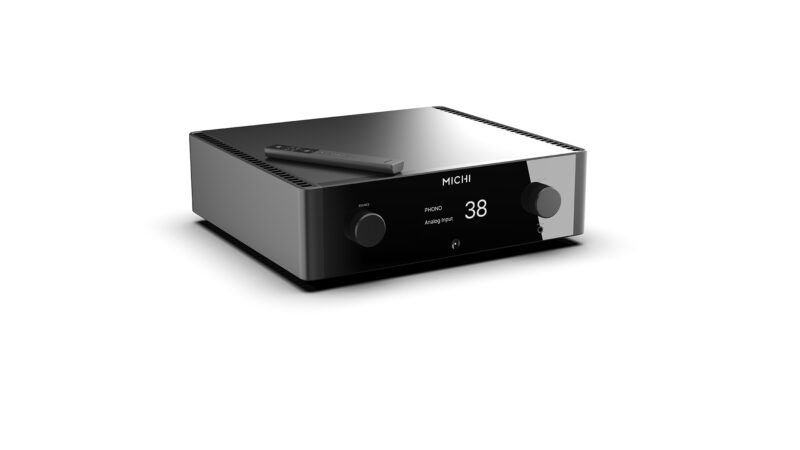
Now given my usual amp is Rotel’s Michi X5, which knocks out 350W (8Ω), I was fully expecting having to tailor my expectations with the Integra in tow. But, as a wise hifi man once said, “not all Watts are equal” and I’ve learnt so many times in this game to never presume that the numbers tell the whole story. And that’s exactly what the Integra reveals, by sounding every bit as powerful in terms of dynamics and sheer punch as amps boasting outputs well into three digit territory.
Dial in Fink’s Wheels Turn Between My Feet live album from Tidal (16-bit/44kHz FLAC) and the scale and depth of the live experience is convincingly conjured. The leading edges of the rapid kickdrum for example on Blueberry Pancakes sound as urgent as they are well formed, with an echo that extends deep into the soundstage, having me presume that Vienna’s WUK performance space (where this track was recorded) must be sizeable (not that I’ve been, so don’t write in to correct me). The point being that the Integra has no issues in delivering music at scale.
But this track isn’t just about scale and dynamics, it’s also an excellent testbed for revealing how an amplifier can handle and separate a cacophony of competing instruments when required. I’ve initially enjoyed this track on many an amp, only to hear them flounder at the final hurdle as the menacing stripped-back guitar notes get overtaken by the rousing conclusion, where everything collapses into a a harsh musical autopsy. The AVID has none of this, remaining calm and composed right up to closing time.
An avid listener
That doesn’t mean this amp can’t do detail like many of the super-integrated breed, and in this respect it’s probably a little hotter sounding than my Rotel, which sounds a little overdamped and darker in comparison. And the contrast that the AVID adds works well in my system, being relatively smooth sounding overall. The litmus test though of an amp at this level is not just detail retrieval, but how cleanly it serves it up, and the Integra walks this line superbly, showing how well it’s been voiced.
Pipe in Peter Gabriel’s 2023 i/o album (16-bit/44kHz FLAC) and you’re in for a delightful balance of musical poise, energy and dynamism that the AVID revels in (as many an amp in this category would). But send in the over polished cavalry via his So of nearly four decades earlier (remastered at 24-bit/96kHz) and the AVID manages to project all that’s in the mix without labouring on the over-production of the era. Instead, in a similar vein to AVID’s Dark Iron deck, it manages to focus on the music and its enjoyment, without overly dissecting it – meaning that a test track listen quickly extends to a whole album, as you just don’t want to switch if off.
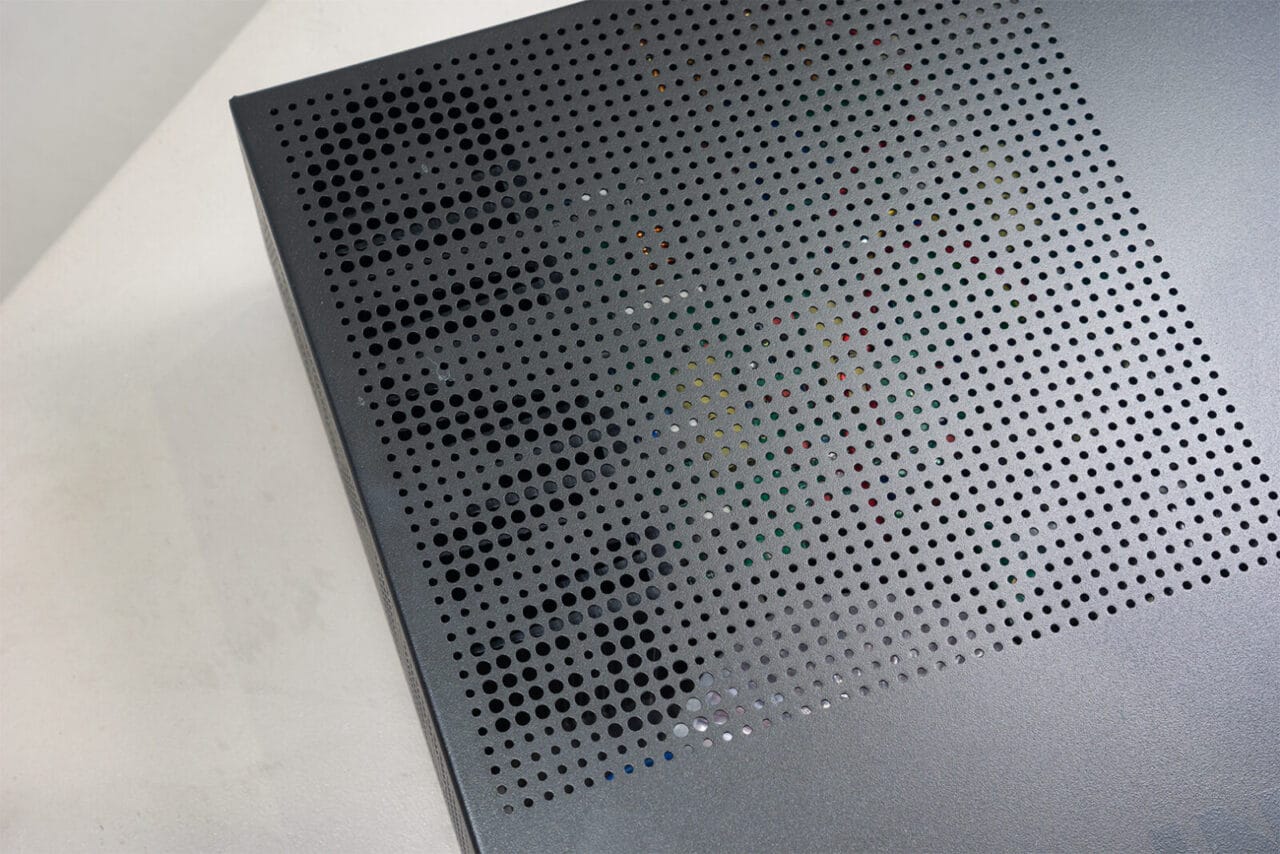
Ventilation AVID style via the Integra’s perforated top panel
As we found with its Accent little brother, you’ll also need to go some way to better the Integra’s inbuilt phono stage, which is perhaps no surprise. With quality vinyl pressings it’s every bit as good as a mid to high end standalone, and what’s really impressive is in how it handles lesser recordings, making you not just reach for your high quality pressings, meaning it’ll help you enjoy your whole album collection.
Trevor Beales’ Fireside Stories: Hebden Bridge 1971-1974 remastered and released only a few years ago is a delightful window into an artist who deserves much greater recognition. Recorded in the family home attic almost half a century ago, Andrew Liles deserves a medal for his mastering decades on from nothing but old cassettes tapes, as it’s a gem of an album. But understandably its nonetheless limited by what was available. Thankfully the AVID seems sympathetic to this, bringing to life all of the music’s charm without dwelling on the recording’s shortcomings.
So much so it seems to add to the album’s appeal. Would I prefer to hear a studio engineered production of today’s standards instead of what we have here? In all honestly I don’t think I would, because it would lose the time-capsule magic of man and instrument captured decades ago in a real setting, which the AVID delivers with delightful honestly. If you do buy this amp, I implore you to buy this album to go with it.
In summary
To channel my inner Yorkshire man, put simply this is a bloody good amp. And where its appeal lies is in how it’s not been over-complicated or festooned with features that most owners don’t need, instead its focus is on the music it delivers.
Sonically its a neutral sounding beast, managing to sound punchy, detailed and yet forgivingly finessed for longterm enjoyment. And given how well its built, longterm ownership is a given.