

Reviewing hifi cables presents an interesting set of challenges verses ‘standard’ hifi gear, some people appear to have very strong feelings on this topic.
This is evidenced by the many forum threads declaring that cables are scientifically proven not to make a difference, but just listening to a few different cables in your system will show you this just ain’t so.
Of course, how you should allocate your funds is also an important question. In the 1970s Linn ran a highly effective campaign to persuade people that you should splash the lion’s share of your cash on the source, (i.e. its LP12) not a biased position I am sure.
Then there was the QED 42 vs 79 strand cable debate…yet some insisted that twin and earth was the way to go.
The truth is that system building is far from simple, and includes variables such as your own tastes.
I have tried to resist the siren call of cables over the years, but I confess I have failed. It is hard, and counter-productive, to argue with your ears.

The all important In-akustik black boxes, denoting their country of origin
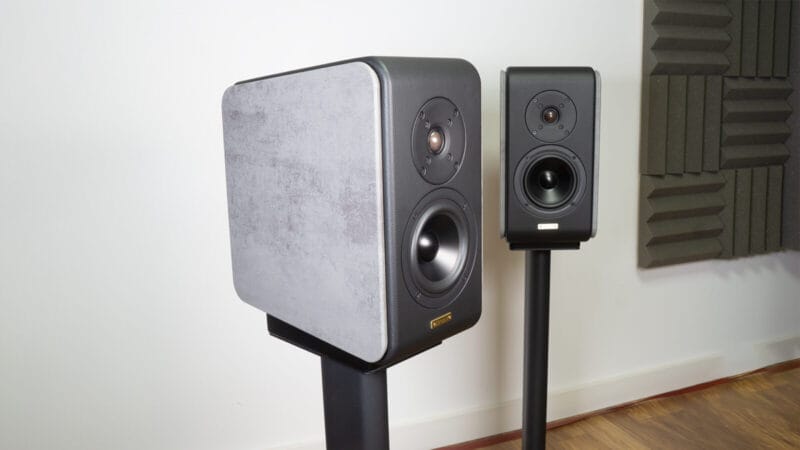
At some point you will want to address how to get the best from your investment. In the case of my nearfield system it sees a lot of action, but I’ll admit I have tended to use just what I have accumulated in my cable store, despite having refined its components over many years. It’s therefore ideal territory for the In-akustik pairing we have here, with the interconnects installed between my Chord Electronic’s Hugo TT DAC and partnering Alto amp, and the speaker cables driving my treasured Graham Audio Chartwell LS3/5A speakers.
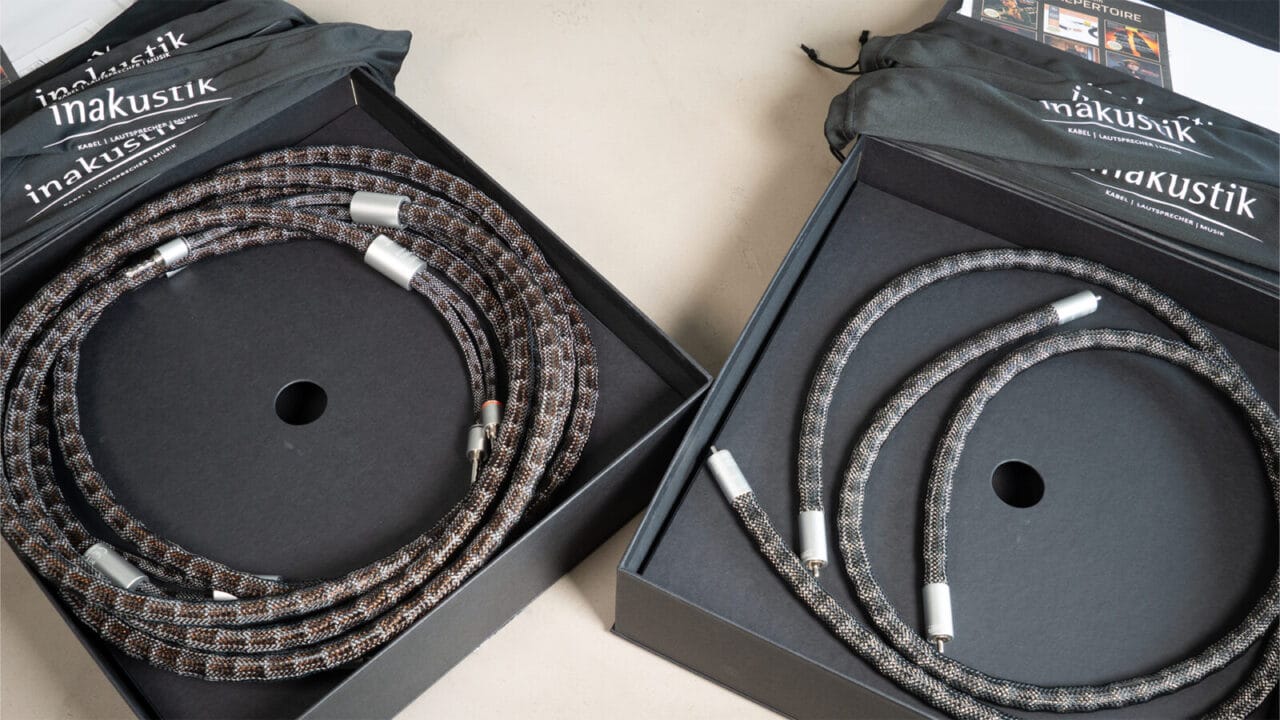
Premium packaging reveals the quality of the cables inside, which includes branded silk socks to protect the terminations
Something in the air
Speaker cable technology is a fascinating rabbit hole to go down. Naim of the 1990s for example was all about its NAC A5 being good enough, but when materials and understanding moves on, so do the facts.
First let’s look at the problem. Speaker cable conducts milliamps of alternating current (AC). The wire itself will impact the ability of your amplifier’s signal to reach and interact with your speakers. And your speakers also present an active load to your amplifier. What these figures are will vary with the complex signal that is being sent, and with what is being sent back to the amplifier. (And if you like an impassioned discussion, John DeVore’s rant about speakers, measurements and their weaponisation is well worth a watch.)
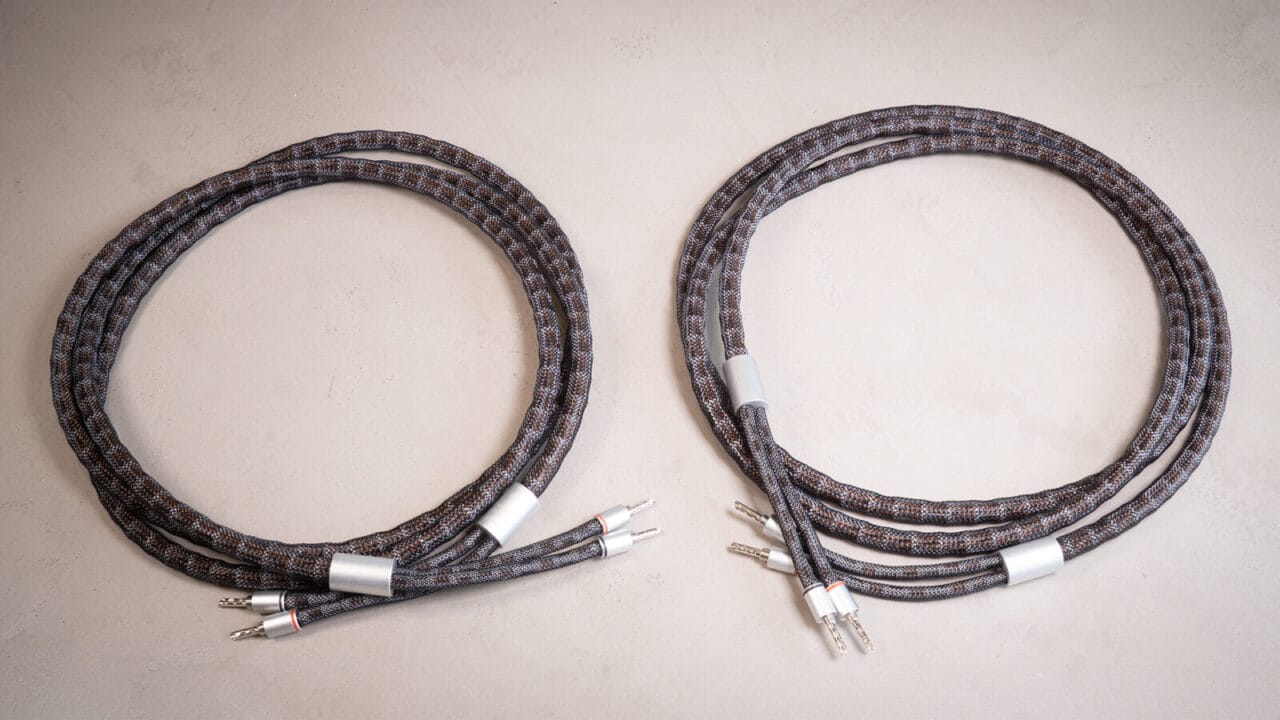
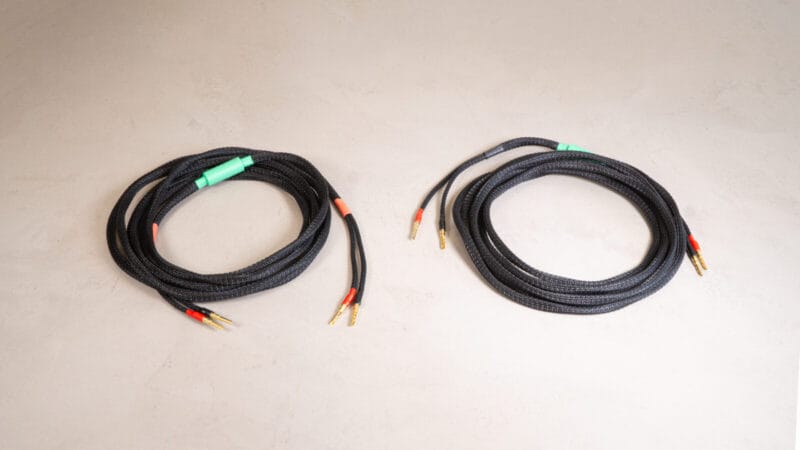
Ready for install – In-akustik LS-1205 Air loudspeaker cables in 3m lengths
This being In-akustik, both cables are laden with the brand’s proprietary tech. Starting with its point-to-point Air Helix which refers to the cables’ skeletal helix-like outer frame that’s designed to keep the wires inside at a set distance, with the point-to-point element underlining how said helix is a continuous cable run and not a series of joins (regardless of length).
And what that helix allows for is what In-akustik’s Product Developer Holger Wachsmann says is the ultimate dielectric to minimise capacitance – the simple air we breathe. All other materials like PVC, Teflon or Polyethylene, have electrostatic effects which increase the capacitance of a cable – says Holger.
Then there’s the ‘Cross Link Super Speed waveguide’ which refers to the cable’s braided structure that’s been designed to swerve skin effects (whereby the signal tends to flow mostly near the outer surface, which increases resistance for high frequencies). To avoid this, In-akustik has applied a lacquer coating around each strand which prevents eddy currents within the conductor, while protecting against oxidation.
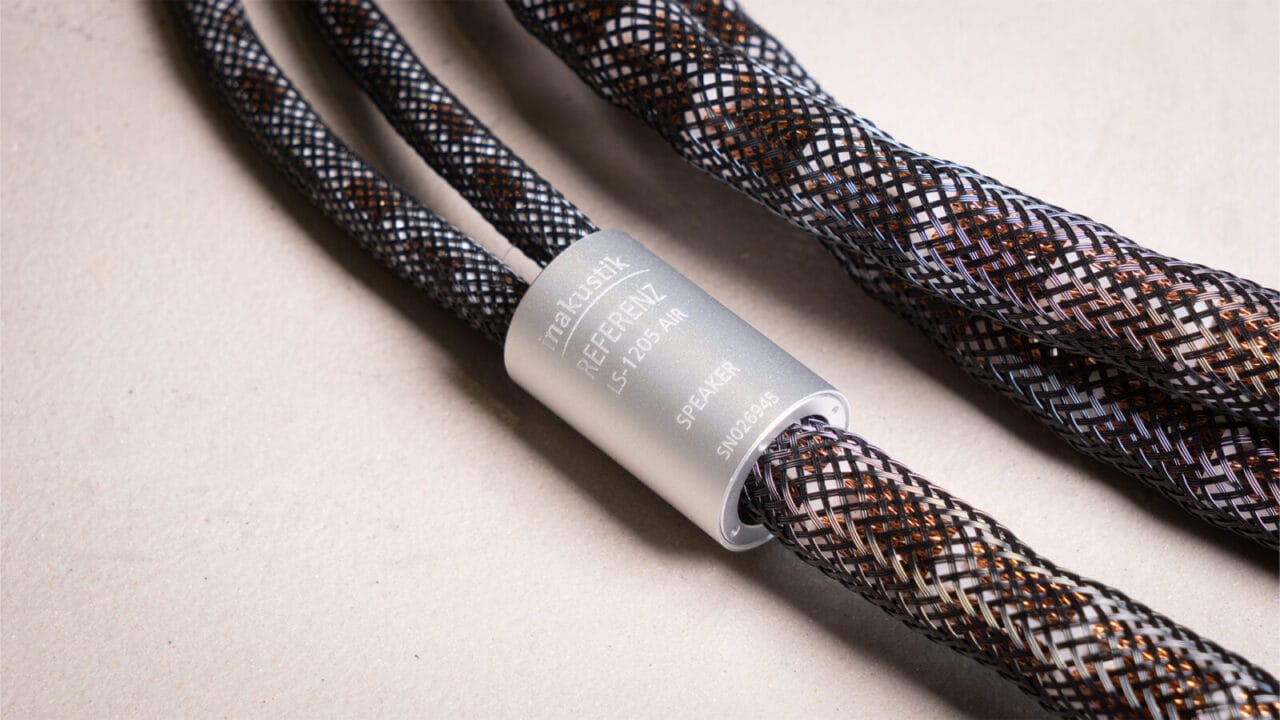
Up close and personal, you can see the cable’s frame structure and woven outer
In-akustik describes the LS-1205 Air as its reference quality cable. The design uses 13mm high purity Oxygen Free Copper (OFC) with a central conductor wrapped in an insulator, and round this is a braid of copper cables. Two pairs of these cables have an open twisted pair arrangement, held in place by a frame made of ‘elastomer’ to maintain the geometry of the four conductors.
This seems to potentially combine the strengths of a coaxial cable with that of a twisted pair which, together with the materials used, bodes well for the listening experience.
The cable itself is has a circular cross-section, terminating in an aluminium barrel splitter, which is marked for signal flow to the speakers.
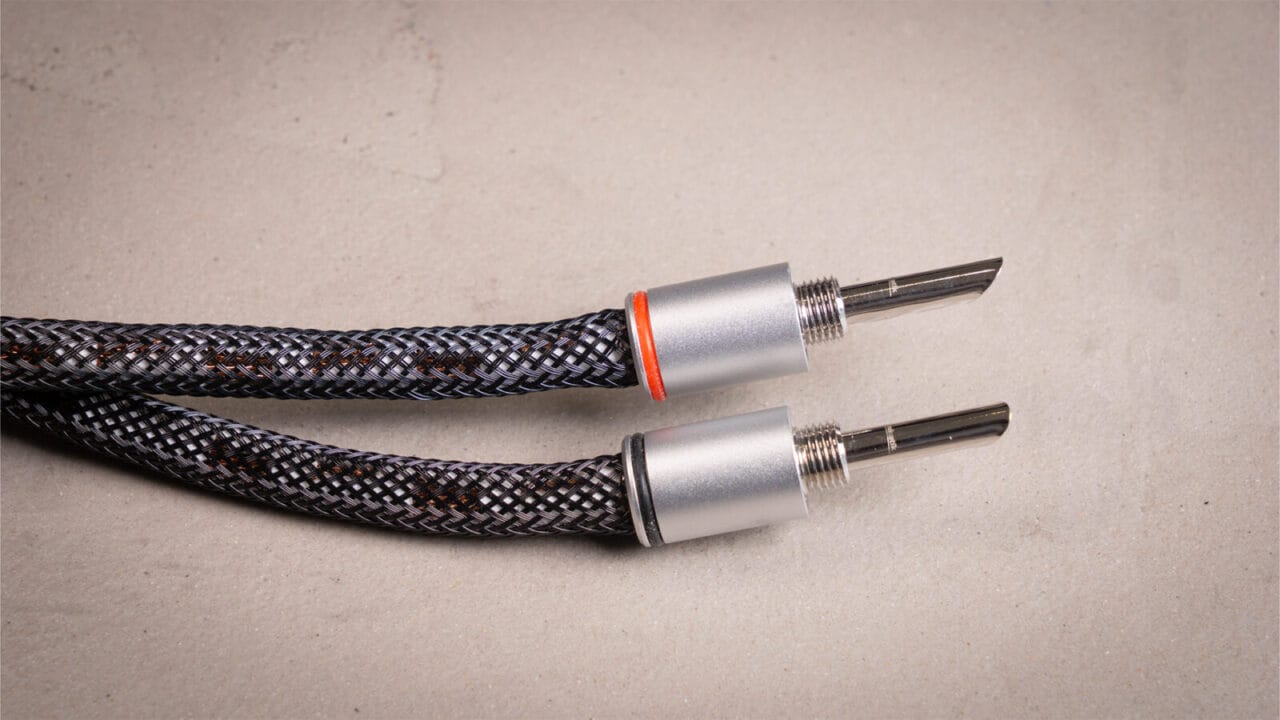
Branded z-type banana plugs are nice quality, with thick colour coded metal jackets
As speaker cables go, the LS-1205 Air is nicely flexible. So while I would avoid a sharp 90 degree turn there is no need to apply any force to install.
The supplied cables were terminated in nice quality banana plugs with chunky outers affording decent grip when plugging them in. Cable-lug type connectors can also be specified, as can a variety of lengths between 2-5m at 0.5m intervals, with prices starting at £1,585 for the shortest set.
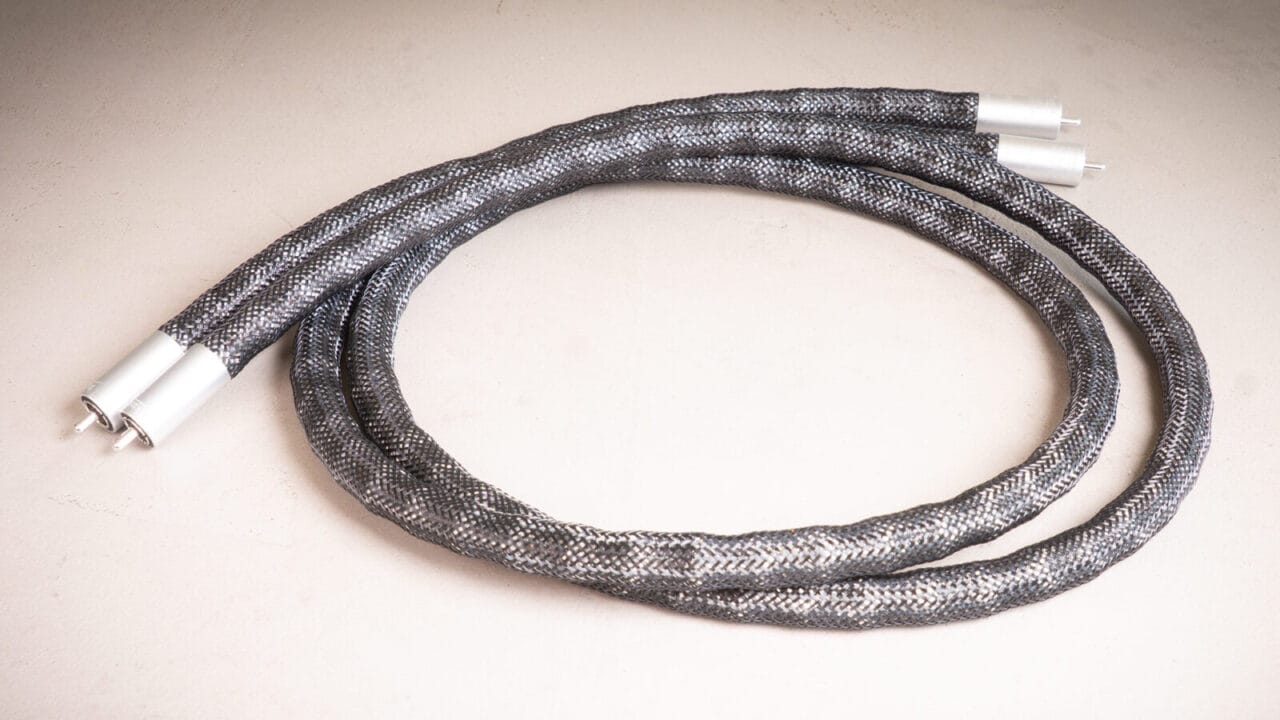
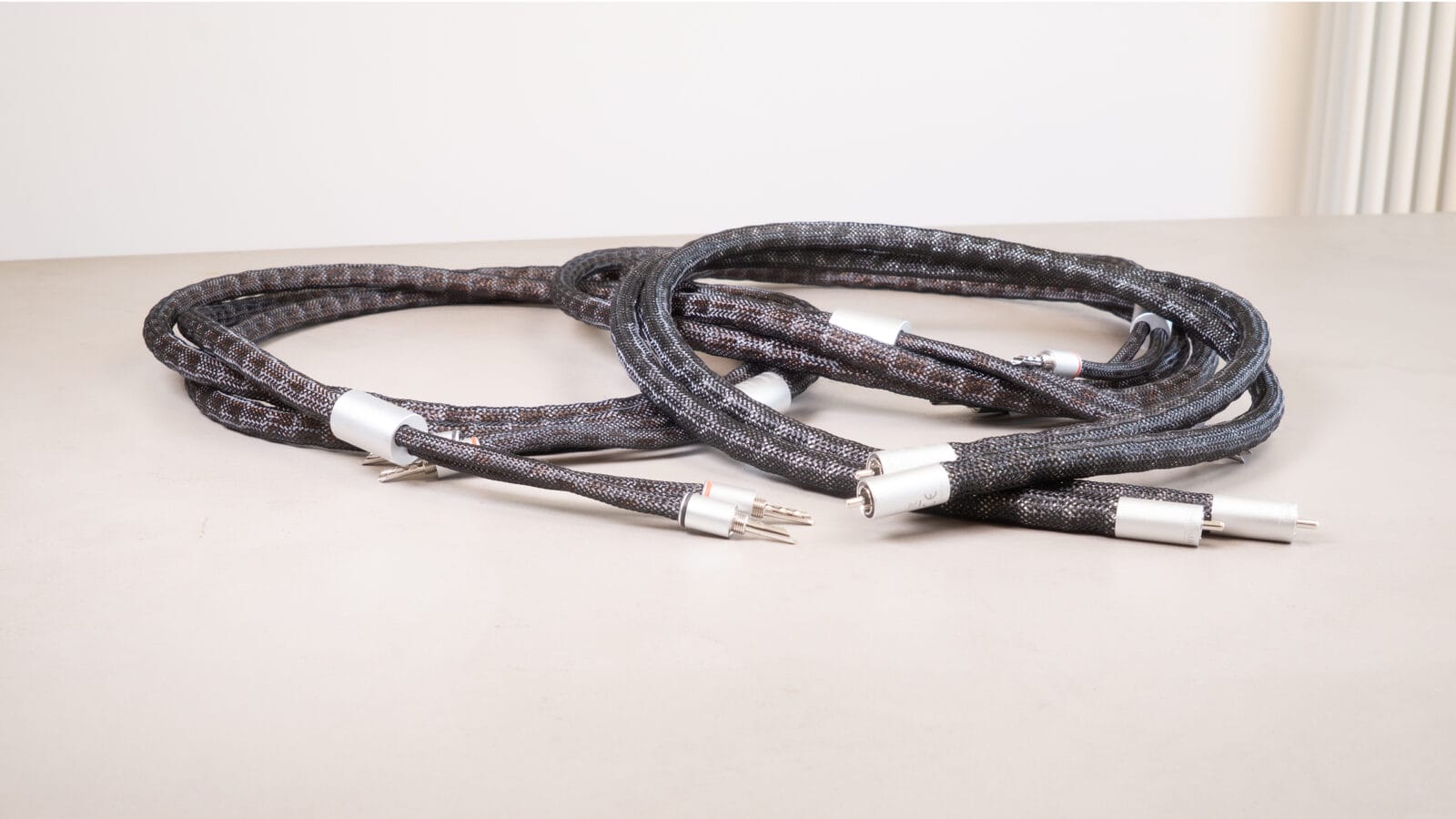
In-akustik NF-1205 Air interconnect is a beefy cable compared to the slimline breed of many rivals
Family connection
This NF-1205 Air is the interconnect corollary to the LS-1205 Air speaker cable, with the same Air Helix technology applied to its construction, but now with a single braid covered conductor and a coaxial sheath.
The pair of cables supplied for review are 1m single-ended with RCA plugs fitted, with 1.5m and 2m also available as standard. And to fit those RCAs, In-akustik has foregone solder in favour of its ‘pressure-grouting’ process, which translates to 1.5 tons of force applied for a perfect tight ‘dry’ fit, meaning less foreign materials (and therefore less resistance) are introduced.
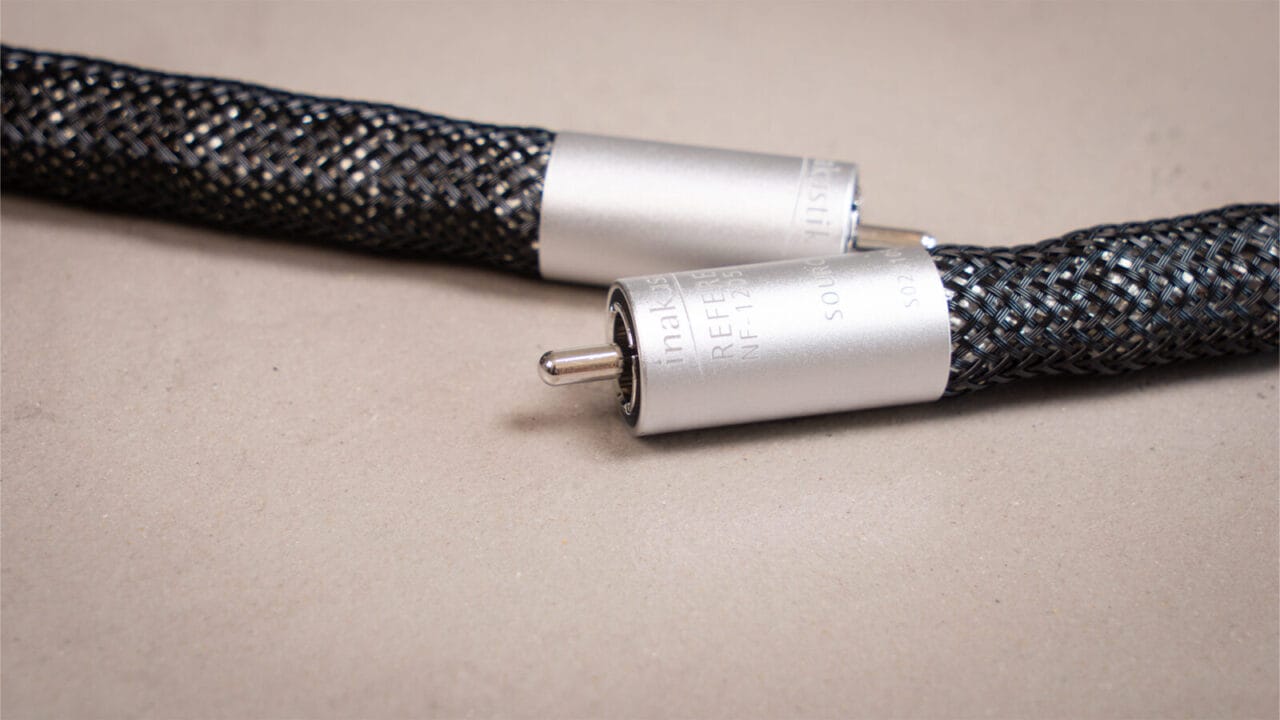
Pressure fitted RCA plugs keep up the quality, although unlike the speaker plugs they’re not colour coded, so take care when fitting
Performance
For this review I returned to a playlist that I use specifically for LS3/5As, streamed via Qobuz. These speakers have their own strengths of course, which are immediately on display – and indeed enhanced – by the presence of the In-akustik wires.
This is a group of tracks I know very well, but hearing them now, I’m aware how much the music is being communicated with extra detail and insight. I’m reminded just how good this variant of the LS3/5A is when fed by the right cables.
I am not talking about added frequency extension and musical pyrotechnics (although this doesn’t mean that some effects weren’t immediate), it’s more the sound-field being created that’s impressive – being both fuller and ‘freer’ of the speakers. I enjoyed my time with the D’Von SQ-10 standmounters some weeks ago, but they do not approach the LS3/5A in a number of respects, and having recently returned to the Graham Audio faithfuls, I’m hearing how the In-akustik Air cables further enhance what the LS3/5A does so well.
To surmise the impact, I am simply being drawn into the music to a greater extent through how the speakers are now able to deliver the subtlety and musical craft of great musicians playing their instruments, in support of the story being unfolded. It is hard to quantify or express emotional involvement, but easy to hear and feel.
You Want It Darker by Leonard Cohen (Inc. Shaar Hashomayim Synagogue Choir) at a lowly 16-bit/44kHz from the album of the same name is a track that emotionally connects when done right. With the Air cables in place the sound field is both wider and deeper, and this extra dimensionality renders the choir in a way that I had not quite heard with these speakers before. Cohen hardly has a singing voice, but it just works so well here, and his gravely tones are counter-balanced by the rather better trained backing singers whose voices hang in the air around me. It’s not a new experience, but it’s now broadcast in VistaVision with added sprinkles of richness and texture.
Sticking with Leonard, I’m naturally led to Hallelujah, this time at 24-bit/96kHz and sung by Sarah McLachlan from the excellent Here it is: A Tribute To Leonard Cohen album. Unlike Cohen, McLachlan has a lovely voice, delicately supported by other musicians. With the Airs delivering the signals, I was never so aware of the placement of these instruments as I am now. As in You Want It Darker the instrumental tonality is very nicely delivered, from the gently brushed cymbals to picked guitars and the sonorous reed of a sax. But this doesn’t mean that they’re devoid of bite, as it’s there too, just beautifully controlled, with the Air cables delivering all of the detail and the tension behind it.
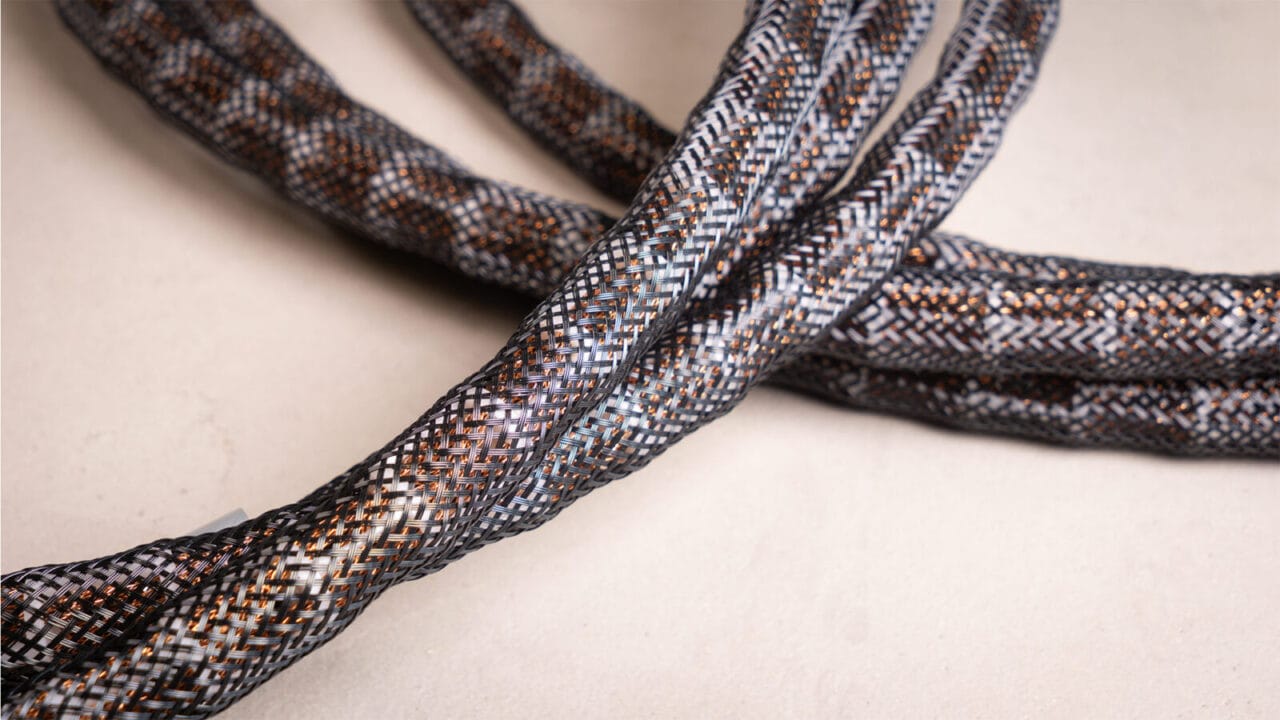
Crossed wires, the In-akustiks sound right at home in my near-field system
Tea dance
Time to pick up the pace via Rakim (Live) (24-bit/44kHz) by Dead Can Dance on their 2013 In Concert album. This is a percussive tour de force. What the LS3/5A lack in low bass they more than make up for in scale, and the expanded sound-scape and clarity afforded by these cables is out in force too. The percussive strikes and drums really punctuate Brendan Perry’s lead male vocal, while Lisa Gerrard’s voice soars way above my ceiling in the background.
Cat Stevens’ seminal album Tea For The Tillerman is the sound of an artist at the top of his game. As a recording it also gets busy, and I mention this because of how well these cables allow you to unpick the more complex passages. Where Do The Children Play? (24-bit/44kHz) for example includes delicately picked guitar, left centre and right, and I have no difficulty in following each part and their stereo separation.
Turning to a subtly different genre via George Solti’s recording of Wagner’s Das Rheingold (24-bit/96kHz) and through my usual cables I have turned this off midway as the brass can sound simply too strident. With the In-akustiks in the mix, the larger staging gives the piece more room to breath, and gain scale. And while the brass loses none of it brassiness, it’s also no longer ear-piercing, making it more palatable than I’ve heard it in a long time. And that’s quite a compliment.
In summary
I am always on the look out for cabling snake oil. But with the In-akustik LS-1205 and NF-1205 Air cables I was won over, and rather quickly.
Cabling differences are often subtle, but that doesn’t mean that they can’t be consistent, obvious and important. Would I rather drink Sainsbury’s Ordinary Claret or an 1855 Classification Bordeaux?
This will depend on training and experience of course. But, I hate to tell you, if you are reading this you are almost certainly a connoisseur already, and if you try these cables then you’ll soon realise Ordinary Claret they are not, instead they’re a delicious mix of quality and engineering that certainly had my system singing at its best. Sante! 🍷